The Glasso Age Begins: Sol Duc Spey, Part 1
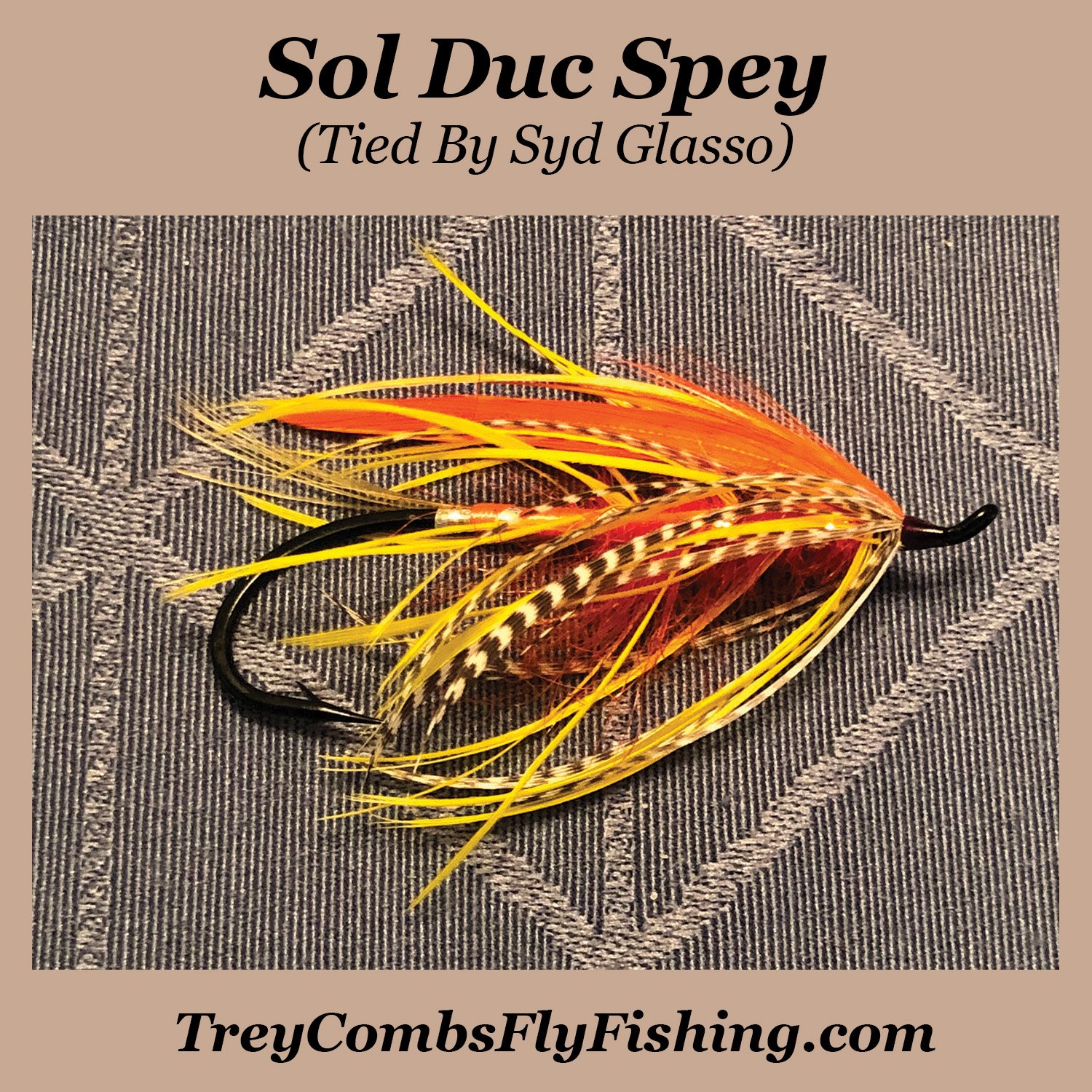
An original Sol Duc Spey dressed by virtuoso fly dresser Syd Glasso.
There are few historical demarcations in the craft of creating artificial flies for steelhead; Glasso was one. There simply was before Syd and there was after. I’d like to think I recognized this early, when in 1976 I wrote: “Syd Glasso has established the only Olympic Peninsula steelhead fly heritage. A finer start couldn’t be imagined.”
Before my time, Eureka’s chamber of commerce had seen to it that the Highway 101 bridge sign that identified the Eel River add a second sign that read River Of Giants, a boast for the river’s great steelhead and one that competed with the Highway 101 notice that a person was entering the Avenue of the Giants, a drive through the towering redwoods, another bigger-than-life asset put on public notice. But after 1936, steelhead fly fishermen could have justified still another sign under the River Of Giants sign that read, Bucktails: Giant Killers.
Not until 1959 would another fly be credited for a winter steelhead of 18 pounds that would also take first place in the Field & Stream fishing contest. The angler was Syd Glasso, his river Washington’s Sol Duc and his fly the Sol Duc, a dressing with a wing of bright, chrome-orange hackle tips and a split body of orange floss and orange dubbing palmered with webby yellow hackle, the fly finished with a turn of teal.
This single fly led to what I call the Glasso Age of Steelhead Flies, a time that profoundly changed forevermore how anglers tied steelhead flies and a time that marked the end of the Age of Steelhead Bucktails.
During the late 1960s, I’d drive from my home in Port Townsend to Forks, Washington each New Year’s morning to meet Skip Zaphhe for a day of pulling plugs on the Sol Duc River. Skip sometimes guided Hollywood types and he had appeared in Wide World of Sports, an early reality television series. He was a big deal in Forks, a redneck town where lumberjacks could still find ancient rainforest trees to chainsaw down.
The day was picked because we’d have the river to ourselves. I knew that in the coming months Skip’s plugs would find many wild steelhead over 20 pounds. This massive race of wild steelhead was so abundant that the two-fish per day limit could often be filled in minutes. One year I had two eightpound steelhead in the boat with the launch still in sight; after no more than 20 minutes we were done for the day—and we still had a dozen miles to float
At the time Wes Drain held the unofficial Washington State fly-caught record, a steelhead of about 21 pounds, and this nagged away at me even though I was pulling plugs. The river abounded with the opportunity to find a big steelhead like Drain’s, doubly so in March, and no less so in its tributaries, the Bogachiel and Calawah. Skip told me stories of steelhead he was certain would push 30 pounds, bucks packing sea-lice and attitude and only hours from the Pacific but then lost when they suddenly raced down a narrow braid that after many years of winter floods had become a slalom of giant root wads.
Sometimes, with steelhead in the boat, Skip would run a large black fly from his Orvis Shooting Star Battenkill rod, back trolling near the surface, the fly swimming a twisting zigzag course across surface currents like a giant bug. I’d been fly fishing for winter steelhead with a Scientific Anglers Wet Cel shooting taper. I was certain that I needed to get my fly down, and down was rarely deep enough, so I first thought Skip’s efforts were silly exercises meant to pass the time.
My prejudice was soon interrupted when, with the fly swimming over a steelhead seven feet below, the water just blew up and the fly was taken down. Skip needed to drop the oars and grab the rod, time enough for the fish to spit the fly. My ignorance was such that I didn’t fully appreciate what had taken place.
Many years would pass before Harry Lemire impressed upon me that how deep the fly ran was less important than how slow and long the fly wobbled over holding steelhead. My wrongheaded approach also defied physics as I tried to keep the fly down while keeping my fly on the swing. The surface currents inexorably pushed the shooting head upward even when the hook was so heavily wrapped with lead wire that its erratic flight on the cast seemed programmed to put a hole in my head. Worse yet, sometimes the butt end of the shooting head was leading the way, the whole mess towing my fly downriver.
The flip side to this grief was the lack of angling activity that could have compromised my fishing; I usually didn’t encounter another fisherman—and never a person casting a fly—on the Sol Duc and Quinault drainages, and on the Hoh nearly at tidewater.
One day when Skip and I floated down to the confluence of the Bogachiel and the Sol Duc, he remarked that he often saw a fly fisherman casting on this water with a cane rod.
“Right there.” Skip pointed to a perfect slot of holding water, and added, “I never saw him catch a steelhead.” He didn’t have a name for the person, but I did: Syd Glasso.
At this time, I was working on a book, The Steelhead Trout, that Frank Amato would publish in 1971. Part of my research included running down all the Field & Stream steelhead fly-fishing records, slow research at a time when a phone, books and back issues of magazines in Seattle’s library were my research tools. In this manner I learned that Syd Glasso had caught an 18-pound 12-ounce steelhead on February 22, 1959, from the Sol Duc. Glasso was 53 years old at the time, and this steelhead was both the largest “rainbow” caught on a fly that year, and the second largest he would ever get to the hand. The fly was a Glasso original, the Sol Duc, an alternate to his Sol Duc Spey, among the most famous members of what would become Glasso’s First Family of classic steelhead dressings.
Sol Duc Spey Dressing Notes
Body: Rear half fluorescent orange floss, front half hot orange seal fur. Rib: Entire body with flat silver tinsel and palmer with very long, webby yellow hackle, widest part toward the rear. Throat: Black heron. Wing: Four matching hot orange hackle tips.
Explore more classic steelhead and salmon fly dressings in the Fly Pattern Dictionary.
This blog is excerpted from the chapter on Syd Glasso in Flies for Atlantic Salmon & Steelhead. The book is available directly from the author on Amazon in two formats:
Limited 1st Edition Hardcover — available on Amazon
Digital Reference Edition — available on Amazon Kindle
Read the Complete Syd Glasso Series:
The Glasso Age Begins: Sol Duc Spey, Part 1
Syd Glasso’s Transformation of the Wet Fly, Part 2
The Glasso Legacy: A Steelhead Revolution, Part 3
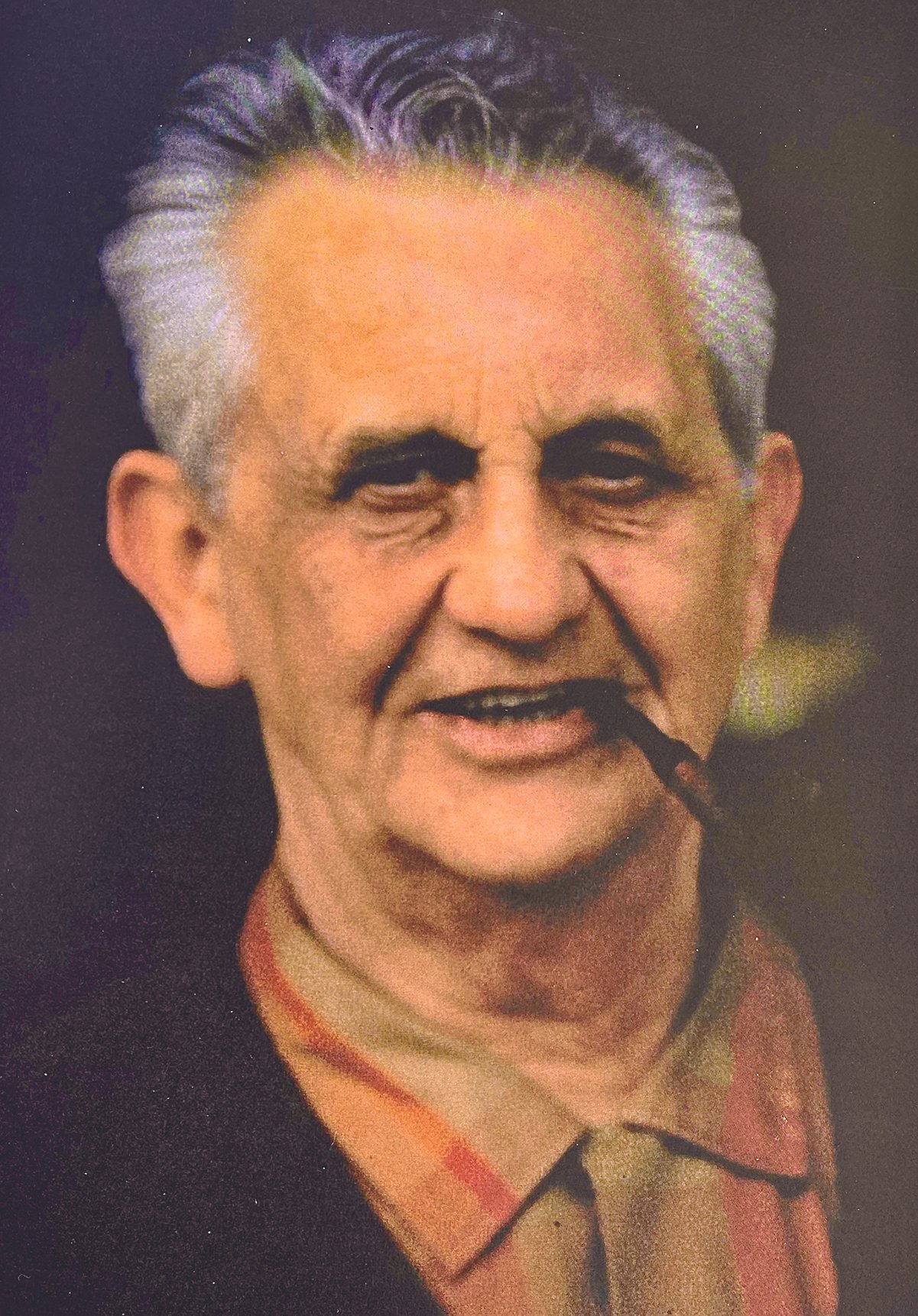
Syd Glasso was a school teacher in the remote, rainy, muddy logging town of Forks, Washington, where he drove around—improbably—in a white Porsche. He is indisputably the artistic father of the modern steelhead wet fly.