Father’s Day 2026: A Life Well Spent
Father’s Day — 2026
When I think about my early years with my father, the images that come to mind are his bamboo Orvis fly rod with his name on it, his old typewriter, and his fly bench, which was tucked inside a closet just outside our apartment at the Captain Brown Apartments in Port Townsend, Washington.
I see images of him and Frank Amato floating and fishing the Deschutes River. I see stacks of fishing books, Salmon Trout Steelheader magazines, cans of Flying Dutchman pipe tobacco, and, of course, his graceful left-handed cast, the fly line unrolling over the water.
As a kid, I was lucky. I got to fish for steelhead on many of the great rivers in the Pacific Northwest. I got to fish for king salmon in Puget Sound. I backpacked and fished for trout in the high country, all while making him crazy as I memorized baseball record books.
As I grew older and moved to California, for a variety of reasons we lost track of each other. During this period, we would cross paths, but he was usually headed somewhere else — an exotic location to fish. These were the kinds of fishing trips most people only dream about: rivers in Scotland, being helicoptered into remote sections of the Kamchatka Peninsula in Russia, and bluewater fly fishing all over the world. If I’m being perfectly honest, sometimes I resented the fact that he was always gone.
But during this same period, there were several images of him that, when I saw them, helped me understand what “a life well spent” means. It means someone gets to spend their life doing something they truly love. It means they make a difference in people’s lives. It means they leave something memorable behind. Most people don’t accomplish all these things.
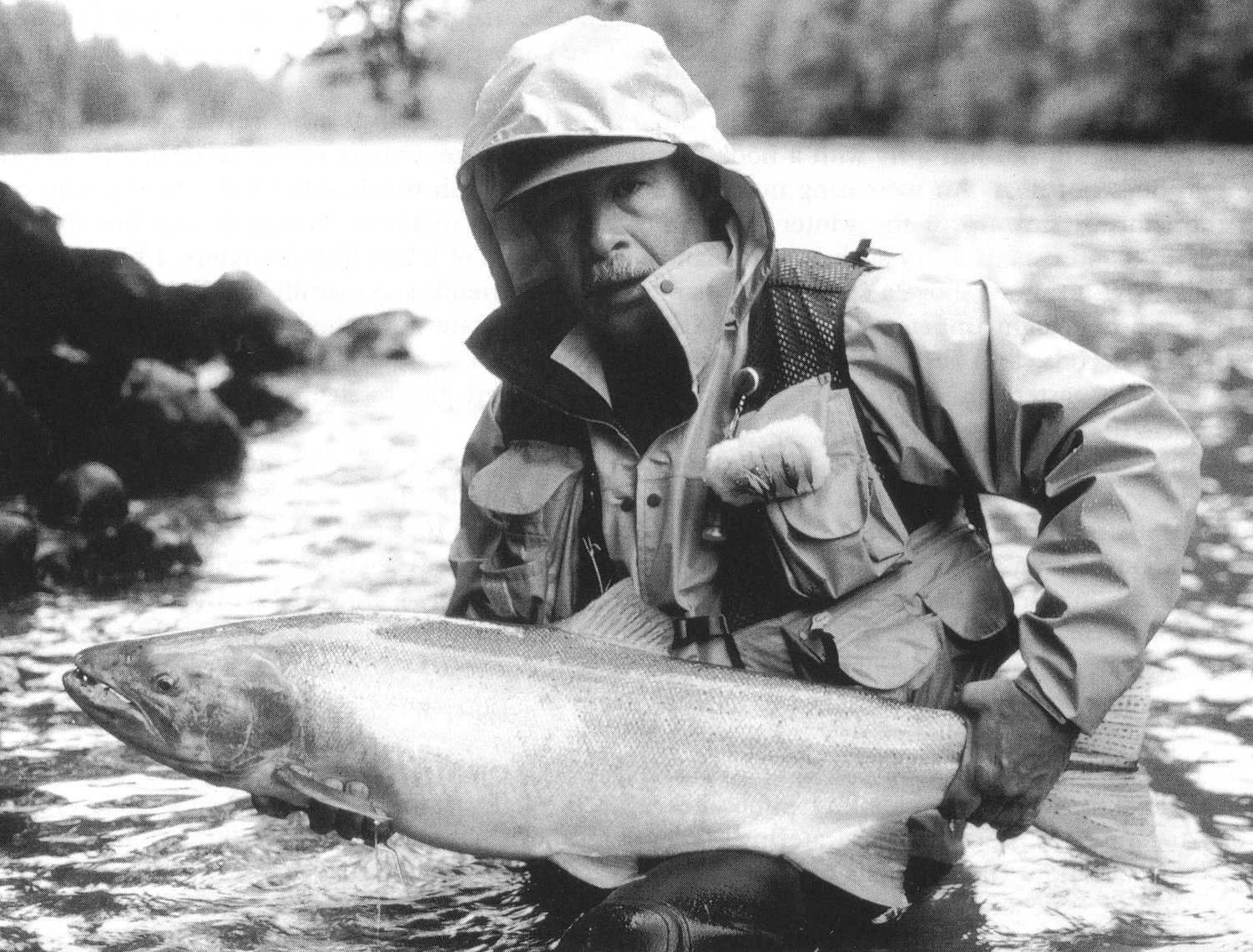
The first of these images was from the dust jacket of The Steelhead Trout, his first book, written in 1971 — a book he dedicated to me. When I saw this image again years later as an adult, it was exactly how I remembered him: intense, bamboo rod in hand, standing in Deschutes River water, getting ready to do battle with one of the great summer steelhead runs in angling history. Little did anyone know that this was a golden age of steelhead fly fishing, and that it would not last forever.
Trey Combs on the Deschutes River, from The Steelhead Trout (1971).
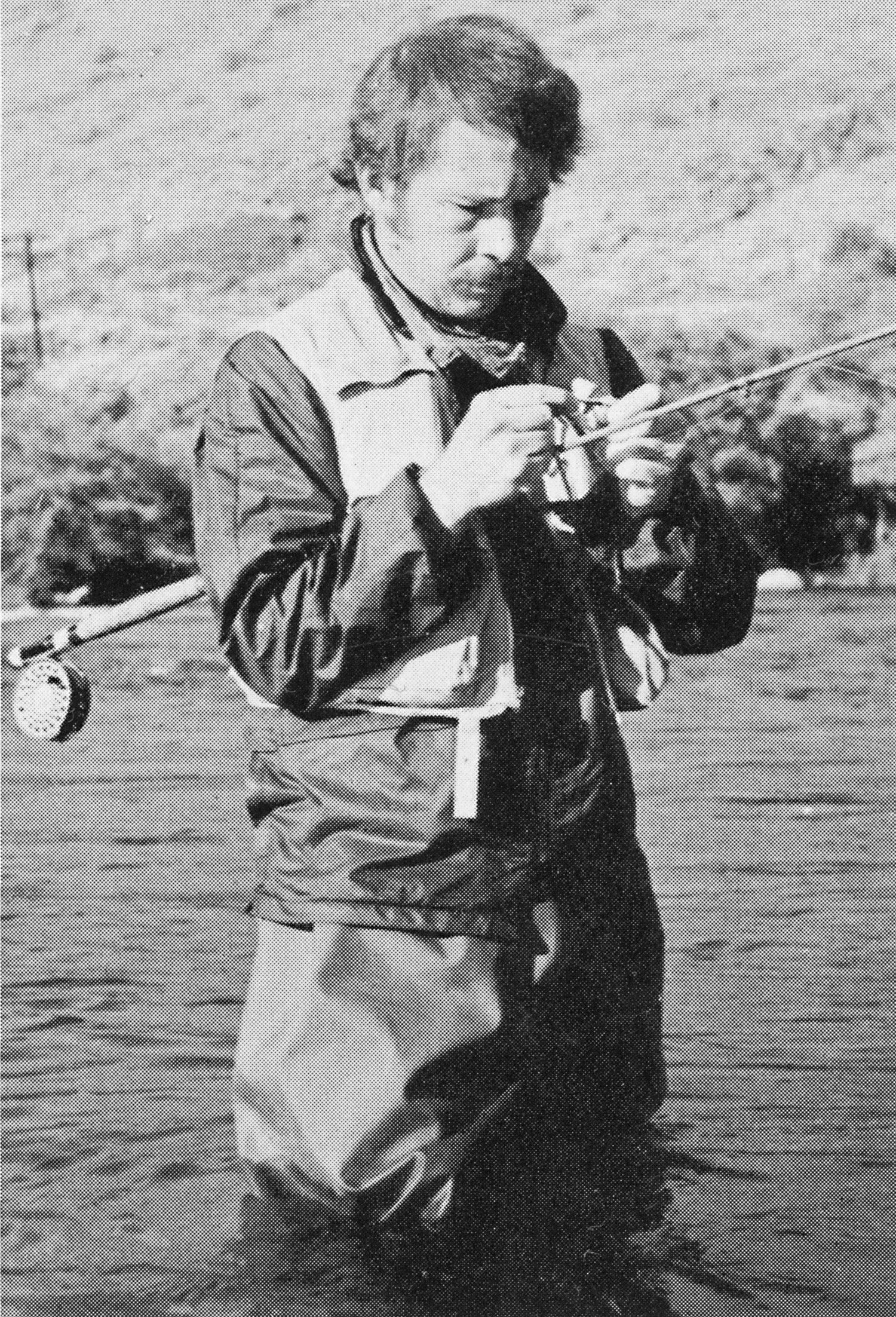
The second image was from Steelhead Fly Fishing. This picture is my favorite fish picture of my father. It’s black and white, and it’s just him, the river, and a massive summer-run buck. In this image from the mid-1980s, he’s older, and you can tell from the vest that he had evolved and was probably at the top of his game when the picture was taken. When I saw this image for the first time, it really hit home for me that doing what you love is important. I was writing computer code for an insurance company, and he had retired early from teaching and was doing what he loved. It all began to make sense.
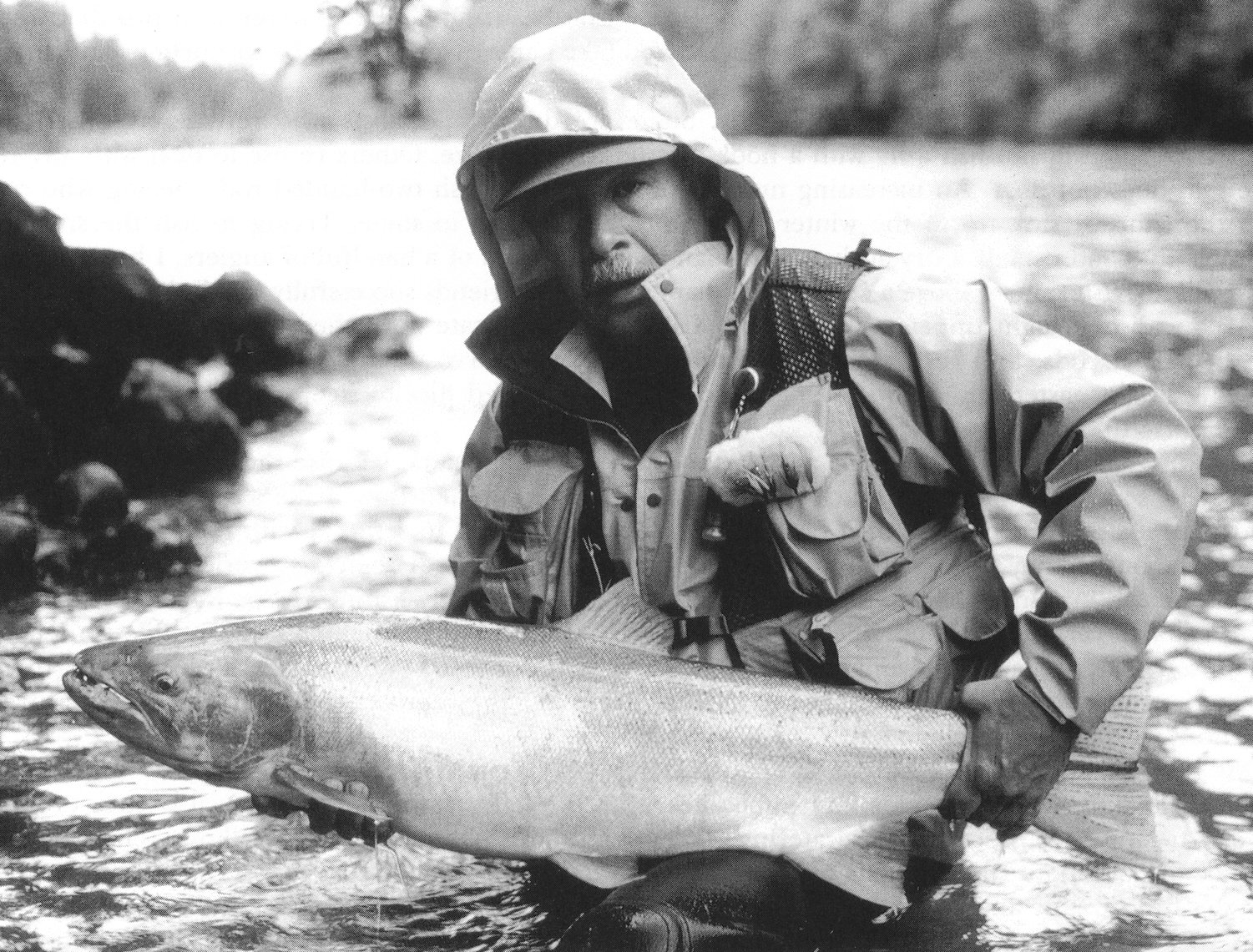
Trey Combs with a summer-run steelhead, from Steelhead Fly Fishing.
But it was the third image, one I saw years later, that really made me understand the significance of what he had accomplished. He had written a book called Bluewater Fly Fishing, with a foreword by none other than Lefty Kreh. The book read like a travel guide, each chapter devoted to a different fish from a different part of the world.
He had mailed me a copy of the book. I was flipping through the pictures when I came to a huge two-page spread of Dad casting a fly for trevally on the north coast of Bazaruto Island, in the Bazaruto Archipelago of Mozambique. As a kid who had often missed his father while he was off fishing, this picture made me fully realize, for the first time, the pull of fishing — the beauty and peacefulness of fishing alone in a remote place. It made me cry because I was proud of him, and because I felt bad for being resentful of him for doing what he loved. I looked at the image for quite a while, and I remember thinking to myself, “Okay Dad, I get it.”
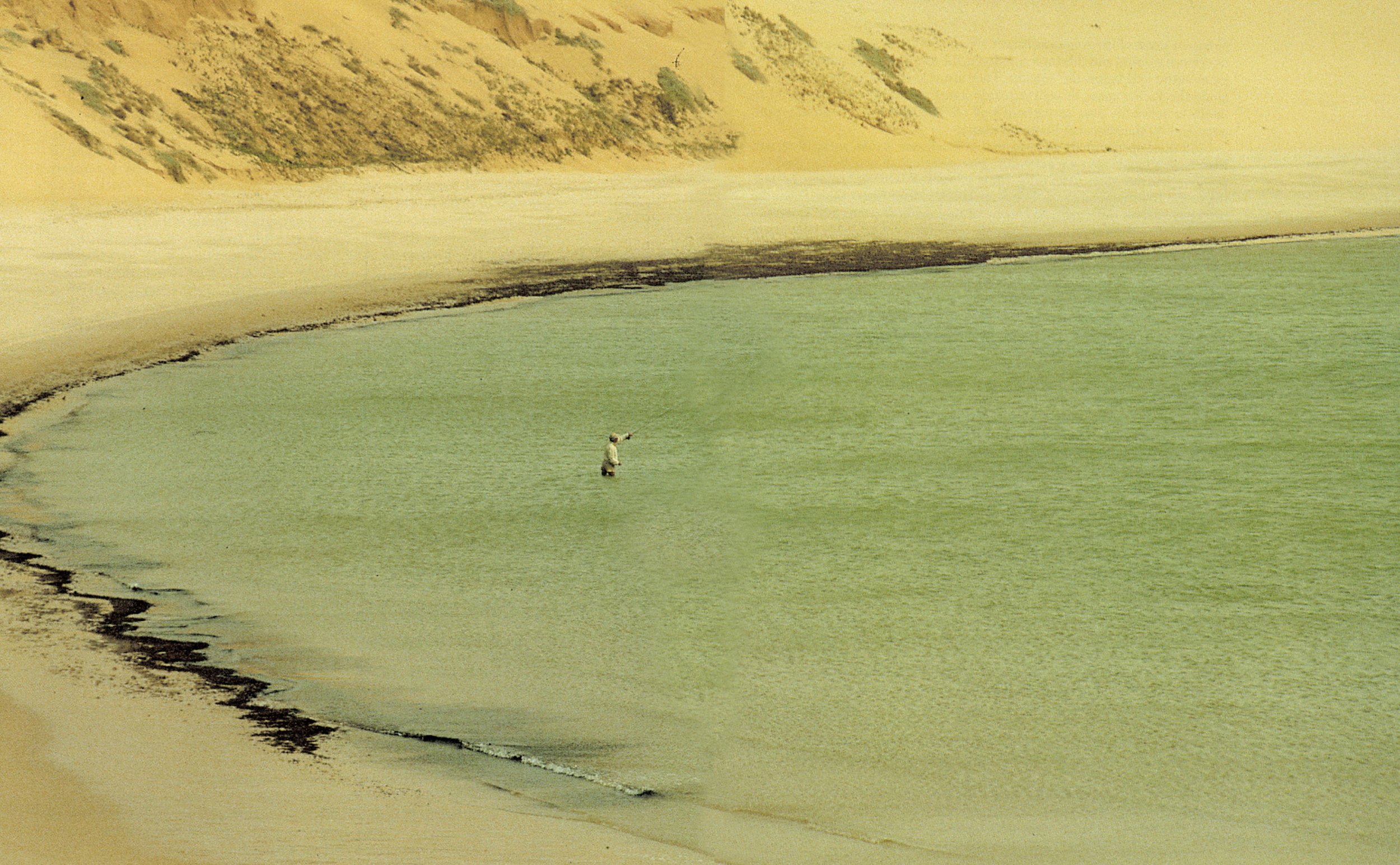
Trey Combs casting for trevally on the north coast of Bazaruto Island, Mozambique, from Bluewater Fly Fishing.
With all this in mind, two years ago, as I began to approach retirement age, I spent some time going through all the books, articles, and boxes of 35mm slides he had accumulated. As someone who completed a Ph.D. dissertation and enjoys research, I realized that I was looking at a seminal body of work that needed to be preserved. So I started Trey Combs Fly Fishing Publications and began to build an online archive of his work.
Most people who have read fishing books over the last 30 years recognize Dad’s name, but going through the writing in detail, I’ve realized he wrote about more than just fishing. He wrote about a culture change in the world of fly fishing — a transformation from Victorian ideas about fly dressings for North Atlantic salmon to a whole new genre of flies meant for steelhead.
The names I remember hearing from the other room as he talked to his publisher Frank Amato were Syd Glasso, Jim Pray, Mike Kennedy, Wes Drain, Roy Donnelly, Lloyd Silvius, Al Knudson, Walt Johnson, Ralph Wahl, Zane Grey, Dave McNeese, and of course, Harry Lemire. Even more amazing to me is that he tracked down, interviewed, and collected fly dressings from these icons before we had email, zoom, or text messaging. He had to call, write letters, and drive to their homes.
The flies from these men were all featured in Steelhead Fly Fishing & Flies, a book that took five years to write and remained in print for 29 years. Finally, typical of Trey, who was never about the money but always about the love of the sport, donated many of the flies from this book to the American Museum of Fly Fishing.
So it is with great pride that, as I write this Father’s Day tribute in 2026, our website has become a popular archive that will remain free and devoid of advertising. It is my way of preserving not only his work, but also the life behind it — a life spent chasing fish, telling stories, documenting a culture, and leaving something behind for the rest of us.
Happy Father’s Day!
– Mark Combs