Modern Anglers And Their Fly Patterns: Mikael Frödin
More than thirty years ago, Steelhead Fly Fishing included a section called “The Anglers and Their Fly Patterns.” It recognized the people who had helped shape the sport through skill, influence, innovation, and a lifetime spent around rivers and fish. Now, more than three decades later, the steelhead world has changed. The rivers are more pressured. Wild fish are less abundant. Conservation is now part of the conversation whether we like it or not. With that in mind, this new series looks at well-known modern anglers, guides, advocates, and teachers who are helping shape steelhead and salmon fly fishing today.
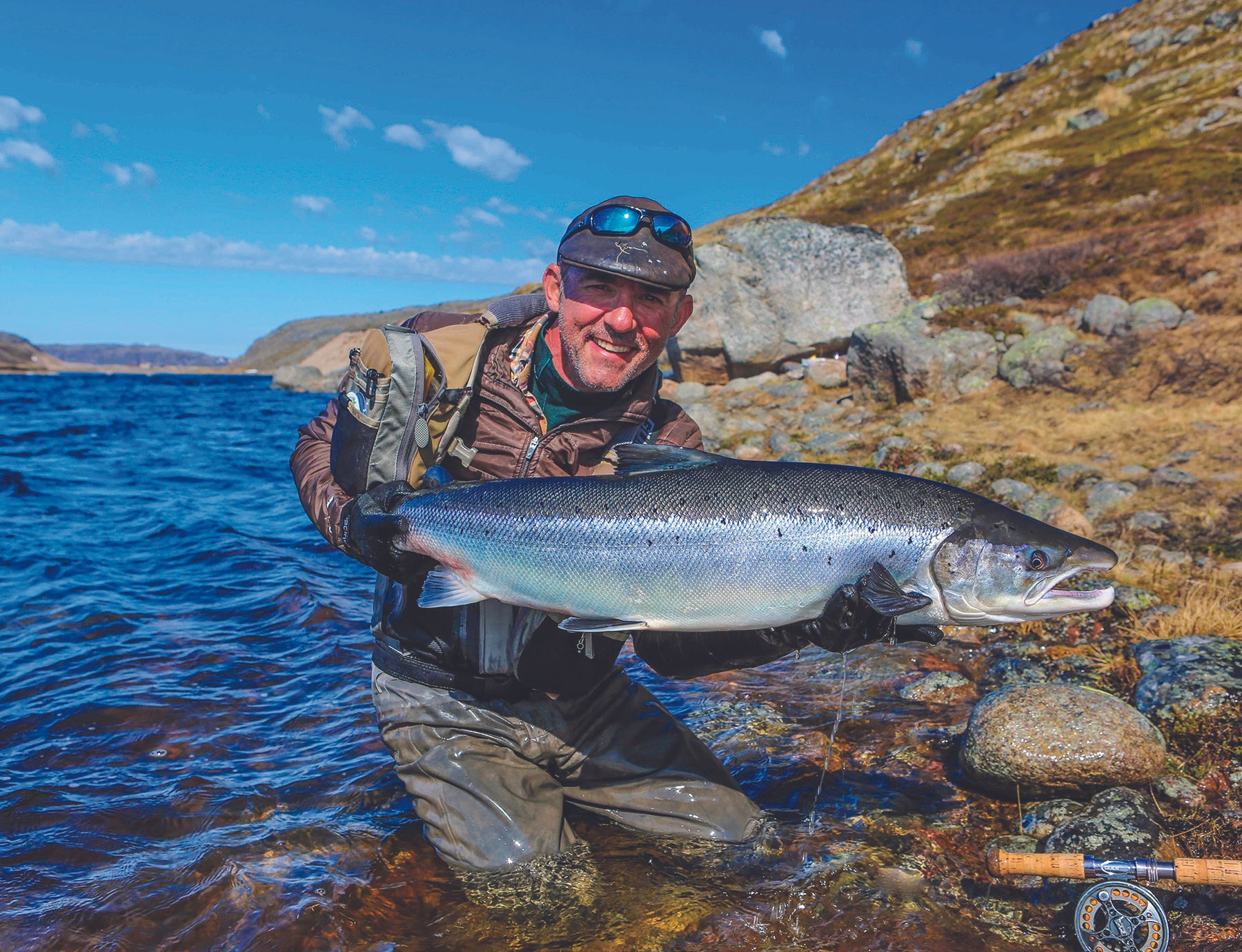
The second of these profiles is Mikael Frödin.
I’ve long believed that Scandinavians in general and Swedes in particular have led the way in the development of tube flies, primarily for Atlantic salmon—but certainly for sea-run brown trout, the legendary sea trout of European lore, and for our Pacific salmon and steelhead as well.
Mikael Frödin more profoundly underscores this opinion than anyone else in the world. The flies that he and Håkan Norling, his close friend, during many years guiding on Norway’s Gaula—especially on the river’s Gaulfoss Frøset and Bogen Reppe pools—are imitated and serve as an inspiration for endless variations on the originals.
Frödin, ever the precocious child, introduced himself to fishing as a five-year-old. His father was a physician who’d bought a summer house on Sweden’s Lake Onsorjan in 1966. The property had an old plywood canoe left behind by the previous owner. He was the lone kid around, in an area of forest lakes and farms, and the canoe became his magic carpet to a new world of fishing.
At this time his grandfather purchased a book for him about fishing the Morrum for salmon. This river and the Em had runs of Baltic Sea salmon that were among the largest in the world. Mikael read the book Salmon in Morrum by Hans Lidman (1962) until it fell apart. The famous river, together with river Dalälven, became Mikael’s “home river” while his professional guiding life would soon take him to Norway.
These influences set the stage for an event that would change the 10-year-old kid to an angler to be taken seriously. Mikael hooked a huge pike while out on the lake in his canoe. The commotion alerted his grandfather who launched a rowboat and helped Mikael land the fish. The pike was longer than a yard. Mikael held it across the handlebars of his bike while he pedaled to a neighboring farm to have it officially weighed: 12 pounds.
When the next Napp & Nytt catalog came out, Mikael Frödin was named in the record section, and he’d won a bronze medal. This was the first of what would become a lifetime of recognition for his writing about Atlantic salmon and the salmon flies he’d developed.
When Mikael was a teenager, he took an adult assessment of his situation. Fishing was his passion, but he needed money to pay for it. The answer was found in fly tying—if he could become sufficiently skilled to sell his creations professionally. The youngster was only 14 when he sold his first flies to a store in Uppsala, his home city near Stockholm, Sweden’s capital. Mikael then advertised his fly-tying skills in a fishing magazine. The orders he received generated repeat businesses; soon demand for his flies filled his spare time. Mikael’s life as a professional fly fisher had begun.
The funds enabled Mikael to fish the Morrum, a big-league Swedish salmon river that, with the nearby Em, competed with the best salmon rivers Sweden had to offer. These were Baltic Sea salmon, fish that lived their entire lives in the Baltic where diets were so dominated by herring that their flesh was almost white, not pink.
Mikael started fishing sea trout and salmon on the River Dalälven at the age of 13. Years before he could get a driver’s license, Mikael began taking the train from Uppsala to Morrum, where he began fly fishing for salmon, a legacy from the book his grandfather had given him years earlier. When he got his driver’s license when he was 18, it became much easier to get to the Morrum. Mikael simply says he fished a lot and he was successful. This brought him local attention, word spread, and he received an invitation to guide on Norway’s Gaula, one of the world’s premier salmon rivers.
But Mikael was 23 before he headed north, the gap in time taken by a couple things that may say as much about the man as about his fishing. The first was a trip around the world. The second was sailing, which he did with such skill and determination that it landed him on Sweden’s national team. Mikael told me that back then, “I moved like a panther.”
Today Mikael lives in Knivsta, an hour’s drive from Stockholm, when he’s not giving lectures and fly-tying demonstrations, or fishing some of the world’s most famous salmon rivers in Norway, Scotland, Canada, Iceland and Russia’s Kola Peninsula. Fishing alone may still occupy him for over 250 days a year.
Most fly fishers meet Mikael Frödin, as I did, on the Internet, where his how-to fly-tying videos and entertaining commentary are tutorials on the latest in tying Scandinavian-style tube flies. Mikael has developed six basic tube-fly styles. All six have a teardrop shape, a meteor-like look with a long, ever-thinning tapered wing.
The designs coming from endless phone calls and fishing adventures with his best buddy Håkan Norling. Their obsession for how the fly behaves in the water is what led them to dream up the new, soft-swimming flies that changed the way we look at salmon flies. This innovative period started some 40 years ago—it is still going on.
Today, his six broad categories of flies are Frödin’s Classic Series and the related Classic Micro Series, the Samurai Series, the Butterfly series, the Surface series and the Tungsten Turbo Tube (TTT)/Brass Turbo Tube (BTT) Nobody Series. Frödin might have several dozen patterns within each of these categories. Like most acclaimed fly dressers, Frödin has a few patterns that have been such popular standbys, they are modern-day classics. While other patterns come and go, as new materials become available, Mikael likes to continually experiment to give all his dressings a fresh look.
Taken as a whole, Frödin’s Classic Series alone—in many sizes—competes with any “classic” series of traditional U.K. salmon flies and North American steelhead flies.
When Mikael began guiding on Norway’s Gaula in the 1980s, two other local hotshots were guiding there too: Håkan Norling and Roland “Rolle” Holmberg. This trio of Swedes changed the trajectory of Norwegian salmon fishing; each would become lionized in the arcane world of Atlantic salmon fly fishing.
Mikael had perfected techniques for taking salmon and sea-run brown trout during late winter when rivers were running high, dirty and cold. He used these sinking-line techniques with such success on the Gaula—when locals were casting lures with spinning gear into the frigid currents—that it became a story in the local newspaper: SWEDE TAKES JUNE SALMON ON FLY.
Håkan was known for the Temple Dog style by reversing the hair in tying in the wing. Håkan and Mikael set the design on a fly with a teardrop shape that would swim and fish so well that it became the Scandinavian standard. As Mikael likes to say: “A great fly should look like it will bite the leader and swim away by itself!” If you aim to be a serious salmon or steelhead angler, you must be always wondering what your fly looks like to the fish. Whether you’re tying flies to swim in Washington’s Queets for a winter steelhead weighing 25 pounds, or for an Alta salmon twice that weight, these tapered, soft-swimming flies will be part of your arsenal.
Besides the months spent guiding in Norway, Mikael found creative ways to get rod time on various rivers, especially public water in Sweden such as the Morrum, his home river. Mikael racked up 250 days a year on the water, either guiding or fishing. He was living with his parents and during the winter months he’d tie flies for clients.
Frödin was gaining an international reputation while guiding in Norway. This gave him lots of contacts and he met some of his heroes and some of the world’s most influential salmon anglers. Mikael spent weeks on rivers with Joan and Lee Wulff, Stan Bogdan, Billy Pate, Nat Reed and many other celebrities.
He began writing articles about fly fishing. But paying the rent was a struggle. Mikael said simply: “It wasn’t easy. Plenty of macaroni and sometimes no money left to buy any food.” He was able to support himself through his fishing. When his first child was born, article output increased. For the first time he was published in North America.
Mikael always had an interest in the history of flies. In the 1970s he started tying the old salmon classics and actually took his first-ever sea trout on a tube version of the Durham Ranger. Years of commercial fly tying had developed Mikael’s skills to such a degree that his classic flies became collectors items. He’d studied all the famous books on the subject, references by William Blacker: Flymaking, Angling and Dyeing (1842); John Henry Hale’s How to Dress Salmon Flies (1867); Francis Francis’s The Book of Angling (1897); George Kelson’s monument to the craft, The Salmon Fly (1895); and John James Hardy’s Salmon Fishing (1907).
While Mikael was guiding, tying flies and writing articles to support his family, he still found time to write a book about this golden age of salmon flies. Not only was he carefully researching the history of each fly, he was tying the fly as well. Anyone who has tied one such fly can only marvel at what a prodigious achievement Mikael accomplished in writing, tying and having the flies photographed for his book Classic Salmon Flies: History & Patterns, published in Gothenburg, Sweden in 1991 and in New Jersey a year later. The book was published in five languages and sold some 50,000 copies, a remarkable number given the esoteric nature of the subject. Mikael was 30 years old and now internationally famous in the world of Atlantic salmon flies.
Several years ago, Mikael Frödin passed the 6,000-fishing-day mark in his remarkable life studying, worshiping and fishing for Salmo salar. When he began guiding in Norway in 1979, on the Gaula, he had already guided professionally for months and personally fished for days. Guiding means exactly what it sounds like: you guide anglers to fish a river and your reputation is built on their success. Carrying this out faithfully requires intense concentration. At the end of a fishing day a good guide is exhausted. You must analyze the water being fished in terms of the skills your sport possesses. If the person can cast only 60 feet and you ask him to cover a lie 80 feet away, you’re guiding a person you’ll never see again.
Guiding other people to fish is an intense learning experience for the guide. Unlike your client, you have time to follow the fly and see what just happened, something rarely noted by the angler. When you’ve seen that 1,000 times, you begin to make sense of it even when it’s at odds with conventional wisdom. Mikael’s guiding led to related professions: fly tying, two-handed casting lessons, lectures, writing articles, making videos and representing companies all came into play as a result of his growing celebrity. The result was less time spent guiding and more time fishing.
He organized his salmon dressings based on traditional styles, color combinations, size for seasons, time of day and water conditions. Here, his remarkable amount of rod time helped validate how he began assembling his Classic Series. In short, Mikael had hard-won opinions as to what conditions would be in play to promote the use of certain fly dressings.
Mikael was intrigued with how a fly swims, like Frank Lloyd Wright’s “form follows function.” Purely by chance, he discovered a tank with a current set up at a local outdoor show. He was shocked at how much a traditional tube swam butt down, weighted at the rear by the weight of the hook, even in the moderate current.
Mikael began working on flies where the weight forward cone would help to balance the weight aft. He set up a current tank of his own and began testing various fly designs and how they were weighted. He discovered that the smaller the head, the less turbulence was transferred back to the fly. The big head, a trademark of the inexperienced tier, created more turbulence. A cone over the head created still more turbulence and life in the fly. This led Mikael to invent the turbo cone, a dish-shaped cone of various sizes and configurations, intended to direct the flow of water over all or parts of the fly. To optimize the radical-looking cones, Mikael mixed fox, dog, kangaroo and the softest hackles available with synthetics. And these materials were being added to annually with more colors and finer textures. There was also the matter of dubbing which was going through an explosion of colors and textures, including metallic. Mikael would incorporate the materials in artful and altogether new ways.
As he field-tested the flies, catching thousands of salmon in the process, he passed the staggering mark of 6,000 days on the water. Mikael’s restless spirit continues to drive him to create a new dressing to add for an established series of flies, or to become the inaugural fly in an altogether new series. He is forever on the hunt for the perfect tube fly.
Johan Greus, in his article “Mikael Frödin: A Pioneer of the Scandinavian Style,” asked Mikael that if forced to limit his fishing to only three flies, each in various sizes, what would be his choices? He picked the Pahtakorva, Green Samurai and (perhaps) the Black-Green Helmet.
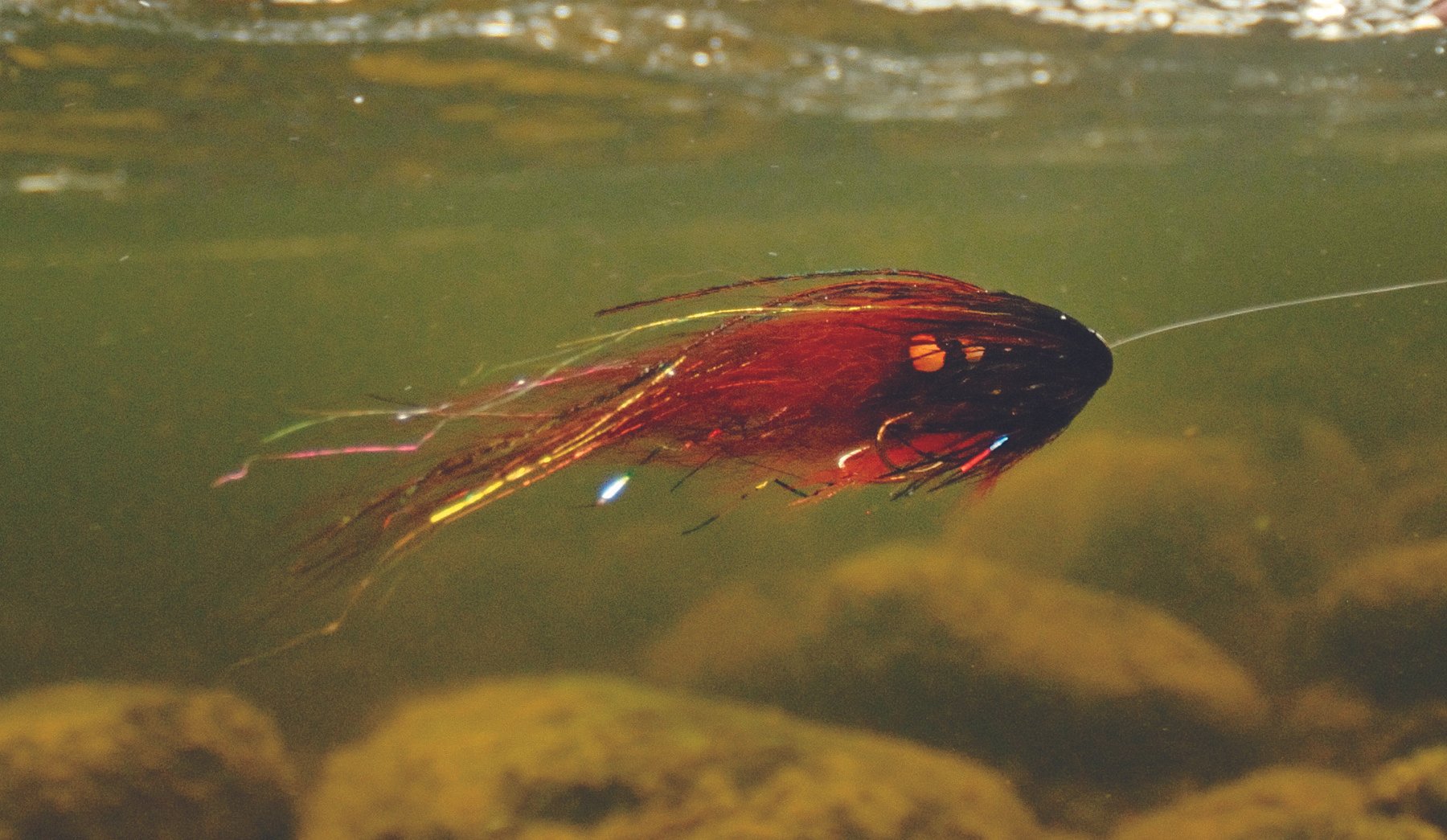
The Pahtakorva is Mikael Frödin’s most well-known pattern; it has taken thousands of salmon. “I fish it early and often,“ he says. “Every year this fantastic fly gives me some of my best fish. No matter where I go it simply works.” The Pahtakorva was voted by the ghillies best fly on the best river in the world: Alta.
Simple waking tubes and Bomber-style tubes with reversed turbo cones set at their fronts is classic Frödin—clever, cutting-edge flies for both salmon and steelhead.
Frödin’s genius is on full display with his invention of the Turbo Cones, and then customizing their shapes depending on the profile he’s aiming to achieve. He describes their use as follows: “The cone divides the water and creates turbulence that will make your fly move and come alive. With the Turbos you can use the softest materials without them collapsing in the current—all to create the perfect swimming fly.”
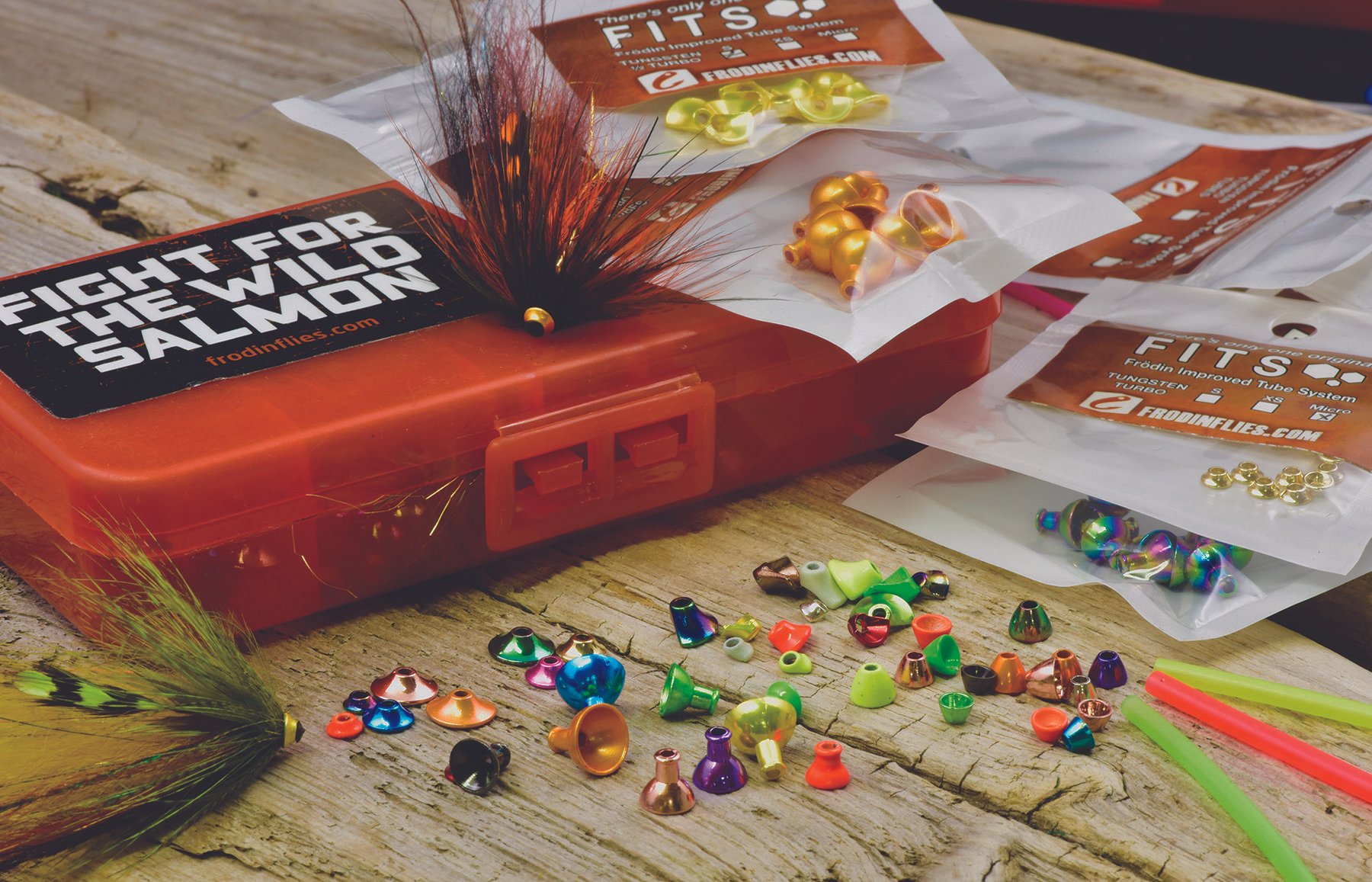
Mikael created the Frödin Integrated Tube Fly System (FITS) in a nearly infinite combination of sizes and colors to make it easy for the tier to select and match materials to please the eye—and the fish. He uses his custom-colored “SSS” craft products, his Salar Synthetic Series, in 15 colors, to dress flies from a six-inch Temple Dog-style to Micro flies less than an inch long. His original “Turbo Cones” create turbulence and make the fly come alive.
His first Turbos were brass and generally gave the fly a medium sink rate. That said, the fly’s sink rate depends on the thickness of the cone’s walls, and the diameter of the cone in terms of the size of the fly and how it’s dressed, whether a sparse Fran N Snaelda or an overdressed Intruder.
Frödin also offers the traditional bullet head cone in tungsten. The amount of turbulence the FITS Tungsten Cone generates less than the Turbo Cones and more than the traditional tube/liner tube head. These cones are manufactured with thinner walls and as a result they better cover the head of the tube. The tradeoff is a lighter cone and a slightly reduced sink rate.
Save for the Rubber (soft plastic) Turbos, all of Frödin’s cones are designed to balance the fly with the addition of front end weight sufficient to prevent the hook from dragging down the rear of the fly. Frödin ties flies with materials that promote fly action in even the lightest currents. Keeping these flies swimming in the horizontal while leading them into soft water is his goal, and his flies do just that better than any other Scandinavian tube flies.
Mikael Frödin’s “Classic Series” of salmon flies pays homage to Hakan Norling, his close friend and the man he calls “Mr. Temple Dog.” Mikael refined these flies in ways useful and clever. The wing is tied in with ever-longer materials so that the finished wing will taper upward to the dorsal run, the longest part of the fly. During the final tying steps, hackle is wound around the head. Then a small bunch of winging material is tied in so that it splits the hackle. This prepares the fly for the Half-Turbo Cone that covers the hackle and honors the split, i.e. the current running through the dorsal opening in the cone, and producing greater turbulence on the ventral side to animate the hackle.
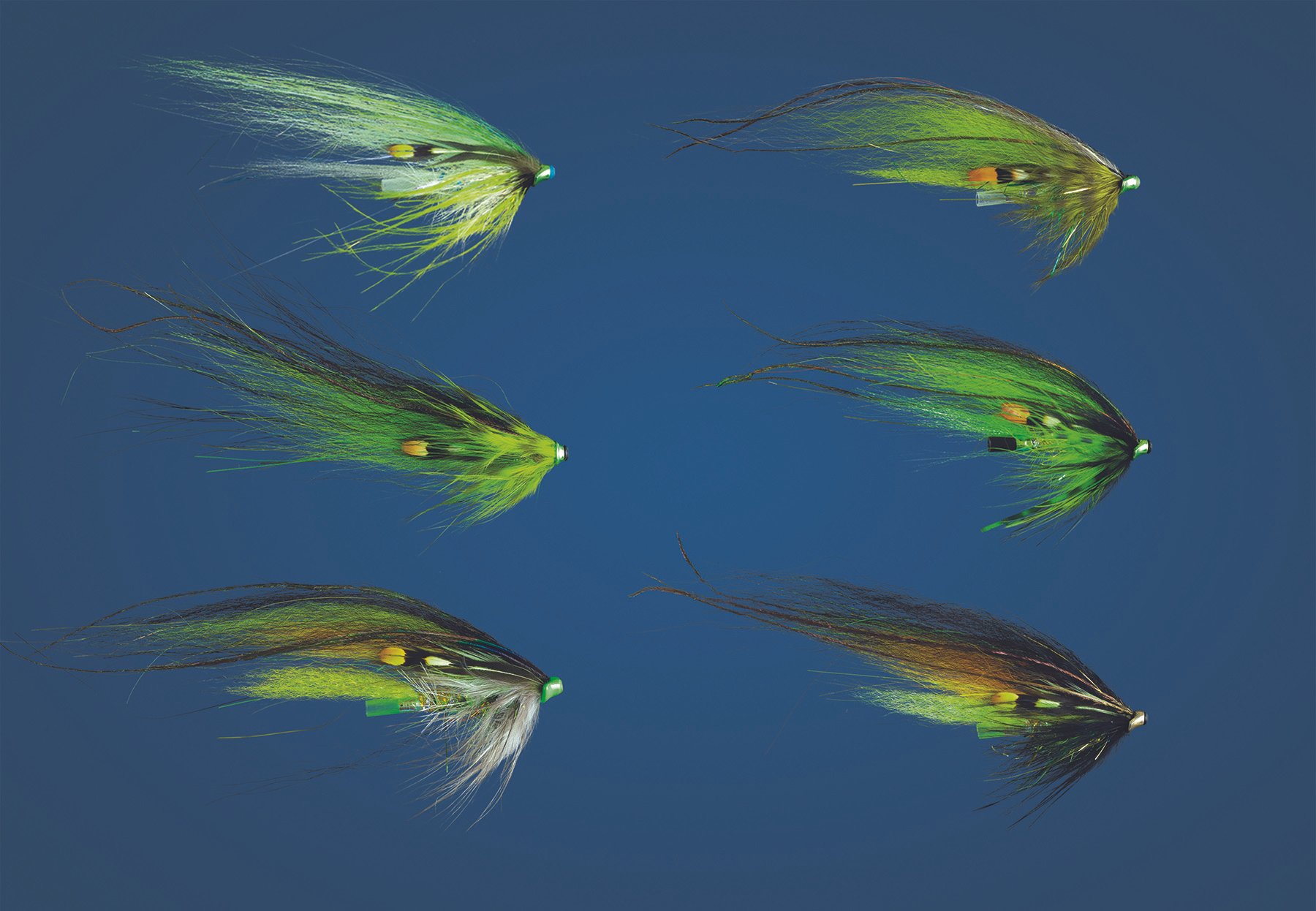
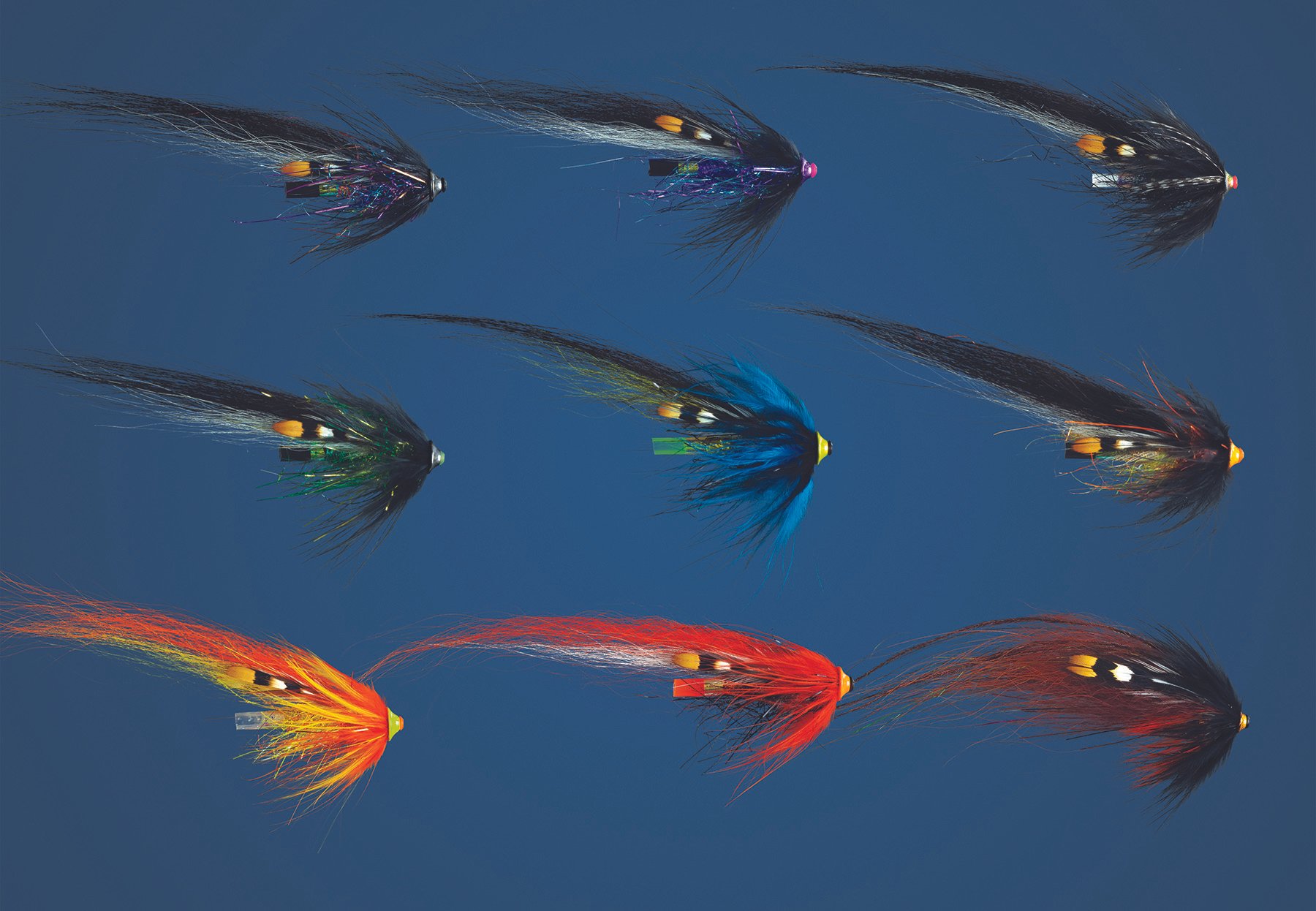
Top row, left to right: Nanook Classic, Grey and Green Classic. Second row, left to right: The Witch Tungsten Turbo Tube (TTT)/Brass Turbo Tube BTT, The Witch Classic. Third row, left to right: Greenlander Classic, Scott Classic.
This refinement distinguishes Mikael’s Classic Series. Each of the series that follow—the Samurai, Nobody, Micro, Spey Fly and Surface Fly—have similar elements in their construction that makes them unique.
Mikael groups his flies by purpose, much as steelhead fly fishers do, to best fish the river whatever conditions encountered, from high and discolored, to low and gin-clear. But he also chooses a fly to fish with the water low and clear under a cloud cover, and the same river in sunshine. He’ll pick a fly for the hour or two of dusk, and a fly for “night,” hour of half-light on the rivers above the Arctic Circle. He also strips a Samurai on the swing to increase the speed of fly across the currents, or fishes far and fine with a micro fly to entice picky salmon. Even the parts of a run might demand a different fly for a different approach. Mikael Frödin describes the flies each in terms of characteristics in salmon flies.
“If you fish a pool with just one fly the only thing you can be certain about is that you fished most of the pool with the wrong fly!” Mikael says. “The fly they see is everything!”
Frödin’s Samurai series is an obvious choice of a fly type to transition into steelhead fly dressings. The sparse wing cuts through currents like a saber while responding to the most subtle of currents. Action to the wing comes from the turbulence generated by water through the dubbing necklace, and the large 360-degree Turbo Cone. There’s simply no other fly built as this. And note, the Turbo Cone can be tungsten or brass or plastic, options that can have the fly running deep for winter steelhead or barely breaking the surface for summer-run in low water.
Top row, left to right: Black samurai, Mikkeli Samurai, Zebra Samurai. Middle row, left to right: Green Samurai, Dee Samurai, Willie Gunn Samurai. Third row, left to right: Torrish Samurai, Ally Samurai, Pahtakorva Tungsten Turbo Tube.
Frödin’s black-over-white all the Samurai wings are a reflection of the fly’s Collie Dog and Sunray Shadow bloodlines. Steelhead fly fishers using the Samurai for a blueprint need not do this because they’re fishing for a different fish and because they’ll likely be fishing it differently. I’ve fished a Samurai fly composed of a black wing and a dubbing hackle necklace of hot orange—that was pretty much it. These are classic steelhead colors and, of course, the fly caught fish. I have barely scratched the surface. Imagine for a moment the traditional Skykomish Sunrise converted to a Samurai. The tie is far more simple than the original. Wing of white fox, body red, front “hackle” of red dubbing, followed by yellow hackle. Nothing kills the action of the fly more completely than overdressing the wing.
Frödin designed the Samurai to be fished fast. He achieves this by leading the fly with the point of his rod and, if necessary, making a downstream “mend” to create belly in the line, the current increasing the speed of the fly as it’s dragged around—the “crack-the-whip” principle. The angler increases the speed of the fly still further by stripping in the fly line. None of this can be achieved if the fly is back mended, i.e., mended upstream so that the fly is pointing upstream rather than across stream. But the Samurai, sleek as a fighter jet, can be fished in all manner of ways, from chewing through the surface film to bouncing off rocks on the river bottom.
The Samurai Series, along with the Classic Series, are flies designed to accommodate a double hook pointing down and tucked in well forward. The tube is kept short and the wing long, so the wing is not likely to tangle with the hook. The double hook also gives the fly a definite dorsal-ventral attitude. The fly isn’t tied in the round and swims as it was tied. This can be retained if the single hook is heavy gauge. The fly needs this weight for its directional stability, like a sailboat needs a keel.
In just a decade or so Samurai flies have taken 10,000 fish in rivers around the world.
To learn more about Mikael Frödin’s flies, materials, films, rods, reels, and ongoing work for wild salmon, visit Frödinflies at www.frodinflies.com. Frödinflies is a Swedish fly-fishing brand built around serious salmon fishing, innovative fly design, and a deep respect for wild salmon and the waters that sustain them.
This essay is a 5,000-word excerpt from Trey Combs’s full 18,000-word chapter on Mikael Frödin in Flies for Atlantic Salmon & Steelhead. The complete chapter includes 23 total images, including 10 fly plates.
Flies for Atlantic Salmon & Steelhead includes additional classic salmon and steelhead patterns, dressing notes, and images. The book is available directly from the author in two formats through Amazon.
Limited 1st Edition Hardcover — available on Amazon
Digital Reference Edition — available on Amazon Kindle