Thompson River Steelhead — The Fisheries (Pt. 2)
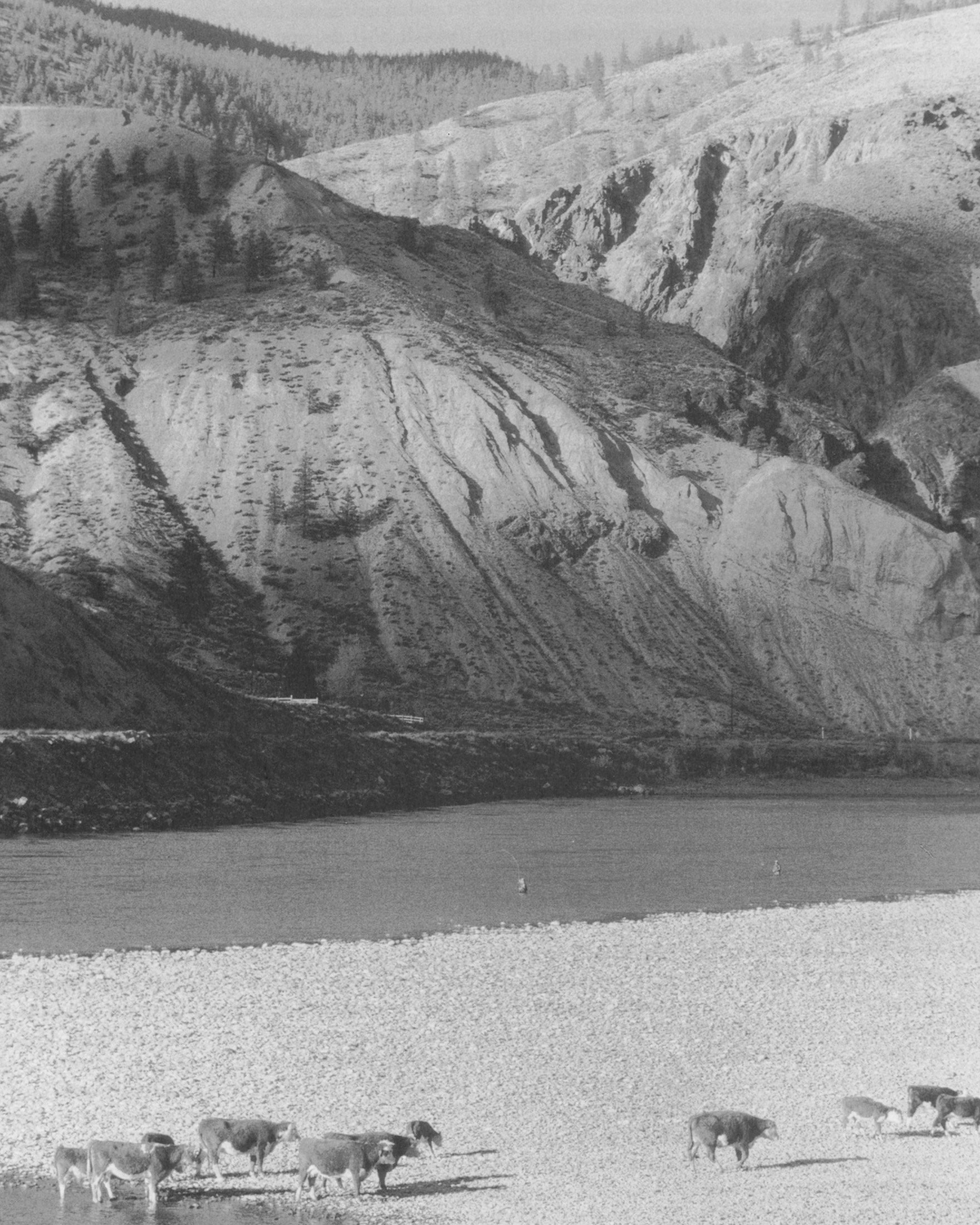
Graveyard Pool on British Columbia’s Thompson River. Photograph from Steelhead Fly Fishing (1991) by Trey Combs.
Part 2 – The Fisheries
Millions of pink salmon migrate up the Fraser during odd-numbered years. Some spawn in the Thompson, but most will spawn in the Fraser. These fish are a valuable food fish whether canned as “pink salmon” or sold fresh when caught as an ocean fish. They deteriorate rapidly on their spawning migration and are caught mostly as a recreational gamefish, or harvested for their roe.
The Fraser River’s chum salmon—the magnificent high-seas “silverbrights”—have always conflicted with efforts to safeguard Thompson steelhead. Their spawning migration perfectly masks steelhead returns in October and November. The chums deteriorate rapidly in freshwater as hormones transform the fish from ocean predator to spawning organism. Often the dramatic color change males undergo, a vivid purple splotching, begins in saltwater. Equally dramatic, the male’s jaw becomes hooked and ends with long canine-like teeth, an appearance that has given the species the name “dog salmon.”
As these physical changes take place, the chum’s flesh ultimately deteriorates so completely that their marginal value as cat food isn’t worth the labor of harvesting. But it’s at this very time that the female chum salmon can be harvested for their roe, a most valuable product that will be shipped fresh or canned to restaurants—mostly sushi restaurants—all over the world. The carcasses of the chums, the remains of the females and the males also caught in the gillnets, are dumped back into the Fraser to provide nutrients for young salmon and steelhead.
This industry is a notable success story for nearly a dozen bands of Indigenous peoples, and the reason why the few Thompson steelhead left that do not survive the nets set for chum salmon are unable to gain any protection under SARA, Canada’s Species at Risk Act.
The Thompson steelhead surviving the Fraser’s chum gillnet fishery reach the Thompson in relative safety from anglers because the river is closed to fishing and has been for years.
The Thompson steelhead must still survive an aboriginal fishery that is little managed, poorly documented, and with no licensing requirements. Cooks Ferry Indian Band engage in “pitch lamp” fishing whereby a fire basket of burning pitch hangs from a boat and illuminates the river shallows. A man stands on each side of the boat with a spear while a paddler moves them along to hunt for steelhead that sluggishly move about in the icy currents. They spear “chothleh” as a subsistence fishery, one that is now largely ceremonial.
Nevertheless, this annually takes place and steelhead are killed in this manner. Also, any steelhead killed by a First Nation person won’t be contested in the courts regardless of whether the Native is part of a tribal band with federally granted fishing rights for taking the wealth of salmon riches in the Fraser.
This Essay Is Part of a Series
Essay: Thompson River Steelhead — The River (Pt. 1)
Essay: Thompson River Steelhead — The Fisheries (Pt. 2)
Essay: Thompson River Steelhead — The Ocean Migration (Pt. 3)
Essay — Trey Combs
Trey Combs is the author of The Steelhead Trout, Fishing the High Country, Steelhead Fly Fishing and Flies, Steelhead Fly Fishing, Bluewater Fly Fishing, and Flies for Atlantic Salmon & Steelhead