This is the first in a series working through The Salmon Fly: How to Dress It and How to Use It by George M. Kelson (1895). The language is very much of its time, so rather than reproduce it, I’ve tried to read Kelson closely—what he’s actually saying, and how those ideas carry into modern steelhead and salmon fly fishing.
Kelson opens chapter 1 of The Salmon Fly with a simple idea: if you want to be a better fisherman, you need a system.
He’s pushing back against the idea that fishing should just be instinct or feel—that thinking too much somehow takes the fun out of it. Kelson doesn’t buy that. His view is straightforward: without some kind of system, you lose fish, and you don’t really understand why.
A big part of this chapter is his distinction between understanding and imitation. He’s critical of what he calls “rules-of-thumb”—things that work in one place, at one time, under one set of conditions, and then get repeated without much thought. Those approaches can work for a while, but they tend to fall apart when something changes.
What he’s really arguing for is a different kind of thinking. Instead of copying what worked yesterday, you pay attention to what’s happening now. That way, when conditions change, you can adjust. The difference is subtle, but important—it’s the difference between relying on habit and actually knowing what you’re doing.
Kelson uses the word “science,” but he doesn’t mean anything complicated. He’s talking about paying attention, trying things, and learning from what happens. Fishing already works this way—most anglers just don’t organize their thinking around it.
One of his more interesting points is about observation. He notes how easy it is to think you saw something that you didn’t. A fish refuses a fly, and you assume it was the color. Or you hook a fish and think it was the pattern. But often the real reason is something else entirely—depth, position, movement. Without careful observation, it’s hard to improve.
From there, he moves into the practical side. He points to three areas that matter most: the rod, the cast, and the fly. These aren’t separate decisions. They work together. Change one, and it affects the others. When things aren’t working, the problem is often in how these pieces are working together, not in any single part.
Even though Kelson is writing about Atlantic salmon, the same ideas carry straight over to steelhead. A fly doesn’t just “work” on its own. It works in a certain setting.
Low, clear water usually calls for something more restrained. Higher or off-color water lets you show more. Light matters too. What looks right on a cloudy day may not look right in bright sun. These are small adjustments, but they add up.
One of the most interesting sections in the chapter comes from his underwater observations. He describes how a fly actually looks below the surface—not sitting still, but moving with the water. Materials shift. Hackles move. Even in slow water, there’s life in the fly.
From that, he draws a useful point: not every fly needs to be worked hard. Some of them already have movement built in. Overworking them can actually make them look less natural, not more.
Kelson also takes issue with the idea that fish are “capricious.” He doesn’t think fish are unpredictable for no reason. If a fish refuses one day and takes the same fly the next, something has changed—light, water, angle, presentation. Calling it luck doesn’t explain anything, and it doesn’t help you improve.
He also puts more importance on fly dressing than most anglers might expect. Not as decoration, but as function. Being able to adjust a fly—change it slightly, or tie something different on the spot—can make a real difference. Sometimes one small change is enough to turn a refusal into a take.
In the end, he comes back to his main point. There will always be days when nothing works. But those days happen less often if you’re paying attention and making adjustments.
The idea is simple: the more you understand what’s going on, the less you rely on chance.
By Mark Combs
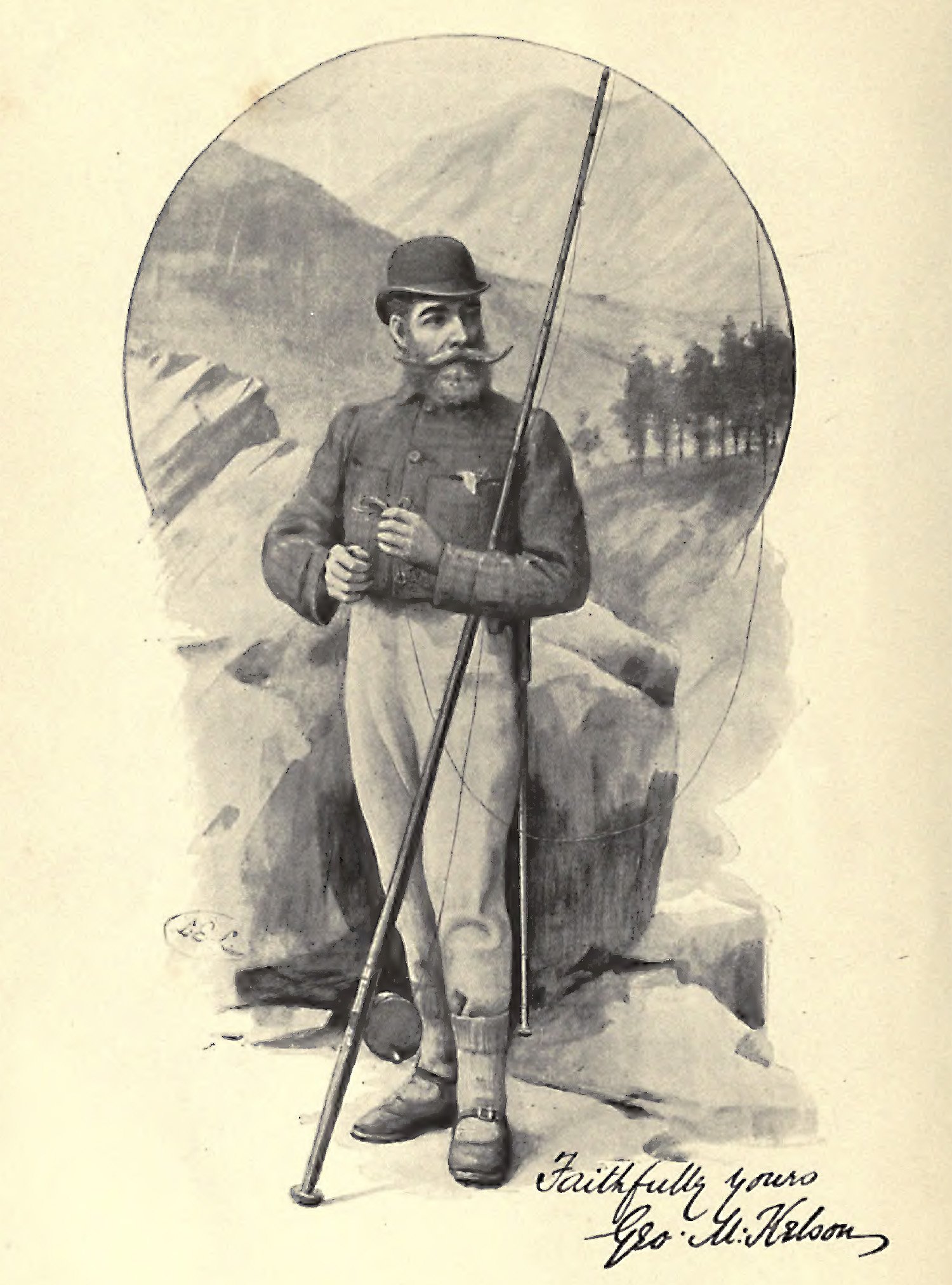
George M. Kelson stands as one of the most important Victorian voices on the tying and design of salmon flies, bringing a level of thought and structure to the subject that still holds today.