This is the second in a series working through The Salmon Fly: How to Dress It and How to Use It by George M. Kelson (1895). As before, the goal isn’t to reproduce Kelson’s language, but to read him closely—what he’s actually saying, and how it carries into modern steelhead and salmon fly fishing.
Chapter 2 moves from theory into structure.
If Chapter 1 is about thinking, Chapter 2 is about definition. Kelson is trying to bring order to something that, even in his time, had become inconsistent and difficult to communicate: what a fly actually is, how it’s described, and why that matters.
His starting point is simple. If you can’t describe a fly clearly, you can’t understand it, reproduce it, or improve it.
He pushes for a standardized way of describing flies—always in the same order, always using the same terms. Not for formality, but for function. A fly should be something you can hold in your mind as a complete structure, not a loose collection of parts.
What he’s really doing here is building a language.
Once that language is in place, he breaks the fly down into its parts—tag, tail, body, hackle, wing—and shows how each piece fits into a sequence. This isn’t just about tying. It’s about seeing the fly as a system, where each element has a role, and where order matters.
Kelson even provides a diagram labeling each part in sequence, reinforcing the idea that a fly can be described—and understood—as a complete system.
And that idea carries forward: when something goes wrong, it’s rarely random. It’s usually a failure of proportion, placement, or interaction.
From there, Kelson moves into classification.
Unlike trout flies, which can be organized by the insects they imitate, salmon flies don’t have a natural system. So he builds an artificial one, choosing to classify flies by wings rather than bodies.
His reasoning is practical. Wings show as much variation as any part of the fly, they reflect local preference, and most importantly, they are the dominant visual feature. For Kelson, the wing is the “leading article” of the fly.
He lays out a working system:
Whole feather wings
Topping wings
Strip wings
Built (married) wings
Mixed wings
Grubs (wingless patterns)
This classification becomes much clearer when seen visually, as Kelson illustrates through a range of wing types.
This isn’t rigid taxonomy. It’s functional grouping. Each type behaves differently in the water, and that behavior is what matters.
That leads into one of the most useful sections in the chapter: how different wing types actually perform.
Whole feather wings hold their shape in turbulent water
Topping wings are effective in bright light and clear conditions
Strip wings offer control but are less favored over time
Built wings create strong contrast and work well in high or early-season water
Mixed wings provide the most movement and excel in slower water
Grubs are especially effective when fish have seen too many winged flies
Kelson isn’t saying one fly is better than another. He’s saying each fly has a place, and that place is defined by water, light, and pressure.
From structure and classification, he moves into something deeper: what makes a good fly.
He narrows it down to a few core ideas, but two stand out above everything else:
Strength
Symmetry
Strength is straightforward. A fly has to hold together through casting, current, and the fish itself. But Kelson is careful here—strength isn’t about using more material. In fact, too much material often weakens the fly rather than improving it.
Symmetry is where the chapter sharpens.
He doesn’t mean symmetry as decoration. He means balance—how the fly behaves in the water.
A properly balanced fly tracks straight, holds its shape, and moves in a controlled way. An unbalanced fly wobbles, twists, or collapses, hiding its materials and breaking the intended presentation.
If the fly doesn’t behave correctly, nothing else matters.
This connects directly back to Chapter 1. If the fly itself isn’t doing what you think it is, then observation becomes unreliable. You can’t learn from results if the system is flawed.
From symmetry, Kelson moves into movement.
A fly needs life, but controlled life.
Too stiff, and it looks dead. Too loose, and it loses form. Different conditions require different levels of movement. Rough water demands stiffer materials to maintain structure, while quiet water favors mobility. Smaller flies, in particular, require proportionally more movement to remain effective.
This is one of the clearest places where his thinking carries directly into modern steelhead fishing.
He then turns to color, treating it not as preference, but as something that can be studied and repeated.
His core idea is simple. If something worked under certain conditions, your goal is to recreate those conditions as closely as possible. You can’t control light or water, but you can control the fly.
Sometimes, very small differences matter. Kelson describes situations where two nearly identical flies perform completely differently based on a single change in color.
From this, a few principles emerge. Color must be accurate. Materials must hold their color in the water. And balance of color matters more than equal amounts.
He also notes something many anglers eventually discover: slightly faded flies can outperform new ones.
From there, the chapter becomes more technical, moving through materials in detail—hooks, gut loops, tags, tails, bodies, hackles, and wings.
Kelson gives particular attention to the hook itself, treating it not as a minor component but as the foundation of the entire fly. Strength, shape, and temper all matter. A poorly made hook may fail under pressure or fail to penetrate properly in the first place. He favors the improved Limerick form and is critical of eyed hooks, arguing that they disrupt how the fly tracks and how the hook engages. As with everything else in the chapter, the emphasis is on function—how the fly behaves and performs in the water, not just how it appears.
On the surface, this reads like instruction. But underneath, the same idea repeats: every material choice affects how the fly behaves.
Not just how it looks, but how it moves, tracks, and presents to the fish.
One subtle but important point is perspective. The fish usually sees the fly from behind. That makes elements like the tag more important than they might appear—it becomes the leading edge of the fly from the fish’s point of view.
Kelson’s inclusion of grub patterns reinforces this point, showing that effective flies need not always conform to the standard winged form, as seen in the grub pattern he presents.
He also emphasizes experimentation. Even in 1895, Kelson is encouraging anglers to go beyond standard patterns—to test materials, observe results, and build knowledge through experience.
System doesn’t mean rigidity. It means structured experimentation.
By the end of the chapter, Kelson has done something important. He has taken something that can feel overly decorative—complex salmon flies—and reduced it to a working system.
Defined parts. Consistent structure. Functional classification. Clear performance principles.
And underneath it all, the same idea holds.
A fly is not something that simply looks right in the hand. It has to behave correctly in the water.
The finished plates in his work show how these principles come together in practice, where proportion, color, and balance are fully realized in complete patterns (see Image 4).
For steelhead, the translation is direct.
You can simplify materials. You can strip patterns down. But the underlying ideas don’t change. Proportion, balance, movement, and color all have to work together.
A fly that tracks clean, moves naturally, and shows what it’s supposed to show will outfish one that doesn’t—no matter how simple or complex it is.
In the end, Chapter 2 is about control.
If you can define the fly, build it correctly, and understand how each part contributes to its behavior, you move further away from guesswork.
The more control you have over the system, the less you leave to chance.
By Mark Combs
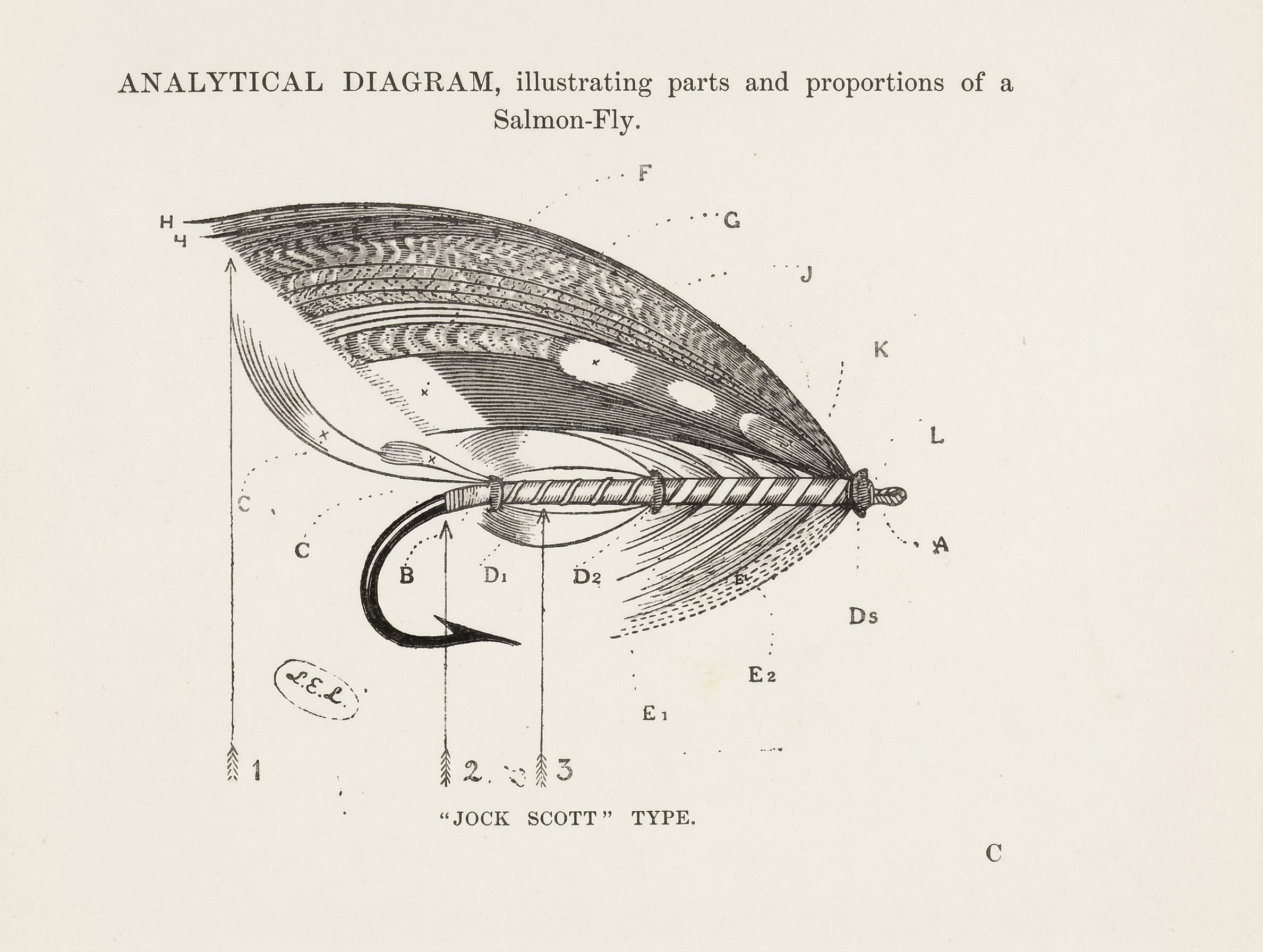
Parts of a Salmon Fly, showing labeled components and structure — Kelson (1895)
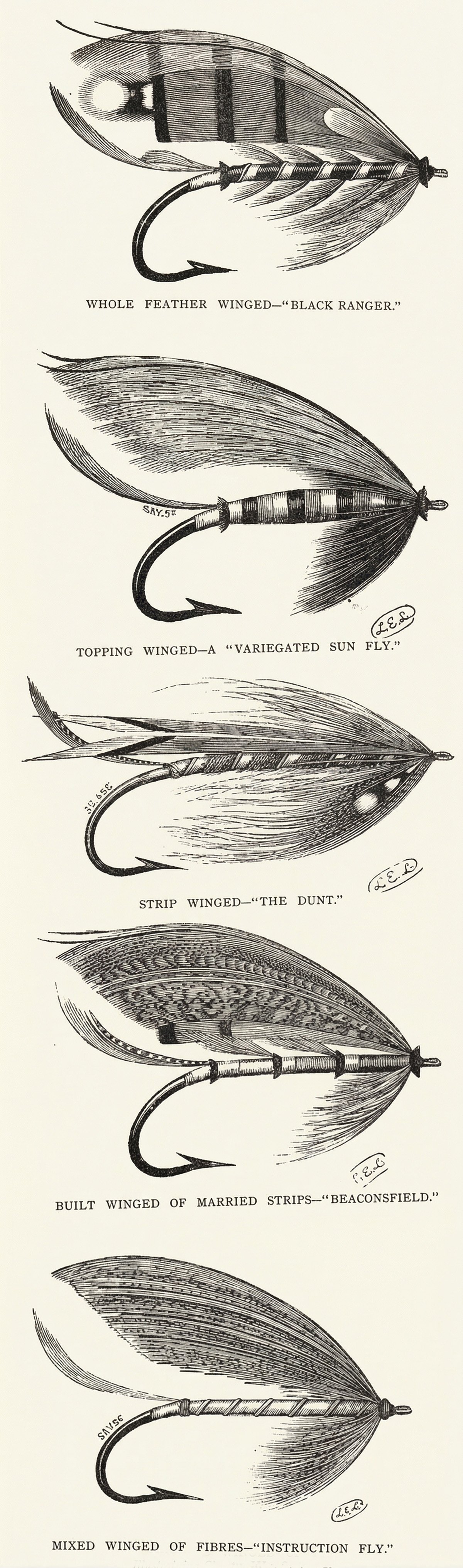
Salmon Fly Wing Types, showing variation in structure and form — Kelson (1895)
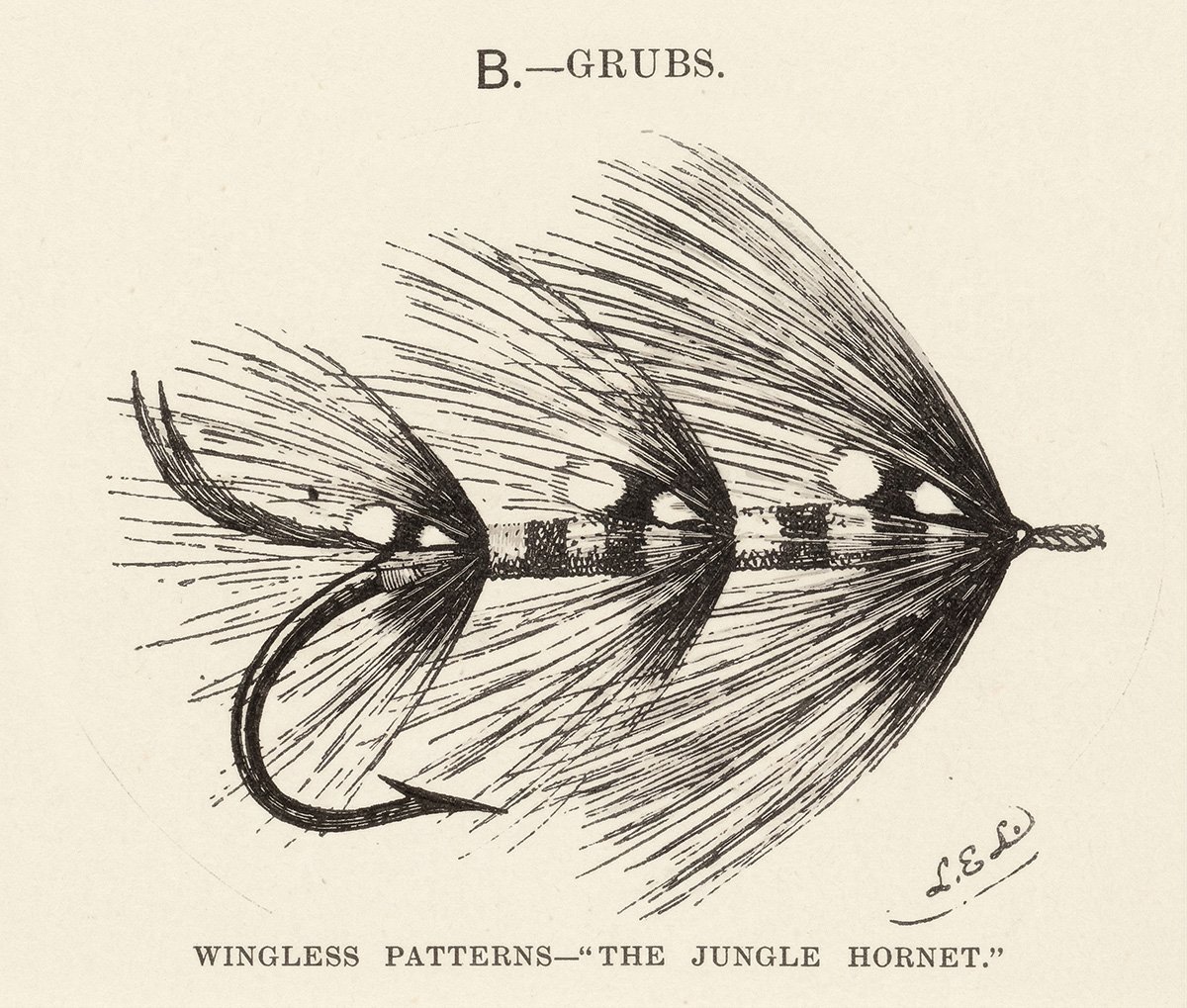
Grub Pattern, illustrating a wingless salmon fly — “Jungle Hornet” — Kelson (1895)
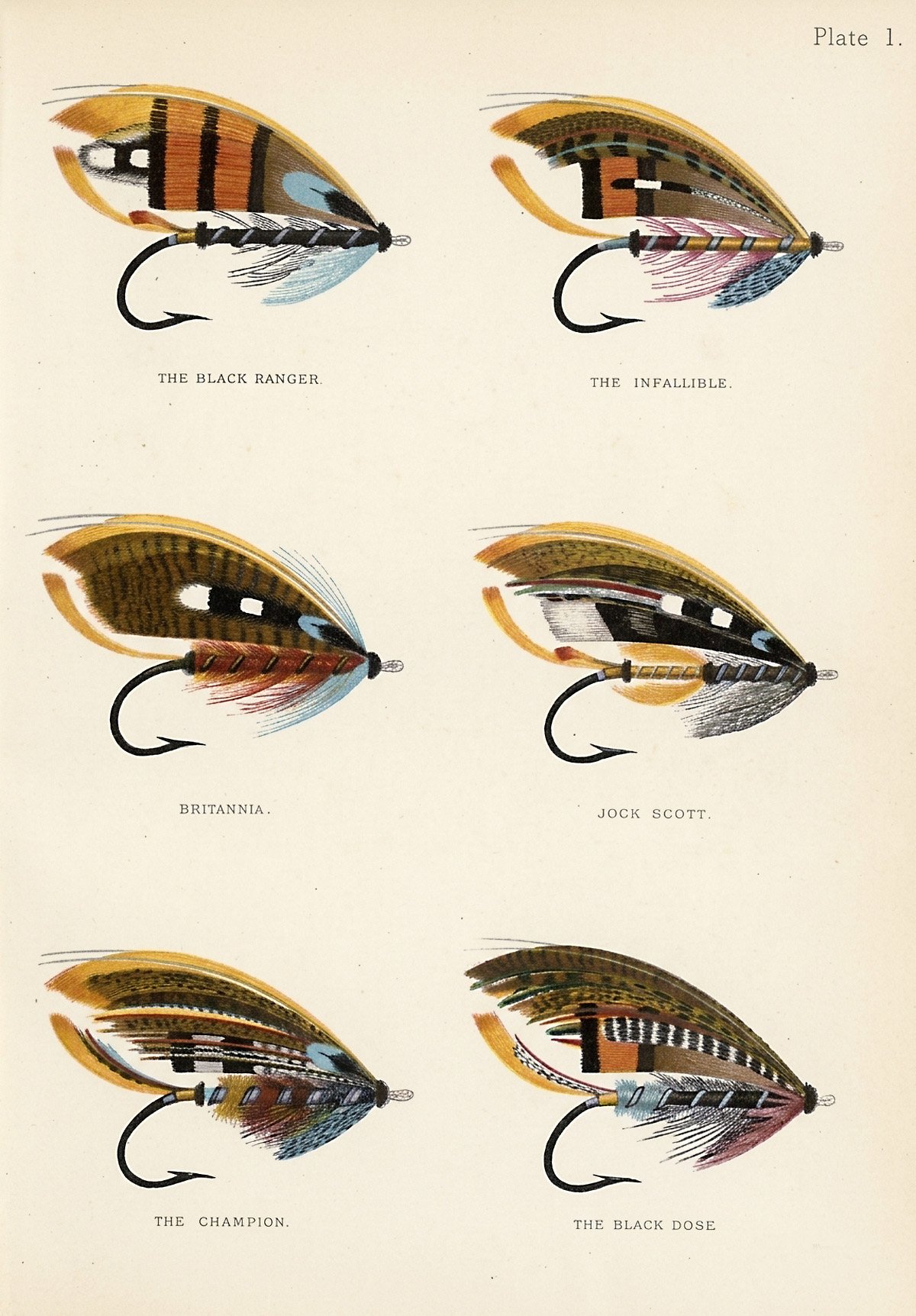
Plate I — Salmon Flies, showing complete patterns — Kelson (1895)