The Green Highlander: The King of Green
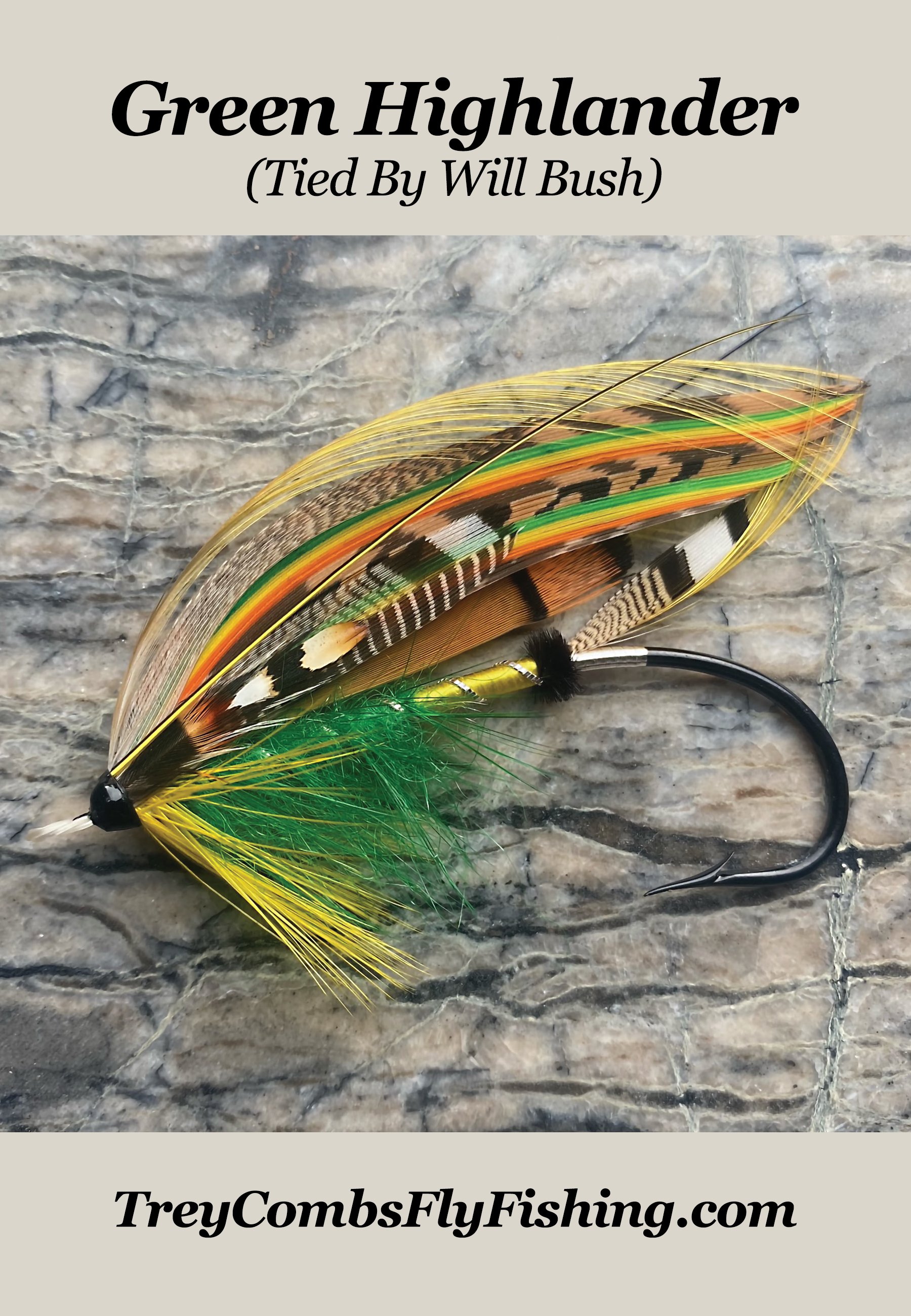
It’s hard to overstate how devoted British anglers were in judging the worth of a salmon fly by every slip of feather and turn of thread. The flies were first and foremost an art medium but also a craft requiring such complex skills that respectable apprenticeships were measured in years. As the salmon flies matured in complexity, they became nothing less than signage for the extent of Great Britain’s colonial empire, so vast that the upper class would boast that the sun was always shining on some part it. The Victorian salmon fly was also emblematic of British wealth and power and judged on the geographic origins of each fly’s many parts, especially its feathers. Imagine a fly fisher opening his fly book and visiting row after row of Jock Scotts, Green Highlanders, Durham Rangers, Mar Lodges and numerous other classic dressings in various sizes, and appreciate the wealth and finery he was about to cast.
Among the most striking examples were quetzal feathers. Ancient chiefs of the Aztec and Maya wore sacred quetzal tail feathers plucked from live birds. The resplendent quetzal, pictured below, is one of the most beautiful and iridescent green birds in the Trogon family. The famous fly dresser William Blacker, born in Ireland in 1815, was among the first to include quetzal feathers in several of his many original salmon fly dressings.
The Green Highlander is a noble example of that world. It is a fly of brilliant color, demanding construction, and unmistakable status within the classic salmon fly tradition. If the Jock Scott is the great emblem of Victorian salmon fly dressing, the Green Highlander belongs very near it: green, gold, silver, yellow, jungle cock, macaw, tippet, teal, bustard, swan, turkey, mallard, and other materials gathered into a single, highly composed fishing fly.
The pattern’s standing is also clear from the writers who recorded and preserved it. Francis Francis described the earlier Highlander in A Book on Angling in 1867. Kelson later gave the Green Highlander its place among the major salmon fly dressings, and Pryce-Tannatt included his own version in How to Dress Salmon Flies in 1914. By the time the pattern appears across these sources, the Green Highlander is no longer just a variation of an older fly. It has become one of the recognized classics.
Its importance can also be measured by its long life in the Hardy catalogues. The Green Highlander appeared in Hardy’s general salmon fly list from 1898 to 1969, in the Canada & USA list from 1907 to 1937, and in the Monoplane list from 1934 to 1952. Few patterns had that kind of staying power.
Hardy’s catalogues also treated the Green Highlander as more than a single fixed dressing. The pattern appeared in both larger and smaller versions, including an Extra Small form with simplified dressing notes. That range matters. It shows that the Green Highlander was not just a display pattern or a famous name in the literature, but a working salmon fly adapted for different water, conditions, and hook sizes.
It was also listed for a remarkable group of northern Scottish rivers, including the Dionard, Inver, Kirkaig, Laxford, Hope, Duartmore, Forss, Halladale, Naver, and Borgie. That record places the Green Highlander not simply as a beautiful classic dressing, but as a salmon fly with a real working history across some of the great rivers of the north.
You can’t discuss the Green Highlander without noting Mikael Frödin’s treatment of this famous dressing in Classic Salmon Flies: History & Patterns. Frödin traces the pattern through Pryce-Tannatt, the earlier Highlander described by Francis Francis, and the later versions associated with Kelson, and Hardy.
The Green Highlander is strongly associated with the dressing given by T. E. Pryce-Tannatt in How to Dress Salmon Flies in 1914. The bright green used in the pattern became so closely connected with the fly that it was known as “Highlander Green.”
Frodin notes that the pattern is usually credited to Mr. Grant of Wester Elchies and dates to the late nineteenth century. It appears to have developed from the older Highlander pattern, which is generally treated as the forerunner of the Green Highlander.
Francis Francis included the Highlander in A Book on Angling in 1867. He described it as a successful fly on the River Carron in Ross-shire and also listed it among his patterns for the Ness. The Highlander was often tied in small sizes, with a gold-and-green body, silver ribbing, a pea-green hackle, blue jay at the throat, and a wing built from tippet fibres, golden pheasant tail, mallard, pintail, and a topping. It also carried double jungle cock sides and a black head.
The Green Highlander became better known through versions associated with Kelson, Hardy, and Hale. These dressings kept the green-and-yellow character of the older fly but developed it into a more elaborate classic salmon fly. The version commonly linked to these writers used a silver and canary floss tag, a topping and teal tail, black ostrich herl, a body of yellow floss and green seal’s fur, silver ribbing, a green body hackle, and a yellow throat hackle. The wing included two golden pheasant tippets, with married sections of light and dark bustard, golden pheasant tail, dark mottled turkey, green dyed swan, mallard, and a topping. This version does not include sides or cheeks, but it does have blue macaw horns and a black head.
Part of what makes the Green Highlander distinctive is its color. Green classic salmon flies were not especially common in Britain, where patterns built around yellow, black, orange, silver, and red were more typical. The Green Highlander was an exception. Its long presence in catalogues and pattern books shows that it was not just an unusual green fly, but one of the lasting classics in the salmon fly tradition.
Selected Green Highlander Dressings
The following dressings show several important versions of the Green Highlander. Kelson and Pryce-Tannatt are formal published dressings. The Hardy entries are shorter catalogue or notebook-style notes and should be read as working dressings rather than full formal dressings.
Green Highlander — Kelson
Tag: Silver twist and canary silk
Tail: A topping and teal
Butt: Black herl
Body: Two turns of yellow silk and green seal’s fur
Ribs: Silver tinsel
Hackle: Green from yellow silk
Throat: A yellow hackle
Wings: Two tippets, back to back, veiled with light and dark bustard, golden pheasant tail, dark mottled turkey, swan dyed green, mallard, and a topping
Horns: Blue macaw
Green Highlander — Pryce-Tannatt
Tag: Silver tinsel
Tail: A topping and barred summer duck
Butt: Black ostrich herl
Body: First quarter, golden yellow floss; remainder bright green seal’s fur or floss silk
Ribs: Oval silver tinsel
Hackle: A grass-green cock’s hackle
Throat: A lemon cock’s hackle
Wings: Mixed golden pheasant tippet in strands, peacock wing and golden yellow, orange, and green swan, florican, peacock wing and golden pheasant tail; outside of this, married sections of teal and barred summer duck; narrow sections of brown mallard over and a topping
Sides: Jungle cock
Cheeks: Indian crow
Horns: Blue and yellow macaw
Head: Black
Hardy Notebook Dressing — Large Green Highlander
Tipp: Silver and floss
Tail: Crest, red, and teal
Butt: Black
Body: One-third yellow floss, two-thirds green seal’s fur
Hackles: Green down body, yellow at shoulder
Wing: Two tippets, mixed wing, yellow, green, blue, golden pheasant tail, jungle cock, and macaw
Hardy Notebook Dressing - Small Green Highlander
Tail: Crest
Body: Two turns yellow floss followed by green seal’s fur
Ribs: Oval silver
Hackle: Yellow
Wing: Same as Silver Doctor, with green instead of red; no guinea fowl; jungle cock cheeks
Kelson’s Green Highlander is the simpler of the two dressings. It includes the main elements associated with the pattern: a silver and canary tag, a topping and teal tail, yellow silk and green seal’s fur body, silver ribbing, green hackle, yellow throat, and a wing built from tippets, bustard, golden pheasant tail, turkey, green swan, mallard, and a topping.
Pryce-Tannatt’s version is more detailed. The body follows the same general yellow-and-green idea, but the wing and finishing details are more involved. His dressing adds barred summer duck in the tail, married sections of teal and barred summer duck, brown mallard over the wing, jungle cock sides, Indian crow cheeks, blue and yellow macaw horns, and a black head.
The main difference is that Kelson gives a cleaner, more direct version of the Green Highlander. Pryce-Tannatt gives a fuller version with more parts, especially in the wing, sides, cheeks, and horns.
Featured Image
Our featured Green Highlander was tied by Will Bush. His version shows the pattern clearly: the yellow-and-green body, the complex married wing, and the traditional materials that define the fly. It is a strong example of why the Green Highlander remains one of the major classic salmon fly dressings.
— Mark Combs
A portion of this blog, along with the featured Green Highlander image, is drawn from Flies for Atlantic Salmon & Steelhead. The book includes additional classic salmon and steelhead patterns, dressing notes, and images, and is available directly from the author in two formats from Amazon.
Limited 1st Edition Hardcover — available on Amazon
Digital Reference Edition — available on Amazon Kindle
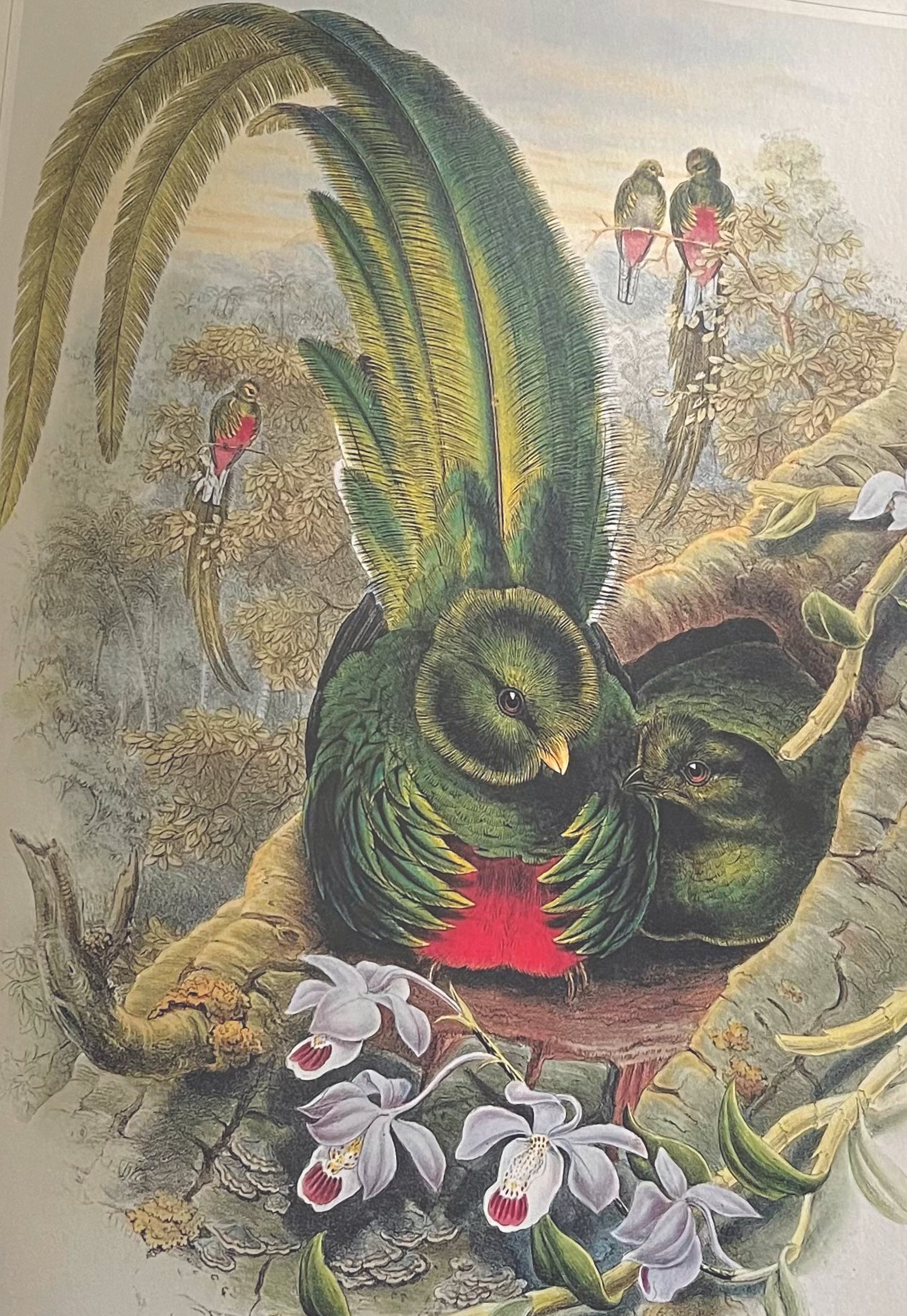
Ancient chiefs of the Aztec and Maya wore sacred quetzal tail feathers plucked from live birds. The resplendent quetzal (pictured) is one of the most beautiful and iridescent green in all the Trogon family of 35 species. The famous fly dresser William Blacker, born in Ireland in 1815, was the first to include quetzal feathers in several of his many dozen originals.