Steelhead Fly Fishing & Flies: Plate 3
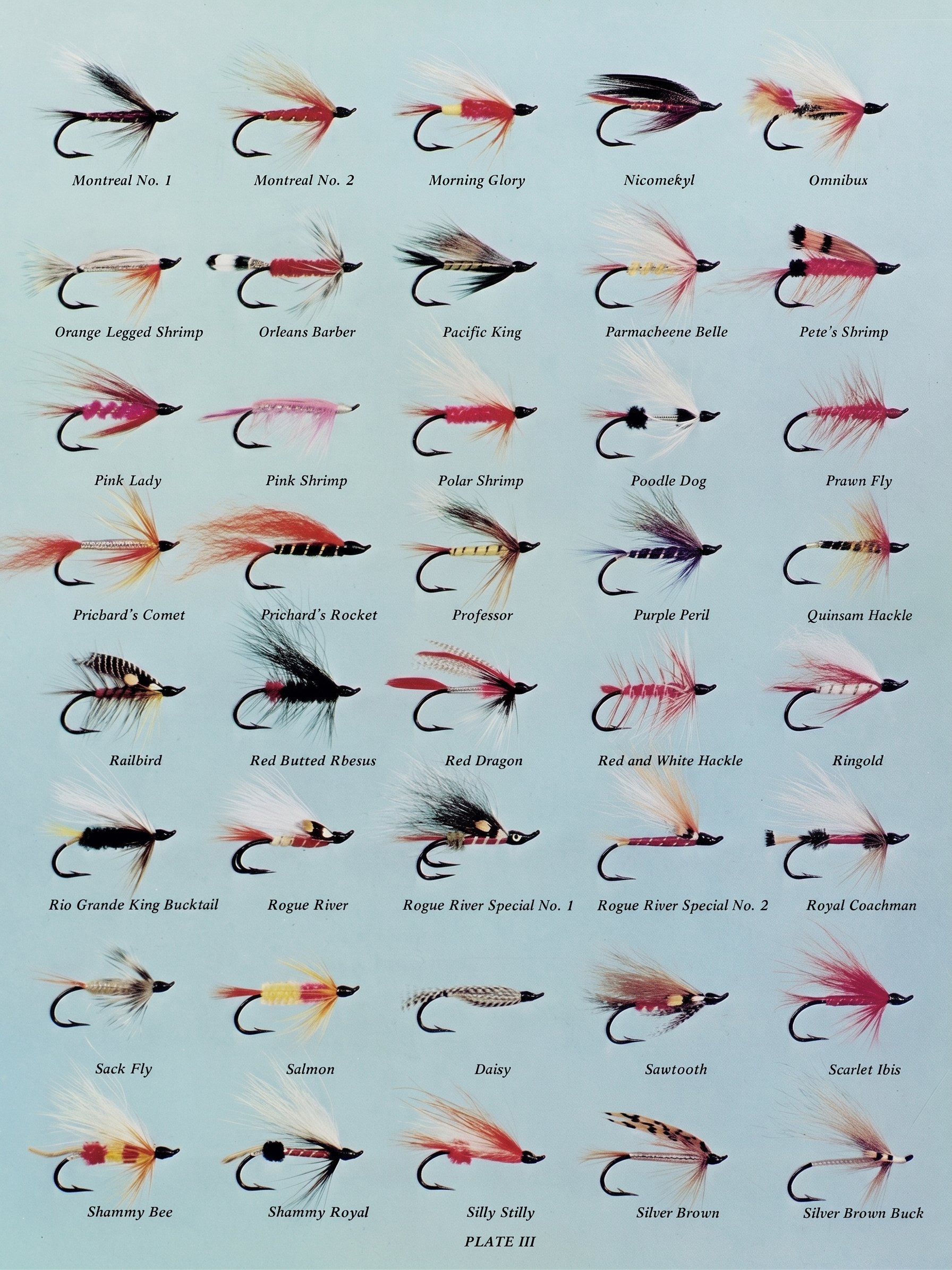
Plate 3 from Steelhead Fly Fishing & Flies (1976), presented here as a historical reference image. Viewing note: This plate contains many small fly images and labels. On mobile, pinch to zoom for a closer view. On desktop, right-click the image and open it in a new tab or save it for a larger view.
This plate is from the 1976 edition of Steelhead Fly Fishing & Flies and shows a selection of steelhead flies alphabetically arranged from Dudie Ann through Midnite Sun. All flies on the plate were tied by Harry Lemire. Many of these patterns are obscure and not widely known today, so the image is presented here as a historical reference for anglers, fly tyers, and collectors interested in how these flies appeared in the original book. Although the image reflects the printing and reproduction quality of the original 1976 edition, the plate remains a useful reference for understanding the form, color, and general character of these classic steelhead patterns. Our goal is to preserve both the images and dressing notes for these flies. Note: Not every fly shown on this plate had a corresponding dressing note in the 1976 text. When available, dressing notes are included in the Fly Pattern Dictionary, and original background notes from the book are included below.
Flies Shown On Plate 3
Montreal No. 1, Montreal No. 2, Morning Glory, Nicomekyl, Omnibus, Orange Legged Shrimp, Orleans Barber, Pacific King, Parmacheene Belle, Pete’s Shrimp, Pink Lady, Pink Shrimp, Polar Shrimp, Poodle Dog, Prawn Fly, Prichard’s Comet, Prichard’s Rocket, Professor, Purple Peril, Quinsam Hackle, Railbird, Red Butted Rhesus, Red Dragon, Red and White Hackle, Ringold, Rio Grande King Bucktail, Rogue River, Rogue River Special No. 1, Rogue River Special No. 2, Royal Coachman, Sack Fly, Salmon, Daisy, Sawtooth, Scarlet Ibis, Shammy Bee, Shammy Royal, Silly Stilly, Silver Brown, and Silver Brown Buck.
Original Background Notes for Plate 3
Not every fly shown on Plate 3 had a corresponding background note in the original 1976 text. Some flies had only dressing notes, while others included both dressing notes and additional background notes. The background notes reproduced below are the additional historical notes from Steelhead Fly Fishing and Flies. Dressing notes, when available, appear in the Fly Pattern Dictionary. For best viewing, open the enlarged plate in a new tab on a desktop and use a second browser window to view the Fly Pattern Dictionary alongside it.
Montreal: The Montreal has appeared in so many forms no present pattern with this name exactly represents the original. This disparity arose because almost from the beginning there appeared two dressings with the same name that bore only a faint resemblance to each other. Peter Cowan is said to have developed the original about 1850. He was the “high sheriff” for the Bedford District in Quebec. This fly had a red wool body ribbed with gold tinsel, brown hackle and gray primary strip wings. It proved to be such a killer than Cowan presented a few to officers of the British army stationed in Montreal. Demand for the pattern grew so great he sent a sample to a Montreal fly tier to correctly duplicate it in quantity. The gentlemen sold them under the name Montreal. Shortly after the Montreal appeared, it was either altered, or had its name borrowed for a dressing with a claret wool body, claret hackle and red hackle tail. The wing was brown turkey. The two Montreal’s evolved, one with claret and brown for its basis, the other with gray and red. With two patterns each listed as Montreal, it was natural that in the confusion there began a general crossing over of materials. Listed below are two steelhead fly versions of the Montreal that illustrate this point.
Nicomekyl: W. Brougham named this fly for the Nickomekyl River which flows near his Vancouver, British Columbia home. The pattern has proven effective on lake and stream for either resident or anadromous trout. It is a popular Canadian dressing.
Orange Legged Shrimp: This local variation of the Horner Shrimp was designed to take steelhead and salmon at or near tidewater. This and other shrimp patterns are most commonly found in use on such northern California rivers as the Eel, Mad and Smith. The Orange Shrimp originated on the Eel.
Pacific King: The late Roy Patrick originated this pattern in 1940 for use in the Sierra Nevada high country. It proved to be a most effective fly, and its use spread to lowland lakes and beginning in 1946 to coastal streams holding steelhead. Patrick was a Seattle professional fly tier who wrote two extremely useful books on flies and fly tying: Pacific Northwest Fly Patterns and Tie Your Own Flies.
Parmacheene Belle: As I tie it, the tail is two strands of white and two of scarlet; the body of yellow mohair, with silver tinsel; the hackle double; first white, with scarlet hackle to sound over this—capping the former, so to speak; the wing white, striped with scarlet. By scarlet, the color of red ibis is to be understood.” enlisting a bit of red bucktail on each side. In sizes 6 and 8, floss is used for the body, or chenille—fluorescent or regular—in sizes 4 and larger. This is how Henry P. Wells described his own dressing in “Fly Fishing in the Rangeley Region,” an essay appearing in Fishing with the Fly, 1886, by Charles Orvis and A. Nelson Cheney. The Parmacheene Belle is an “attractor” pattern. It certainly resembles no insect. Some claim the fly was tied to imitate the brook trout’s belly fin, a rather ridiculous design rationale since disengaged fins swimming upside down are foreign to any trout’s experience in this world. But the fly does attract, a happy fact not altered by calling it anything in or out of nature. It should be pointed out that the Parmacheene Belle described by Wells didn’t contain a peacock herl butt, even though many came to consider this a required part of the fly. Jungle cock cheeks were often placed on the fly. When dressed in this manner, the Belle became “Beau”. The Parmacheene Beau was first observed in use during the 1880’s but did not originate with Wells. While early steelheaders usually maintained dressing integrity, yellow floss and gold tinsel were occasionally substituted. At least into the 1920’s, the Beau and Belle enjoyed equal popularity on our anadromous rivers. Today the pattern is tied for steelheading with a white bucktail wing.
Pete’s Shrimp: Pete McVey of Merritt, British Columbia developed this pattern for his Canadian rivers. Domestic anglers have found the dressing very effective. It should be weighted with an underbody of lead wire for winter fishing.
Polar Shrimp: The Polar Shrimp first gained widespread publicity on California’s Eel River in 1936, contributing to some outstanding late season steelheading. According to the late Jim Pray, the first of these flies he saw were supplied by Shoff Fishing Tackle Company in Kent, Washington. Over the years the Polar Shrimp has remained one of the very best winter flies when weighted and tied with fluorescent materials.
Poodle Dog: This Stillaguamish River summer-run pattern was designed by amateur fly tier Robert Wesson of Marysville, Washington in the 1950’s.
Prawn Fly: Walt Johnson describes his Prawn Fly as “a joint effort between my friend Craig Shreeve and myself, an effort to represent this creature of the sea which no doubt provides part of the steelhead’s diet. Some of the materials are a little difficult to come by, but it is an effective pattern.” It was first tied in 1966.
Prichard’s Rocket: These two attractor patterns were developed by Al Prichard for use on Washington’s Kalama River. For many years Al has owned a store on the Kalama, selling lunches, flies, lures and freely giving advice. When I last talked with this former member of the Washington Game Commission, a series of strokes was keeping him from the river. His coffee took the chill out of an overcast, forlorn late winter day. I had lost a springer in an upriver canyon pool that morning. We talked of the river, and he calmed my disappointment. Al, too, had stories to tell, and I left the river feeling enriched by the interlude. Hundreds of other Kalama anglers have experienced similar days.
Professor: This is an English pattern developed by John Wilson about 1830. He was a philosophy professor at Edinburgh University. The fly was originally tied with barred mallard over a pale yellow silk body. No tail adorned it, and hackle was only sometimes used and then sparsely in fiery brown (“red”) or black. The modern English Professor, and the one our Eastern trout version is most consistent with, differs somewhat from the original: a red hackle tail, ginger hackle and gold tinsel have been added. A delicious little legend survives surrounding this fly’s origins. It is told that Wilson was fishing a loch one day and found himself out of flies while trout were still rising. Seeking a temporary substitute, he wrapped some buttercup petals around a hook shank with dried grass at the head of the fly. All was secured with a bit of thread. He took trout with this botanical creation and was so impressed by the experience that permanent dressings with conventional materials were tied. The fly has been popular with Americans, and for steelhead was favored during the early days of the sport. Its use is now overshadowed by the many specialized steelhead patterns available.
Purple Peril: Ken McLeod’s Purple Peril is overlooked by the casual steelheader and cherished by the expert. The fly is not traditionally “dark,” and does not possess the primary brightness of our attractor patterns. Yet it both represents and attracts extremely well during clear water conditions. It has been a Northwest standard for more than 25 years.
Quinsam Hackle: The Quinsam Hackle is a Vancouver Island pattern by Brigadier General Noel Money of Qualicum Beach, British Columbia. It is sometimes called the “Shrimp Fly.” See Prawn Fly.
Railbird: John Benn (1838–1907) originated the still popular Railbird while he was living in San Francisco. It became a famous steelhead pattern on the Eel River during the 1900’s.
Red and White Hackle: This Canadian pattern has been effectively fished on both coastal streams and interior lakes for steelhead, Kamloops and cutthroat. In general conformation and construction, the Red and White Hackle resembles the Prawn Fly and Quinsam Hackle.
Red Butted Rhesus: This dressing was called the Red Ass Rhesus when first introduced by Ken McLeod in 1948. It closely resembles his more popular McLeod Ugly. Ken is very well known in Northwest steelheading circles. The former outdoor editor of the Seattle Times, he was perhaps the first to champion the use of a stripping basket for steelhead fly fishing. And long before the term “shooting head” was coined, he was fishing a silk head with paraffin-stiffened silk shooting line. He has fished Washington’s best waters and cast his flies on British Columbia’s trophy steelhead rivers.
Rio Grande King Bucktail: This is a steelhead hairwing version of a popular trout pattern first tied by James Douglas of Denver, Colorado.
Rogue River Special: This is an early Rogue River Special first tied 35 or more years ago. The mixing of red and white bucktail produced a rose hue much resembling spawn upon which steelhead “feed”. The double hook was not specified in this dressing.
Rogue River Special: This more recent version divides the wings, a practice first popular on the Rogue. The dressing is tied on a double hook.
Royal Coachman: For reasons as aesthetic as mundane, the Royal Coachman is America’s best known, best loved fly pattern and the only one commonly recognized by the man—or woman—on the street.
Salmon Fly: The Salmon Fly is a comet pattern developed on the Russian River during the 1940’s for winter-run steelhead.
Scarlet Ibis: Like no other fly pattern, the Scarlet Ibis amplifies the glories of heavy brook trout and pristine streams still enjoyed in nineteenth century America. No fancy was brighter or better known, and the single fly became a family: Scarlet, Gold, Silver, Guinea, White, Yellow, and they all bore scarlet wings and hackle. The Scarlet Ibis was, of course, named for the tropical birds whose intensely red feathers once dressed this and many other patterns. It probably dates back to the Civil War; by the 1870’s variations of the pattern abounded. Twenty years later it helped usher in the beginning of steelheading.
Silly Stilly: This popular Stillaguamish River pattern was designed by Mike Kennedy of Seattle, Washington.
Silver Brown: Roderick Haig-Brown of Campbell River, British Columbia, originally developed this pattern during the 1930’s for sea-run cutthroat. It is now known as a reliable summer-run fly.
Silver Brown Buck: Some years ago I was working a fly deeply through a pool on the Quinault River. At the head of the pool was a bridge, and from it I had watched at least two dozen chinook salmon nervously exchange stations. One looked as large as a seal and would surely have weighed over sixty pounds; companion fish were troutlike beside it. It was August, and the salmon were so mature they could belong only to the river. I was thus fishing for this single salmon and, more hopefully, for a stray summer-run steelhead. A splash from the bridge nearly stopped me in mid-cast. An angler was beginning to troll for the salmon using a large keel sinker, herring dodger, and, as I was later to discover, pickled herring. He kind of heaved it all into the current from a stout rod and 4/0 reel. I went back to casting, and he kept splashing until my curiosity could stand it no longer. We met on the bridge, and he told me this was his first experience fishing for salmon. I hungrily eyed his bottle of imported herring, and he studied the fly in the keeper ring of my rod. Could he try a fly? I told him my luck had been as poor as his, but that he was welcome to try a fly, and my fly box was opened for him. He made his selection. I suggested other patterns. But he was pleased with his initial choice and tied it on the 25 pound test monofilament several feet below the keel sinker. Line was spooled into the river and the rod set against the bridge railing. We talked. He was on vacation from somewhere back east and visiting Olympic National Park for the first time. He didn’t get far into his past before his rod nearly left the bridge. He wasn’t surprised. Don’t flies hook salmon? I was astonished. Apparently he had somehow foul-hooked a chinook. After great difficulty the fish was beached on a bar below the bridge. My astonishment was complete when I discovered the fly was deeply imbedded in the corner of the salmon’s jaw. The fourteen-pound chinook was red and ugly. My friend was so pleased there was no question about releasing it. I made sure he kept the fly, too, a Silver Brown Bucktail, a nondescript but effective summer-run steelhead pattern when sparsely dressed.