Steelhead Fly Fishing & Flies: Plate 2
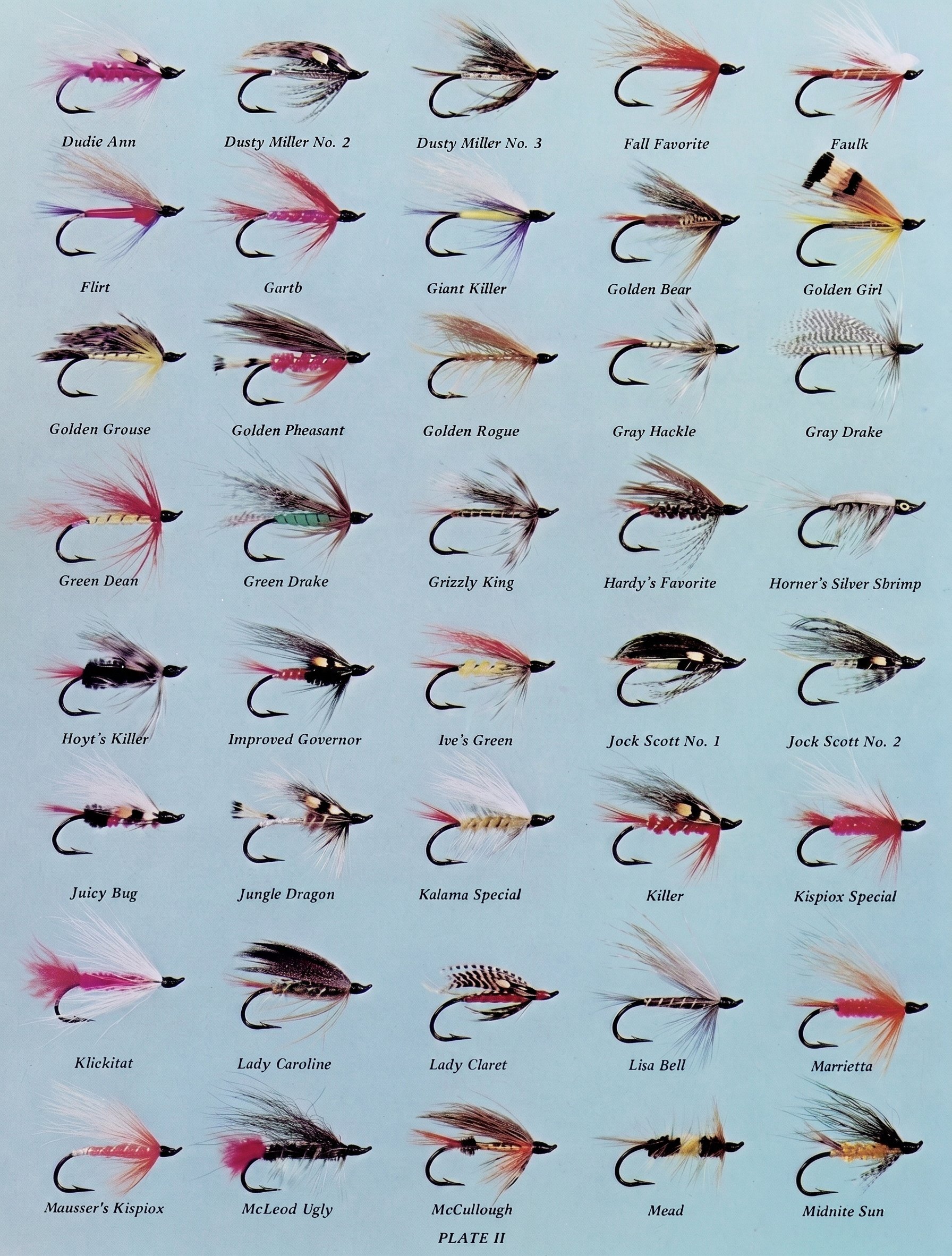
Plate 2 from Steelhead Fly Fishing & Flies (1976), presented here as a historical reference image. Viewing note: This plate contains many small fly images and labels. On mobile, pinch to zoom for a closer view. On desktop, right-click the image and open it in a new tab or save it for a larger view.
This plate is from the 1976 edition of Steelhead Fly Fishing & Flies and shows a selection of steelhead flies alphabetically arranged from Dudie Ann through Midnite Sun. All flies on the plate were tied by Harry Lemire. Many of these patterns are obscure and not widely known today, so the image is presented here as a historical reference for anglers, fly tyers, and collectors interested in how these flies appeared in the original book. Although the image reflects the printing and reproduction quality of the original 1976 edition, the plate remains a useful reference for understanding the form, color, and general character of these classic steelhead patterns. Our goal is to preserve both the images and dressing notes for these flies. Note: Not every fly shown on this plate had a corresponding dressing note in the 1976 text. When available, dressing notes are included in the Fly Pattern Dictionary, and original background notes from the book are included below.
Flies Shown On Plate 2
Dudie Ann, Dusty Miller No. 2, Dusty Miller No. 3, Fall Favorite, Faulk, Flirt, Garth, Giant Killer, Golden Bear, Golden Girl, Golden Grouse, Golden Pheasant, Golden Rogue, Gray Hackle, Gray Drake, Green Dean, Green Drake, Grizzly King, Hardy’s Favorite, Horner’s Silver Shrimp, Hoyt’s Killer, Improved Governor, Ive’s Green, Jock Scott No. 1, Jock Scott No. 2, Juicy Bug, Jungle Dragon, Kalama Special, Killer, Kispiox Special, Klickitat, Lady Caroline, Lady Claret, Lisa Bell, Marrietta, Mausser’s Kispiox, McLeod Ugly, McCullough, Mead, and Midnite Sun.
Original Background Notes for Plate 2
Not every fly shown on Plate 2 had a corresponding background note in the original 1976 text. Some flies had only dressing notes, while others included both dressing notes and additional background notes. The background notes reproduced below are the additional historical notes fromSteelhead Fly Fishing and Flies.Dressing notes, when available, appear in the Fly Pattern Dictionary. For best viewing, open the enlarged plate in a new tab on a desktop and use a second browser window to view the Fly Pattern Dictionary alongside it.
Dusty Miller: This modified version of the full-dressed Atlantic salmon fly dates back to the 1900’s and the Eel River. It also became popular on the Klamath River, especially in the Orleans area.
Fall Favorite: The Fall Favorite would have to be counted in any “ten best” list regardless of the steelhead region; it’s a standard from the Skeena to the Russian. Lloyd Silvius of Eureka, California introduced the pattern in 1946. He intended it for the Eel River’s fall-run steelhead. Dressed fluorescent, the fly has worked extremely well for all winter runs. It was first tied as an optic though the conventional tie is now far more popular.
Faulk: Emil Faulk tied this pattern in 1923 for Olympic Peninsula and Greys Harbor streams. It is one of Washington’s earliest hairwing flies. No doubt the stubble at the head helps to give it a more erratic action.
Garth: The Garth was reportedly developed by Bob Arnold in 1960 for use on the Stillaguamish River. It is a most handsome pattern and if weighted—palmering reduces the rate of sink—the Garth should be very effective for winter steelheading.
Giant Killer: The Giant Killer was introduced by Don Larson of Seattle, Washington for use of British Columbia’s Kispiox River and other Skeena River tributaries.
Golden Girl: A simple, effective winter pattern first tied by Roderick Haig-Brown for the Campbell River, his “Home river” on Vancouver Island. A stripped down Durham Ranger, the Golden Girl probably dates to 35 years ago. See Steelhead Bee.
Golden Pheasant: The above are nineteenth century dressings that were popular on the Rogue during the 1920’s. The Golden Grouse is said to have been a particular favorite of Zane Grey.
Golden Rogue: The above are nineteenth century dressings that were popular on the Rogue during the 1920’s. The Golden Grouse is said to have been a particular favorite of Zane Grey.
Gray Hackle: During the early years of steelheading, this fly usually vied with the Royal Coachman for most used honors. The Gray Hackle remains especially popular on California’s interior anadromous rivers such as the Sacramento and Klamath.
Green Drake: The Green Drake was tied for the Klamath River and its tributaries in the late 1940’s and is now a standard on those waters. A less known variation is the Gray Drake.
Hardy’s Favorite: This is a more colorful steelheading version of an English original by J. J. Hardy of that famous fly tackle firm, Hardy Brothers, Alnwick, England. The pattern probably goes back fifty years to the Eel River.
Horner’s Silver Shrimp: This pattern was developed by Jack Horner of San Francisco and first used on the Eel River in September, 1938. It answered a need for a fly effective at tidewater on both steelhead and salmon. The original version was simply called “the shrimp”. Fellow members of the Golden Gate Casting Club renamed the fly in honor of its originator. Steelhead have taken it at all depths while the dressing and variations of it, fished deep, have worked well on ascending chinook salmon, especially on that extraordinary Smith River race. When cast at or very near a river’s tidewater mouth, the fly is retrieved in six to eight inch strips. The first of our tidewater shrimp flies for trout and salmon, it is still considered as good as any of the many like patterns that have followed.
Improved Governor - Tip: Gold tinsel. Tail: Red hackle fibers. Body: Rear third red floss ribbed with fine oval gold tinsel; front of peacock herl. Rear third is sometimes tied as a long tag. Wing: Bronze mallard. Shoulder: Jungle cock. Alternate wing: Dark brown bucktail.
Improved Governor: The original English Governor was basically a Coachman with brown wings, sections from ring-necked pheasant pinions. Halford added a tip of yellow silk or flat gold tinsel and changed to a woodcock wing. Another English variation was the Orange Governor with an orange tip and starling wings. Easterners changed the tip still again, substituting red silk floss. The Governor Alvord dropped the red tip but added a red tail and an upper wing of blue heron. This popular nineteenth century bass and trout pattern was named for Thomas Gold Alvord, a lieutenant governor of New York. Steelheading’s Improved Governor is a combination of this domestic influence on the English original. It was one of the earliest flies used on the Eel, dating back to 1910 and perhaps earlier. The fly is not in common use today.
Ive’s Green: This unusual but effective winter-run pattern was introduced to Northwest waters in the 1950’s.
Juicy Bug: Ben Chandler and Ike Tower of Coos Bay, Oregon are credited for developing this Rogue pattern. Dividing and setting wet fly hairwings upright is becoming increasingly typical of Rogue dressings. The action is more erratic and oriented toward the surface.
Jungle Dragon: The Jungle Dragon was introduced in 1943 by William Hosie for both steelhead and sea-run cutthroat.
Kalama Special: Mooch Abrams of Portland, Oregon developed the Kalama Special, doing so for the sea-run cutthroat angling he so favored. His friend, Mike Kennedy, used the fly to such advantage for steelhead on Washington’s Kalama River that it became known as the Kennedy Special.
Killer: Somewhat of an Admiral with a black wing, this Washington pattern originated during the early 1940’s for summer-run steelhead.
Kispiox Special: The Kispiox Special was tied in 1957 by Roy Pitts and Karl Mausser after Mausser began fishing the Kispiox. The pattern was created as a bright fly for the river’s large steelhead and named by Drew Wookey of Wookey’s Fishing Resort. Mausser later used it on October 8, 1962, to land a 33-pound Kispiox steelhead, then a new fly-caught steelhead record.
Klickitat: This strange-looking pattern is named for Washington’s Klickitat, a glacier-fed summer-run river tributary to the Columbia.
Marrietta: Don Redfern invented this pattern during the mid-1950’s and used it with great success on Canadian rivers such as the Kispiox. The fly accounted for several prize-winning steelhead in the national Field & Stream fishing contest.
McLeod Ugly: Ken McLeod, an angler long venerated by his fellow Northwest flyfishers, developed this all season fly in 1962. Though little known in California and southern Oregon, it is a highly regarded dark pattern from the Kalama to the Kispiox.
Mead: The Mead is a summer-run steelhead pattern believed to have been developed for Washington’s Stillaguamish River.
Midnite Sun: This subdued attractor pattern was perfected by Mike Frith of Renton, Washington for use as a “change up” pattern on British Columbia’s Dean River. It has been fished on many Washington rivers with very satisfying results.