Stamp River
This is the complete chapter from Steelhead Fly Fishing, written by Trey Combs and originally published in 1991. It is presented here in its original form. Desktop only: Right-click any image in this essay to open it in a new tab to view the high-resolution version. This feature is not available on mobile.
This pilgrimage began on an August day when the temperature had reached ninety degrees by midmorning. Vancouver Island's forests were tinder dry and all logging operations had been shut down, an enforced holiday for faller Mark Spence. He and I now trudged along an abandoned logging road, sweating hard in our waders and wishing for the sound of the river.
"We're almost there," he said, and pointed with his ten-foot drift rod to an opening in the woods. Mark sometimes guides to validate his passion for steelhead. I had come to enjoy the huge man's bonhomie and rascally sense of humor. "Let's go get those wily steelheads," he would say each morning.
As we entered the clearing and first felt the coolness of the Stamp River, Mark mopped his face with a bandanna and waved it upstream and then downstream from our position at the bend of the dogleg.
"This is General Money's Pool," he said simply. I studied the run and thought it was at least seven hundred feet long. The water was impossibly clear, a lens of shimmering viscosities that brought into focus the splashes of orange and yellow on the freestone bottom. The greater depths, mostly on our side of the river, were filtered green, and ascending fish would easily disappear in the cover.
At the top end, from a shallows that ran from wooded bank to sweeping river bar, the Stamp broke cleanly to become several hundred feet of boulders and foam. A lone fisherman, nearly hidden in the glare, cast roe, his large white float trailing a sparkling tail of monofilament as it arched through the sunlight. Directly before us the river slowed and deepened. Children were cannonballing its depths as their spaniel swam and barked from one geyser to another.
I asked Mark about the tiny feeder stream that trickled into the Stamp below our feet. "I've seen steelhead holding here at first light," he said. "One morning I counted eight." The long tailout was like the top end, but in slow motion and without the shallows of the gravel bar. Presenting a fly from the bank side would entail a deep and difficult wade with no room for a backcast. I would have a much easier time casting from the gravel bar across from us, and if I thought the pool held steelhead, it would take several hours to fish the entire run.
"Could the General have fished the pool from this side?" I asked. Mark saw the water as a drift fisherman, and the question was moot. We walked along the shore, located the best shallows, and started across. The river came to the very top of my waders. "I'm sure he never crossed the river to do his fishing," I added. We reached the far side and walked up the gravel bar to watch the bait fisherman continue through the pool.
General Money had a little cabin on the high bank across the river from where we stood. It was gone now. At least we could find no trace of it. The heavily wooded hillside still shaded the run beneath where the cabin must have been. From my new vantage, I saw how the General must have often fished Great Pool, as he called the water that now bears his name. Using his two-handed Wye rod, he would walk below his cabin and cover all the water with spey casts, the slowest part of the fly's swing taking place in the deep shadows along the bank, the crease of holding water I would reach briefly and only with difficulty. The General's approach was impossible to duplicate with my nine-and-a-half-foot rod and forward-taper line.
When the angler quit the water, Mark stepped in and began to search the lies, his float marking the course of the roe. He must have felt there was little promise in the exercise, for he made short work of it and joined me on the bar.
"Not a thing," he said. "Give it a go with your fly."
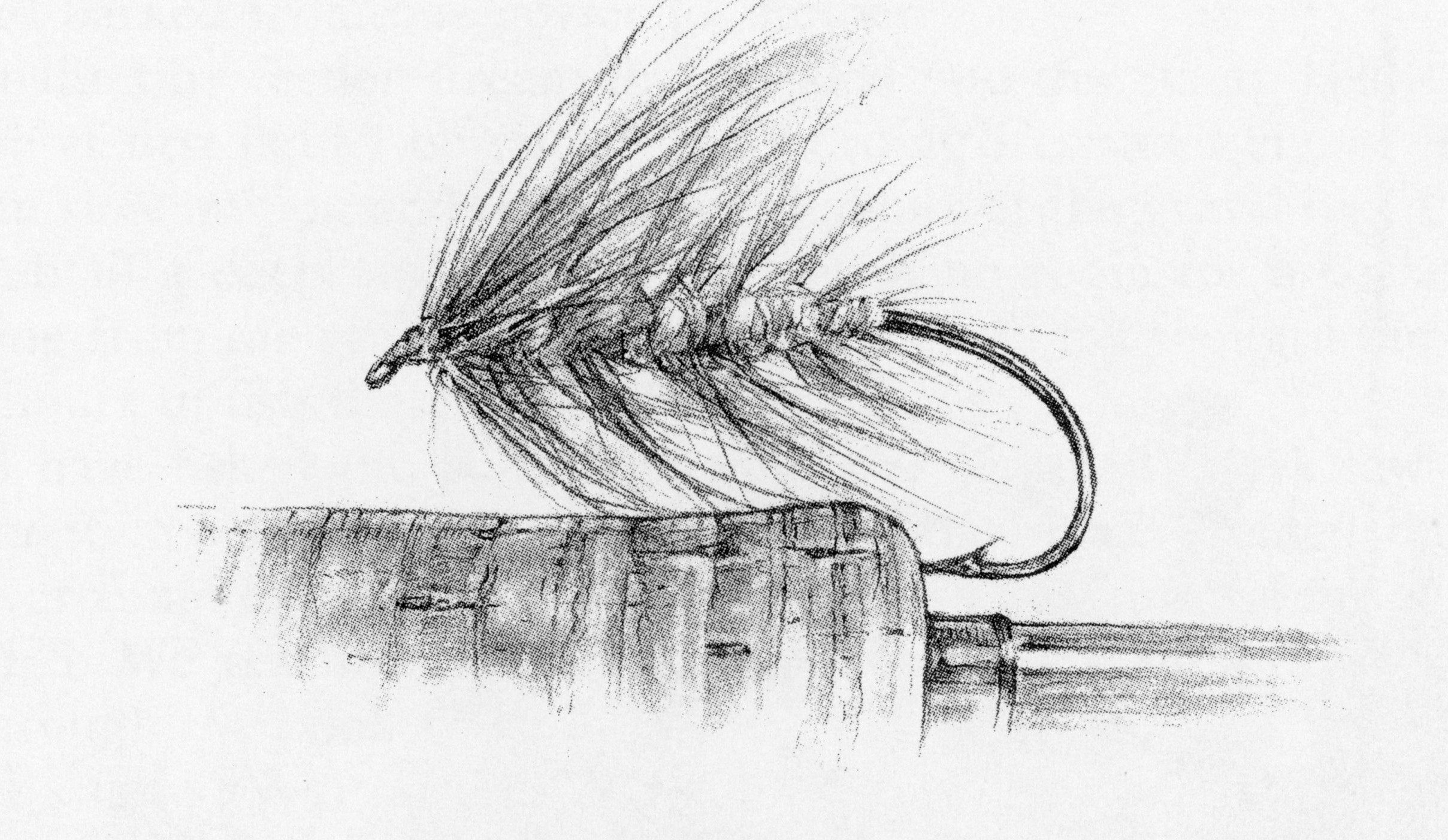
There was no doubt how I wanted to proceed. It didn't matter that there were no fish. I had tied on a low-water Atlantic salmon fly, an Orange Charm, and I would cast and mend and swim the sparsely dressed fly through the pool. That would provide great satisfaction, and in these relative ways Mark and I were fishing the river with different expectations. As I waded in and worked out my line, I wanted to tell him that my fly didn't possess any magical properties, that in fact I had more faith in his roe. It was just that my sense of historical propriety had determined how I wished this day to be joined with the past.
About halfway down the top end, a very large boulder lying just below the surface held up currents and caused unnatural drag. It took several casts to work out the mends, after which a very forceful upstream mend would eventually give me a proper presentation past this obstruction. The first time I was able to swing the fly into the downstream end of the boulder, I saw a flash and felt the steelhead take the fly. I was so astonished that I raised my rod and tightened too early. The steelhead was clearly visible as it sought to return to its station, but after several head shakes it panicked and began a downstream run. "Good for you!" cried Mark, and the fly came away. This had not been a large steelhead, probably no more than five pounds, but few trout had ever pleased me half so much.
The General, I thought, must be smiling.
Brigadier General Noel Money
Brigadier General Noel Money first traveled to Vancouver Island in 1913, reportedly on the advice of his physician, who thought that any change from the English climate would provide a healthy antidote to a lingering illness. He was forty-six, a veteran of the South African War, and commander of the Shropshire Imperial Yeomanry when wounded in the Western Transvaal. At war's end in 1901, he resigned his army commission and returned to England and married. More than sixty years later I would come to know his son, Gordon.
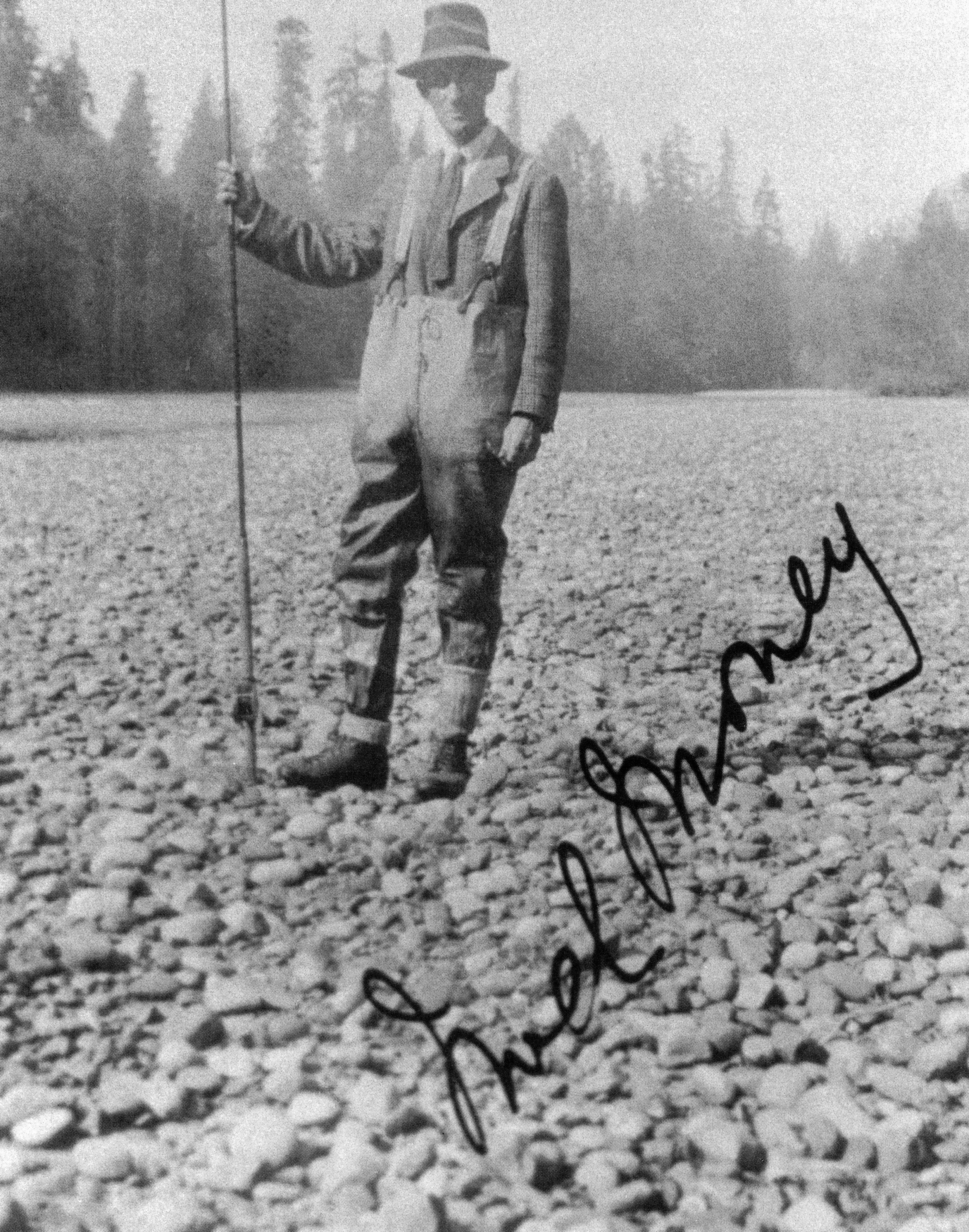
Brigadier General Noel Money
If Money's health was his expressed reason for seeking out this remote corner of the world, a no-less-important motivation was the Campbell River's famous chinook salmon. The very English Canadians had brought to this extraordinary race meticulously crafted cane rods, finely machined reels, and a socially prominent salmon club to dispense buttons and badges commemorating the testing of wills and equipment. They distinguished salmon over thirty pounds as "tyee," and called lesser chinook "springs," names that survive to this day. No other salmon resort of the period so attracted an international clientele, and Campbell River justifiably called itself the "Salmon Capital of the World."
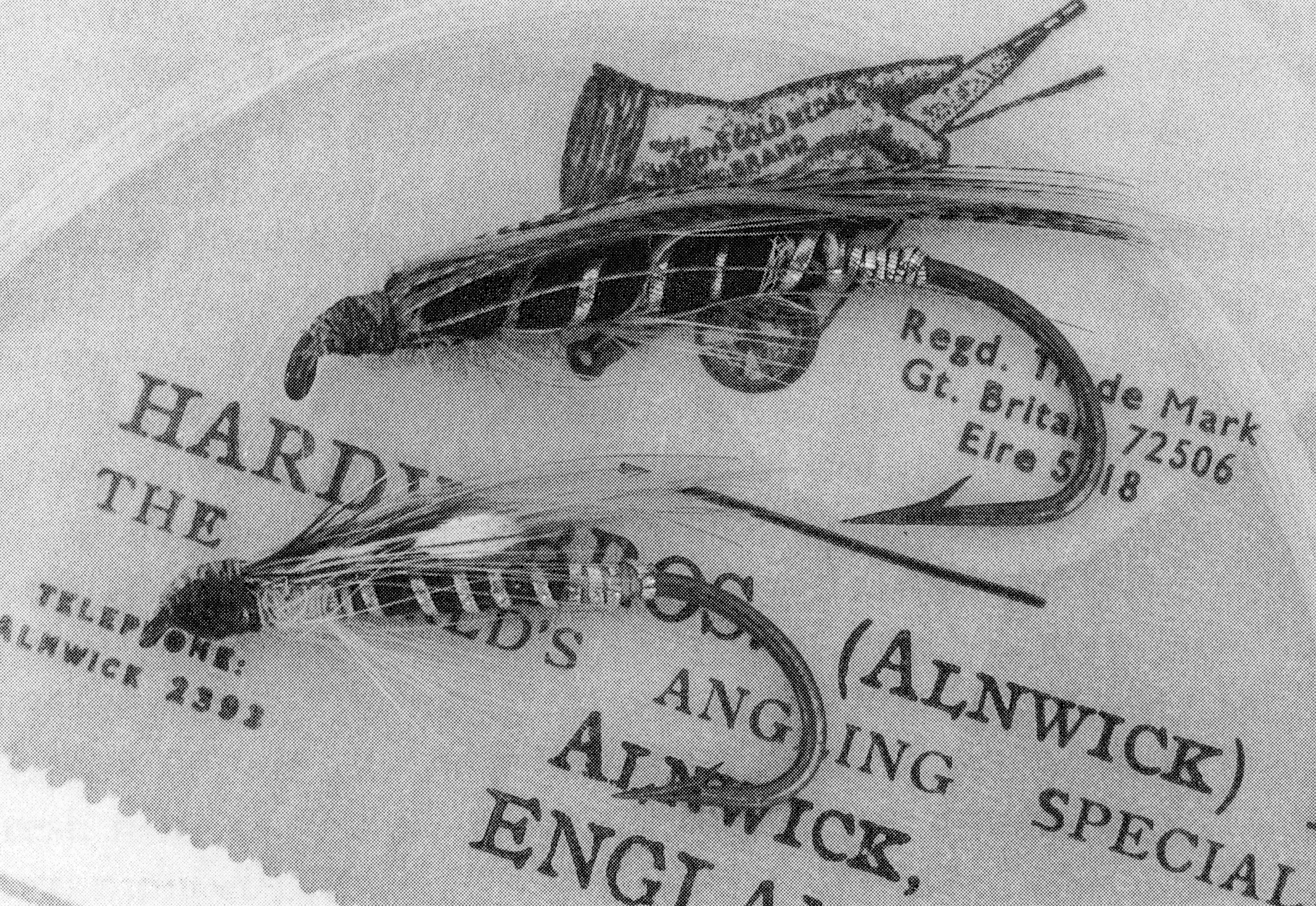
General Money #2 tied by the general and saved by Ted Pengelley, the General's ghillie.
Money saw business opportunities in these developments, and when he returned to England he sold the family estate, Culmington Manor in Shropshire, and left again for Vancouver Island. He settled with his family just south of Campbell River in the small coastal community of Qualicum Beach, and made plans to build a hotel for traveling salmon anglers. The enterprise, however, was delayed by the outbreak of World War I. Money took command of the 159th Brigade and was directly responsible for the liberation of Turkish-controlled Jerusalem. He was promoted to Brigadier General and retired once again to British Columbia, a revered old soldier, and an institution in the making, for his Qualicum Inn soon became an intrinsic part of the tyee experience.
Money's formal education in England had included a proper grounding in Atlantic salmon fly fishing. While a university student at Oxford, he had his first game book constructed. Leatherbound, with pages printed to record every category of fish and game, it could detail his fortunes on rivers and in the field. This was more than a logging-in of catches. He noted his companions, recorded his thoughts and the water conditions, and often headed the page with a photograph. Religiously keeping at this ever-expanding history-there would be nine game books in all-was a habit he maintained for more than half a century.
The General applied what he knew of Atlantic salmon to steelhead and found little reason to change long-practiced techniques. The steelhead were usually winter-runs, as are most in the waters of Vancouver Island's eastern slopes. The migrations came with a rush, and on the small rivers, half the annual escapement often occurred in six weeks, mostly in December and January, and their predictable abundance soon attracted a devoted angling following.
Summer steelhead were another matter. Common in West Coast streams and their remote canyon waters, the fish ascended inconspicuously and disappeared into deep pools, not to be seen again for weeks, even months. The spawning run continued in the company of freshly ascending salmon. Steelhead were obscured within these more massive migrations, and most were lost to angling. With the exception of the Stamp River, a summer steelhead was a single fish, encountered by accident.
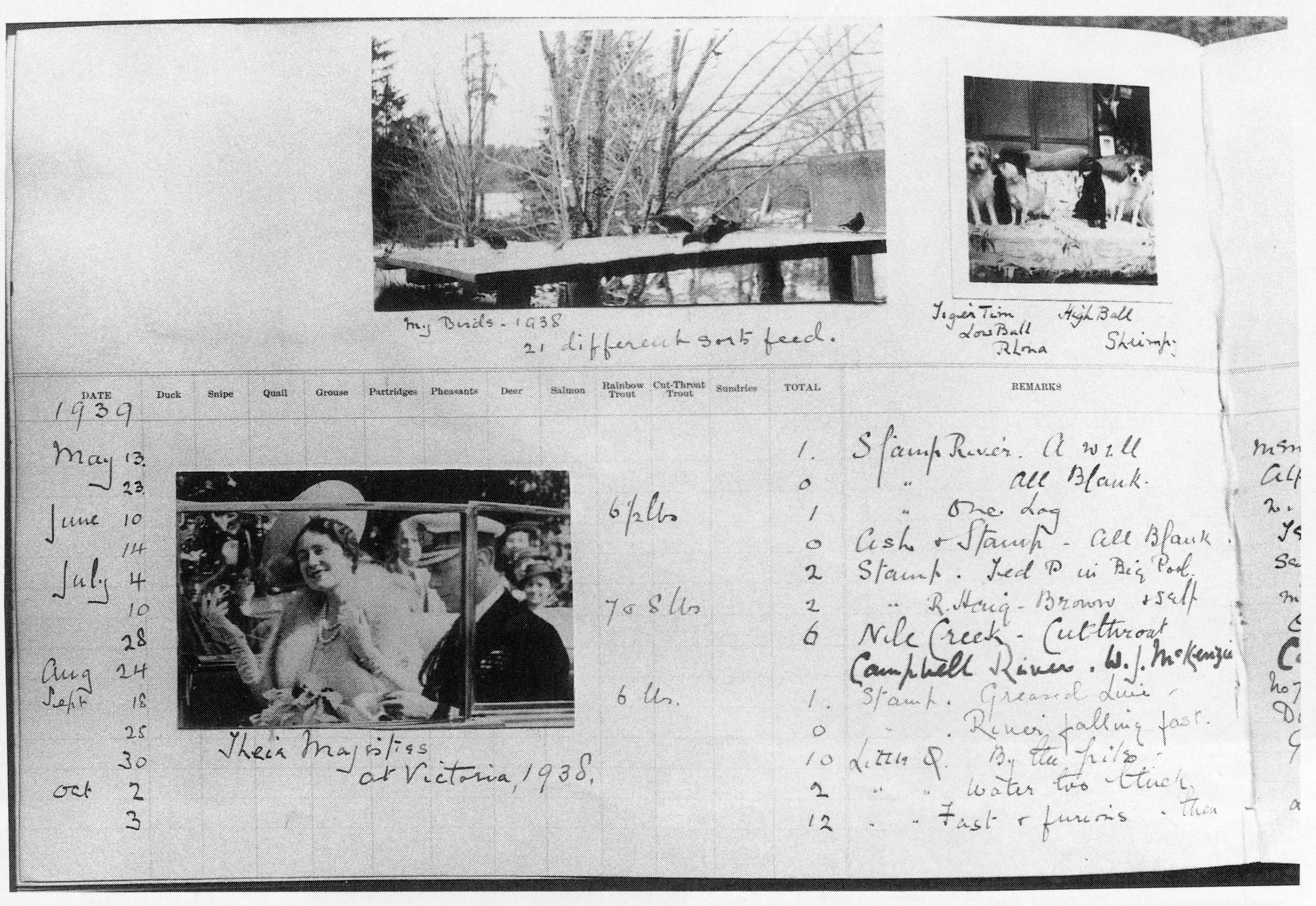
A page from the general's gamebook in 1939. The entry on July 10 marks a day Roderick Haig-Brown described in A RIVER NEVER SLEEPS. Note also: a) Entry for July 4: "Ted P," is Ted Pengelley. b) The General returned to the river on September 18 and took a 6 pound steelhead on the "greased line." c) Snapshot is of King Edward VII before his abdication.
Along the west coast of Vancouver Island, west and north of Washington's Cape Flattery, is Barkley Sound. Here is an immense kingdom of island groups, capes, and fjords. One of these arms of the sea, much longer than the rest, is Alberni Inlet, and it reaches so deeply into the island that it nearly makes two islands of the whole. Many rivers tumble into this sea, but none is so fine as those that begin with the Somass at Port Alberni.
The Somass is a short trunk of a river, a gatherer of other rivers and their lakes: only a mile upstream from tidewater, it splits to become the Sproat and the Stamp. Named for Captain Edward Stamp, a nineteenth-century English lumber merchant, the Stamp is joined, many miles upstream, by the Ash. All three rivers have flows sustained and tempered by very large lakes, and two of these, Sproat Lake and the Stamp's Great Central Lake, are sockeye-salmon lakes that have always been important to the commercial fishing industry of the area.
The first summer steelhead enter the Somass in June. They pass by Port Alberni on the flood tide before reaching the Stamp and the shelter of deep runs below steep hillsides and stately suburban homes. As the fish continue upstream, they enter a forest corridor honeycombed with logging roads and prairie farms, and anglers can find ways to follow them from salt water to their destination just below Great Central Lake.
General Money and his friends might sink a red or orange fly during periods of high water, but summer steelhead generally belonged to low-water dressings and the floating line. On the Stamp, as nowhere else, the rationale for fly selection and the methods employed for their presentation could be the same for Atlantic salmon and steelhead trout.
Roderick Haig-Brown
By the late 1930s, Roderick Haig-Brown, a young Campbell River magistrate, was nearing completion of his monumental angling work, The Western Angler, published by The Derrydale Press in 1939, a definitive two-volume account of fresh- and saltwater angling in British Columbia. Whenever possible, he relied upon knowledge gained by local experts, and he combined this with his own considerable experience and the latest studies completed by provincial fishery biologists. Bill Nation, the father of Canadian Kamloops trout fishing, provided many original patterns and explained how best to make use of each on interior lakes. Tommy Brayshaw, twenty years Haig-Brown's senior, was a self-taught artist, and his brilliant paintings of Canadian gamefish illustrated the book. The author himself was wise in the ways of Campbell River salmon. During his youth in England he had learned how to work a Devon minnow in spate rivers for Atlantic salmon, so a transfer to winter steelhead was easy. His years of searching the Campbell River's Canyon Pool with a Steelhead Bee were still to come, and his knowledge of these more elusive summer steelhead was now, at best, tentative. Not so the General's, and Haig-Brown gathered from their relationship an understanding of the Stamp River's steelhead and an idolatrous respect for his mentor. When The Western Angler was published shortly before the General's passing in 1941, it began with the following dedication: "To General Money of Qualicum Beach, finest of western anglers, and to his own Stamp River, loveliest and most generous of western streams."
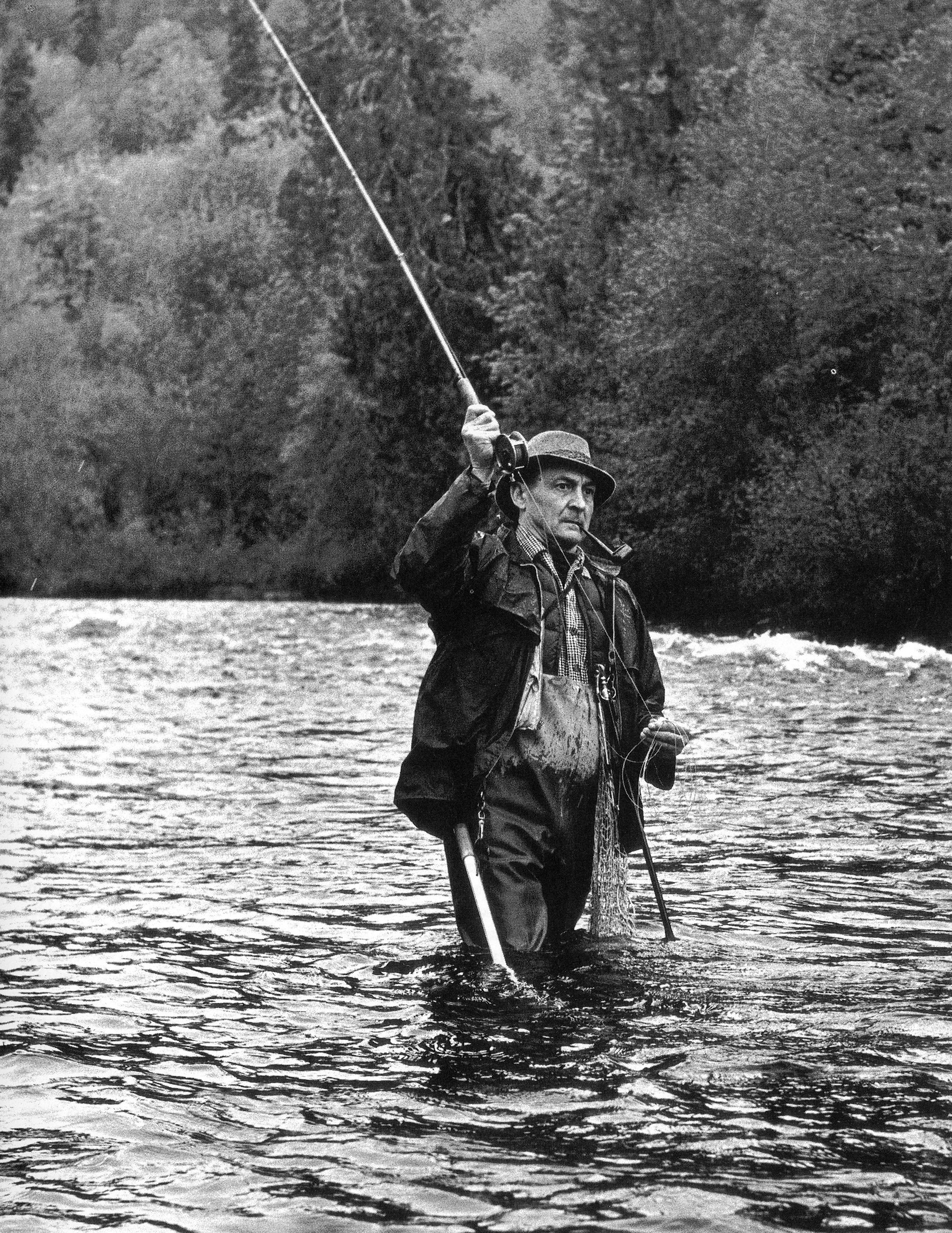
Roderick Haig-Brown (photo by Mary Randlett)
I came to know these icons of western angling first through correspondence and ultimately in person. Tommy Brayshaw was a friend, and I discovered an original, two-volume copy of The Western Angler through him. I met Haig-Brown at a banquet in Portland, Oregon, and we had dinner together. The memory of that meeting and his letters to me are among my most cherished possessions. Gordon Money introduced me to his father through the General's game books. One afternoon we spent hours thumbing through the volumes, turning the pages and visiting Siberia and India, big game and upland game, Midlands trout and Scottish salmon. New World elk and salmon were there, too, as well as a consistent record of summer-run steelhead fly fishing. This was the archetypical Englishman taking his leisure, the sum total of a man's life measured neither by military deed nor by fortune gained, but by the intense pleasure his gentlemanly pursuits brought him. As we neared the end of the last game book, I came upon a single terse entry telling that on July 10, 1939, a day on the Stamp had been completed with "R. Haig-Brown." According to the ledger, they had killed two steelhead, a seven- and an eight-pounder.
Haig-Brown would later write about this experience with wonderful sensitivity in the "June" chapter of A River Never Sleeps. He had introduced the General to "a new method" of presenting a low water fly, the greased line, based on Greased Line Fishing For Salmon, the book Donald Rudd had written under the pseudonym Jock Scott.
The General took great pleasure in applying the method, and then hooking and successfully gaffing his catch.
"That's wonderful sport," he said. "We should have tried it long ago." He knelt beside his fish and freed the fly from the corner of the jaw. ''I'm going to send away for the light rod as soon as we get home. You must help me pick one out from the catalogue." We took the fish back in the shade and sat down. "That's my day's fishing," the General said. "I'm getting old. But we've found something new for the river after all these years."
I do not know whether the General kept faith with his decision to purchase the new rod, but I think he did. He returned to the Stamp on September 18, more than two months later, and, as was his custom, he fished Great Pool. The game book records that he took a six-pound steelhead, and under the heading "Remarks" he wrote, "Greased line."
The two game-book entries signaled the passing of an angling heritage from one person who exemplified the best of our fly fishing traditions, to another who would communicate those ideals to future generations through angling literature of lasting importance. No small thing to be a direct descendant of such lineage!
Stamp River Steelhead
Stamp Falls is a famous cataract four miles above where the Stamp joins the Sproat. Here the river gathers itself for a plunge into a pool that seems to possess no bottom. Because winter steelhead congregate in its depths, the Meat Hole, as it is inelegantly called by locals, is a popular place to dunk roe. Few of these fish continue their migration beyond this barrier, a habit established during eons when the falls was virtually impassable. Some years ago a fishway was constructed at the falls, and while this has assisted biologists in determining escapements and securing hatchery stock, it has also allowed a few winter fish to pass upstream. Historically, only the summer steelhead could best the tremendous currents of the falls, and today Stamp Falls still marks the nearly complete separation of the two seasonally distinct races.
Winter steelhead first enter the Somass in November, with peak escapement from late November to January. When rain is adequate, it becomes the rare November-run winter steelhead river. The majority of the escapement is over by March, though a few fresh fish are found well into April.
G. S. Horncastle, in his study, Life History of Steelhead Trout from the Somass River on Vancouver Island, 1981, determined that among winter steelhead, 9.2 percent were repeat spawners with females outnumbering males 7.5 to 1. Approximately sixty-five percent of the maiden steelhead were two-year ocean fish, while thirty-five percent were three-year ocean fish. (The one-year and four-year ocean categories were both represented by single fish from a sampling of 163 steelhead.) The two-year ocean steelhead averaged twenty-seven inches, or about seven pounds, and ranged from three to twelve pounds. Three-year ocean steelhead averaged nearly thirty inches in length and ten pounds, with a range of six to eighteen pounds. The "official" Stamp River record is a male winter steelhead of a little over nineteen pounds. A few local stories circulate of one or two steelhead of twenty pounds, but clearly these weights are the upper size limit for this race.
Horncastle's investigation of summer-run steelhead revealed a race significantly different from the winter-run. In the sampling of sixty-two wild steelhead, twenty-five percent were one-year ocean fish, and seventy-five percent were two-year ocean fish. Hatchery steelhead for the same age groups were sixteen percent and eighty-four percent respectively. Steelhead with three or more years of ocean residency were totally absent from either group. The one-year ocean fish averaged 23 1/4 inches; the two-year ocean fish averaged 27 inches, or about seven pounds, and exhibited considerable range-from about twenty-two to nearly thirty-eight inches. However, the great majority of Stamp summer-run steelhead were ten pounds or less; twelve pounds was exceptional. I asked Bob Hooton, senior biologist for the Fisheries Branch (1986), whether anything was unique about Stamp River steelhead. Without hesitation he replied, "Yes, their small size."
Among all wild steelhead, winter- or summer-run, the females outnumbered males by two to one, an expected imbalance due to the polygamous nature of the species. The ratio changes to one to one with hatchery stock; the reasons for this are not understood.
The summer fish spawn in late February and March, the winter-run about four weeks later. As the spawned-out steelhead, the kelts, pick their way downstream, they are met by thousands of May-run sockeye salmon migrating upstream for the lakes that receive their spawning tributaries. These steelhead, survivors of the season past, then enter Barkley Sound and join maiden summer steelhead of the new spawning year. Sadly, miles of sockeye gill nets document this passing of steelhead generations. About a thousand steelhead, mostly summer-run stocks, will perish in the nets, an incidental catch lost in a sockeye harvest numbering in the hundreds of thousands.
To mitigate these losses, the Robertson Creek Hatchery began releasing summer-run steelhead smolts in 1974. This program was increased in 1977, as a result of funding from the Salmonid Enhancement Program, a far-reaching joint effort by federal and provincial governments to increase salmonid stocks, including Atlantic salmon, to twice current levels, or to levels first exploited in the nineteenth century.
Robertson Creek Hatchery is located on the Stamp River at the outlet of Great Central Lake. Its primary function is raising several million chinook fry and a million coho fry. For ten years, the steelhead reared were summer-run stock. In 1986, about 60,000 summer-run and 125,000 winter-run steelhead smolts were released, the latter always the offspring of wild fish. The returns range from 3 to 7 percent for winter steelhead, to 1.5 percent for the summer run. In spite of this meager return, Bob Hooton estimated that at any given time in the summer there are 1,000 to 2,000 hatchery, and 200 to 250 wild summer-run steelhead in the Stamp.
Biologists discovered years ago that smolts released near the hatchery site returned to the hatchery as adults a year or two later with such determination and speed that they were in large measure lost to angling. At one point, steelhead were captured at the hatchery, trucked downriver, and released to repeat their upstream journey. Hooton found a better solution when smolts were released at points lower down in the system. These enterprising efforts have allegedly resulted in what some anglers call "The Miracle Mile," a mile or so of water just below the confluence of the Stamp and Sproat rivers where summer-run steelhead congregate for weeks before continuing upstream.
A few summer-run steelhead begin reaching the Robertson Creek Hatchery in June. Ten females and several males are secured each month for hatchery production. The other steelhead are collected at the hatchery and ultimately sold to a fish buyer who bids on the entire lot. When I visited the hatchery and discussed this with Mike Wolf, a federal fish culturist, we were staring into a pen containing several hundred steelhead from four to ten pounds. "We don't want these fish," said Wolf. "We want these hatchery fish caught."
At least part of the problem has been lack of angling pressure. The summer angler may dabble in brown trout from Great Central Lake, or he may spend a day or two hunting for steelhead in the Stamp, but basically, deep in his bones, he is a salmon fisherman. And no wonder: Port Alberni is famous for its tyee. One day I saw a sixty-three-pound chinook "in glass," the expression locals use to describe a salmon displayed on ice and under glass. This particular fish, the largest tyee that summer from Vancouver Island waters, was the source of considerable civic pride and served to justify the city's claim, "Salmon Capital of the World," a title they insist on sharing with Campbell River.
Mark would come to my campsite at Stamp Falls Provincial Park each dawn, and after coffee we would drive and then hike to his favorite water, a pool several hundred feet upstream from the top end of Money's. One morning here, where the Ash River met the Stamp, I raised a steelhead that had nosed up beneath the shallow turbulence of the confluence. Mark liked to fish farther down the pool, water that failed me completely, and a morning hardly passed without his finding a fin-clipped hatchery steelhead. After a few days, I began to feel that some combination of river depth and the manner in which steelhead held to the far side prevented my fly from slowing enough to encourage a rise.
After lunch, Mark and I would explore, sometimes driving to the upper Ash, or downstream to fish the Somass and Swanson Pool, a fly water every bit as classic as the General's. When I couldn't make a steelhead from two halfhearted rises, I became determined to return in November and cast a fly for the winter run. There would be many more fish then, tidewater steelhead fairly dripping with sea lice, and Mark thought that if the water were low the fishing would be grand.
"Not like chasing these ghosts of summer, eh?" I challenged.
"No! Those winter steelhead are voracious! You can't believe how strong they are-and they're blue! Wait until you see one against snow!" he answered.
The beautiful Ash River is a series of falls and extremely deep canyon pools. It has few access points, cannot be floated, and sustains little angling pressure. Biologists estimate that no more than one in fifty summer-run steelhead entering the Somass are Ash stock, but all of these are wild fish preserved as a natural gene pool.
Ash steelhead collect just below the river's confluence with the Stamp, exactly where Mark and I began each fishing day together. Rick Axford, provincial fishery technician, has frequently donned a wet suit and snorkeled through the pool. He has counted as many as two hundred steelhead, the Ash fish spooky and temperamental by midsummer. Axford is also an enthusiastic angler who feels that these summer steelhead are easier to locate with a fly in late summer, just before the heaviest chinook and coho runs, or in November when most of the salmon have spawned.
The continuous recycling of the Stamp's hatchery-bred summer-run stock became a worry to biologists at the Robertson Creek Hatchery, and in 1986 they secured Ash steelhead to invigorate the Stamp gene pool. Biologists are certain that the use of wild winter steelhead for brood stock has been instrumental in maintaining that race's vigor and wild nature. It is hoped their efforts at enhancing runs of summer-run steelhead will be equally successful.
We returned to the Stamp every evening, I to fish the top end of Money's Pool, Mark to drift bait or bobbers below the mouth of the Ash. Just as the sun dropped below the mountains, a steelhead boiled beside my Green-Butt Skunk and did not take. I repeated the cast, and I felt only a tentative strike, more a pluck. I searched methodically down through the upper pool for a new fish and to rest the steelhead holding in the growing darkness. My concentration and the sound of the river so filled my head that I barely heard Mark's call, "Trey! I've got a big one!"
He was only a shadow against the firs, but the steelhead revealed his whereabouts with a jump that caught the last light of day on its flanks. I quickly returned to my steelhead, gave in to my scattered senses, and sent the fly directly across the heart of the run exactly as before. The take was solid, but there was no fish at the end of it. This had happened to me several weeks earlier on Oregon's Deschutes: On the fourth rise, in complete darkness, I had hooked a four-pound steelhead. This night would not be like that one, for the steelhead did not come back. I damned my lack of patience and wished I had waited ten more minutes until not even a crack of light remained.
I picked my way across the river and soon joined Mark on the bank. He was pumped from his experience, a man so fully restored by his catch and its release that the story came out rapid-fire as his pace kept me jogging in my waders. "Ah, that was a big bastard, at least twelve pounds," he said as we made our way down the path in the darkness.