Skykomish Sunrise: Three Dressings Across Time
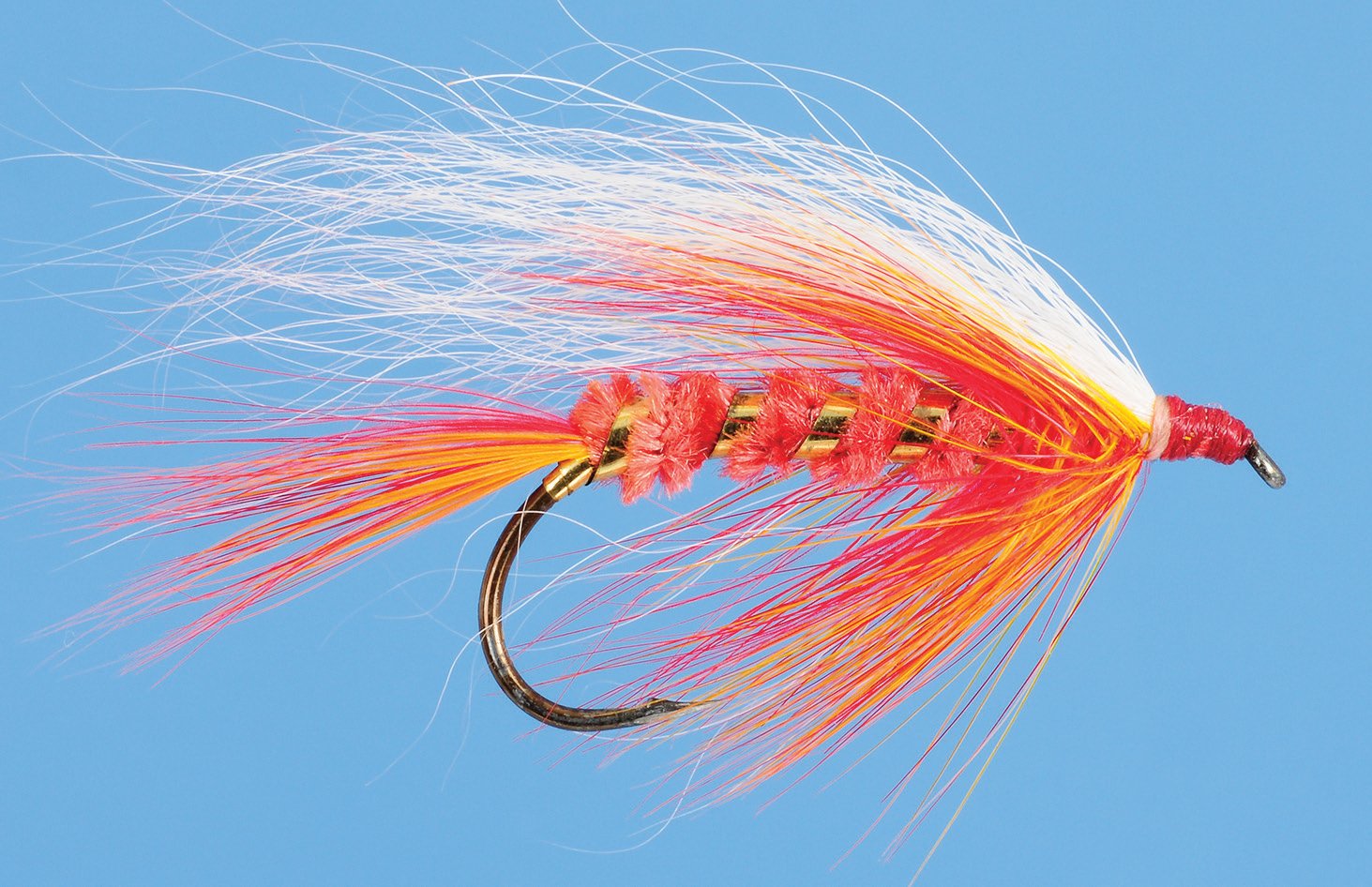
Skykomish Sunrise tied by George McLeod in the 1940s. This rare image shows the famous pattern in its early, full-bodied chenille style. Desktop only: Right-click any image in this essay to open it in a new tab to view the high-resolution version. This feature is not available on mobile.
A Winter Sunrise, a Father’s Challenge, and the Birth of a Steelhead Classic
This story is assembled from excerpts from Trey Combs’s Steelhead Fly Fishing and Flies (1976), Steelhead Fly Fishing (1991), and Flies for Atlantic Salmon & Steelhead (2023).
Ken McLeod and his son, George McLeod, were driving east to the Skykomish River one January morning in 1936. The sun was coming up over the snowcapped Cascades, a splendor of red, yellow, and white. “Tie me a fly with those colors in it,” Ken told his son. That evening, George used red tying thread to secure a mix of red and yellow hackle, a red wool body, and a white polar bear wing. The completed fly was named the Skykomish Sunrise. George christened the pattern with three winter steelhead from a single pool near Monroe. The day included a seventeen-pounder. The new fly became a sensation.
I knew about the Skykomish Sunrise even before I knew about the river, and many years before I actually fished there. I am certain it is the best known steelhead fly wrought from this area, so much so that it is often used as a logo for the sport, very much analogous to the Royal Coachman and trout fishing.
Three dressings help tell the story of that famous fly: one tied by George McLeod in the 1940s and two later versions dressed by Dave McNeese. Together, they show how the Skykomish Sunrise changed over time while retaining the red, yellow, and white colors that made it immediately recognizable.
Skykomish Sunrise (1940s) — Tied by George McLeod
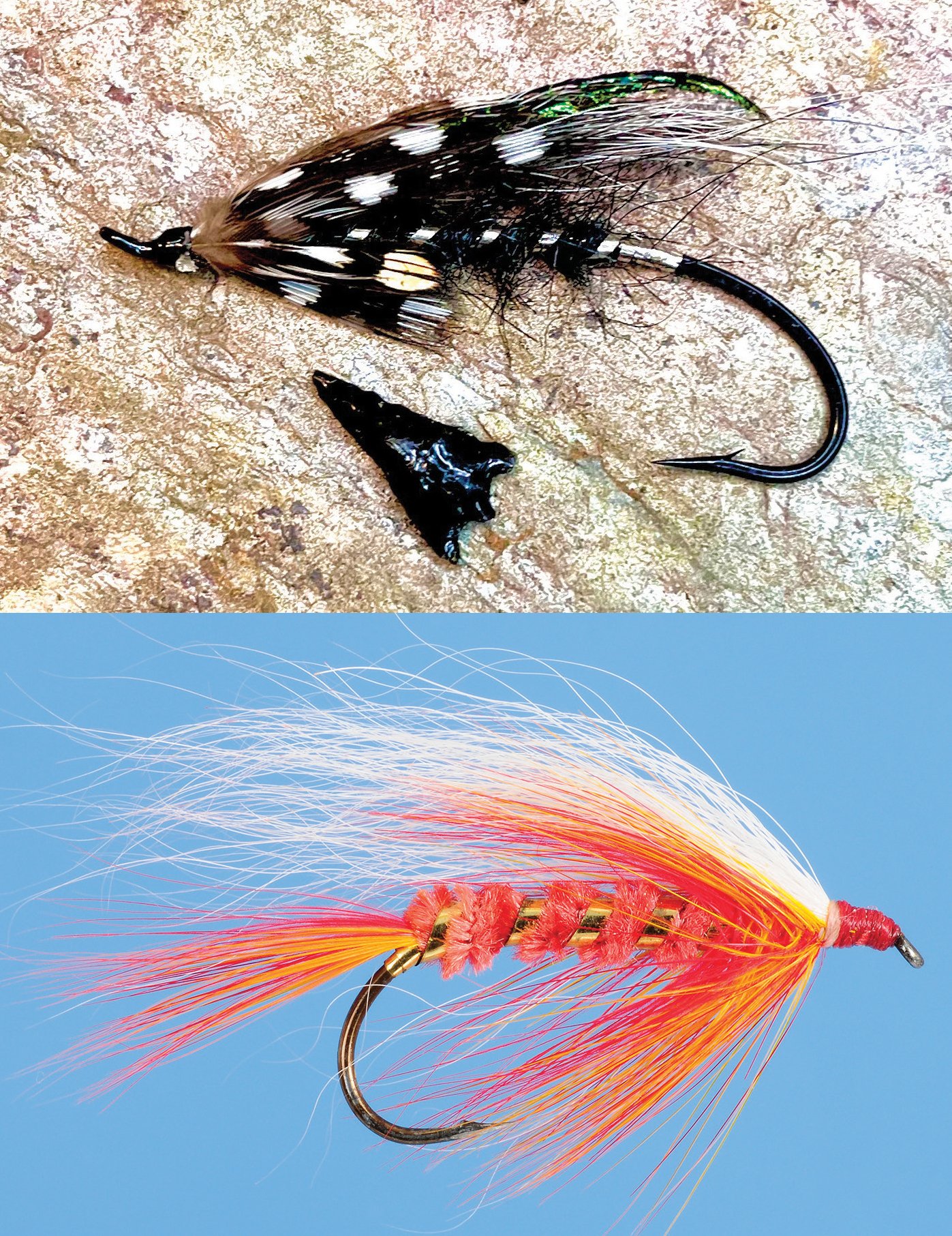
The transition from the style that dominated the post-World War II world of steelhead fly fishing is seen in these two original wet flies: the 1940s-born Skykomish Sunrise with chenille body (bottom) from the vise of George McLeod, and the 1960s-born Black Diamond (top), sleeker with seal fur body designed and tied by Harry Lemire.
Writing in 1976, I described the McLeods’ remarkable record with the Skykomish Sunrise:
“The Skykomish Sunrise is a steelheading standard. It is the result of a joint effort by famous father-son steelheading team Ken and George McLeod. As its name suggests, the color scheme was inspired by a sunrise on Washington’s Skykomish River. They introduced the pattern in 1940.
The number of record-size steelhead these two gentlemen have accounted for over the years is amazing. Using this pattern, George took a 29 pound, 2 ounce Kispiox River steelhead in 1955. It was then a world’s record for fly-caught rainbow trout. On the same river four years later, Ken won first place in the Field & Stream fishing contest with a 22-pound, 8½-ounce fish. And in 1957 and 1959 each placed steelhead in the top ten on the contest’s “fly only” rainbow category. (Field & Stream now has a “fly only” steelhead category.)
The Skykomish Sunrise is recommended in sizes 4 and 6 for the summer-run, and 4 to 2/0 for winter-run steelhead.
A recent variation is the Skykomish Yellow. It is identical to the original except for a yellow chenille body. Both of these patterns are commonly tied with fluorescent materials.”
From the Original Bucktail to the Later Dressings
So, the development of steelhead fly fishing can be traced by the flies we fished as the sport moved north to our Washington rivers running from the weather side of the great Cascade Mountains: Skagit, Sauk and Skykomish among the most stunning rivers in the world. The more “modern” flies we were tying had shorter but sleek low-riding wings, the patterns tied on graceful Victorian-era hooks given new life by Dave McNeese and Alec Jackson.
Bodies were chenille, a name going back to 19th-century France, where yarns could be woven into soft and puffy narrow chenille strips to edge blankets, women’s clothing, and the like. I’d buy hanks of the material, enough to produce many hundreds, even thousands of steelhead flies. Bags of red, orange and yellow hackle and some bucktail ordered from Herter’s and I was good for at least a month. The only change to this was first wrapping the hook with fine lead wire to get the fly down. My personal challenge was tying a flawless Skykomish Sunrise, something I rarely mastered.
The two later flies, dressed by Dave McNeese and featured in Flies for Atlantic Salmon & Steelhead, continue the pattern’s familiar colors while presenting the Skykomish Sunrise through different materials and proportions.
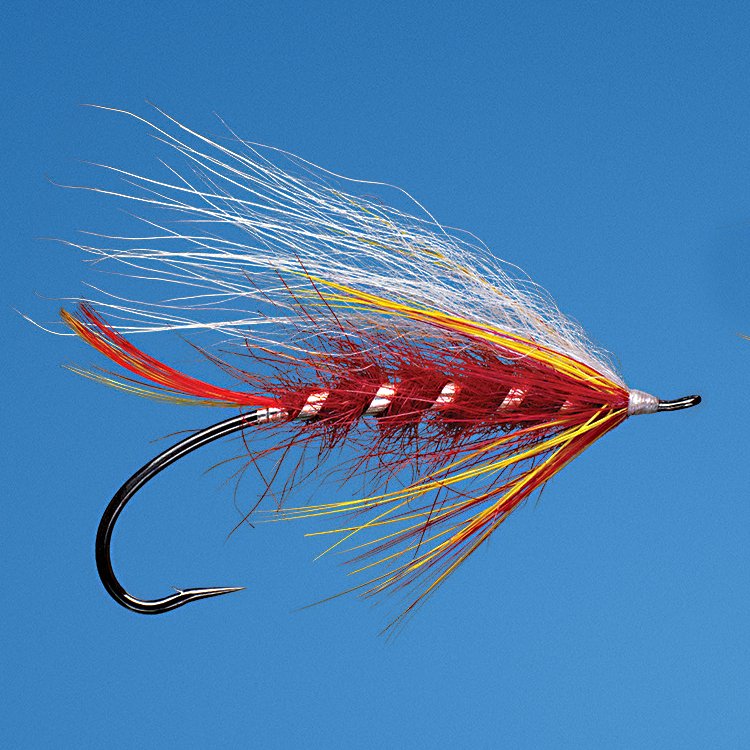
Skykomish Sunrise, dressed by Dave McNeese after George McLeod’s original pattern. The chenille body of the earlier fly gives way to bright red seal or substitute material, while the familiar red, yellow, and white color scheme remains.
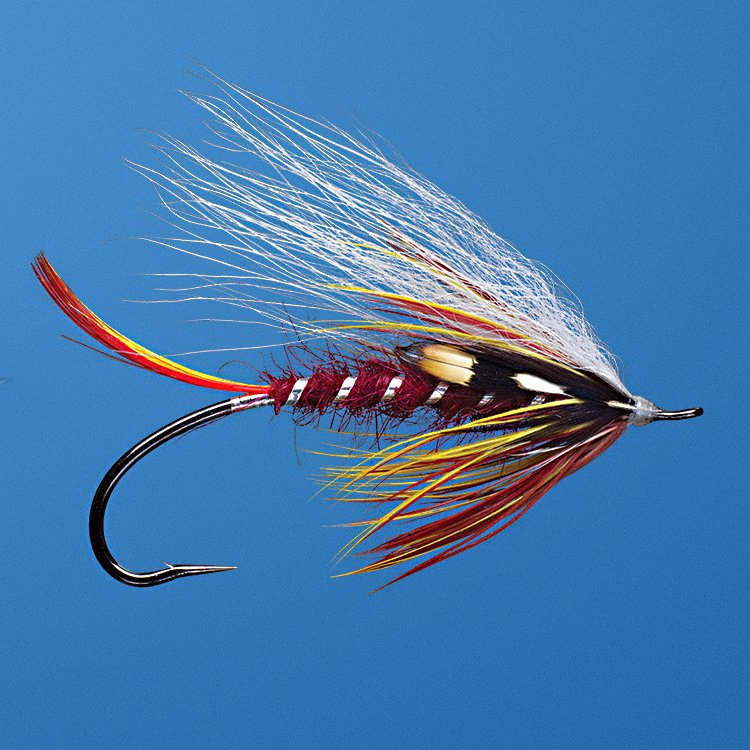
Skykomish Sunrise (Reimagined), designed and dressed by Dave McNeese. The familiar red, yellow, and white color scheme remains, recast with golden pheasant tippet, a fluorescent red seal or substitute-dubbing body, and red and yellow macaw breast-feather hackle.
The story of the Skykomish Sunrise was first told to me without dates, and this was the story I repeated to friends. Soon fact became legend, a little tale out of historical context but comforting in its charming simplicity. A half-century later, the original Sunrise remains the consummate winter fly, and continues to inspire anglers to new flights of aesthetic fancy. I tie the original with fluorescent floss and marabou, add a few strands of Krystal Flash, and still believe in its magic.
Dressing Notes from the Fly Pattern Dictionary
Skykomish Sunrise (1976) - Tip: Silver tinsel. Tail: Red and yellow hackle fibers mixed. Body: Red chenille ribbed with flat silver tinsel. Hackle: Red and yellow wound together. Wing: White bucktail. Dressing notes from Steelhead Fly Fishing and Flies (1976) by Trey Combs. Original Design: George McLeod.
Skykomish Sunrise (2023)- Tag: Fine flat silver tinsel. Tail: Golden pheasant crest feather, one each dyed yellow and dyed red. Body: Bright red, seal or substitute either organic or synthetic. Rib: Bright red Wing: Fluorescent, polar bear, bucktail, or a synthetic white. Head: White in photo; traditionally black. Dressing notes from Flies for Atlantic Salmon & Steelhead (2023) by Trey Combs. Original Design: George McLeod.
Skykomish Sunrise (2023, Reimagined) - Tag: Fine Flat silver tinsel. Tail: Golden pheasant tippet, one each, dyed red and natural yellow. Body: Fluorescent red seal or substitute natural or synthetic dubbing. Ribbing: Medium oval silver tinsel. Hackle: One each, red and yellow macaw breast feather. Wing: Fluorescent, polar bear or substitute bucktail or synthetic fur. Head: White. Dressing notes from Flies for Atlantic Salmon & Steelhead (2023) by Trey Combs. Original Design: Dave McNeese.
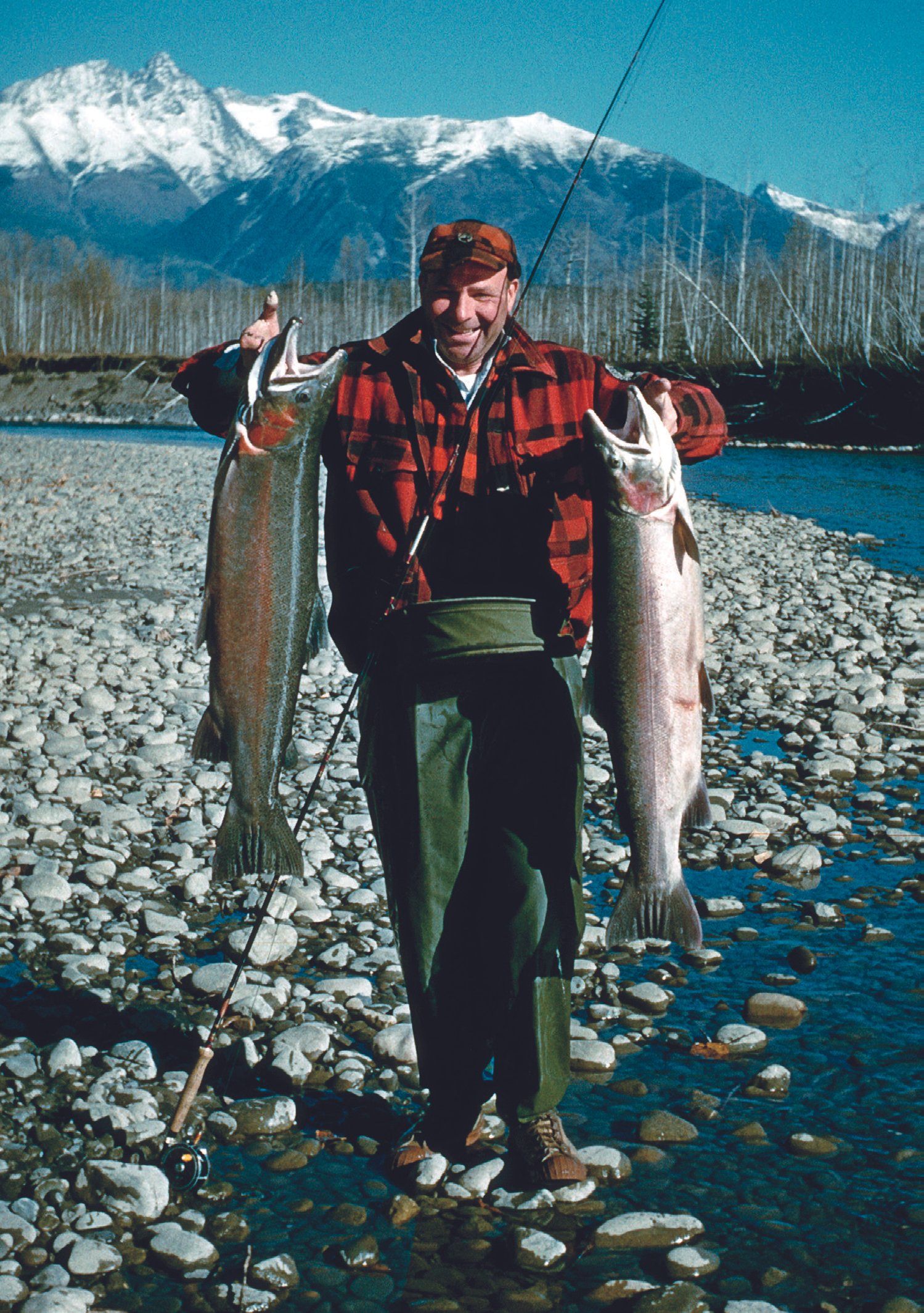
George McLeod in 1957 with a pair of giant steelhead from the Kispiox River. Only a handful of Americans fly-fished the northern British Columbia river then.
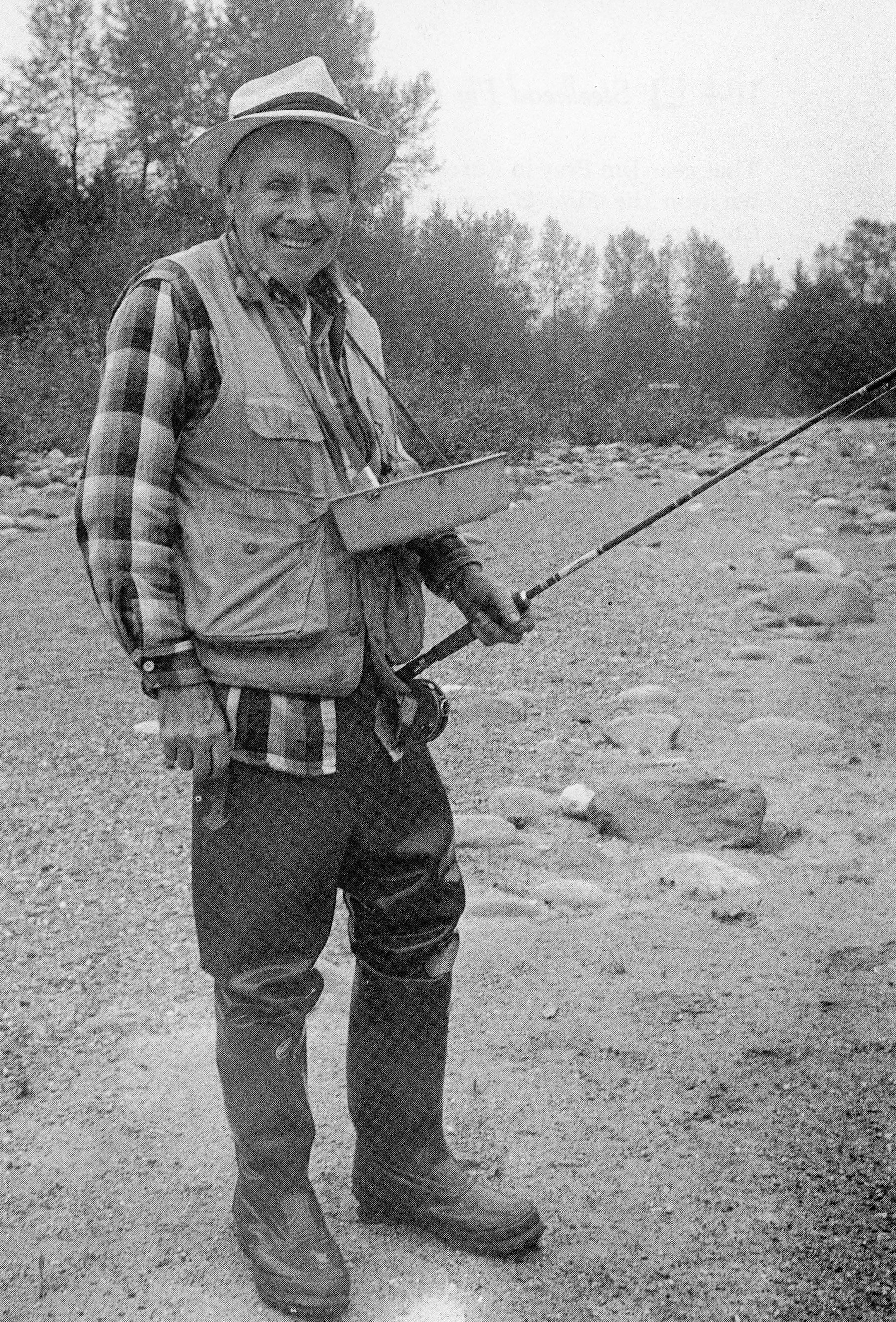
Ken McLeod pictured on the Skykomich River. Photo credit: Bob Arnold
Parts of this blog are excerpted from Flies for Atlantic Salmon & Steelhead. The book is available directly from the author on Amazon in two formats:
Limited 1st Edition Hardcover — available on Amazon
Digital Reference Edition — available on Amazon Kindle