Lady Caroline And Her Famous Fly
The following is an excerpt from Flies For Atlantic Salmon & Steelhead
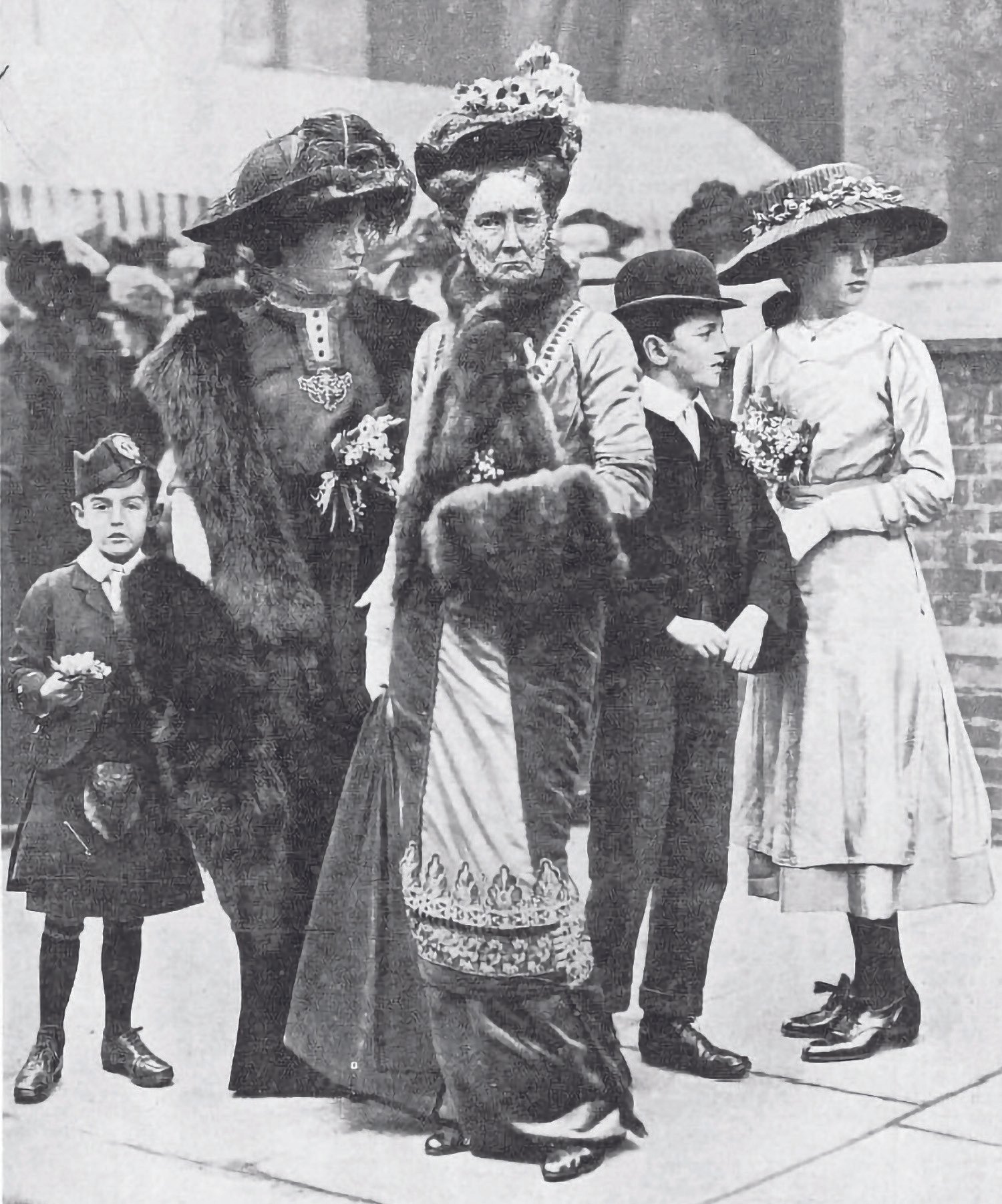
This 1911 photograph of Lady Caroline Gordon Lennox, surrounded by unidentified nieces and nephews, ran in a London-based journal called the Tatler. She was nearing 70 years old, and was well known for her daily brisk walks around the area of London where she resided.
For many years, the Lady Caroline has reigned as the most famous Spey fly, widely known among both steelhead anglers and Atlantic salmon aficionados. In fact, prior to the age of the Internet and social media, this fetching fly was the only original Spey fly known to many steelhead anglers—it was far more famous than such 19th-century Speyside stalwarts as the Purple King and Carron, to say nothing of the Riachs and the many other Kings. And on both sides of the Atlantic, the lady for whom this salmon fly was named lurked in the shadows of history until the publication of my book Spey Flies & Dee Flies in 2002, when a wider audience discovered what learned anglers and authors already knew.
Her name was Caroline Elizabeth Gordon Lennox, eldest child of the Charles Henry Gordon Lennox, the sixth Duke of Richmond and Gordon. By birth into the uppermost ranks of the Peerage of England, Caroline inherited the privileged upbringing of the nobility. Upon the death of his father in 1860, Charles Henry ascended to the dukedom and reveled in his expansive Scottish properties—particularly the Gordon Lennox family Scottish seat, the spectacular Gordon Castle on the River Spey at Fochabers. Each autumn, the duke hosted elaborate gatherings of rich, famous and titled sportsmen and sportswomen for deer stalking, red grouse shooting and salmon fishing.
Born in 1844, Caroline most certainly began fishing salmon as a child, and did so under the most extraordinary circumstances: her fishing precept was the legendary Gordon Castle head fisherman or ghillie Geordie Shanks of Craigellachie. During the autumn great-house parties, the 12 or so miles of the Spey owned by the duke could accommodate dozens of rods and, to each angling party, Geordie assigned a ghillie. But he reserved the duke’s immediate family, along with the most-privileged guests, for himself. Geordie taught all the duke’s children to fish—and then taught their children to fish during a career as head fisherman that lasted more than half a century.
Few among us today can imagine the luxury of such wealth and privilege. Each morning after breakfast, the anglers and the ghillies gathered at the Gordon Castle tackle room, which eventually came to be known as “The Shankery” in deference to the famous head fisherman. Geordie assigned beats to each party, and away they went by carriage or by boat, dispersing along the most productive run of the Spey. Shore lunches interrupted the fishing, which wrapped up in the afternoon so that anglers could return to boast of their successes and commiserate over their failures before retiring to quarters to change for the elaborate evening festivities that culminated with sprawling multicourse dinners. For the most extravagant occasions, such as when Prince Albert visited for the fall fishing and hunting, Gordon Castle needed upwards of 200 workers.
Under such auspices, Lady Caroline rapidly excelled at fly angling for salmon, as did her younger sister, Florence. By her early 20s, Caroline was already recognized as a most-accomplished angler. In 1864, a writer for the Sheffield Daily Paragraph reported, “Lady Caroline Gordon Lennox . . . is a most expert follower of old Izaak, and many a fine salmon has been killed by her ladyship in the noble Spey River. . . .”
Caroline set the standard for the many lady salmon anglers to follow in the coming decades on the Spey. She never married, dedicated considerable effort in service to the community of Fochabers, excelled at a variety of crafts and outdoors pursuits, and was de facto guardian to her brother’s children after his wife died in 1887. Even before then she had embraced the role of chatelaine (a woman in charge of a large household) both at Gordon Castle and back home at the family’s English estate, Goodwood. Her angling feats continued unabated each autumn—one writer reported that Caroline was such a skilled and successful angler that she could “keep the house in fish,” meaning by her own rod she could supply more than enough salmon for the lavish dinner parties at Gordon Castle.
Among her many accomplishments was a four-day stint in October, 1877, when she landed 15 salmon totaling 300 pounds. She landed hundreds—including many trophy-class salmon—during her career, which was interrupted by the outbreak of The Great War in 1914.
So, it is fitting that the most famous of the Spey flies was invented and coined in her honor, probably in 1864, when the new fly was all the rage upon the Spey. We don’t know who invented the fly—I’d like to think it was old Jamie Shanks, Geordie’s father, and famous tackle maker. But we just don’t know.
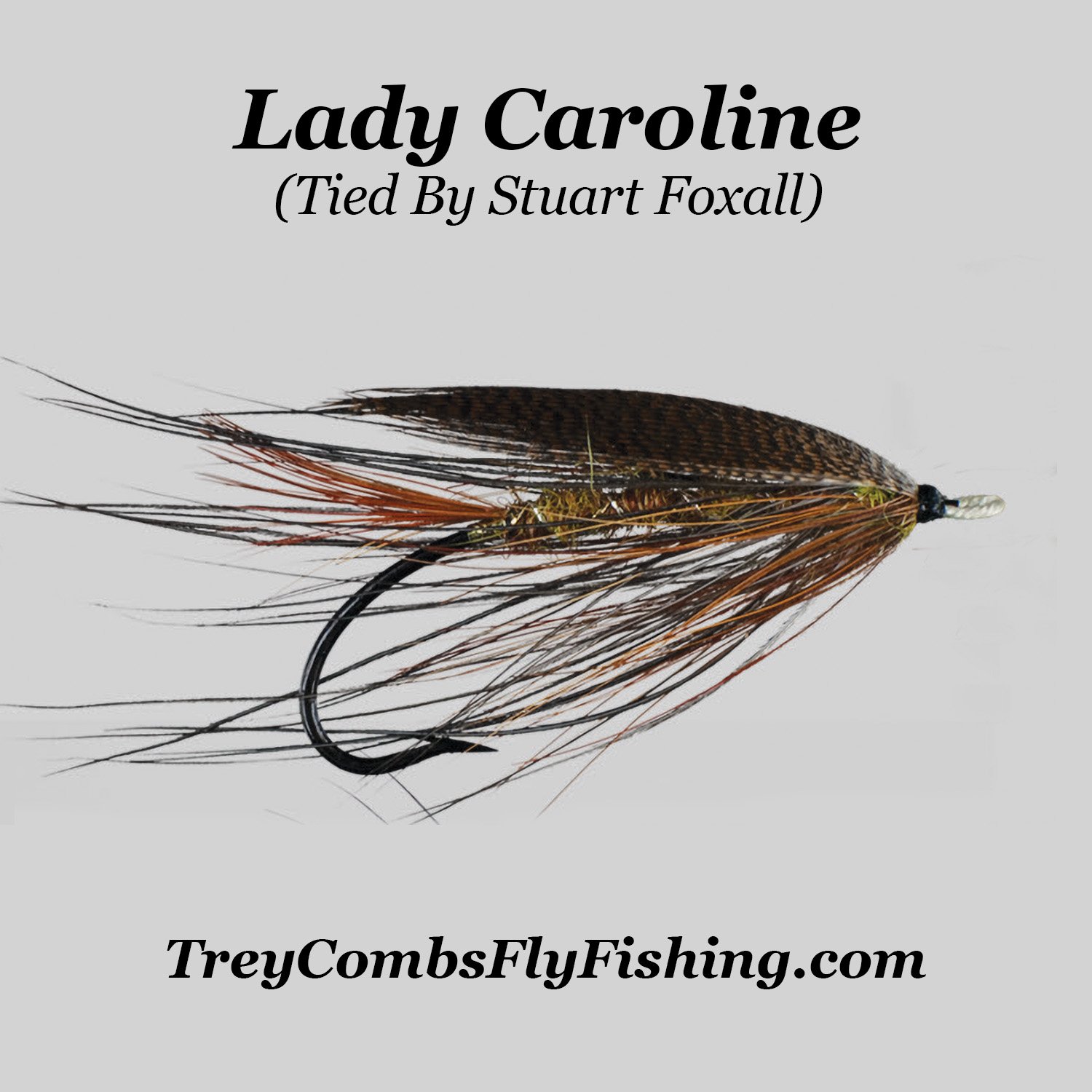
Regardless, it’s a beautiful fly, the original version sporting a coppery-colored body that matches the tail and throat of red feathers from the flanks of the golden pheasant.
Caroline—“Aunt Line” to her many nieces and nephews—was beloved. Her niece Muriel Beckwith (nee Gordon Lennox) once wrote of her aunt: “I wish it were in my power to put before this generation something of the loveliness and charm she represented . . . and which those who knew her might expect, being aware of the innate part she played in our lives and the immense sympathy and understanding she showed to us, the devoted family of children she brought up.”
Lady Caroline passed away in 1934, in London, a month past her 90th birthday. Happily, she had enjoyed robust health right up to her death, and was well known for her daily invigorating walks around the part of London where she resided. The influential journal, The Fishing Gazette, once noted that Caroline was “one of the most expert lady anglers of the day,” but they needn’t have included the word “lady,” because Caroline was the superior to most all the Spey anglers, man or woman.
By John Shewey
Additional Information
While A.E. Knox is the primary source for the flies of Gordon Castle (where the pattern originated), he actually does not list a specific recipe for the Lady Caroline by name in Autumns on the Spey (1872). Instead, he describes the characteristics and philosophy of Spey flies used by the castle's ghillies, like George Shanks.
The first person to officially put "Knox’s Gordon Castle style" into a formal recipe for the Lady Caroline was George M. Kelson in The Salmon Fly (1895). Kelson explicitly attributed the style and the fly to the Spey-side tradition Knox documented.
Kelson’s Original Dressing Notes
Tail: Golden Pheasant red-breast, a few strands only. Body: Brown and olive-green Berlin wool mixed together in proportion of one part olive-green, two parts brown. Ribs: From separate starting points, of gold tinsel (narrow), gold twist, and silver twist, wound the usual way, an equal distance apart. Hackle: Grey Heron, from tail (tied in at the point as usual) wound alongside gold tinsel. Throat: Golden Pheasant red-breast, two turns. Wings: Two strips of Mallard showing brown points and light roots.
The fly image used for this essay comes from the talented hands of master fly dresser Stuart Foxall. The Lady Caroline is one of the most famous Spey flies beloved by Atlantic salmon and steelhead anglers alike.
Flies For Atlantic Salmon & Steelhead Can Be Purchased In Two Formats:
Limited Edition Hardcover — $119.00 (Amazon)
Digital Edition — $24.99 (Amazon - Kindle)
This 1911 photograph of Lady Caroline Gordon Lennox, surrounded by unidentified nieces and nephews, ran in a London-based journal called the Tatler. She was nearing 70 years old, and was well known for her daily brisk walks around the area of London where she resided.