Hoh River Steelhead: The Scales Tell the Story
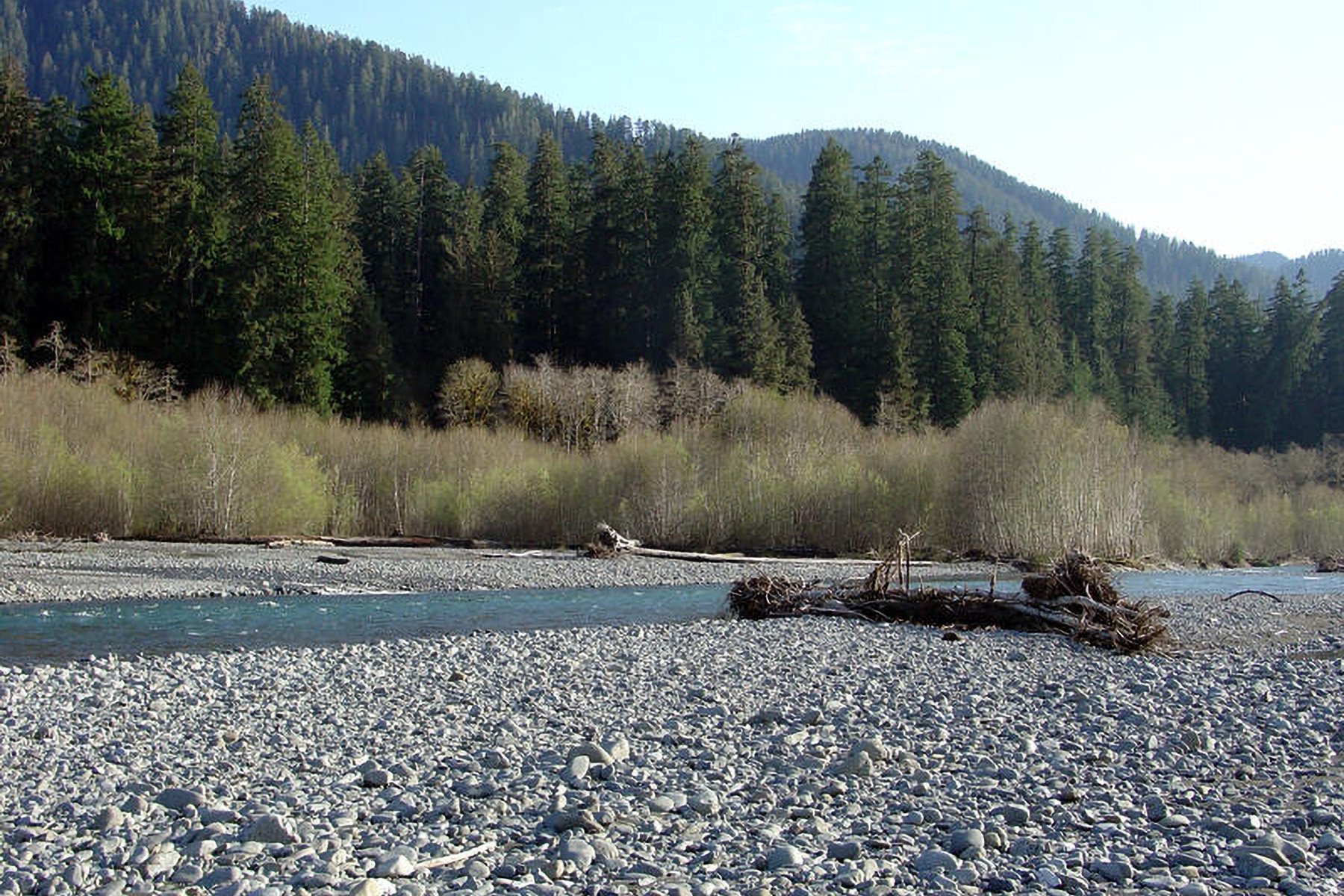
This article is a synthesis of recent research titled “Life History Diversity of Hoh River Winter Steelhead Based on Three Decades of Scale Analysis.” It draws on the study’s findings to present a clear, angler-focused overview of long-term changes in the Hoh River steelhead population, including shifts in age structure, repeat spawning, and overall life history diversity.
Monitoring Steelhead Trends in the Hoh River
Wild steelhead up and down the West Coast haven’t been as abundant as they once were, and that’s led to a lot more attention on how these fish are doing over time. On the Hoh River, a long-term study by the Washington Department of Fish and Wildlife and the Hoh Tribe looked at roughly thirty years of data to better understand how winter steelhead are living, growing, and returning.
The Hoh is one of the key rivers on the Washington coast, draining a large portion of the Olympic Peninsula. It’s a unique system in that most of the watershed remains protected, with a significant portion lying within Olympic National Park. Even with that level of protection, the river still supports a mix of uses—tribal fisheries, recreational sport fishing, and hatchery programs. For this study, though, the focus stayed on wild fish, identified by an intact adipose fin and the absence of hatchery tags.
What Fish Scales Can Tell Us
One of the more interesting aspects of the study is how researchers reconstruct a steelhead’s life history using its scales. This method has been around for over a century and remains one of the most reliable ways to understand how these fish grow and move between freshwater and the ocean.
As a steelhead grows, its scales form ridges—similar in concept to tree rings. When growth is fast, the spacing between those ridges is wider, often reflecting good feeding conditions or warmer water. When growth slows, especially during winter months, the ridges tighten up and form what biologists call annuli.
By reading these patterns, researchers can estimate how many years a fish spent in freshwater before heading to sea, and how long it remained in the ocean before returning. Just as important, scales also record whether a fish has spawned before. Steelhead are one of the few salmonids capable of surviving spawning and returning again, and that history leaves clear marks—known as spawning scars—on the scales.
Understanding Steelhead Life Cycles
To describe these patterns, researchers use a simple age notation system. A fish labeled “2.2+S+,” for example, spent two years in freshwater, two years in the ocean, and had already spawned once before returning again.
Across more than 5,000 fish sampled, the study identified 35 different life history combinations. Most Hoh River steelhead follow a fairly consistent path—spending about two years in freshwater before migrating to the ocean, then one to three years at sea before returning to spawn for the first time. Still, there is a wide range, with some fish spending less or more time in each phase.
What’s Changed Over Time
While many aspects of the population have remained stable, one shift stands out.
Older first-time spawners—fish that spend four years in the ocean before returning—have almost completely disappeared from the population. These fish were never a large percentage of the run, but historically they made up about 2 percent of returning adults. In more recent years, that number has dropped to essentially zero.
Even though they were a small part of the overall population, their loss matters. Fish that spend more time in the ocean tend to return larger, and larger fish generally produce more eggs. Over time, losing that group can reduce the overall reproductive potential of the run.
Repeat Spawners: A Key Piece of the Puzzle
Repeat spawners—fish that survive spawning and return to the ocean, then come back again—are another important part of the picture.
On the Hoh, these fish contribute not just to total numbers, but to the genetic diversity and stability of the population. Females, in particular, are more likely than males to survive spawning and return again, making up the majority of repeat spawners.
Over the course of the study, about 63 percent of the life histories identified included repeat spawning. The overall proportion of repeat spawners in any given year varied, but did not show a clear long-term decline. What did change, however, was the diversity within that group. There are still repeat spawners in the system, but fewer different types of them than there used to be.
Why This Matters
One of the key takeaways from the study is that it’s not just the number of fish that matters—it’s the variety of fish.
A population made up of different ages, sizes, and life strategies is more resilient. Some fish return earlier, some later; some spend more time in freshwater, others in the ocean. That spread helps buffer the population against changing conditions.
In the Hoh River, that overall diversity has declined, and the study found that this is closely tied to how well post-spawn fish—known as kelts—survive and make it back to the ocean. When more of these fish survive, the population maintains a broader range of life histories.
What Could Be Driving These Changes
There isn’t a single clear cause, but several factors likely play a role.
Warmer ocean conditions in the North Pacific have been linked to lower survival rates for both first-time and repeat spawners. Increased competition in the ocean, particularly with pink salmon, may also be a factor. Closer to home, reduced river flows during spawning years and warmer freshwater temperatures can make conditions more stressful for adult fish, especially after they’ve already gone through the physical demands of spawning.
Taken together, these pressures can reduce survival, particularly for older fish and repeat spawners.
Management Takeaways
The study points toward a practical takeaway: protecting repeat spawners—especially kelts on their way back to the ocean—may be one of the most effective ways to maintain a healthy run.
These fish play a key role in maintaining both numbers and diversity. Helping them survive that post-spawn migration gives the population a better chance to express a wider range of life histories in future years.
Bottom Line
The Hoh River steelhead run isn’t just about how many fish return—it’s about the mix of fish that make up that return.
While early freshwater life stages appear stable, the adult population is shifting toward younger, less diverse fish. The loss of older ocean fish and the narrowing range of repeat spawner histories point to a system under pressure.
Keeping an eye on that diversity—not just total counts—gives a much clearer picture of the health of the run, and a better idea of what needs to be protected moving forward.
By Mark Combs
Source: Andrew M Claiborne, Austin J Anderson, Jan Ohlberger, James P Losee, Brian Hoffman, Jennifer Whitney, Life history diversity of Hoh River winter steelhead based on three decades of scale analysis, North American Journal of Fisheries Management, Volume 46, Issue 2, April 2026, Pages 328–339, https://doi.org/10.1093/najfmt/vqaf124
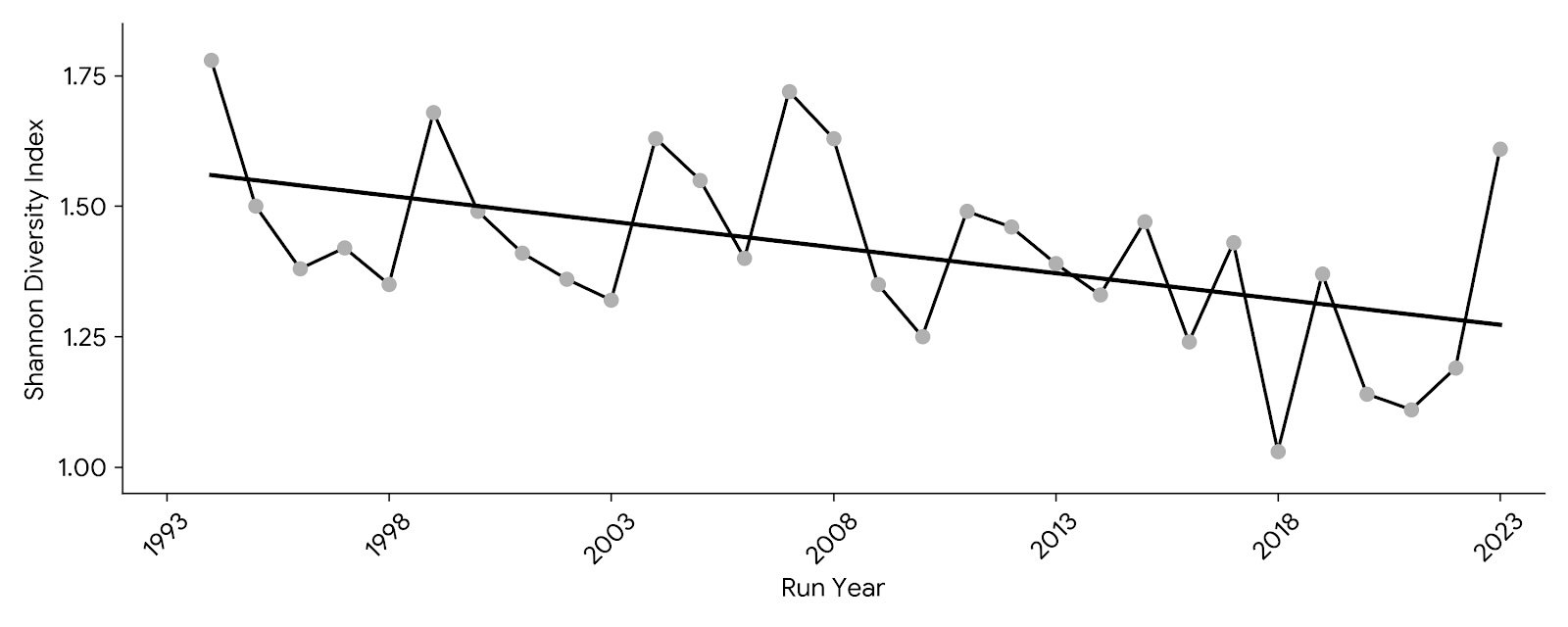
Life history diversity of Hoh River steelhead from 1994–2023, showing an overall decline with natural year-to-year variation. Source: Claiborne et al. 2026.
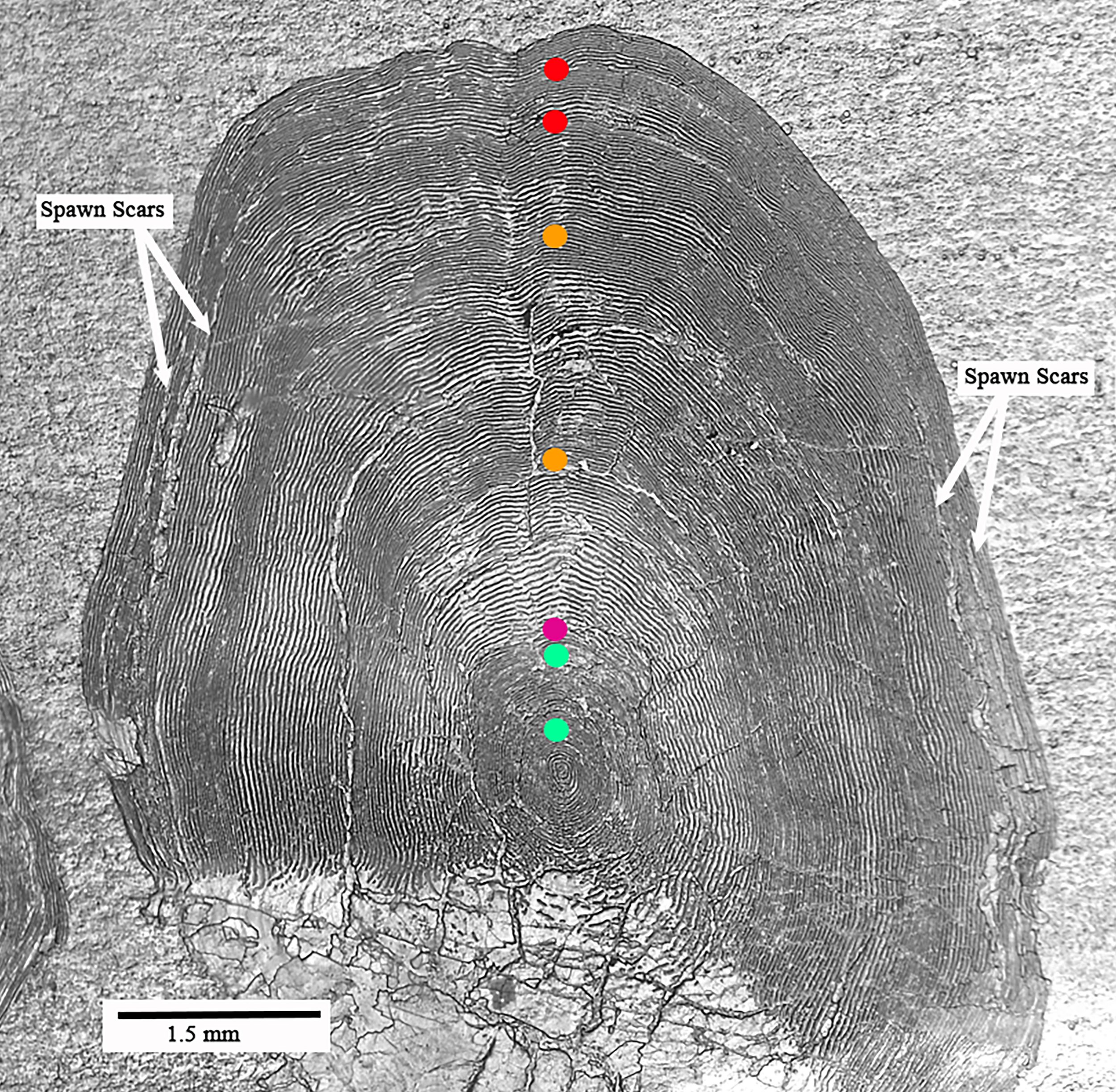
Steelhead scale showing freshwater growth, ocean years, and spawning scars used to reconstruct a fish’s life history. Colored dots represent different years in freshwater and the ocean. Source: Claiborne et al. 2026.