From the Archives: The Nite Owl
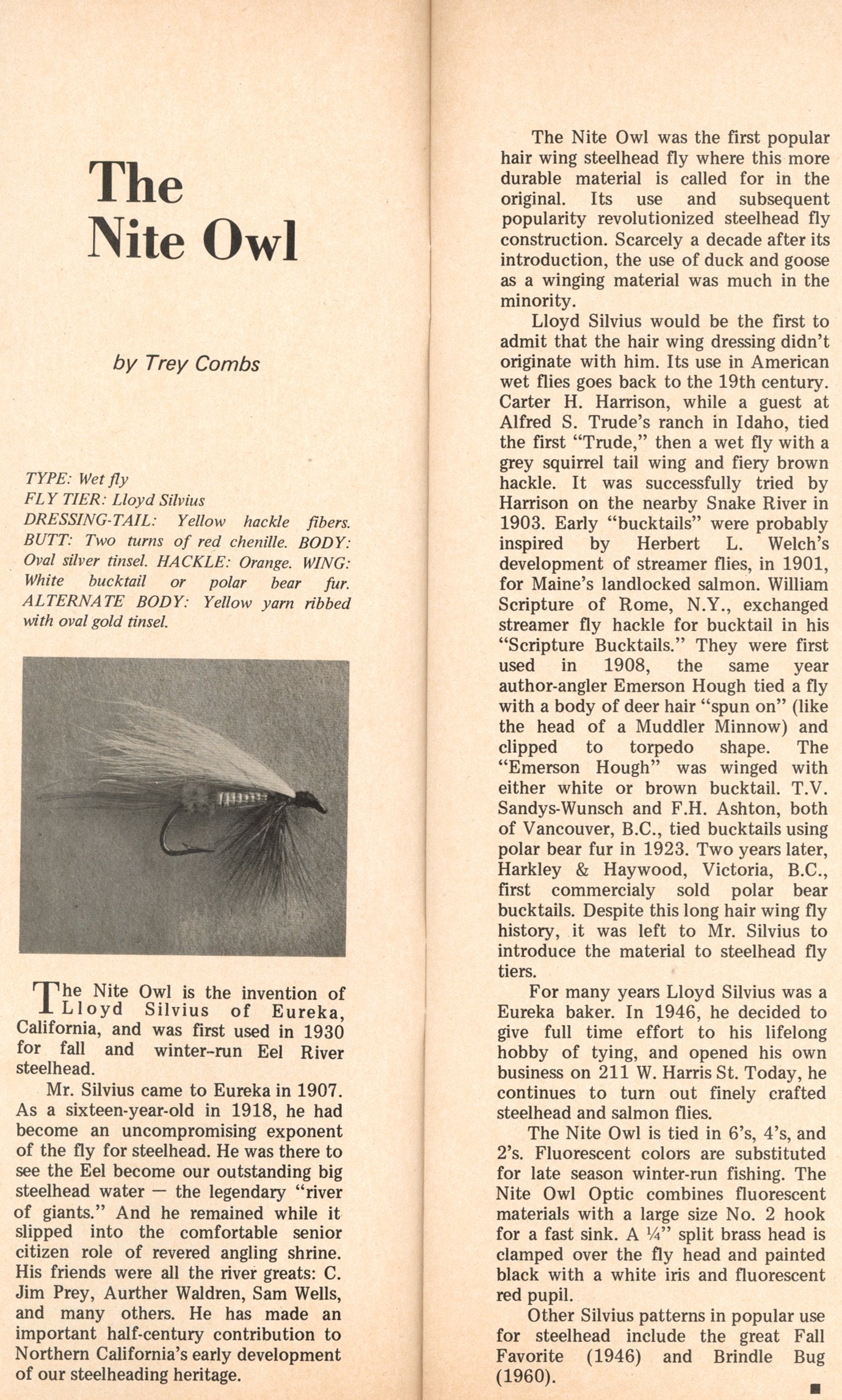
From the Archives presents complete vintage articles by Trey Combs in their original published form. This article appeared in the February March 1969 issue of Salmon Trout Steelheader. On a desktop computer, right-click the original page and select “Open Image in New Tab” to view the high-resolution scan.
The Nite Owl
by Trey Combs
TYPE: Wet fly
FLY TIER: Lloyd Silvius
DRESSING-TAIL: Yellow hackle fibers.
BUTT: Two turns of red chenille. BODY: Oval silver tinsel. HACKLE: Orange. WING: White bucktail or polar bear fur.
ALTERNATE BODY: Yellow yarn ribbed with oval gold tinsel.
The Nite Owl is the invention of Lloyd Silvius of Eureka, California, and was first used in 1930 for fall and winter-run Eel River steelhead.
Mr. Silvius came to Eureka in 1907. As a sixteen-year-old in 1918, he had become an uncompromising exponent of the fly for steelhead. He was there to see the Eel become our outstanding big steelhead water—the legendary “river of giants.” And he remained while it slipped into the comfortable senior citizen role of revered angling shrine. His friends were all the river greats: C. Jim Prey, Aurther Waldren, Sam Wells, and many others. He has made an important half-century contribution to Northern California’s early development of our steelheading heritage.
The Nite Owl was the first popular hair wing steelhead fly where this more durable material is called for in the original. Its use and subsequent popularity revolutionized steelhead fly construction. Scarcely a decade after its introduction, the use of duck and goose as a winging material was much in the minority.
Lloyd Silvius would be the first to admit that the hair wing dressing didn’t originate with him. Its use in American wet flies goes back to the 19th century. Carter H. Harrison, while a guest at Alfred S. Trude’s ranch in Idaho, tied the first “Trude,” then a wet fly with a grey squirrel tail wing and fiery brown hackle. It was successfully tried by Harrison on the nearby Snake River in 1903. Early “bucktails” were probably inspired by Herbert L. Welch’s development of streamer flies, in 1901, for Maine’s landlocked salmon. William Scripture of Rome, N.Y., exchanged streamer fly hackle for bucktail in his “Scripture Bucktails.” They were first used in 1908, the same year author-angler Emerson Hough tied a fly with a body of deer hair “spun on” (like the head of a Muddler Minnow) and clipped to torpedo shape. The “Emerson Hough” was winged with either white or brown bucktail. T.V. Sandys-Wunsch and F.H. Ashton, both of Vancouver, B.C., tied bucktails using polar bear fur in 1923. Two years later, Harkley & Haywood, Victoria, B.C., first commercially sold polar bear bucktails. Despite this long hair wing fly history, it was left to Mr. Silvius to introduce the material to steelhead fly tiers.
For many years Lloyd Silvius was a Eureka baker. In 1946, he decided to give full time effort to his lifelong hobby of tying, and opened his own business on 211 W. Harris St. Today, he continues to turn out finely crafted steelhead and salmon flies.
The Nite Owl is tied in 6’s, 4’s, and 2’s. Fluorescent colors are substituted for late season winter-run fishing. The Nite Owl Optic combines fluorescent materials with a large size No. 2 hook for a fast sink. A ¼” split brass head is clamped over the fly head and painted black with a white iris and fluorescent red pupil.
Other Silvius patterns in popular use for steelhead include the great Fall Favorite (1946) and Brindle Bug (1960).
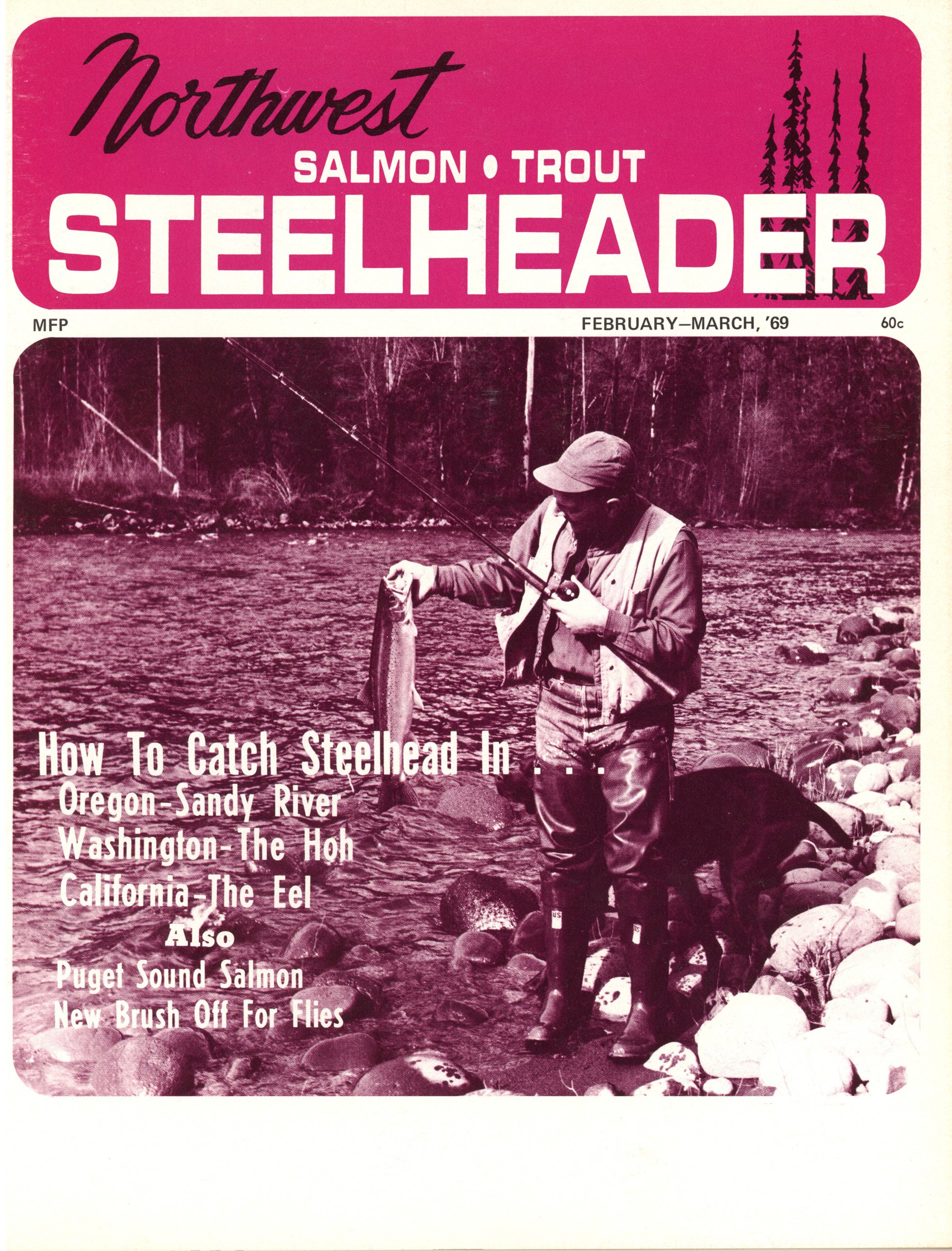
Original cover of the Feb/Mar 1969 issue of Salmon Trout Steelheader in which “The Nite Owl” first appeared.
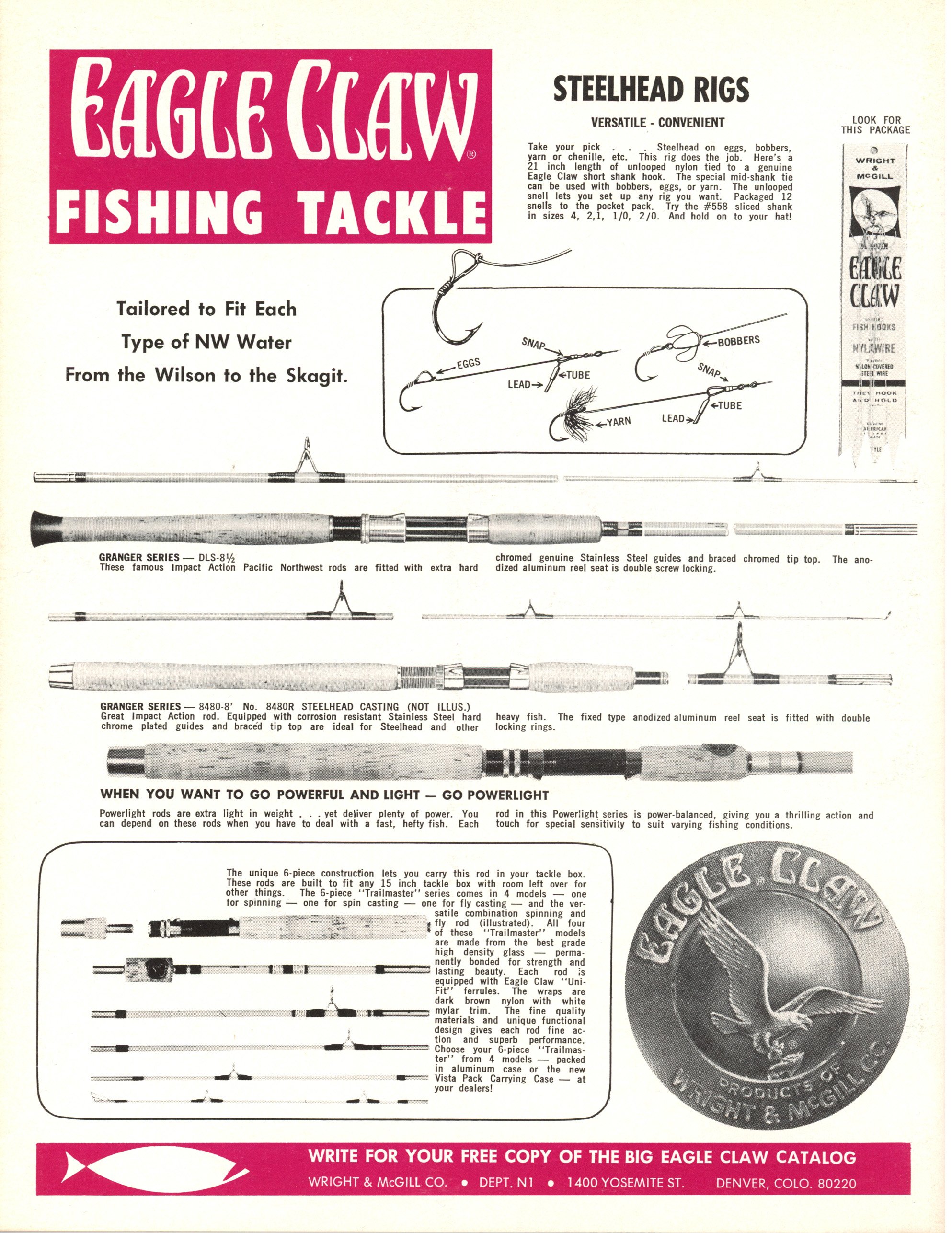
Original back cover of the Feb/Mar 1969 issue of Salmon Trout Steelheader in which “The Nite Owl” first appeared.