From the Archives: Optic Flies for Steelhead
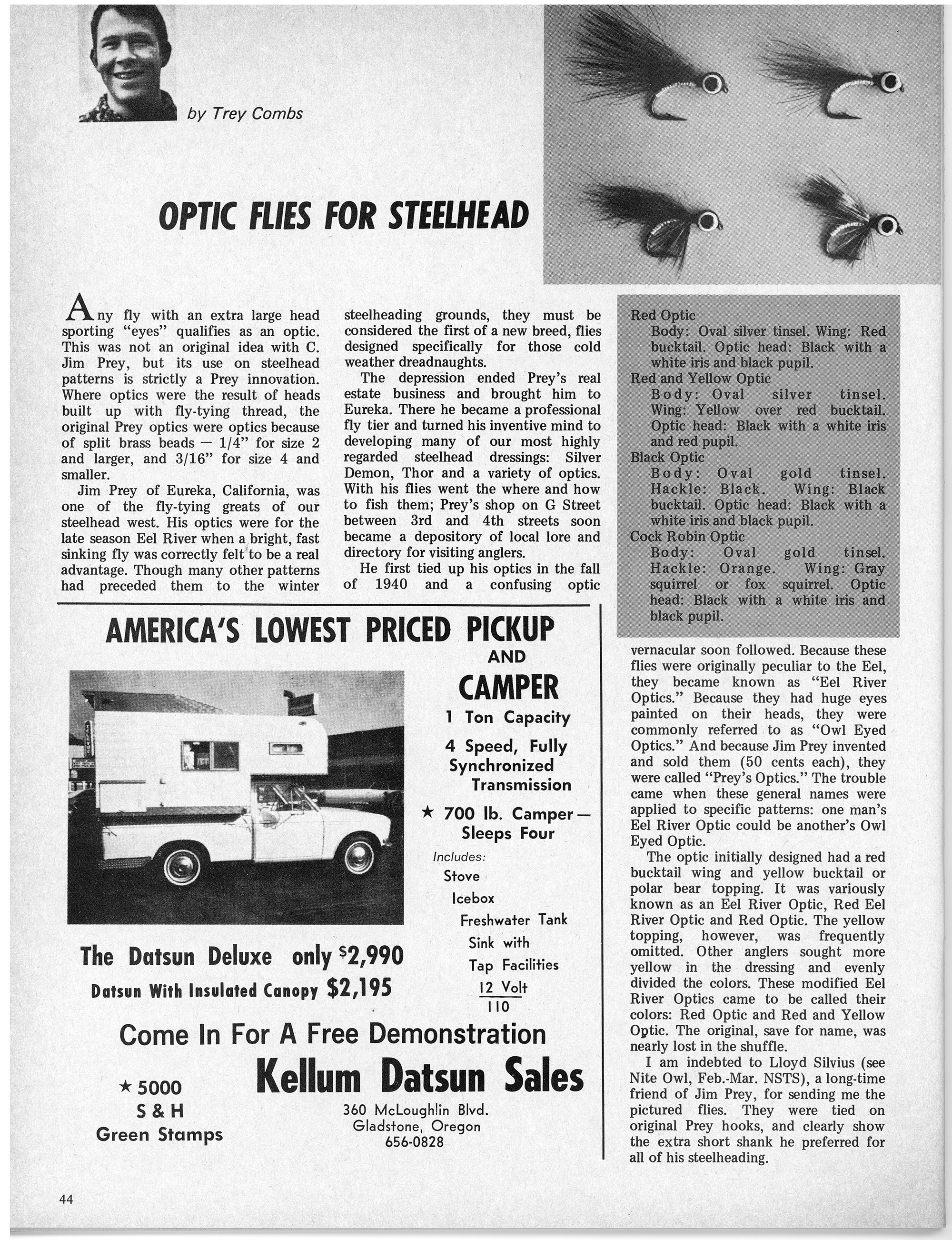
From the Archives presents complete vintage articles by Trey Combs in their original published form. This article appeared in the December–January 1970 issue of Salmon Trout Steelheader. On a desktop computer, right-click the original page and select “Open Image in New Tab” to view the high-resolution scan.
Optic Flies for Steelhead
By Trey Combs
Any fly with an extra large head sporting “eyes” qualifies as an optic. This was not an original idea with C. Jim Prey, but its use on steelhead patterns is strictly a Prey innovation. Where optics were the result of heads built up with fly-tying thread, the original Prey optics were optics because of split brass beads — 1/4” for size 2 and larger, and 3/16” for size 4 and smaller.
Jim Prey of Eureka, California, was one of the fly-tying greats of our steelhead west. His optics were for the late season Eel River when a bright, fast sinking fly was correctly felt to be a real advantage. Though many other patterns had preceded them to the winter steelheading grounds, they must be considered the first of a new breed, flies designed specifically for those cold weather dreadnaughts.
The depression ended Prey’s real estate business and brought him to Eureka. There he became a professional fly tier and turned his inventive mind to developing many of our most highly regarded steelhead dressings: Silver Demon, Thor and a variety of optics. With his flies went the where and how to fish them; Prey’s shop on G Street between 3rd and 4th streets soon became a depository of local lore and directory for visiting anglers.
He first tied up his optics in the fall of 1940 and a confusing optic vernacular soon followed. Because these flies were originally peculiar to the Eel, they became known as “Eel River Optics.” Because they had huge eyes painted on their heads, they were commonly referred to as “Owl Eyed Optics.” And because Jim Prey invented and sold them (50 cents each), they were called “Prey’s Optics.” The trouble came when these general names were applied to specific patterns: one man’s Eel River Optic could be another’s Owl Eyed Optic.
The optic initially designed had a red bucktail wing and yellow bucktail or polar bear topping. It was variously known as an Eel River Optic, Red Eel River Optic and Red Optic. The yellow topping, however, was frequently omitted. Other anglers sought more yellow in the dressing and evenly divided the colors. These modified Eel River Optics came to be called their colors: Red Optic and Red and Yellow Optic. The original, save for name, was nearly lost in the shuffle.
I am indebted to Lloyd Silvius (see Nite Owl, Feb.-Mar. NSTS), a long-time friend of Jim Prey, for sending me the pictured flies. They were tied on original Prey hooks, and clearly show the extra short shank he preferred for all of his steelheading.
Red Optic - Body: Oval silver tinsel. Wing: Red bucktail. Optic head: Black with a white iris and black pupil.
Red and Yellow Optic - Body: Oval silver tinsel. Wing: Yellow over red bucktail. Optic head: Black with a white iris and red pupil.
Black Optic - Body: Oval gold tinsel. Hackle: Black. Wing: Black bucktail. Optic head: Black with a white iris and black pupil.
Cock Robin Optic - Body: Oval gold tinsel. Hackle: Orange. Wing: Gray squirrel or fox squirrel. Optic head: Black with a white iris and black pupil.
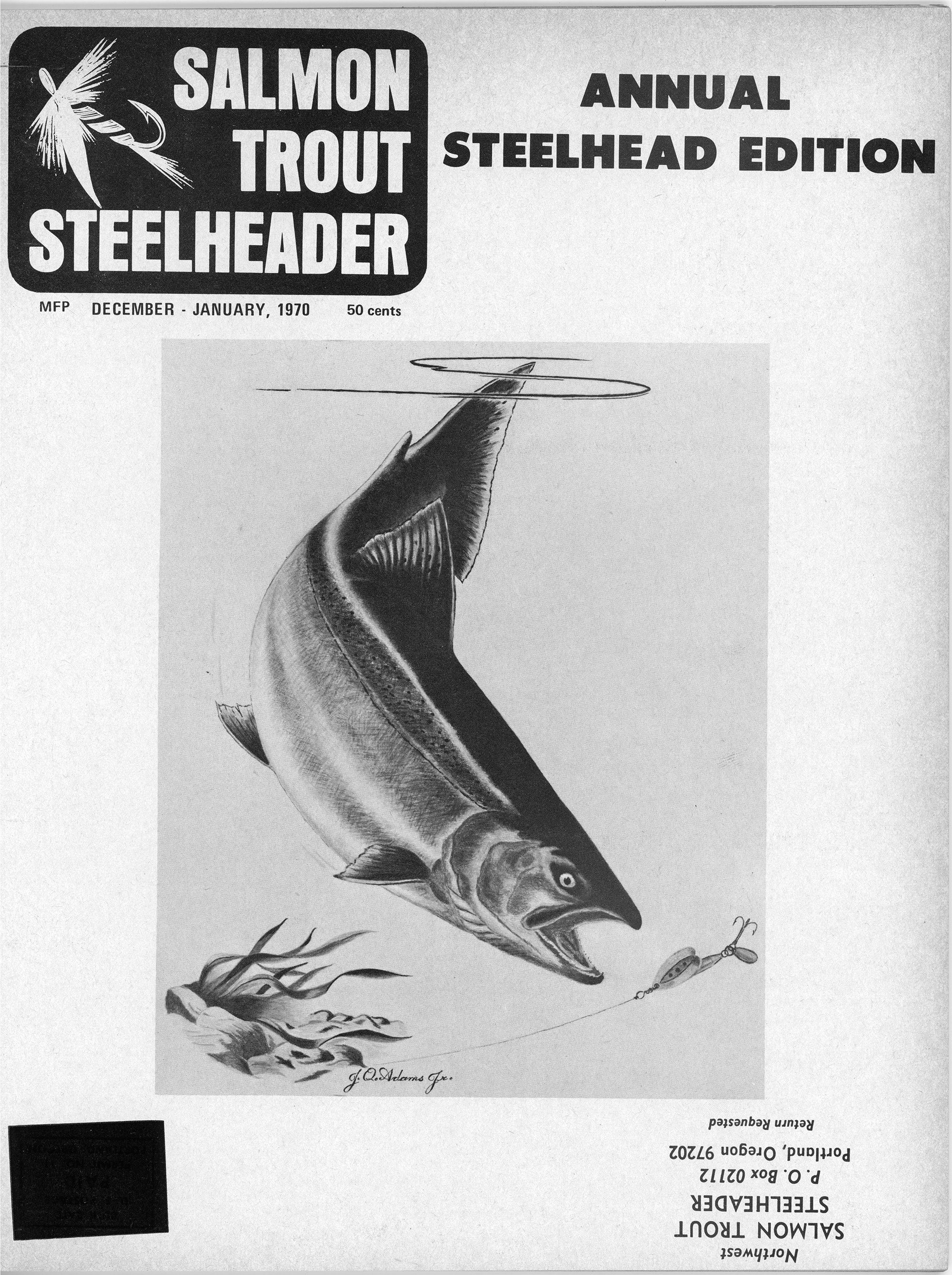
Original cover of the Dec/Jan 1970 issue of Salmon Trout Steelheader in which “Optic Flies for Steelhead” first appeared.
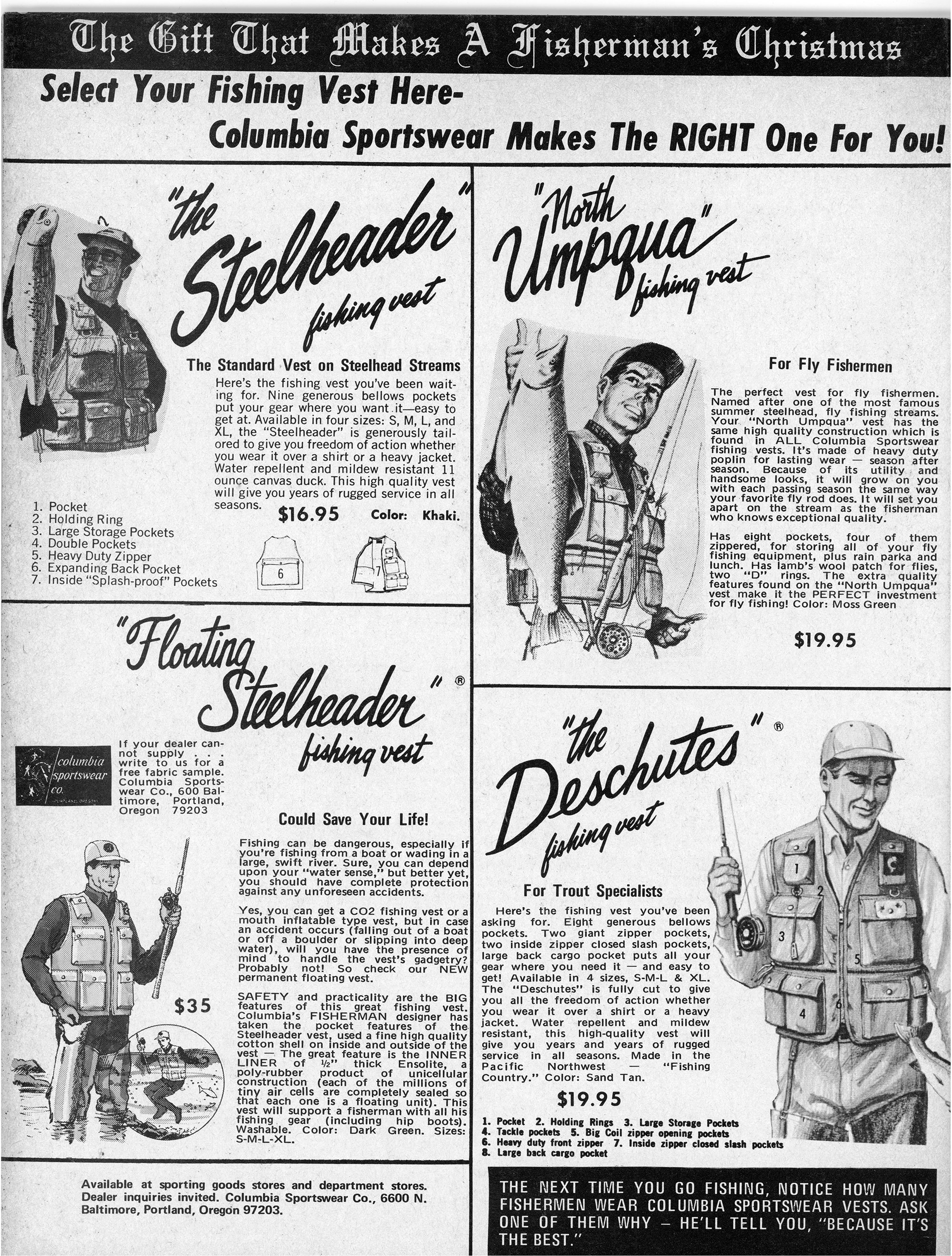
Original back cover of the Dec/Jan 1970 issue, featuring a collection of period steelhead and fly fishing advertisements.