C. Jim Pray - The Wizard of West Coast Flies
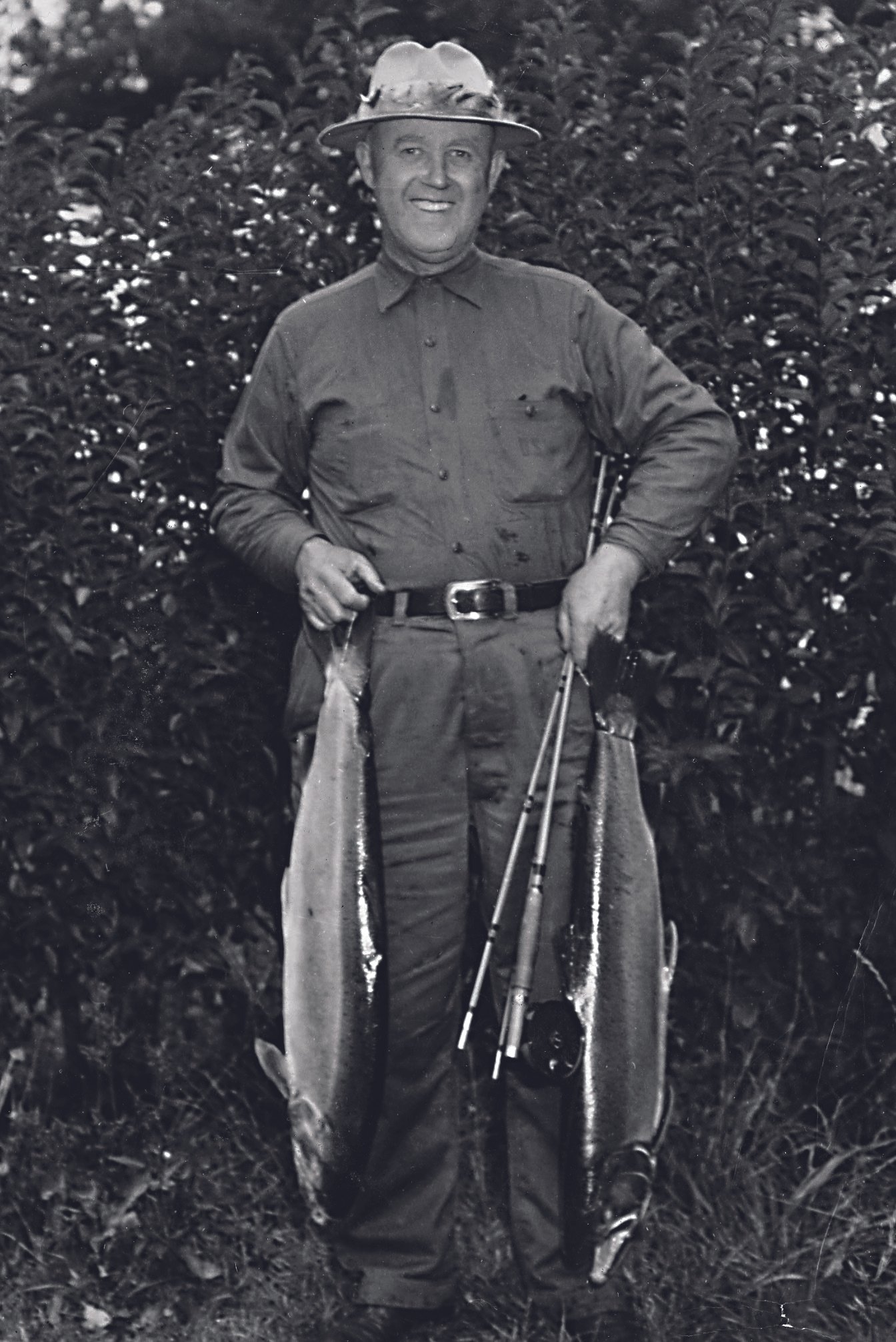
C. Jim Pray with a nice brace of steelhead. His fly shop in Eureka, California was a magnet for fly fishers from everywhere intrigued with the thought of catching steelhead on fly. He was the guru.
Compiled from excerpts from three books by Trey Combs—Steelhead Fly Fishing & Flies (1976), Steelhead Fly Fishing (1991), and Flies for Atlantic Salmon & Steelhead (2023)—with additional recollections from recent conversations with Trey and supplementary material from the American Museum of Fly Fishing’s journal, The American Fly Fisher.
C. Jim Pray - The Wizard of West Coast Flies
Jim Pray of Eureka, California, was one of the fly-tying greats of our steelhead west.
In a historical sense, John Benn handed off the role of Eel River guru to C. Jim Pray (1885–1952). Remarkably, each man came to fill his role in a similar manner. An illness caused Benn to turn to fly tying to make a living, while the Great Depression doomed Pray’s real estate business. Pray was an avid angler who made his own flies; tying professionally was a natural solution during this time of financial hardship.
He opened his own shop and living quarters on G Street between Third and Fourth Streets. Business had flourished, and shortly Jim Pray became Eureka’s most respected commercial tier.
With his flies went the where and how to fish them; Pray’s shop soon became a depository of local lore and directory for visiting anglers.
The patterns Pray tied and promoted for sale became the classic steelhead bucktail dressings for his time—and the patterns I first tied for steelhead in the 1960s.
Perhaps the most influential of the sporting goods dealers was Shoff’s Tackle in Kent, Washington. Though little known outside of Puget Sound, Clarence Shoff wholesaled flies and fly-tying materials to many other businesses, including Sam Wells, Joe Wharton, and C. Jim Pray.
Flies of the Eel and Klamath
The Eel and Klamath rivers figure prominently in the stories behind the flies Pray tied and sold. Trey discussed these patterns at length in Steelhead Fly Fishing & Flies (1976), writing: “The patterns Pray tied and promoted for sale became the classic steelhead bucktail dressings for his time—and the patterns I first tied for steelhead in the 1960s.”
Orleans Barber
Jim Pray christened this pattern in 1934, honoring an expert Klamath River angler who was a barber in Orleans, California. The Orleans barber developed this fly, a jazzed-up version from the Gray Hackle series, and fished it so successfully that it has been a northern California standard almost from its inception.
Tail: Wood duck flank with a black, white, black tip. Body: Red chenille. Hackle: Grizzly, long.
Silver and Black Demons
Pray’s contributions also included two variations of the Golden Demon, a New Zealand pattern brought to America by Zane Grey and Fred Burnham: the Silver Demon and the Black Demon.
He introduced the Silver Demon in 1935, first used on the Eel River, and said that it “outsold the Golden Demon in my shop 1,300 to 200.” The Black Demon followed and, according to Pray, “was much favored in the Orleans district of the Klamath River.
Silver Demon
Tip: Oval silver tinsel. Tail: Wood duck flank. Body: Oval silver tinsel. Hackle: Orange. Wing: Gadwall flank. Note: Tail is often orange hackle fibers and wing is mallard flank.
An alternate version:
Tail: Orange polar bear fur. Body: Flat silver tinsel. Hackle: Orange. Wing: Guinea strips with golden pheasant crest topping. Alternate wing: Silver squirrel tail.
Thor and the Winter of 1936
The Eel received her usual compliment of rain and anglers during the steelhead season that got underway in September, 1936. Storms raked the coast as they had for countless millenniums, but, as the year progressed, it seemed they were less frequent and gentler than in times past. Many steelhead had come to visiting and resident anglers. Few bettered ten pounds. The river’s quiet flow held constant in November, and the lower 25 miles remained clear.
Now the balmy weather made fishing a slow game. The little activity experienced came on tidewater pools where the occasional bright fish could be hooked. Once in the river a day or so they became unresponsive, dourly finning in channels to the consternation of anglers who through the clear water could view this rejection. On November 26th, K. D. Roberts took a fourteen-pound, fourteen-ounce steelhead from Dungan Pool using a Red Parma fly (red-bodied Parmachene Belle). It was the largest so far and finished the season on a happy angling note. Heavy December rains had traditionally closed the river and sent rods to the closet shelf. It was known that some wonderfully large fish entered this month because bait accounted for a few, but ascending high and muddy water they were not for the fly man.
Days passed, and still the weather held. Tourists had long since departed and concerned themselves with the yuletide in distant cities. Optimistic Eel River residents prepared for an expected steelhead run. Would fish now be available at a time foreign to the angler’s fly fishing experience? Answers were soon forthcoming. Mrs. Ralph E. Luick caught a sixteen-pound, one-ounce steelhead with a No. 8 Queen of the Waters on December 5th. Like many earlier arrivals, it came from Dungan Pool.
Anglers hoped this was a single impatient fish that had entered the Eel despite low, clear water. Enough rain fell two weeks later to color lower pools and bring in the awaited run. A sixteen-pound, ten-ounce steelhead hit a Polar Shrimp for B. R. Harris at Fernbridge Pool on Christmas Eve. Next day, and the size was pushed still higher. Clark Varian lived on the Eel. While waiting for the Christmas turkey to cool enough to carve, he took a five-minute fishing walk from his house and was quickly into a huge fish. Varian delayed his return long enough to beach the seventeen-pound, four-ounce steelhead. Golden Demon was the fly used, a new pattern two years before.
On Christmas evening, a respectable rain began to fall and lasted most of the night. By morning, the river was rising fast under an overcast sky. Walter J. Thoresen in company with Fred Blair and Frank Toby traveled from their Eureka homes to fish Dungan Pool. Only two miles from the Pacific, it had during fair weather been one productive spot. Now rain made effective fishing difficult. They moved several miles upstream and rented boats at Fernbridge Pool. Anchored on the river, Thoresen started casting.
He was well equipped for steelhead; a Hardy Perfect reel matched his nine-foot, seven-ounce Leonard rod; Ashaway silk line carried his fly out. To a nine foot leader was attached a new fly by C. Jim Pray. Thoresen and Pray had been good friends since Pray’s arrival in Eureka a few years before.
The flies he had given Thoresen were all on No. 6 hooks with the pattern carrying those proven Royal Coachman colors. On this day, on this river, the fly was a killer; Thoresen soon hooked and boated an eleven pounder and a matched pair a few ounces over ten pounds each. A commotion on the beach then momentarily drew his attention. A young boy who had been fighting a steelhead for many minutes was now gaining the upper hand. While his father nervously watched and gave instructions, the youngster slid his fish on the river’s edge where it could be grabbed. Hoisted aloft, the fish looked huge. Proudly carrying his steelhead, he and his father headed for the nearby car.
Thoresen resumed casting. A slashing strike and heavy, powerful weight announced he had hooked an exceptional fish. The struggle was long, but the steelhead was well hooked. Immediately weighed after being boated, it brought the scales down to the eighteen-pound mark. One final steelhead of ten pounds came to Thoresen on this day of days. His California limit of five was filled; their weight totaled sixty pounds. His largest fish was entered in the annual Field & Stream fishing contest and won first place. Jim Pray now had a name for the fly that Thoresen had worked to such advantage. To honor his friend and the event, the pattern was called Thor. It has subsequently gone on to become one of the greatest in the steelhead fly fisherman’s repertoire of standard dressings.
But the generation of fly fishers to come fished a fly named for Thor, the hammer-wielding Norse god of thunder. This was a better name for a steelhead fly and perhaps it fished better as a result.
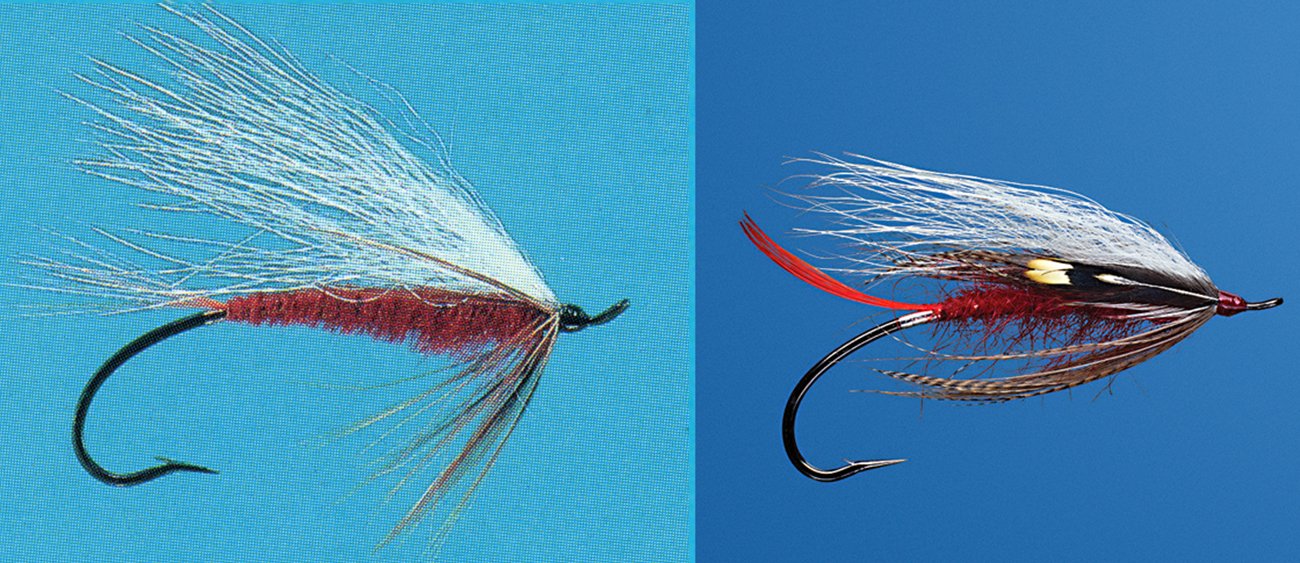
Two versions of C. Jim Pray’s Thor pattern, both tied by Dave McNeese. Left: the original dressing, featured in Steelhead Fly Fishing (1991). Right: a reimagined version, featured in Flies for Atlantic Salmon & Steelhead (2023).
Thor - Tail: Orange hackle fibers. Body: Red chenille. Hackle: Brown. Wing: White bucktail.
The boy that Thoresen had observed, and the boy incidentally, who watched Thoresen battle his fish, was Gene Silvius. His steelhead weight fourteen pounds, fourteen ounces, and took first place in the Junior Division of the same contest. Gene’s father, Lloyd, was an amateur fly tier and baker by trade. The fly used had been designed by Lloyd, and for lack of a better name at the time was called the Silvius White Bucktail. Most fishermen know it today by the name it was later called: Nite Owl.
This catch is personal to me because I knew Lloyd, the boy’s father, who had retired from baking and opened a fly shop in Eureka on 211 West Harris Street after World War II. He had invented and tied his son’s fly, the Nite Owl, and the more famous Nite Owl Optic so named for its oversized head with large owl-like eyes painted on it. Lloyd’s friend, Jim Pray, made the optic famous and he has been most often credited for its origins.
What of the other catches described on the 1936 Eel River? Those mentioned filled the first five places in the top ten North American “rainbows” caught that year. It would be almost thirty years before another river in a single season so dominated the steelhead angling scene. That would come on a Skeena River tributary far north of the Eel. The 1936 steelheaders didn’t know, and wouldn’t have believed, that a little river with the unlikely name of Kispiox, flowing by an Indian camp by day and under the aurora borealis at night, would produce a steelhead twice the size of Thoresen’s record catch.
Pray’s Optics
Pray is also know for the optic flies he designed: the Black, Red and Cock Robin.
Any fly with an extra-large head sporting “eyes” qualifies as an optic. Pray’s original optics used split brass beads to form their heads—¼ inch for hooks size 2 and larger, and 3/16 inch for size 4 and smaller.
His optics were for the late season Eel River when a bright, fast-sinking fly was correctly felt to be a real advantage. Though many other patterns had preceded them to the winter steelheading grounds, they must be considered the first of a new breed, flies designed specifically for those cold weather dreadnaughts.
Trey describes the difficulty of forming an Optic’s oversized head with thread:
“If you’ve ever tried to make an optic by hand, by wrapping a thread around the head of a hook, it’s just almost impossible because the thread keeps slipping and falling over. Wrapping thread around it just makes a big head and not much else.”
The split brass beads offered a practical solution:
“They got these split brass beads … and they could put the bead around the head of their fly and just clamp it with a pair of pliers …”
Historical examples tied by Lloyd Silvius are pictured below, following the dressing notes.
Black Optic
Contrary to what many anglers believe, the first Jim Pray optic was the Black Optic, tied in the fall of 1940 for use at tidewater on the Eel. Pray always preferred slow-moving water to fish his optics, firmly believing the steelhead then had an opportunity to see the fly’s large “eyes” and were attracted accordingly.
Body: Oval gold or silver tinsel wound into the hook bend. Hackle: Black. Wing: Black bucktail. Head: Split brass bead clamped in place and painted black with a white iris and red or white pupil.
Red Optic
The Black and Cock Robin optics were favored at tidewater where casting from boats was the norm. The Red Optic was usually fished upstream and became a great favorite.
Many anglers would seek out the Eel River’s fall and winter steelhead with no other fly. Its fame quickly spread. Within a few years of its introduction in 1941, Pray received a letter from Frank Dufresne telling what a marvelous fly the Red Optic was for rainbow trout, silver salmon, and steelhead in Alaska.
Body: Oval silver tinsel wound into bend of hook. Wing: Red bucktail. Head: Split brass bead clamped in place and painted black with a white iris and black pupil.
Cock Robin Optic
Jim Pray developed the Cock Robin Optic for the Eel River’s fall fishing. Besides steelhead, it also proved effective on silver and chinook salmon. Pray named the fly for Cock Robin Island, which is at tidewater and very near the ocean.
Body: Oval silver tinsel wound into hook bend. Hackle: Orange. Wing: Fox squirrel. Head: Split brass bead clamped in place and painted black with a white iris and black pupil.
Eel River Optic
Because these flies were originally peculiar to the Eel, they became known as “Eel River Optics.” Because they had huge eyes painted on their heads, they were commonly referred to as “Owl Eyed Optics.” And because Jim Pray invented and sold them (fifty cents each), they were called “Pray’s Optics.” The trouble came when these general names were applied to specific patterns: one man’s Eel River Optic could be another’s Owl Eyed Optic.
George Leonard Herter lists these flies as Pray’s Optic, Owl-Eyed Optic No. 1 and Owl-Eyed Optic No. 2 in his book, Professional Fly Tying, Spinning and Tackle Making, 1941. The Eel River Optic is also listed but is not credited to Pray. I have found no mention of the pattern in any of Pray’s writings. It is probable that vernacular names evolved that better described the originals and that these were eventually adopted by Pray.
Body: Oval silver tinsel wound into bend of hook. Wing: Red bucktail with a topping of yellow polar bear fur. Head: Split brass bead clamped in place, painted white with a red iris and black pupil.
The Same Flies, Fifty Years Later
Trey knew Lloyd Silvius and interviewed him while researching steelhead fly history. “I drove down to Eureka, California, to meet him and interview him … He just was one of the earliest pioneers in the whole thing, as well as Jim Pray,” Trey says.
The question of who first developed the Optics is less certain:
“Lloyd Silvius’s Owl-Eyed Optics go way back, and I don’t know whether he came up with these optics as well as Pray did, or whether Pray led the way.”
In Steelhead Fly Fishing & Flies (1976), Trey credits Pray with designing three basic Optic patterns: the Black, Red and Cock Robin.
For decades, readers have admired Jim Pray’s Optics through these dressings tied by Lloyd Silvius. Now, fifty years after the book’s publication, new photographs show those very same flies in much greater detail than the original printing allowed. Trey donated the flies from Plates V–VIII to the American Museum of Fly Fishing, where they have been preserved. They are now too brittle to be placed face down on a scanner, so they had to be photographed. Published here for the first time, these higher-resolution images offer a fresh look at dressings familiar to generations of readers. We are very grateful to the AMFF for supplying the photographs and making this closer look possible.
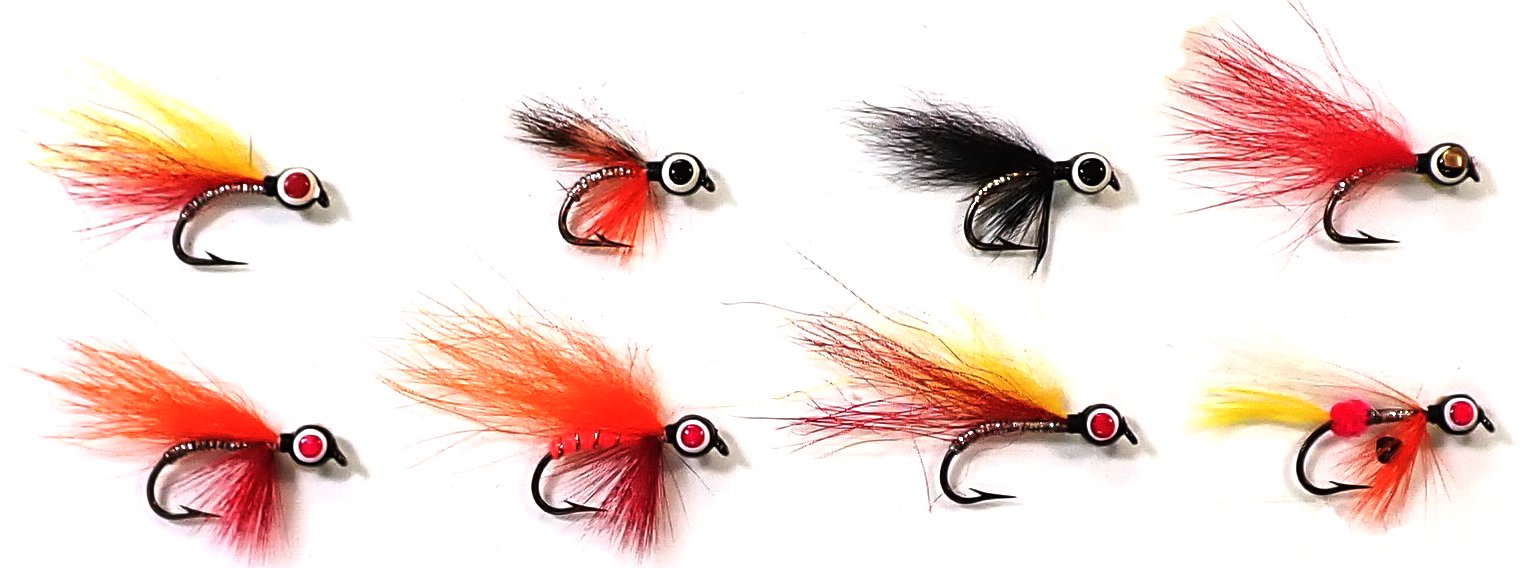
Eight Optics tied by Lloyd Silvius and pictured in Trey Combs’s Steelhead Fly Fishing & Flies (1976), photographed again fifty years later. Top row, left to right: Eel River Optic, Owl Eyed Optic No. 2, Pray’s Optic, and Owl Eyed Optic No. 1. Bottom row: Fall Favorite Optic, Fall Favorite Optic (Winter Dress), Red and Yellow Optic, and Nite Owl Optic. Flies donated by Trey Combs; photograph courtesy of the American Museum of Fly Fishing. On a desktop computer, right-click this image and select “Open Image in New Tab” to view the high-resolution image.
An American Art Form
By the 1940s, steelheading had its own cherished fly patterns, home-grown and winged with bucktail or polar bear. Jim Pray’s Optics and Thor, the Umpqua Special and Skunk from the North Umpqua, Ken McLeod’s Skykomish Sunrise and Purple Peril, Enos Bradner’s Brad’s Brat, and Clarence Shoff’s Polar Shrimp were standards that would soon beget hundreds of similar patterns.
For more than thirty years, the proliferation of bright, showy steelhead bucktails became a distinctly American art form and symbolized the sport of steelhead fly fishing. In these many dressings, Atlantic salmon flies survived mostly as trace elements.
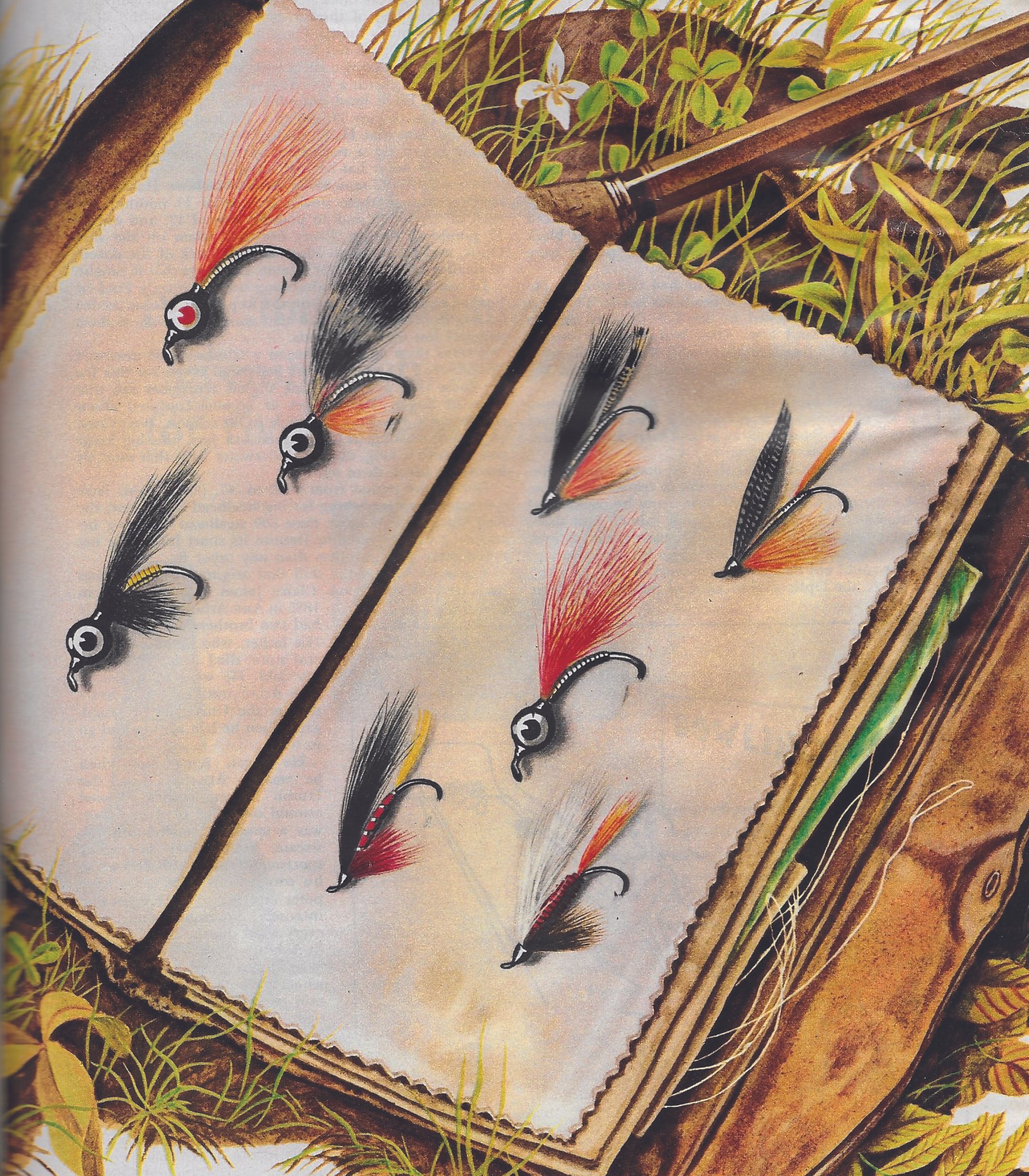
This painting by noted New York illustrator—and avid Atlantic salmon angler—John Atherton of steelhead flies tied by C. Jim Pray appeared in the April 1952 issue of True magazine. Pray’s wildly successful Optic bucktails had painted eyes over a brass bead. True called him “The Wizard of West Coast Flies.”
From the Museum Archives
Photographs of flies tied by C. Jim Pray are rare. The examples pictured below were tied and sold by Pray at his fly shop in Eureka, California, offering a glimpse of the dressings that helped establish his reputation.
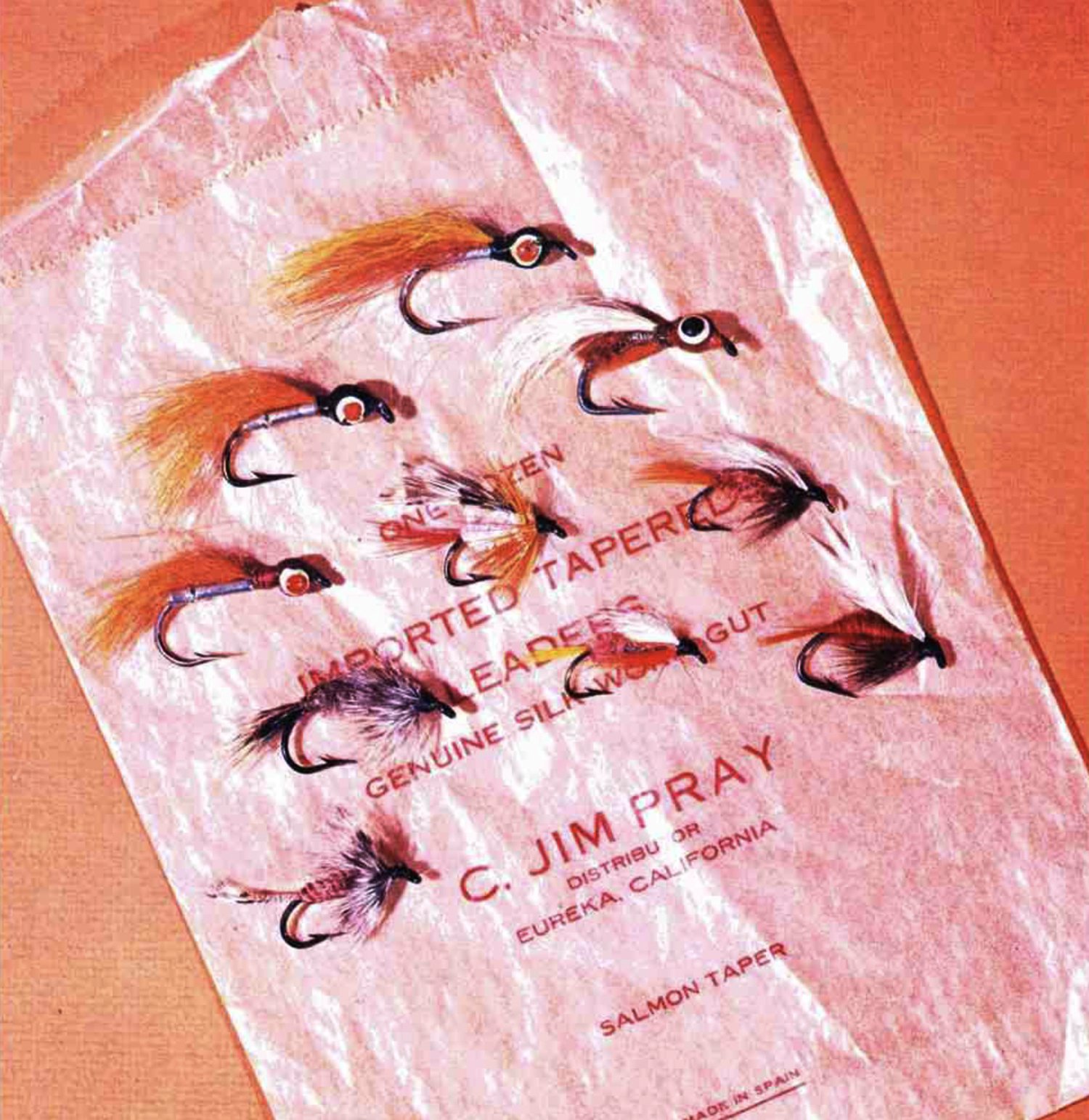
Original flies tied by C. Jim Pray, pictured in The American Fly Fisher. The accompanying article identifies the museum’s collection as a donation from Dr. Stanwood Schmidt of Eureka, a longtime friend of Pray. Source: “The Jim Pray Steelhead Flies,” The American Fly Fisher, vol. 7, no. 2 (Spring 1980), pp. 12–13.
The museum’s account of Pray’s death in 1952 records a final gathering of friends in his shop after the funeral. They drank a toast to his memory, then left a wreath on the door. Beneath it was a card reading: “Gone Fishing - C. Jim Pray, 1885-1952.”
Trey’s most recent book Flies for Atlantic Salmon & Steelhead is available directly from the author on Amazon in two formats:
Limited First Edition Hardcover (edition of 1500 copies) — available on Amazon
Digital Reference Edition (ideal for larger tablets) — available on Amazon Kindle