Modern Anglers And Their Fly Patterns: Mike Kinney
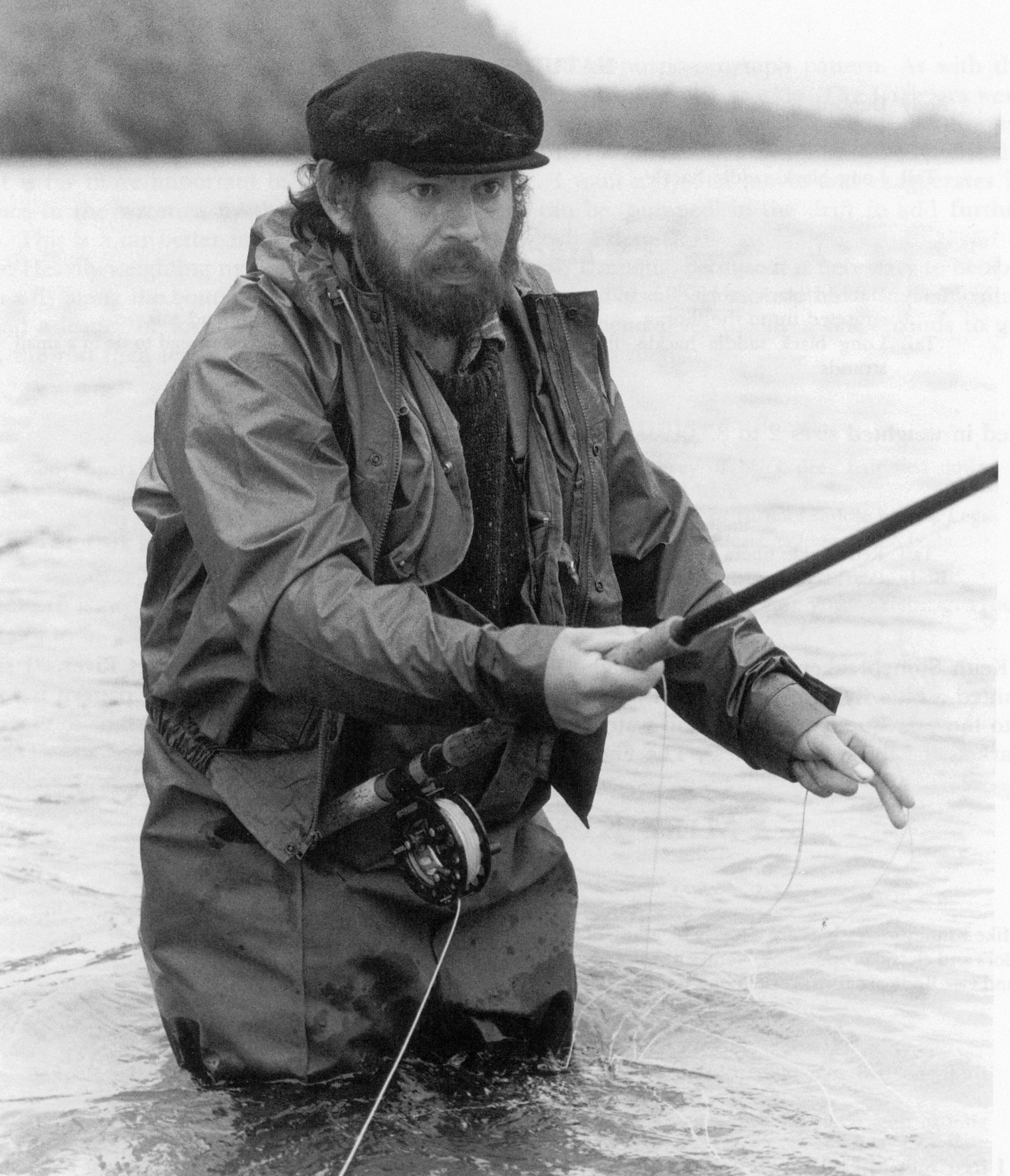
Mike Kinney
More than thirty years ago, Steelhead Fly Fishing included a section called “The Anglers and Their Fly Patterns.” It recognized the people who had helped shape the sport through skill, influence, innovation, and a lifetime spent around rivers and fish. Now, more than three decades later, the steelhead world has changed. The rivers are more pressured. Wild fish are less abundant. Conservation is now part of the conversation whether we like it or not. With that in mind, this new series looks at well-known modern anglers, guides, advocates, and teachers who are helping shape steelhead and salmon fly fishing today. The third profile in this series features Mike Kinney.
Meeting Mike on the Skagit
Excerpt from Trey Combs’s Steelhead Fly Fishing (1991).
I first met Mike Kinney one spring morning when Dale Edmonds and I were running big marabou flies through the Skagit’s famous Mixer. This was Dale’s first experience with winter-run steelhead. I put him at the pool’s upper end, and on his fifth cast he was into a steelhead. He eventually lost the fish and continued to work down as two anglers entered the pool above him. I hooked a steelhead, too, and the fly did not come away until it was being beached. When I pulled out and started up the beach, one of the anglers called to me.
“Where are you going?”
“To start at the top end again,” I said. “I hooked my fish.” The man was casting a sixteen-foot two-handed rod and clearly seemed to know what he was about.
“Oh, you don’t have to do that. Go ahead and fish through.”
I thought about this. To violate common courtesy and custom at another angler’s request is dangerous. I reasoned that perhaps he didn’t want anyone fishing down on him. I resumed fishing, and in a single cast hooked another fish. The steelhead was gone in a moment. Now I was determined to quit the pool, and the angler did not wave me back, but instead joined me, my second surprise. One does not casually lose one’s place on the Mixer.
This was Mike Kinney. I’d read about him in an article by Bob Arnold, a caring and insightful treatment, and I’d heard about his spey flies, true working flies at once beautiful and practical. I knew that he lived his life on the Stillaguamish and Skagit rivers so completely that his understanding of people and steelhead bordered on the mystical. Bob said that though Mike is only forty, Stilly locals refer to him as the “Old Man of the River.” Mike thinks of himself as a “River Keeper.”
“He’s Irish, has the soul of a poet and the look of a Leprechaun,” I later told Dale.
We became friends, hung out together from time to time, and promised ourselves we would fish the Stillaguamish the next summer. For much of his life he has guided bait and gear fishermen on the Olympic Peninsula, and now fly fishermen on his home waters, winter and summer. Like Walt Johnson, his neighbor across the Stilly, Mike can sometimes be found in the summer casting dries for steelhead with a six-foot midge rod, and in early fall he takes time off from guiding to hunt for sea-run cutthroat on the lower river. But when I think of Mike, he has his big two-handed rod and a box full of spey flies, and his fly is swinging through a lie a hundred feet away.
Mike Kinney’s Spey Flies
Mike’s original Spey fly designs are well known. In his review of Steelhead Fly Fishing for The Salmon Flyer, Bob Arnold singled out Kinney alongside Steve Gobin and John Farrar as dressers whose flies he would happily fish.
In Steelhead Fly Fishing (1991), Trey wrote: “Mike Kinney’s dressings are a lovely blending of somber colors and classic proportions. Names like Boulder Creek and Car Body are for favorite pools on the Skagit River.” Four of Mike’s dressings appear in Plate 3 and are shown below.
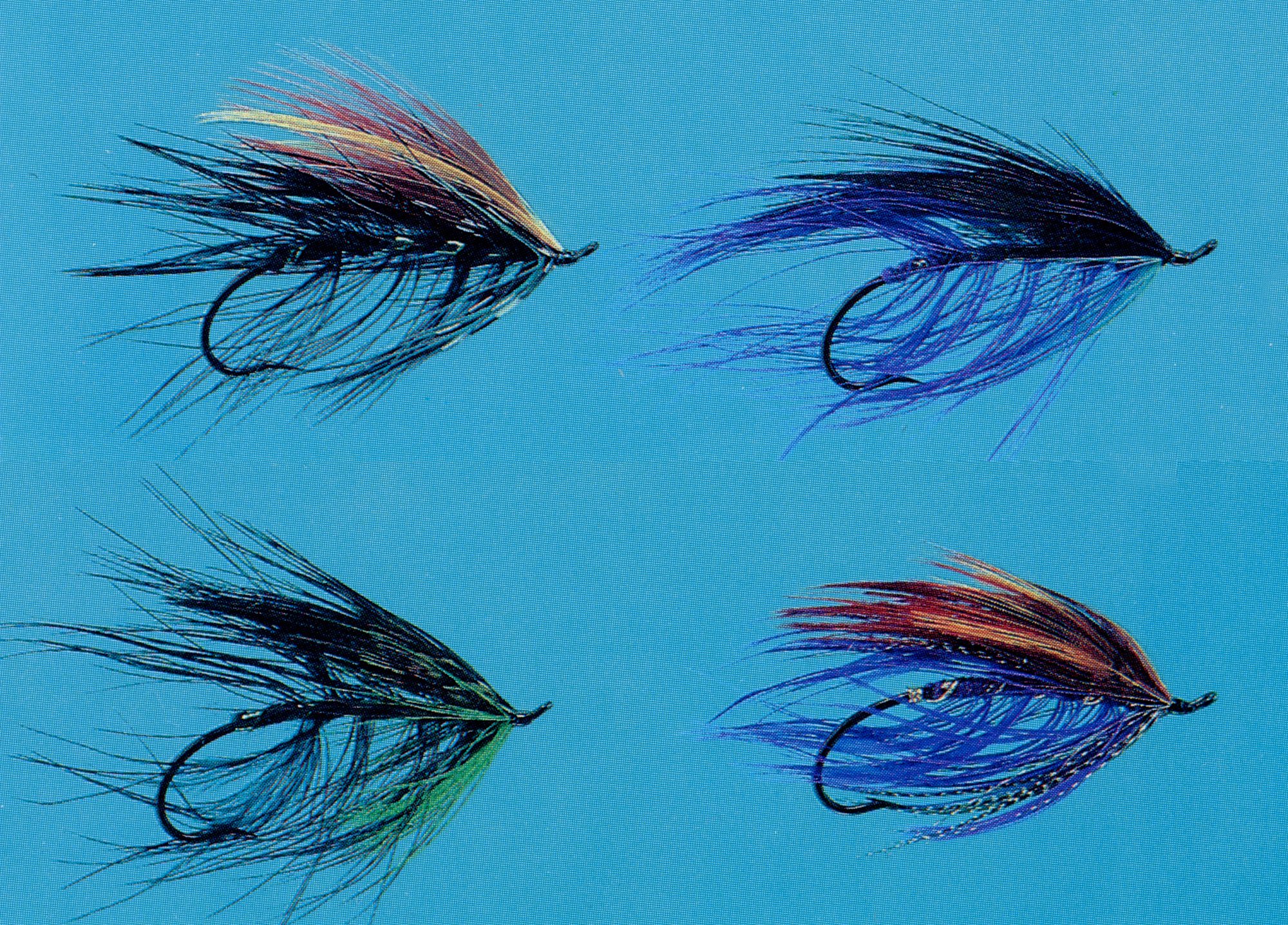
Top Row: Boulder Creek, Car Body. Bottom Row: Dark Daze, and Dragon’s Tooth. Flies tied by Mike Kinney, from Plate 3 of Trey Combs’s Steelhead Fly Fishing (1991). On Desktop Only - right mouse click, open in new tab, and see enlarged high resolution version of this image.
Boulder Creek
Body: Black floss ribbed with flat chartreuse mylar tinsel and palmered with black hackle. Throat: Kingfisher blue and guinea. Wing: Matching golden pheasant flank. Topping: Two golden pheasant crest feathers.
Car Body
Body: Black dubbing ribbed with chartreuse mylar tinsel. Palmer with deep purple saddle hackle. Throat: Kingfisher blue. Wing: Matching pheasant rump dyed purple (color is nearly black).
Dark Daze
Body: Black dubbing ribbed with chartreuse mylar tinsel. Palmer with black saddle hackle. Throat: Saddle hackle dyed Veniard’s Highlander Green. Wing: Matching pheasant flank dyed black.
Dragon’s Tooth
Tip: Several turns of narrow oval silver tinsel. Body: Purple dubbing or wool palmered with long deep purple saddle hackle. Rib with flat silver tinsel and narrow oval silver tinsel. Throat: Pintail. Wing: Matching golden pheasant flank (red). Partially veil with golden pheasant body feather on each side (yellow).
Two Patterns Dressed by Mike Sewards
Mike Sewards, one of the dressers contributing to our Fly Pattern Dictionary through Instagram, has provided his own dressings of Boulder Creek and Dragon’s Tooth. Shown alongside Kinney’s flies from the 1991 book, they offer a chance to compare two dressers’ work with the same patterns.
The following notes describe the flies as tied by Sewards. Some details differ from the dressings published in Trey’s book, including the pearl mylar rib on Boulder Creek and the golden pheasant rump feathers used for the outer veil on Dragon’s Tooth.
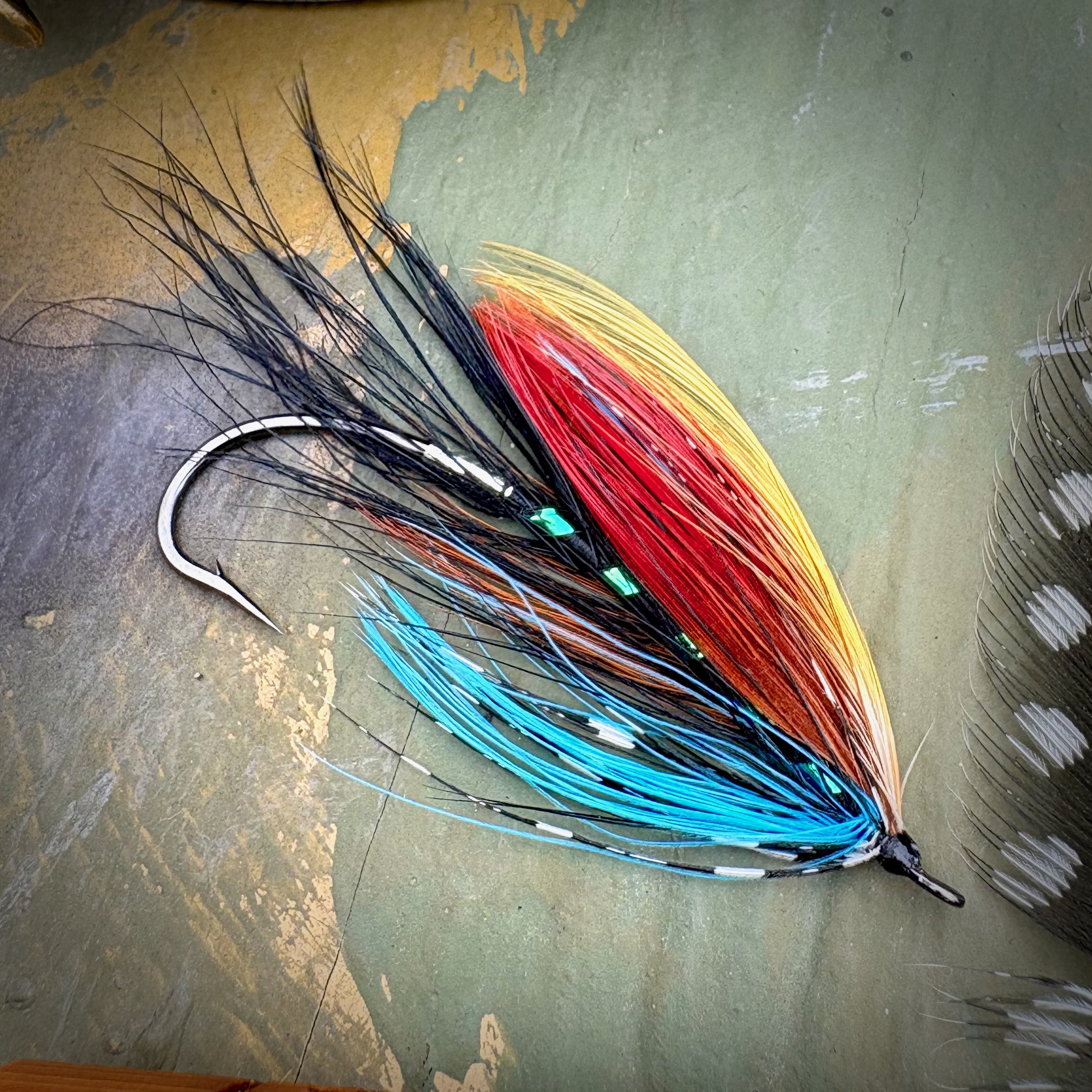
Boulder Creek, dressed by Mike Sewards.
Boulder Creek Dressing Notes:
Hook: Alec Jackson Spey or McNeese Blue Heron. Rib: Flat pearl mylar tinsel. Body: Black floss. Hackle: Black schlappen. Throat: Kingfisher blue schlappen and guinea. Wing: Four golden pheasant flank feathers. Topping: Two golden pheasant crests. Head: Black.
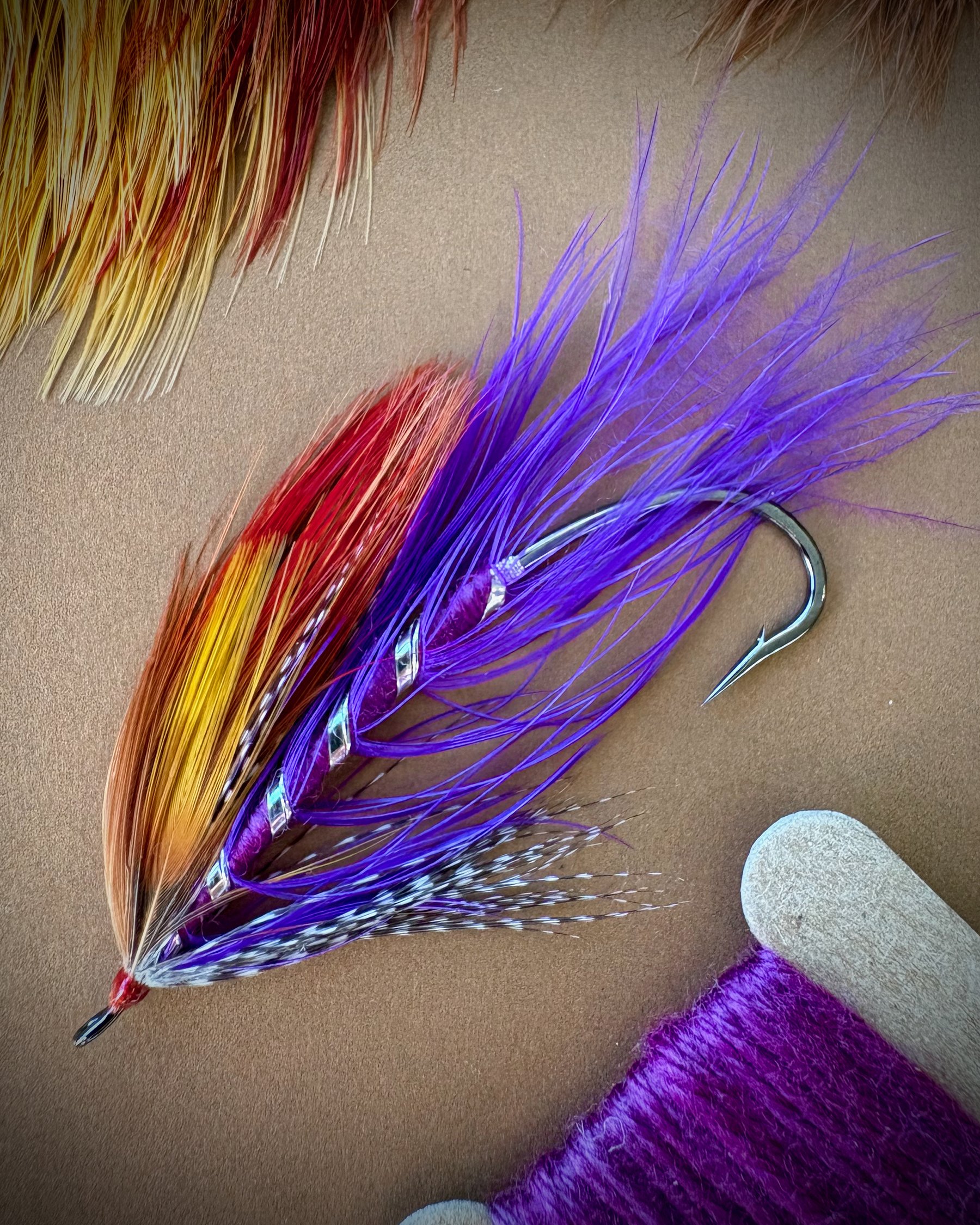
Dragon’s Tooth, dressed by Mike Sewards.
Dragon’s Tooth Dressing Notes:
Hook: Alec Jackson Spey or McNeese Blue Heron. Tag: Oval silver tinsel. Rib: Flat silver tinsel and oval silver tinsel. Body: Purple wool yarn. Hackle: Purple schlappen. Wing: Two golden pheasant flank feathers enveloped by two slightly shorter golden pheasant rump feathers. Throat: Pintail flank. Head: Black.
More About Mike Kinney
According to the biography on Mike’s website, he devoted more than 25 years to guiding for trout and salmon in Pacific Northwest rivers. He also shared his knowledge through free Spey casting clinics around Puget Sound and demonstrations at Spey claves across the country, helping both beginners and experienced anglers improve their casting.
His contributions extend to fly tying, including the Reverse Spider for sea-run cutthroat. His flies appear in numerous books, and he demonstrated his steelhead patterns in two instructional videos released in 1995. His website also describes his growing interest in photography, sharing the wildlife and landscapes he came to know through a lifetime outdoors.
—Mark Combs
Sources:
Combs, Trey. Steelhead Fly Fishing. 1991. Pages 413–415 and Plate 3.
Kinney, Mike. “About.” MK Photography & Tours. https://www.mikekinney.com/about. Accessed October 1, 2026.
Additional dressing notes supplied by Mike Sewards.