Dave McNeese - New Takes On A Classic Style
Dave McNeese’s Original Steelhead Flies With A Fine Twist Of Class
The following excerpt is from Chapter 17 of Flies for Atlantic Salmon & Steelhead by Trey Combs. The chapter features many of Dave McNeese’s original steelhead flies, reimagined with a touch of classic elegance. Two full-page fly plates showcase 20 classic flies; this essay includes details and images of five of those patterns.
If you’re unfamiliar with Dave’s work, he’s done it all: angler, fly shop owner, reel designer, importer of exotic feathers and fur, author, and one of the greatest steelhead fly dressers of all time. Dave and Trey have been friends since the late 1960s—a friendship that continues to this day.
Dave’s Fur & Feather Background
Dave worked for a lumber company in the late 1960s while remaining obsessed with hunting and fishing. His wife encouraged him to take the leap and open a fly-tying materials mail-order business they called “My Flies.” Dave became the first person to export dyed Arctic fox to Europe and Scandinavia. Almost overnight, the material replaced bucktail among steelhead fly tiers. I vividly recall the transition. The ease of tying wings, the shape they took, their superb action in the water, the super small head—all promoted a more professional look to my flies.
There was also the Glasso-look that was taking steelhead fly tying by storm.
Dave set up a homemade eight-burner stove in his garage. He bought commercial-sized pressure cookers and purchased quantities of dyes from both Keystone and Herter’s. Almost from the start of his research, he discovered the value of first dyeing all the materials with fluorescent white before repeating with solid colors. This gave red, orange, even black a rich depth that had never been achieved.
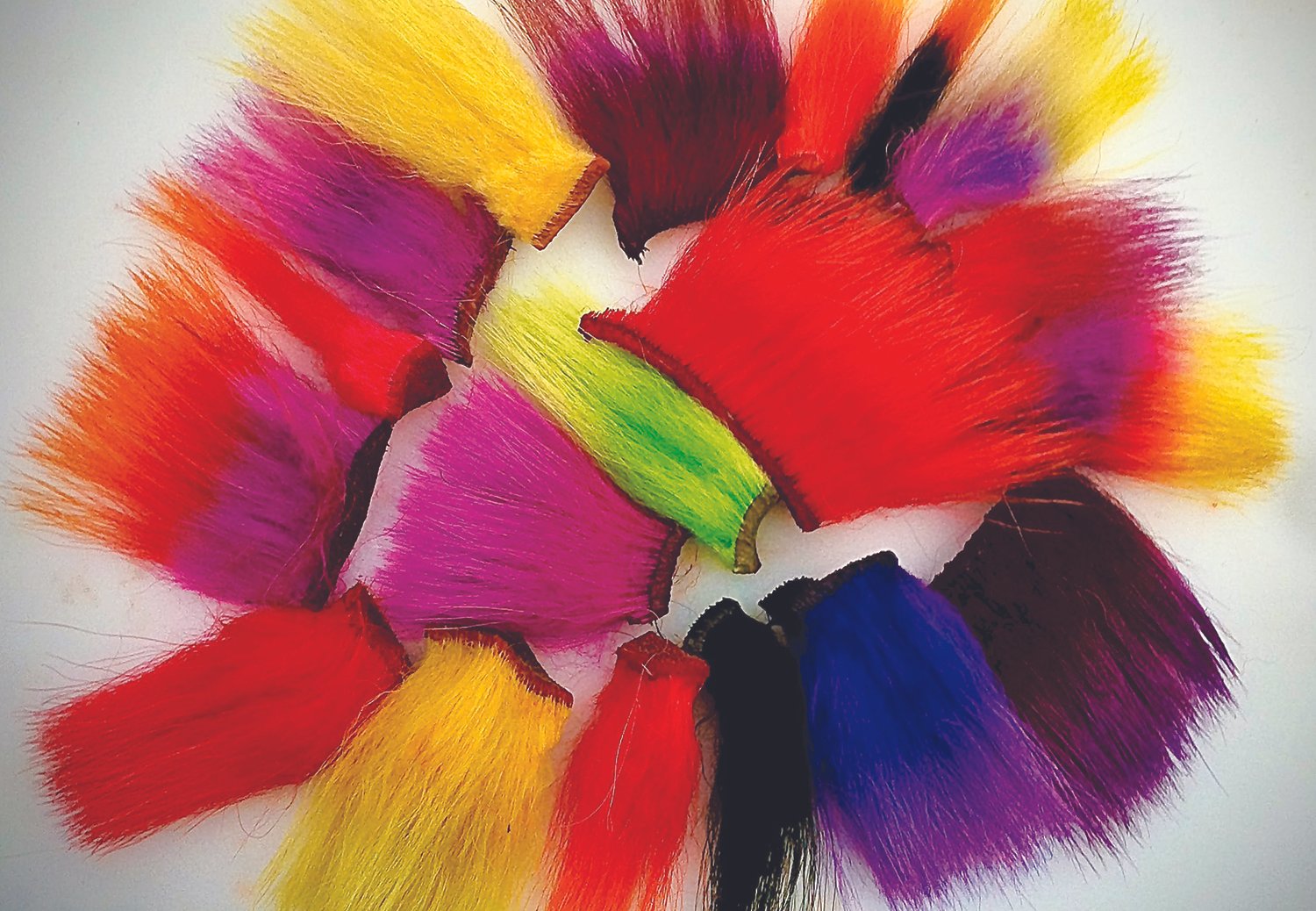
For years Dave McNeese has dyed select materials fluorescent white before dyeing them the desired color to give them a rich glow.
The pressure cookers were used to deeply infuse colors into hard guard hairs on Arctic fox, otter and other furs. “When I first started,” Dave says, “I’d open a pressure cooker and find a mess.” The furs were blasted to pieces by excessive heat under pressure. He soon mastered the techniques that guaranteed international success for his new business.
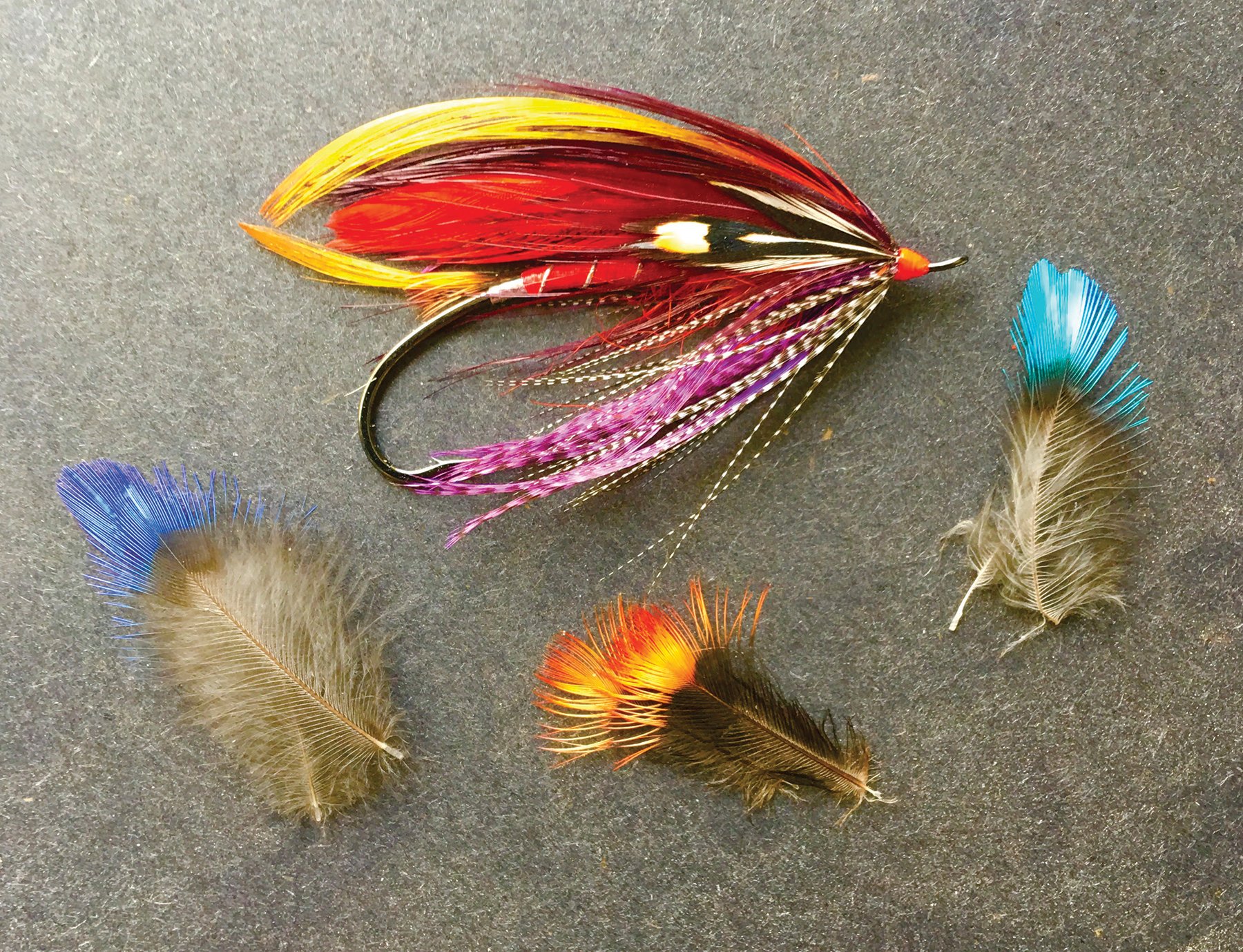
Purple Prince, a Dave McNeese original design. Lower left feathers: Cotinga amabilis. Center: red-ruffed fruit crow (Pyroderus scutatus). Right: spangled cotinga (Cotinga cayana).
Dave traveled to upstate New York to visit Harry and Elsie Darbee, where he offered to trade Elsie a box full of valuable dyed hackle and 50 wood duck flanks in exchange for lessons on how to tie their iconic style of Catskill dry flies. During his stay, Dave went to New York City and the Hudson River Valley to visit a host of celebrity fly fishers that included Sam Melner, Ted Neimeyer, Eric Leiser and Poul Jorgensen. Dave and Poul had common interests; they immediately became friends.
Sam Melner, who owned Fly Fisherman’s Bookcase, one of the first large-scale mail-order companies in the field, was so impressed with the quality of the materials Dave had given the Darbees that he booked a flight to Eugene and purchased Dave’s entire “My Flies” inventory.
Jorgensen also came west where Dave guided him to his largest-ever trout on Oregon’s Williamson River, and then to his first steelhead. Dave had ample opportunity to study how Jorgensen tied Atlantic salmon flies from Poul’s 1975 book, Salmon Flies: Their Character, Style, and Dressing. McNeese adopted many of Jorgensen’s methods, another rung on the ladder on Dave’s endless quest to learn everything he could related to fly fishing. Dave soon graduated to Victorian built-wing salmon flies and membership in Atlantic salmon tying guilds.
As Dave prepared to return home, Elsie Darbee packed up four dozen fertilized Andalusian chicken eggs from the rare strain of Spanish birds that they’d selectively bred for generations. The shade of blue dun neck hackles from these chickens were prized by traditional dry-fly tiers. The four eggs crates were in Dave’s lap on the long flight home. All but one egg was successfully hatched, the chicks taking their place in Dave’s fly-tying aviary. Their progeny continue to thrive under Dave’s care.
McNeese booked a flight to New York City and visited Levin and Sons, a business that wholesaled furs, materials that Dave’s bleaching and dyeing would turn into exotic fly-tying materials never seen before. Not surprisingly, McNeese’s Fly Fishing Shop—the new business that Melner helped fund—became a mandatory stop by many of the world’s most skilled and discriminating fly tiers.
When I first visited the shop, Mark Waslick—a tier with world-class credentials for tying full-dressed Victorian-era salmon flies—was commanding a workshop that Dave had brought together. Dave’s vitality and his own skills attracted such masters—learning one-on-one from the very best. He brought the finest fly tiers to his shop to tie, instruct and entertain. and they would tie with the best materials the world had to offer.
Dave still maintains a busy mail-order business for feathers and furs. His book-writing project about Syd Glasso, now years long, will give readers insights into the father of modern steelhead fly tying, a private and even reclusive man who matched up with the finest fly tiers in the world. Dave has had hundreds of original Glasso steelhead and Victorian-era Atlantic salmon flies professionally photographed for the book. This will become must-reading for serious fly tiers of both steelhead and modern Atlantic salmon flies.
Purple Spey
During the late 1970s, Dave McNeese’s favorite “west-side” river was Oregon’s North Santiam. The river then supported a strong run of hatchery summer-run steelhead and hatchery rainbow trout. Like so many fly fishers at the time, Dave was enthralled with Syd Glasso’s Spey flies, particularly the Orange Heron and Brown Heron, lovely Scottish Spey-style ties incorporating orange and hot orange.
“On every cast a trout was hooked and the steelhead were put down,” Dave says. “When the trout quickly tore up these labor-intensive examples of McNeese fly art, he turned to a purple fly—a color that put off trout, but a known attractor for steelhead. The result was the Purple Spey. When Dave and Keith Mootry first baptized the fly on the South Santiam, Mootry took six steelhead while Dave landed four plus a silver salmon. The two steelhead killed were full of October caddisflies, “trouty” steelhead at their finest.
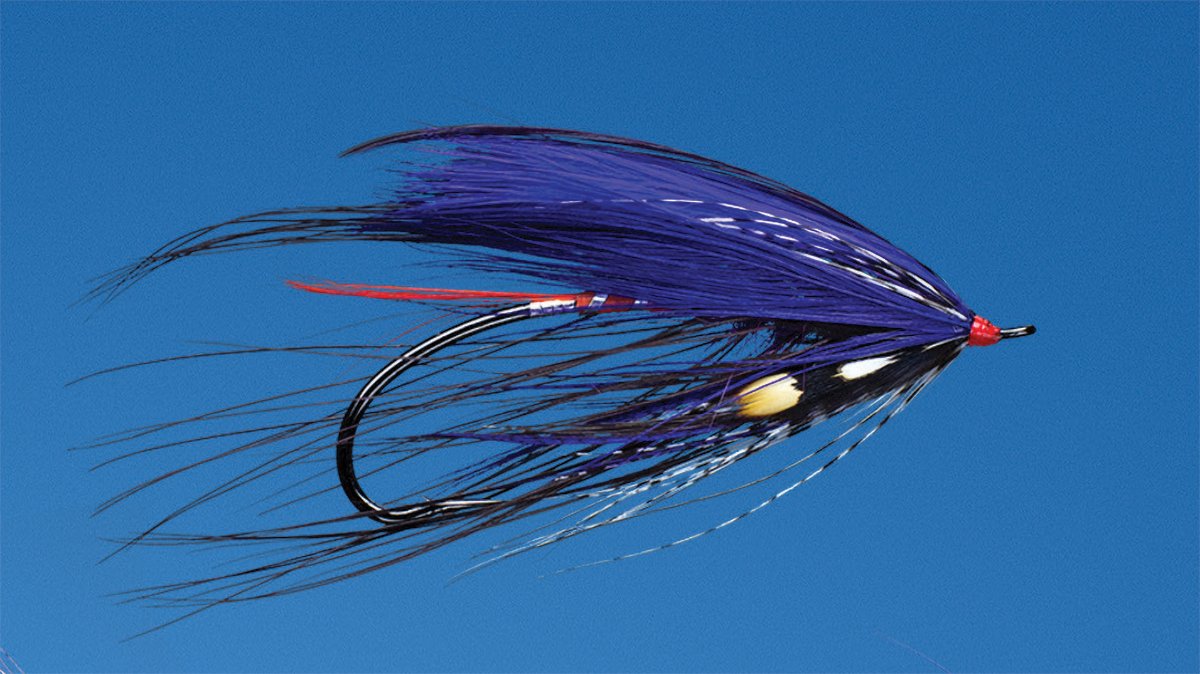
Purple Spey - Dressed By Dave McNeese
Purple Spey Dressing Notes - Tag: Fine flat silver tinsel. Tail: Fluorescent orange golden pheasant crest. Body: Rear third fluorescent orange floss over flat silver tinsel; front two-thirds purple seal. Rib entire body with narrow flat silver tinsel. Spey hackle: Heron dyed deep purple or black from the second turn of tinsel. Throat: Long teal flank or natural guinea, two turns. Wing: Hot purple neck hackles, size 10 dry-fly hackles, four to six hackles total. Cheeks: Jungle cock, drooping down below body. Head: Hot orange Danville 6/0.
Worthy Of Note
One of the more intriguing and rarely seen patterns pictured in this chapter is Worthy of Note. My internet search turned up no history or dressing notes, and the chapter offered no further information about the fly. I spoke with Dave, who provided some background and the dressing.
Many years ago, Dave attended a fly-fishing auction and casting club meeting in San Francisco. There, he purchased several hand-painted card-stock sheets with multiple flies on each. One featured “Worthy of Note,” accompanied by the date 1957, dressing notes, and a notation specifying winter use on the Klamath River with hook sizes up to 4/0.
The fly’s history remains something of a mystery, but its beauty—and Dave’s recollection—made it worth sharing more with our readers.
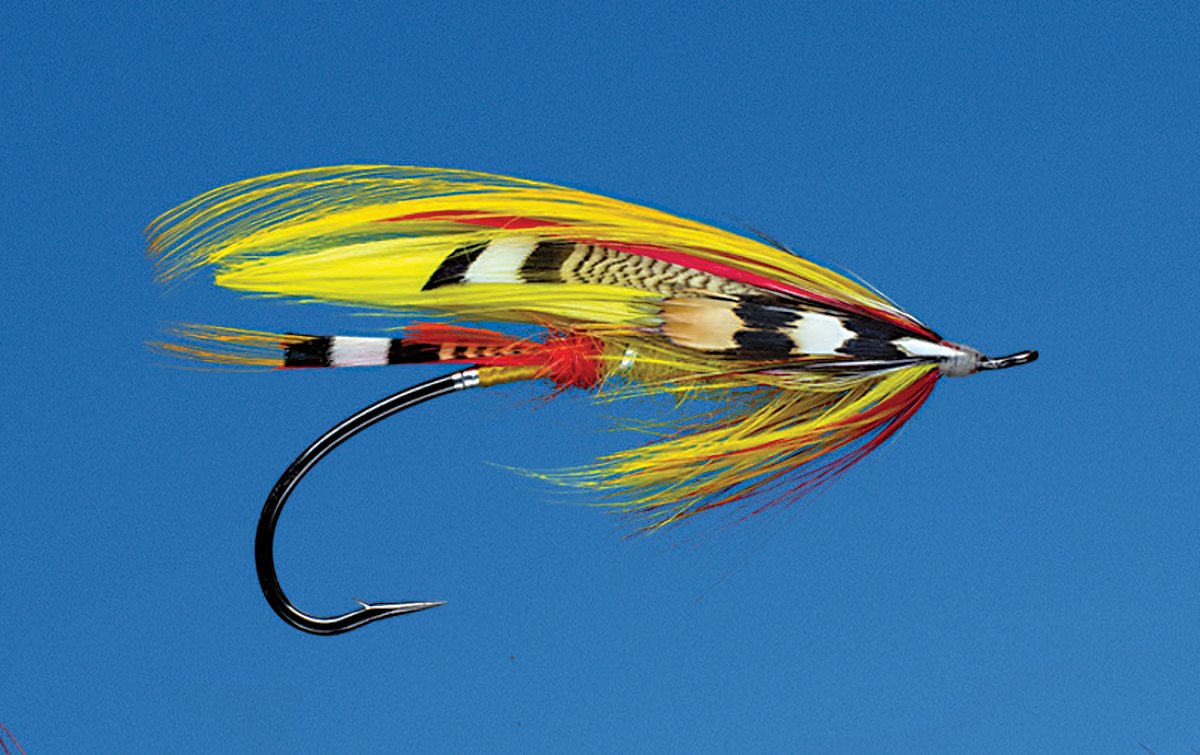
Worthy of Note - Dressed by Dave McNeese
Worthy of Note Dressing Notes - Tag: Fine silver oval 3-4 turns followed by yellow floss. Tail: Golden pheasant crest, Black and White barred wood duck , topped with small Cock of the Rock feather or Red hen feather tied flat 1/2 tail length. Butt: Two turns of red wool, seal or substitute. Body: Rear half yellow floss, two turns of red wool or dubbing with remainder yellow floss. Ribbing: Silver oval tinsel. Palmer hackle: From center red dubbing yellow hackle to throat. Throat hackle: Red long neck hackle. Wing: Wide strips of yellow goose shoulder or 2 pairs of yellow neck hackle with side of Barred Woodduck half length of wing followed above by the strips of red goose shoulder fibers. Topping: Golden Pheasant crests. Cheeks: Jungle Cock. Head: White. Hook sizes: 2- 4/0. Winter steelhead pattern.
Orange Matuka
Dave employs the basic fish-catching Matuka style, and most often dresses and fishes the fly as described. But the style complements other hot colors. I personally like this fly led so that all the parts stand out in the currents, rather than being compressed when back mended and held facing into the currents. Dave’s comments:
I first tied the fly for Alaska’s fall rainbows running from the lakes, and silver salmon coming in from the sea. The fly proved so effective that I experimented with a variation for pink salmon: Fluorescent green butt and tail; pink wing and hackle on a No. 4 hook. The fly in pink and purple has been excellent for silvers, too. I’ve tied the fly in 4 and 6, mini versions in reds and oranges for upriver Chinooks. For winter steelhead, I tie wings 1, 2 and 3 with red polar bear and the 4th wing of hot purple. I use red mallard flank with purple over and an extra large jungle cock to complete the dressing. I typically lead the fly, giving the fish a broadside presentation. I’ll also strip the fly across the current.
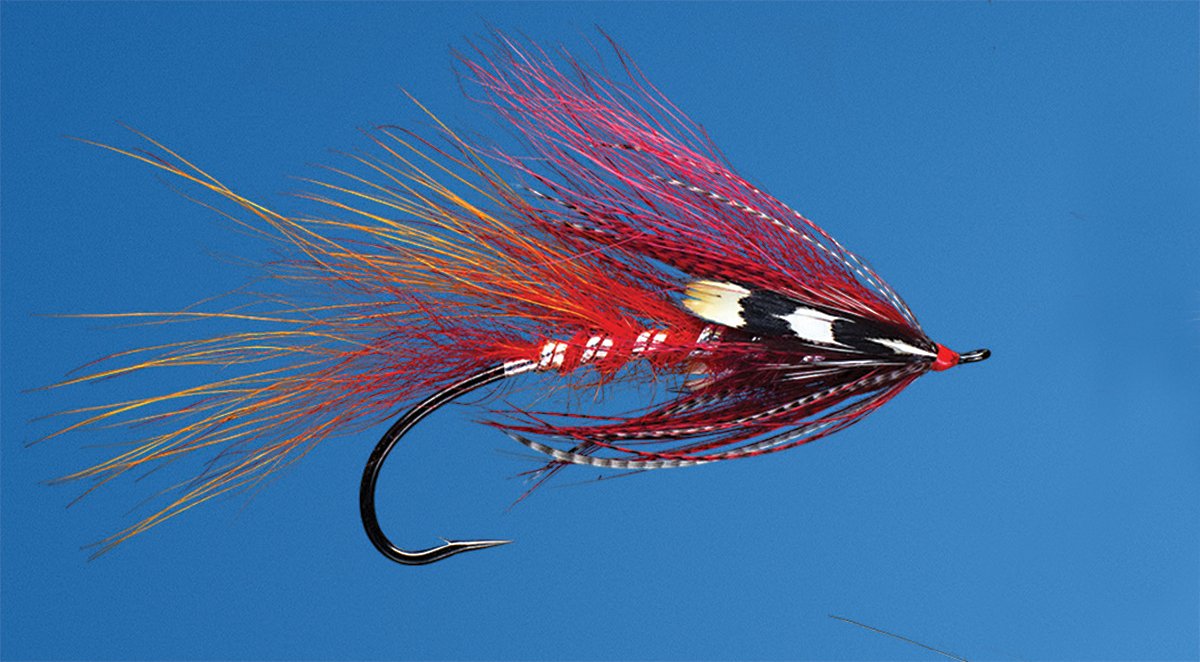
Orange Matuka - Dressed by Dave McNeese
Orange Matuka Dressing Notes - Tag: Fine flat silver tinsel. Tail: Hot fluorescent orange polar bear, hook length. Body: Hot fluorescent orange seal. Rib: Flat medium or wide flat silver tinsel followed behind each wrap turns of oval silver tinsel. Wing: Three sets of hot orange fluorescent polar bear evenly spaced, a fourth set and last wing of hot red polar bear. Hackle: Long to hook point, mallard or teal flank dyed fluorescent hot orange; natural gadwall over. Cheeks: Jungle cock. Head: Fluorescent orange or red.
McNeese Madness
Dave considers the Madness the best pattern he’s ever developed for the Deschutes, and neighboring summer-run rivers. The fly has continued gaining in popularity for a quarter of a century, from Oregon to the Skeena’s legendary tributaries. The fluorescent purple has “pop” because it begins with bleached-out polar bear dyed fluorescent white.
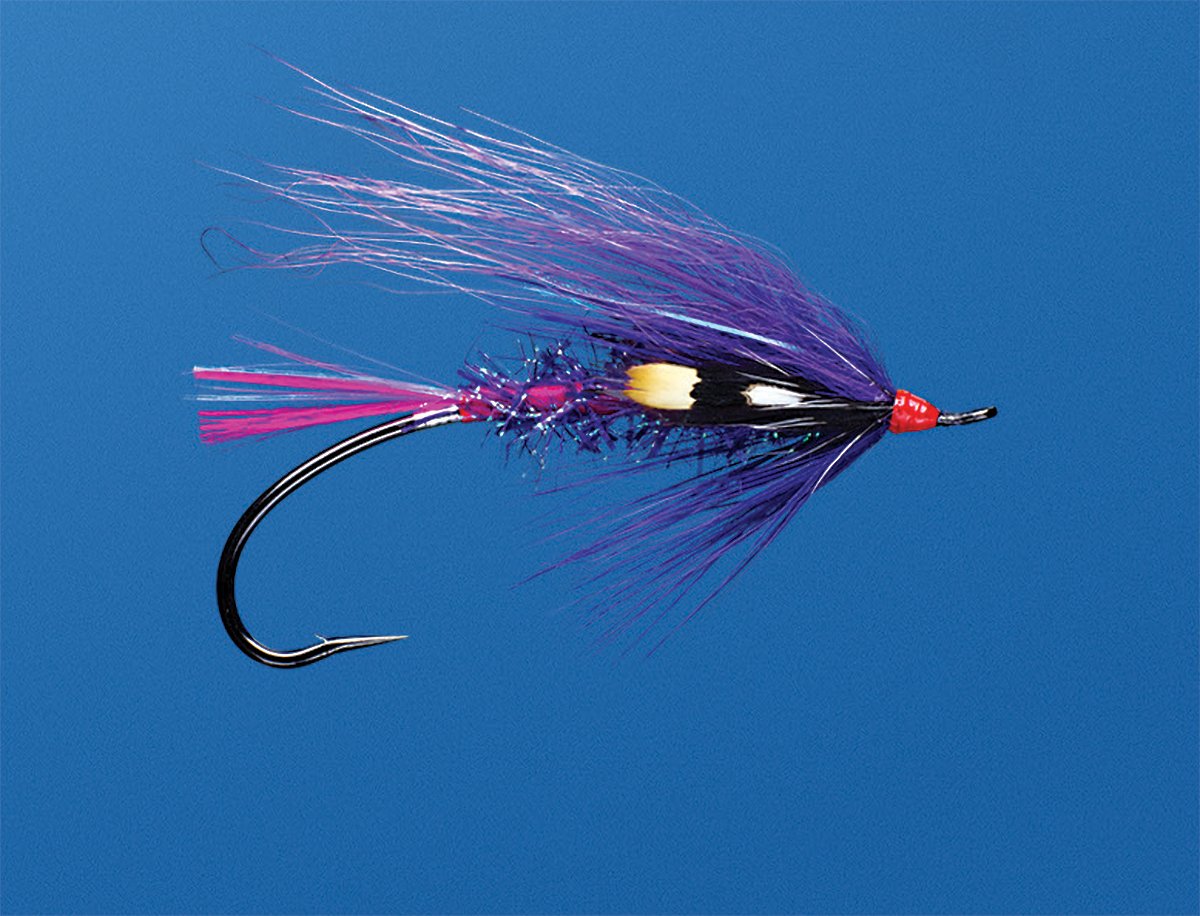
McNeese Madness - Dressed by Dave McNeese
McNeese Madness Dressing Notes - Tag: Fine flat silver tinsel. Tail: Fluorescent, red or orange floss, thick, with a few strands of clear Flashabou. Body: Purple plastic chenille ribbed with fluorescent red or orange floss, and counter-ribbed with blue wire. Hackle: Hot purple; add a few strands of clear Flashabou on top. Wing: Purple Flashabou mixed with fluorescent purple polar bear. Cheeks: Jungle cock. Head: Hot orange.
Red Wing
The early version of this pattern was tied with redwing blackbird shoulder feathers for the body, but now Dave uses various white bird feathers that he dyes fluorescent red-orange. Hen capes will work, he notes, as well as dyed red ringneck pheasant collar.
The body feathers need to expand outward as the fly is dead drifted to a target fish. When Chinook, steelhead and large trout are in a “clean-up” mode on loose eggs, the fly is deadly in small sizes, 6 through 10. “I’ve taken a good number of Chinook salmon over 30 pounds, the largest 62 pounds,” Dave says. “This is my go-to Chinook fly on southern Oregon rivers such as the Rogue and Elk, and farther north the Trask.”
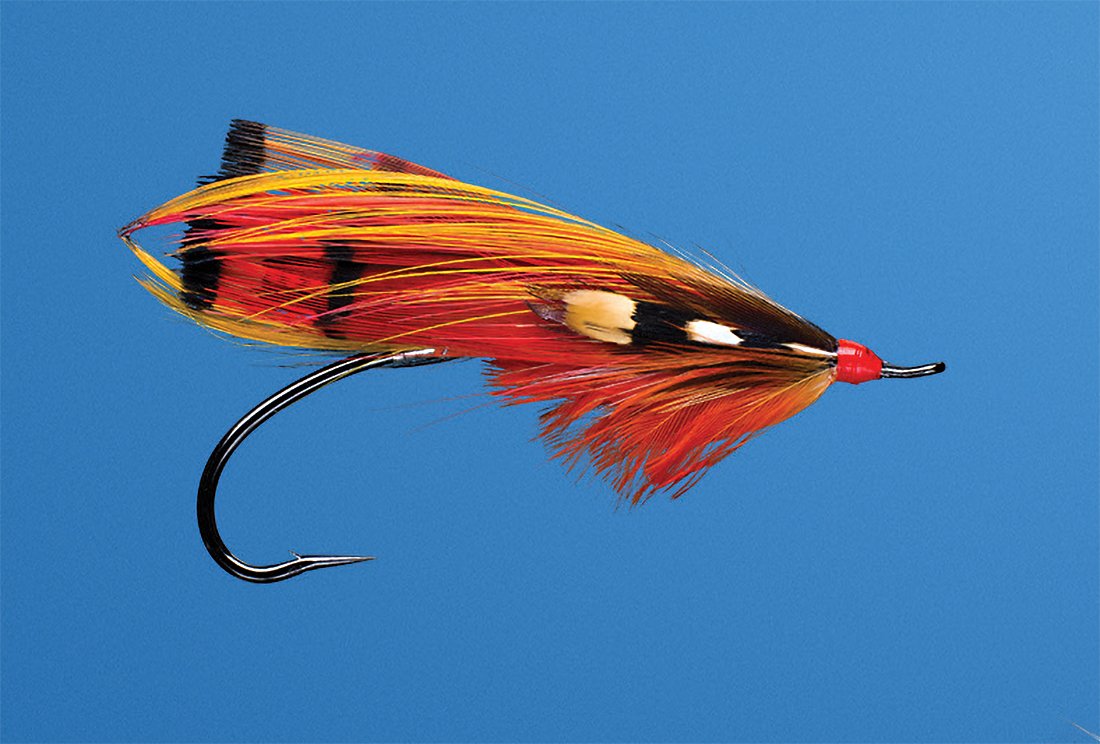
Red Wing - Dressed by Dave McNeese
Red Wing Dressing Notes - Tag: Flat silver tinsel. Tail: Three to four golden pheasant crests. Body: Rear half, fluorescent orange floss over flat silver tinsel. Front half, orange/ red feathers, weaver or dyed ringneck hen pheasant collar dyed hot fluorescent orange/ red. Paired side to side and top to bottom. Smaller feathers at the rear and larger feathers forward. Wing: Sets of matching jungle cock to bend of hook. Matching sets of golden pheasant tippets. Note: The tippet are first dyed white, and then dyed light fluorescent orange. If unavailable, use natural matching tippets. Cheeks: Jungle cock. Topping: Golden pheasant crests, three to six, divide, half natural and half hot orange. Throat: Last pairs of longer body feathers. Head: Hot orange.
Trey’s most recent book, Flies for Atlantic Salmon & Steelhead, is available directly from the author on Amazon in two formats:
Limited First Edition Hardcover — An oversized coffee-table book measuring 12.5 × 10.25 inches, with 384 pages and more than 1,000 photographs and illustrations. Bound in cloth with an embossed cover and dust jacket, this edition is limited to 1,500 copies. Available on Amazon.
Digital Reference Edition — A digital replica of the original book, preserving its page layouts, photographs, and illustrations. Ideal for viewing on a larger tablet in landscape mode, it makes a convenient reference at the fly-tying bench, keeping dressing notes and detailed fly images close at hand. Available on Amazon Kindle.