A Speyside Soliloquy: The Dunt
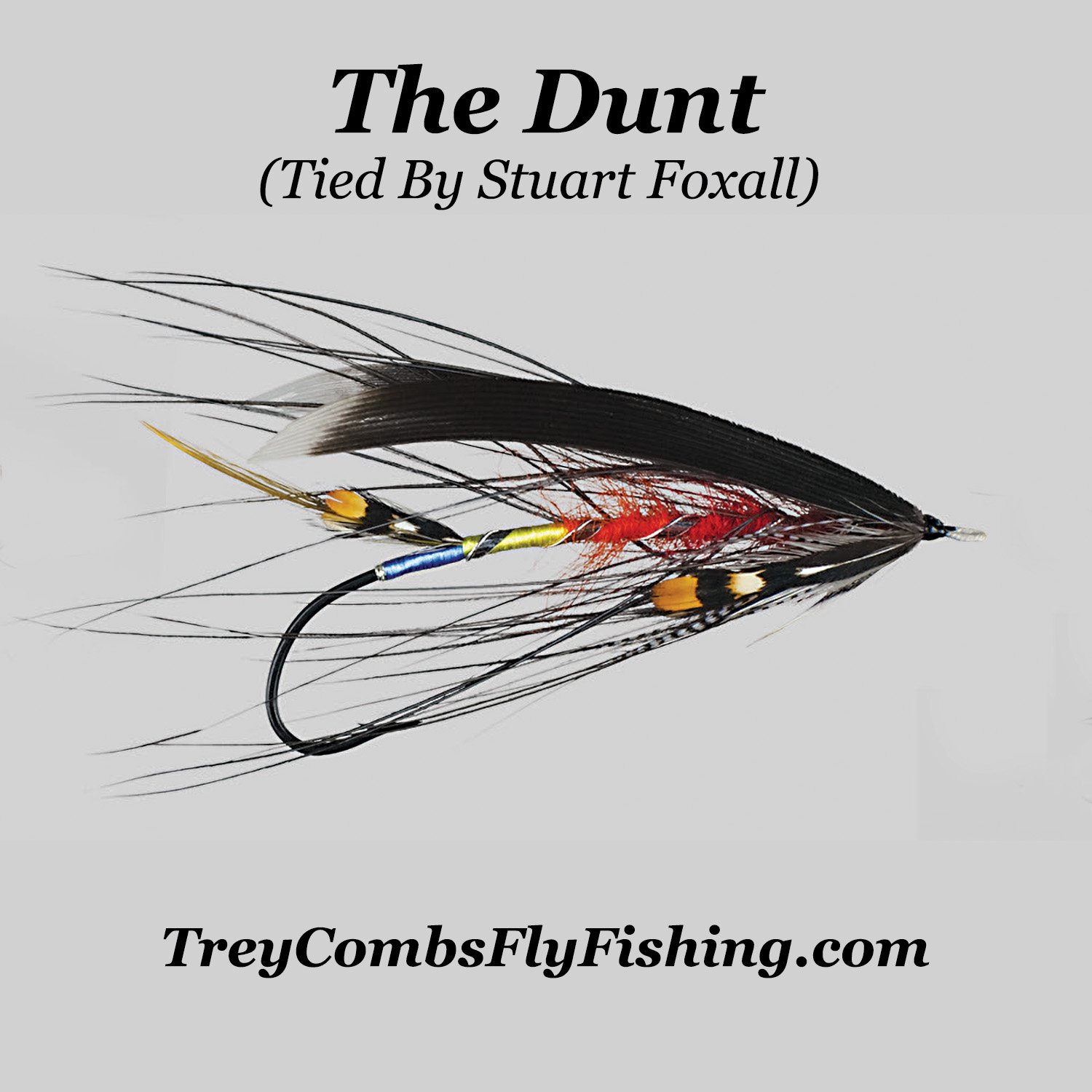
The Dunt is a classic Dee strip-wing salmon fly associated with Mr. Murdoch of Aberdeen and recorded by George M. Kelson in The Salmon Fly.
History and Origin
Associated with Mr. Murdoch, an early 19th-century authority on the River Dee and its salmon flies, the Dunt became one of the best-known Dee strip-wing patterns. George M. Kelson later recorded the fly and credited Murdoch with regarding it as one of the best standard flies for the Dee in both spring and autumn. Kelson also noted that the fly was not limited to the Dee, reporting that seven of nine salmon taken on the Birnam stretch of the Tweed in 1893 were caught on the Dunt.
A Classic Dee Strip-Wing Fly
The fly belongs to the Dee strip-wing family, a group of long, slender salmon flies developed for the River Dee. These patterns are generally tied on long-shanked hooks with low, separated strip wings drawn down along the sides of the shank rather than mounted high above it. They often use seal’s fur bodies, long heron hackles, and teal throats, creating a slim, lightly dressed fly with movement and translucency in the water.
Pattern and Legacy
Kelson’s version of the Dunt uses a light blue and silver tag, a golden pheasant topping and teal tail, a body divided into yellow, orange, and red-claret seal’s fur, silver ribs, black heron hackle, teal throat, plain brown turkey strip wings with black bars and white tips, short jungle cock sides, and a black head. Later authors, including J. J. Hardy, J. H. Hale, and T. E. Pryce-Tannatt, also recognized the pattern, though Pryce-Tannatt’s dressing differed slightly, including the use of jungle cock in the tail and a fiery-brown front body section.
As a Dee fly, the Dunt sits in the same tradition as patterns such as the Akroyd, Glentana, Gardener, Tri-colour, and Eagle flies. Its long, low profile and plain strip-wing construction make it very different from the more ornate full-dressed Victorian salmon flies, but that plainness is part of its appeal. It is an old, practical Dee pattern with a documented history of use beyond its home river.
Dressing Notes
Tag: Silver twist and light blue silk. Tail: A topping and teal. Body: Yellow, orange, red-claret seal’s fur, in equal sections. Ribs: Silver lace and silver tinsel. Hackle: Black heron, from claret fur. Throat: Teal. Wings: Two strips of plain brown turkey with black bars and white tips. Sides: Jungle cock, short and drooping over the throat hackle. Head: Black
Featured Image & Fly Dresser
The fly image featured in this blog entry and in our fly pattern dictionary comes from the talented hands of master fly dresser Stuart Foxall.
— Mark Combs
Sources: George M. Kelson, The Salmon Fly (1895); Mikael Frödin, Classic Salmon Flies: History and Patterns.