River Plate #5 - The Hofsá River
The download link to the high resolution version of this image is located at the bottom of this page.
The Hofsá River, Northern Iceland
The Hofsá is one of Iceland’s classic Atlantic salmon rivers, located in the Vopnafjörður region of Northeast Iceland. Along with the nearby Selá, it is one of the important salmon rivers of the northeast and has long been known for clear water, beautiful fly-fishing pools, and a strong run of multi-sea-winter salmon.
The river offers roughly 30 kilometers of fishable salmon water and is managed with a very limited rod system. It is commonly described as being divided into seven beats and fished by seven rods, with anglers rotating through the beats. This gives each angler a large amount of private water during each fishing session.
The Hofsá is a clear-water river, and that clarity defines the fishing. Much of the river can be fished with a single-handed rod, though many anglers also bring a light double-handed or switch rod for certain pools and wind conditions. Floating lines, long leaders, small flies, and careful presentation are central to the approach.
One of the signature methods on the Hofsá is fishing small flies and hitched tubes on or near the surface. The river is well known for salmon that will rise to small flies, especially in the right water and light conditions. This is part of what gives Icelandic salmon fishing its distinctive character: clear water, visible lies, light tackle, and explosive surface takes.
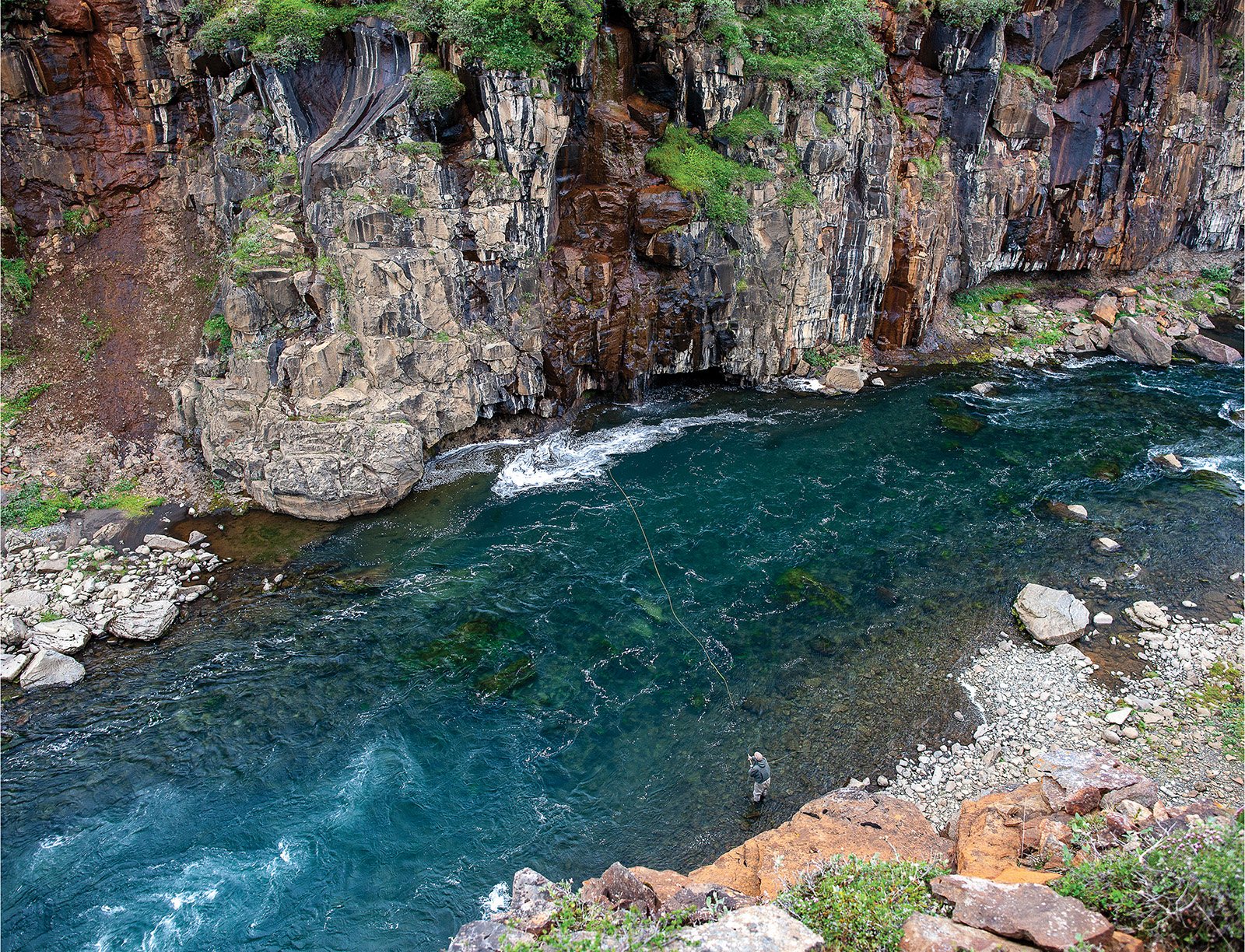
The Hofsá typifies the crystal-clear pools of most Icelandic salmon rivers, where long casts and tiny flies are the rule. Typical flies include small hair-wing patterns, hitched tubes, and Icelandic salmon patterns such as the Frances. A small Sunray Shadow or similar long-winged pattern can also be useful in certain pools and conditions. The emphasis is usually on fishing the fly cleanly and quietly rather than overpowering the river with heavy tackle.
The upper Hofsá includes dramatic canyon water and a waterfall where salmon passage is limited. The top beat is often described as one of the river’s most scenic and memorable sections, with more demanding access and more dramatic water than the lower and middle river.
The Hofsá also has a notable modern history. Hofsá Lodge was built in the 1970s, and Prince Charles, now King Charles III, was among its early regular visitors. That history has helped give the river a prestigious reputation, but the appeal of the Hofsá remains simple: clear water, beautiful pools, limited rods, and the chance of a large Atlantic salmon on a small fly.
The fishing season generally runs from late June or early July into September. Early season fishing is often associated with the chance of larger multi-sea-winter salmon, while later summer brings more fish into the system, including grilse. As with all salmon fishing, conditions matter: water height, temperature, light, and timing can change the character of the fishing from week to week.
River Plate #5 features a dramatic view of the River Hofsá cutting through a steep canyon in northeastern Iceland, its clear blue-green water moving beneath dark volcanic cliffs and broken rock walls. The Hofsá is not as well known to many anglers as the major salmon rivers of Norway, Scotland, or Canada, but it is an exceptional Atlantic salmon river: clear, clean, and remarkably unspoiled, with classic pools set among volcanic rock. A lone angler stands small against the scale of the river, giving the scene a quiet sense of distance, wildness, and Atlantic salmon country. This image was used in Flies For Atlantic Salmon & Steelhead and is one of my favorite river images in the book.
Download Information: River Plate #5 is a high-resolution archival plate. Each plate includes a white border and is suitable for high-quality printing and framing. Dimensions: 10” (width) x 8” (height) at 300 DPI. Click the button below to automatically download the high-resolution image.