Oystein is Chasing Silver
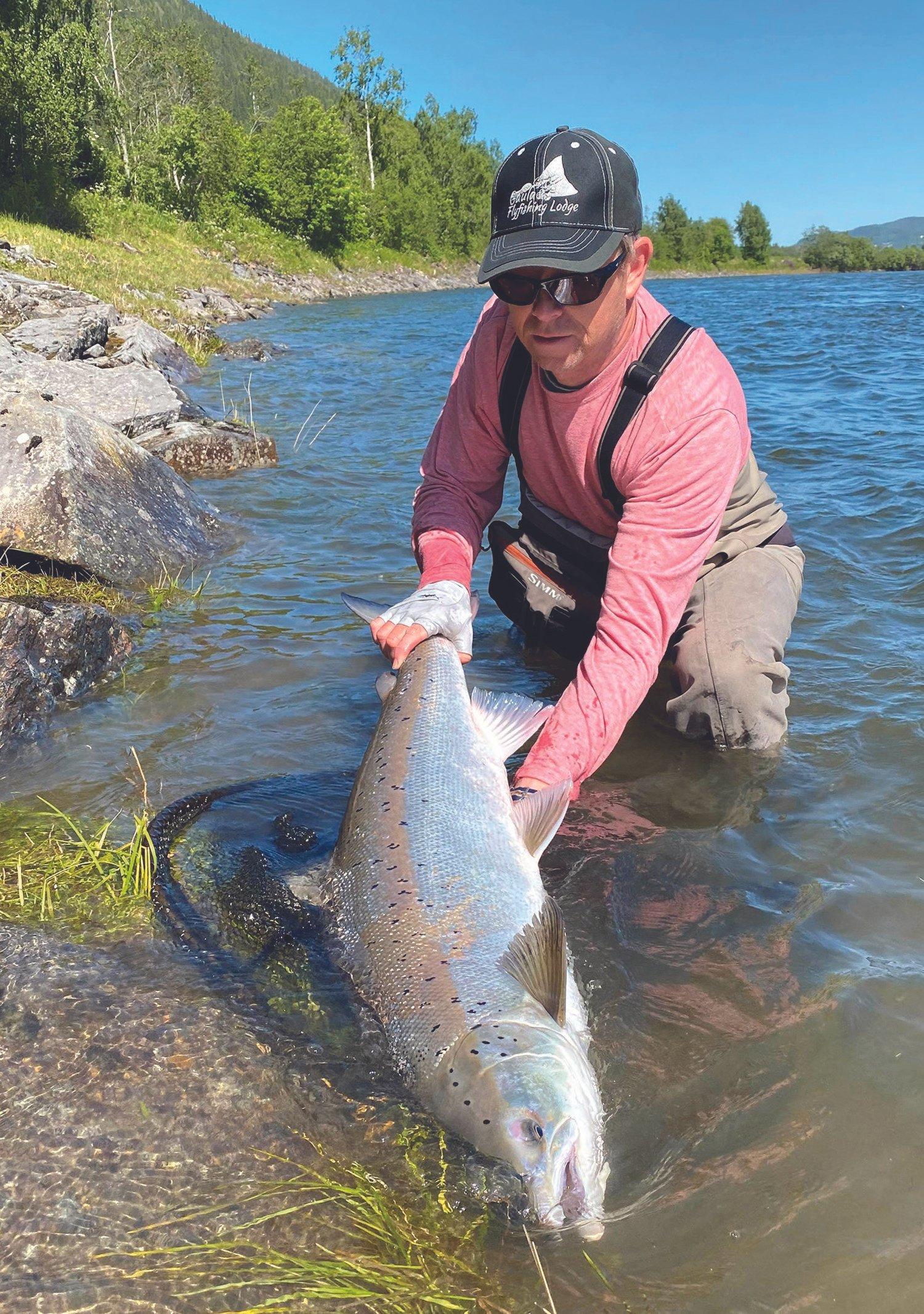
Øystein Aas with a massive wild Atlantic salmon from the Gaula River in Norway.
A Lifetime of Chasing Silver Salmon & Steelhead
Norwegian Øystein Aas has fished for Atlantic salmon and Pacific steelhead for several decades in many countries and nearly 100 different rivers. He has published two books on salmon fly fishing and contributed to several others, as well as a high number of articles for angling magazines in many countries. He is currently Editor-in-chief of the international Chasing Silver Magazine. Øystein is also a professor at the Norwegian University of Life Science. He lives north of Oslo, near Lillehammer, at the foot of the mountain region of southern Norway. From his old farmhouse he can be knee deep in the Gaula in less than four hours.
Publisher of Chasing Silver Magazine
Øystein is a busy man. In addition to research, teaching, and fishing, he also oversees Chasing Silver Magazine, a fly-fishing publication devoted to sea-run fish: Atlantic salmon, steelhead, Pacific salmon, and sea-run trout. Published since 2008, the magazine describes itself as being made for “sea-run anglers,” with an emphasis on high-quality paper, strong photography, destination writing, fly patterns, tackle, casting, and conservation. It is one of the few magazines that speaks directly to the overlap between Atlantic salmon and steelhead fishing. For this reason, it was a natural fit to include a chapter written by Øystein in Flies For Atlantic Salmon & Steelhead.
The magazine is available in a traditional format, along with a digital version that reads beautifully on tablets. If you look at the graphics we’ve provided below, you’ll see an image of several covers of the magazine that demonstrates the global worldview that informs this terrific fly fishing publication.
Chasing Silver is currently running a special campaign to recruit new subscribers. For all new subscribers registering before 1st June 2026, the magazine will draw a fantastic Loop Classic fly reel, several T-shirts and other treats. See more and subscribe at www.chasingsilvermagazine.com
Øystein & The Sunray Shadow
In Øystein’s excellent chapter in Flies For Atlantic Salmon & Steelhead , he described a early-season salmon catch to explain the effectiveness of the Sunray Shadow, a long-winged tube fly developed by British angler Raymond Brooks on Norway’s famous Lærdalselva in the early 1970s. The chapter described a salmon moving a long distance to attack a sleek Sunray, then traces the fly’s history, original dressing, and likely appeal as an imitation of small baitfish such as sand eels, capelin, or herring. He argues that a true Sunray should remain close to Brooks’s simple design: a bare plastic tube, short underwing, peacock herl, and long black wing, rather than the heavily dressed modern variations often labeled “Sunray.” He discussed how to tie and fish the pattern properly, emphasizing stiff, well-tapered hair, smaller sizes, active retrieves, and adaptable techniques such as swinging, stripping, and riffling-hitch presentations. His main point was that the Sunray Shadow is not just a large night fly, but one of the most versatile and convincing modern Atlantic salmon flies when tied sparsely and fished with movement. I’ve fished the Sunray and I can tell you – it’s deadly!
Dressing Notes for Øystein’s Sunray Variation (pictured below)
Thread/head: Black. Tube: Grayish transparent plastic tube one to two inches in length. Underwing: White, olive or chartreuse bucktail of good quality or CITES- approved polar bear tied in slightly longer than the tube. If hairs are not too thick, can also be tied in pointing forward and then folded back and secured. Other colors can also be used. Blue is popular in Norwegian west coast rivers as well as in Iceland. Middle wing: Two to six strands of flash in gold colors. Main wing: Black goat or colobus monkey two and a half times the length of the tube. The wing should be well tapered and tied in quite wide, with the underwing as support. The main wing can be tied in two or three rounds. Sides: Artificial or natural jungle cock (CITES approved).
Atlantic Salmon Ecology
In his academic work, Øystein is also the lead editor of Atlantic Salmon Ecology, a major scientific reference on Atlantic salmon published by the esteemed scientific publisher Wiley. The book looks at how Atlantic salmon interact with their environment across the full life cycle, including migration, spawning, habitat, feeding, growth, predation, disease, population change, hydropower, climate change, and fishing pressure.
For anglers, the value of a book like this is that it places Atlantic salmon in a much larger context. These fish are not only important to fly fishing and sporting culture; they are also affected by river conditions, land use, dams, warming water, harvest, and aquaculture. Atlantic Salmon Ecology is written primarily for scientists and fisheries managers, but it helps explain why the future of Atlantic salmon depends on more than what happens in the river during fishing season.
— Mark Combs
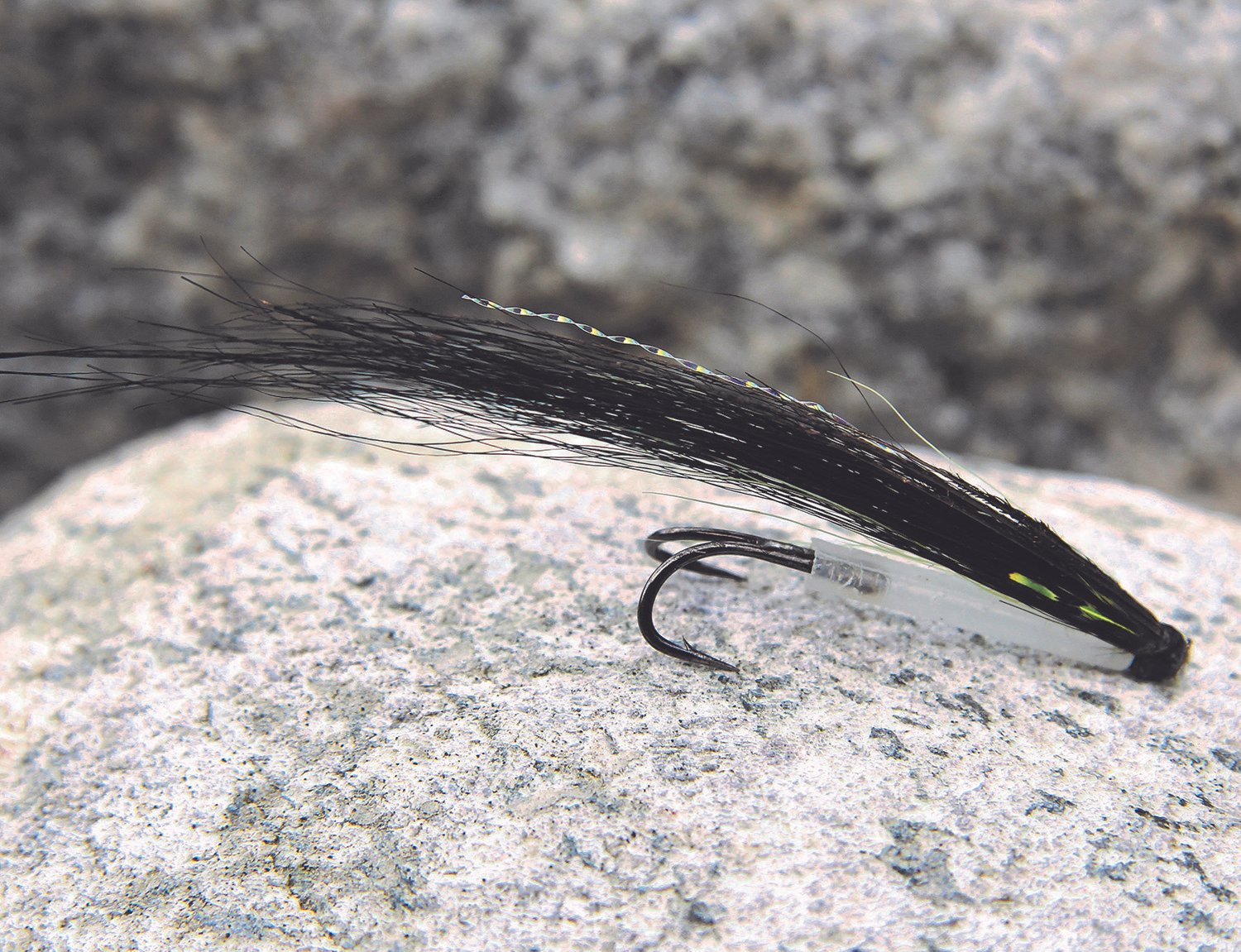
A well-used Sunray variation tied by Øystein Aas. Note the marks from numerous sharp salmon teeth on the tube.
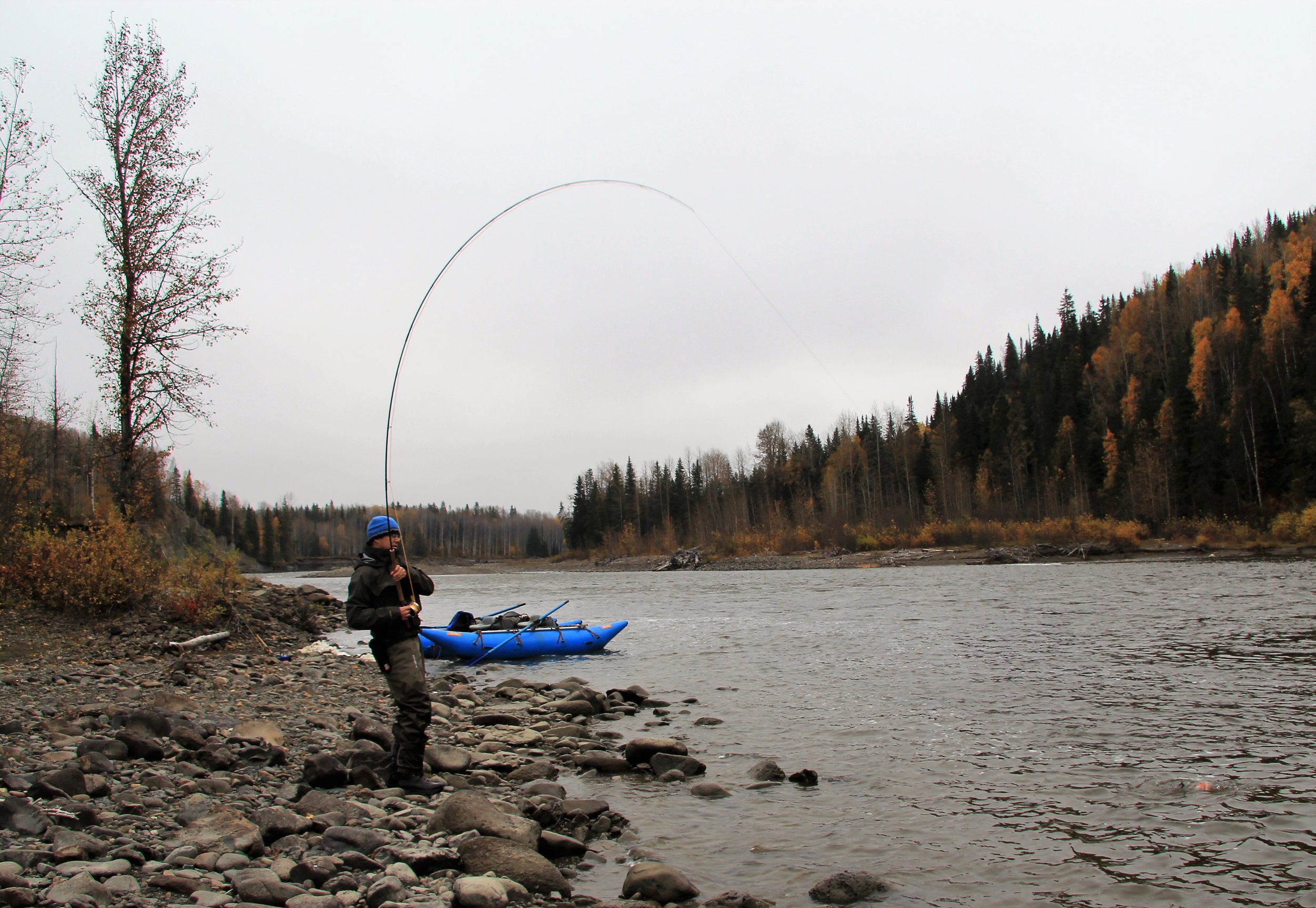
About to land a Babine steelhead. Øystein has several years of experience from the mighty Skeena and it's fabled tributaries.
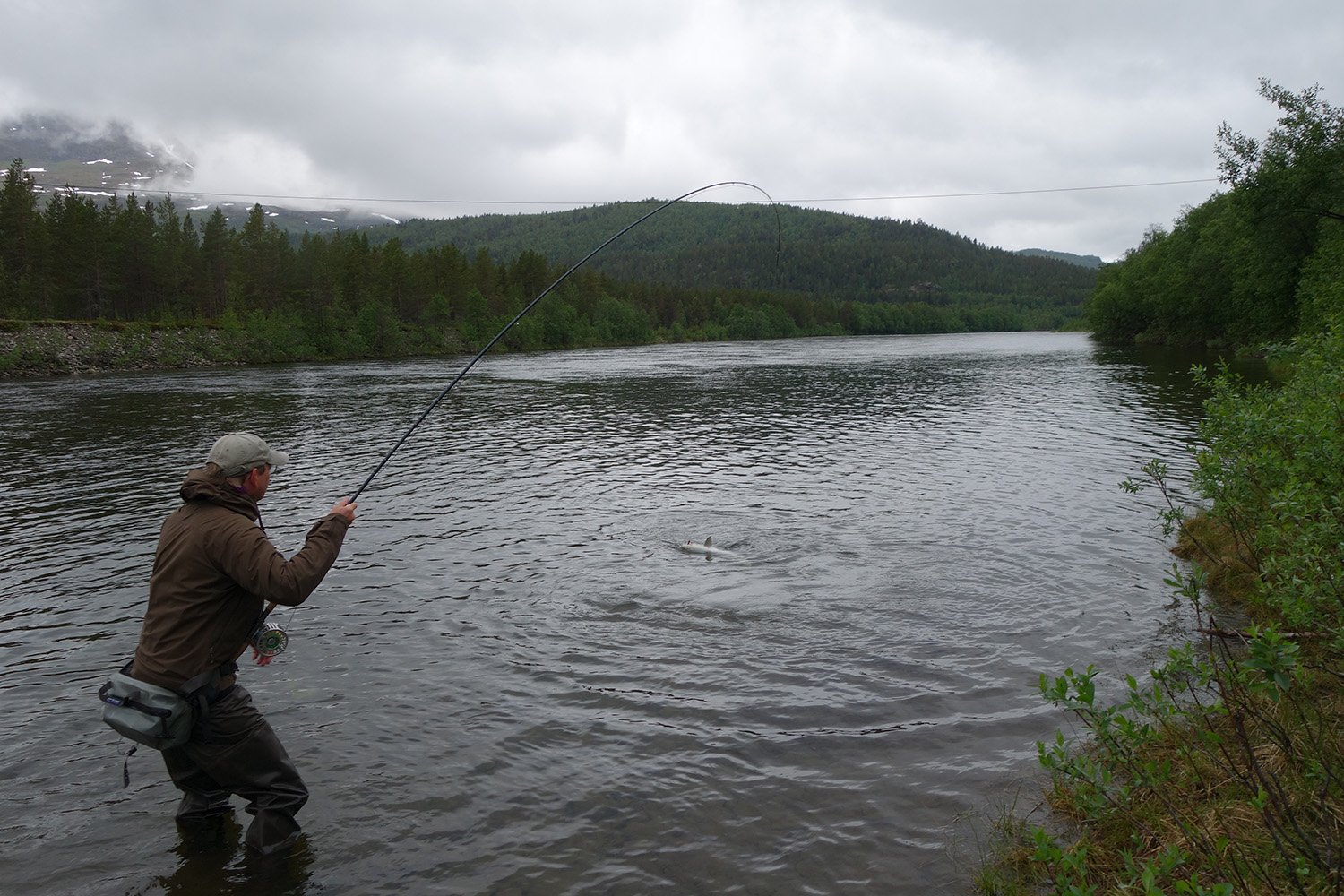
Fighting a 25 pound Reisa salmon. The Reisa is one of Trey's favorite Norwegian rivers.
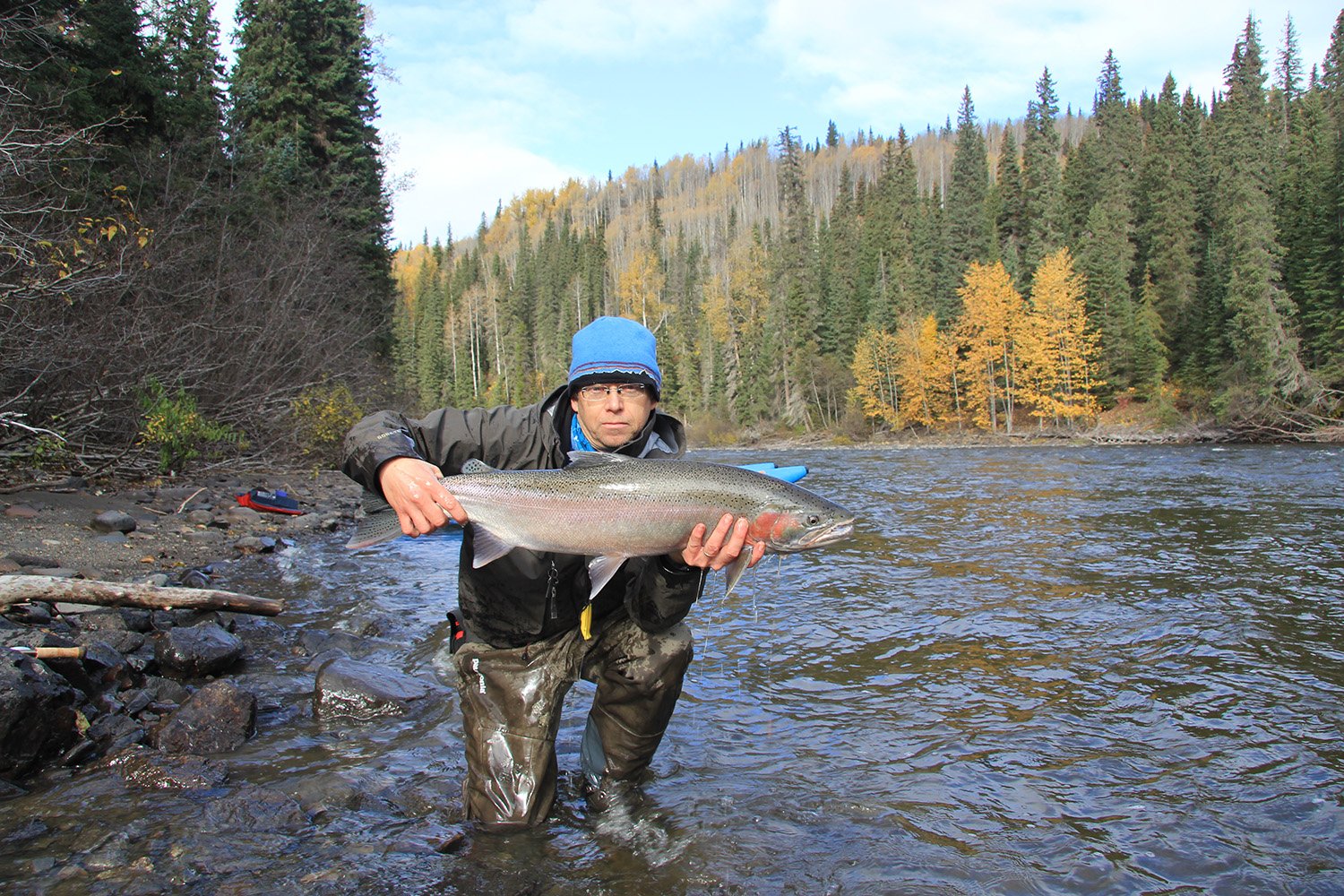
Øystein with a massive Babine buck, landed some miles upstream of Silver Hilton.
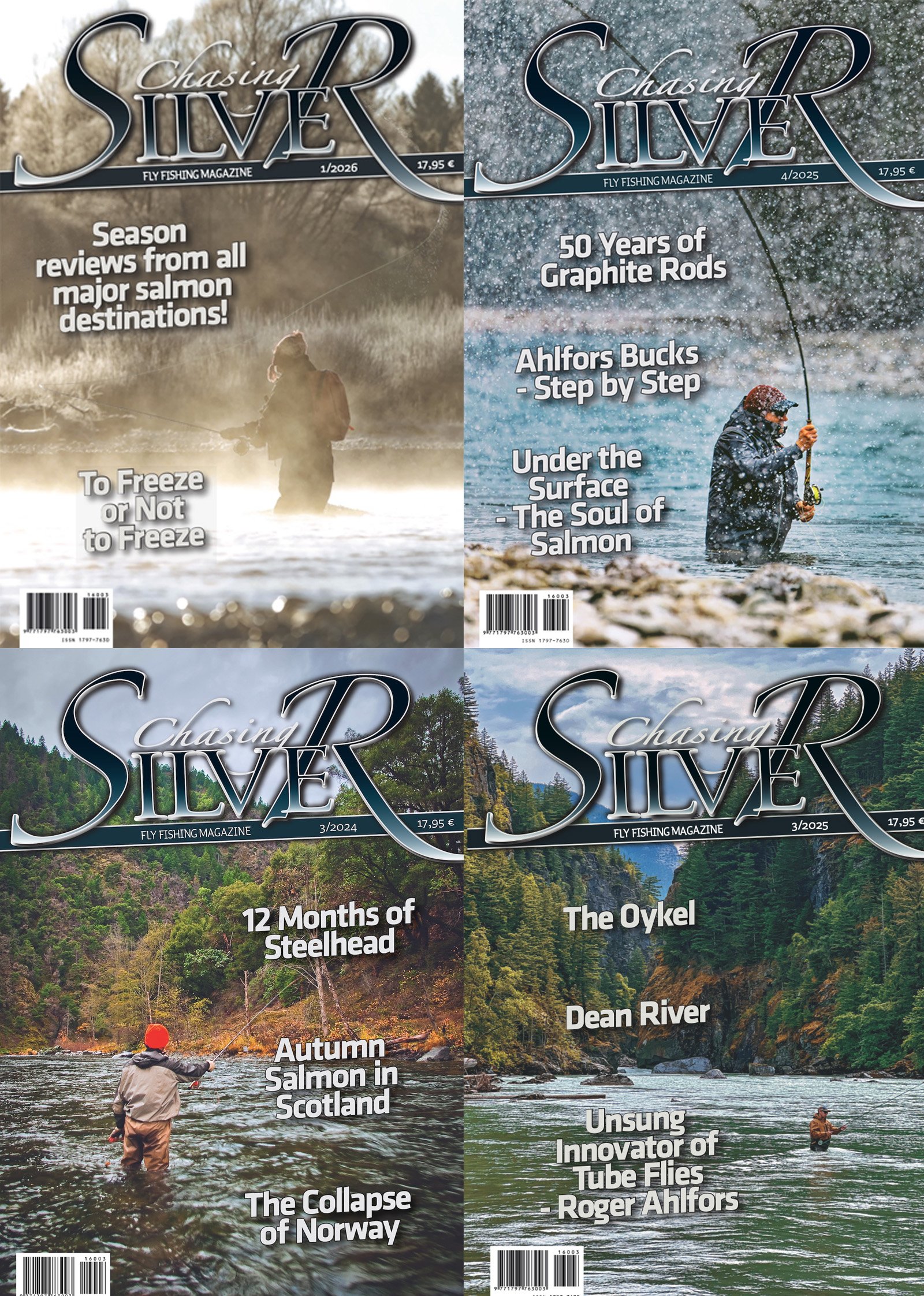
Some recent covers of Øystein’s Chasing Silver magazine, demonstrating the breadth of content found in this fine fly-fishing publication.