Overshoot Steelhead at Priest Rapids Dam
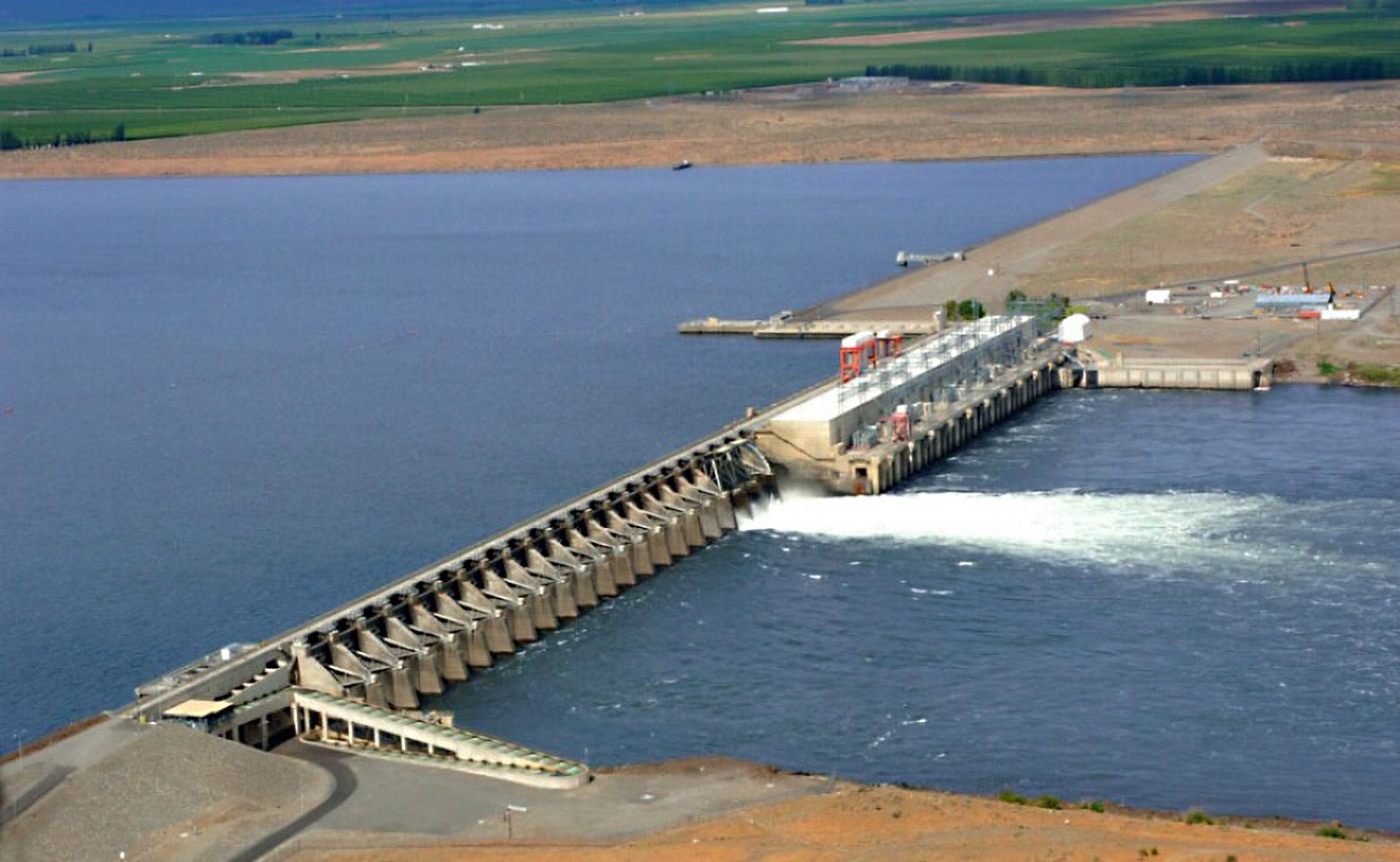
Priest Rapids Dam on the Columbia River, where researchers studied overshoot steelhead and their ability to migrate back downstream before spawning.
This article is a synthesis of research titled “Abundance and Migration Success of Overshoot Steelhead in the Upper Columbia River.” It draws on the study’s findings to present a clear, angler-focused explanation of how some Columbia River steelhead overshoot their natal tributaries, attempt to migrate back downstream before spawning, and face lower success as the number of dams increases.
When Steelhead Go Too Far
A paper published in 2022 in the North American Journal of Fisheries Management examined a specific problem in Columbia River steelhead migration: how many summer steelhead pass upstream of their natal tributaries, how many successfully turn around and migrate back downstream before spawning, and whether dams reduce their chances of making it home. Using PIT-tag detections from adult steelhead passing Priest Rapids Dam from 2010–2017, the researchers estimated the abundance of “overshoot” steelhead, the percentage that successfully “fell back” downstream, and how downstream dam passage affected that success. Their larger concern was that overshoot fish that fail to return may reduce spawning abundance in their home rivers or stray into nonnatal tributaries.
A summer steelhead entering the Columbia River may still be months away from spawning. It can travel deep into the basin, move through changing flows and warm water, and hold for months before entering a spawning tributary.
But some steelhead go too far.
They pass the river they are supposed to return to, continue upstream, and later have to turn around and migrate back downstream before spawning. Fisheries biologists call this overshooting. When those fish move back downstream toward their natal tributary, that return movement is called fallback.
A Complicated Migration
Overshooting is not simply a fish “getting lost.” Columbia River summer steelhead have one of the most complicated freshwater migrations of any salmonid. They may enter freshwater long before spawning, move through warm summer water, encounter multiple dams, and wait months before entering their home tributaries.
The researchers used PIT-tag detections to estimate how many fish passing Priest Rapids Dam belonged to upstream upper Columbia populations and how many were overshoot fish from downstream populations. PIT tags are tiny electronic identification tags, similar in concept to a microchip used in pets. When a tagged fish passes a detection site, researchers can record where and when it was detected. In this study, those detections allowed researchers to track whether steelhead passing Priest Rapids Dam later moved downstream toward their natal tributaries.
The numbers were striking.
On average, wild overshoot steelhead made up about 45% of the adjusted wild steelhead count at Priest Rapids Dam. These were fish that had moved upstream past their natal tributaries and were later faced with the problem of getting back downstream.
Not All Fish Make It Back
The study estimated that, on average, about 59% of wild overshoot steelhead successfully migrated back downstream of Priest Rapids Dam before spawning.
That also means a substantial portion did not.
The fate of the fish that did not make it back was unclear. The study found that only a small portion of known unsuccessful overshoot fish were detected in upstream tributaries during the spawning period. The authors suggested that many likely experienced mainstem or downstream-passage-related mortality rather than successfully spawning in an unmonitored upstream tributary.
Dams Change the Odds
The farther upstream an overshoot steelhead traveled, the more dams it had to pass on the way back.
That mattered.
The study found that fallback success declined as the number of dams increased. Fish that only needed to move back downstream past Priest Rapids Dam had much better success than fish detected farther upstream. For fish that reached Wells Dam, the farthest upstream dam in the study, only 22% were later detected downstream of Priest Rapids Dam.
For an overshoot steelhead, every extra dam added another obstacle between the fish and its home river.
Why Anglers Should Care
For anglers, the study changes how we should think about steelhead counts in the Columbia River. A fish counted at a dam is not always a fish bound for the water above that dam. Some of the steelhead passing Priest Rapids were overshoot fish from downstream populations, trying to correct course before spawning.
That matters because those fish still belong to their home rivers. If they cannot get back downstream, their natal populations lose potential spawners. In a wild steelhead population, every returning adult carries importance. Losing fish during a complicated fallback migration is not just a passage problem. It is a spawning-abundance problem.
The study also reminds us that downstream passage is not only about juvenile fish migrating to the ocean. Adult steelhead sometimes need to move downstream before they spawn. For an overshoot fish, a safe downstream route through the dam system may determine whether it returns to its home tributary or disappears from the population.
In a free-flowing river, a steelhead that travels too far can turn around and drop back downstream. In the Columbia, that same fish may have to pass one dam after another. The farther upstream it goes, the harder the return journey becomes.
That is why dam operations, surface passage routes, and adult downstream passage matter to anglers. They are not just engineering details. They can affect how many fish make it home to spawn, and ultimately how many wild steelhead remain in the rivers anglers care about.
– Mark Combs
For more river and steelhead research articles, visit our Essays section and look under “Rivers & Research Articles.”
Source: Murdoch, A. R., See, K., & Truscott, B. L. (2022). Abundance and migration success of overshoot steelhead in the upper Columbia River. North American Journal of Fisheries Management, 42, 1066–1080. https://doi.org/10.1002/nafm.10800
The figure and table below are from the original research article and provide additional context for the study area and key results.
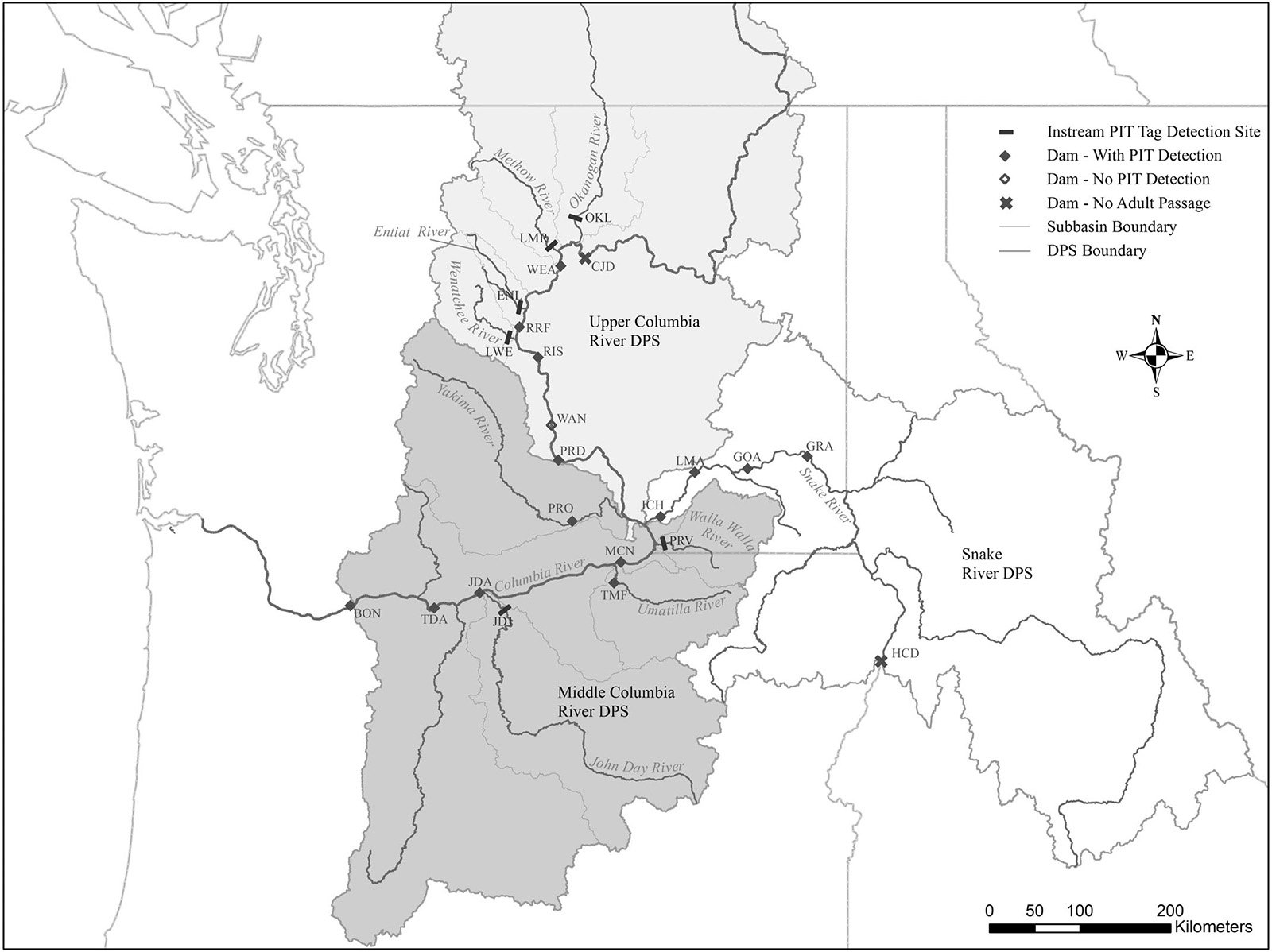
Columbia and Snake River study area showing major dams, rivers, and PIT tag detection sites used to track overshoot and fallback steelhead. Priest Rapids Dam was the central location for estimating overshoot steelhead in this study.
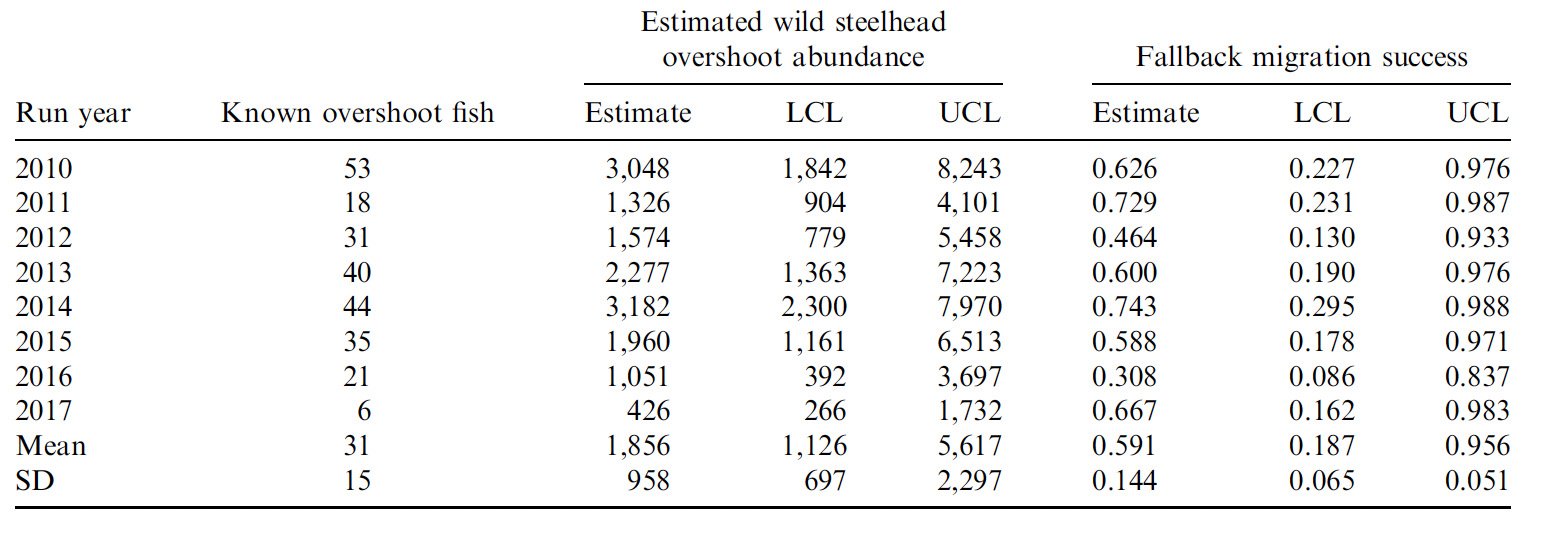
Number of known overshoot steelhead detected at Priest Rapids Dam, estimated wild steelhead overshoot abundance, and fallback migration success, 2010–2017. Source: Murdoch, See, and Truscott (2022).