Learn The Run
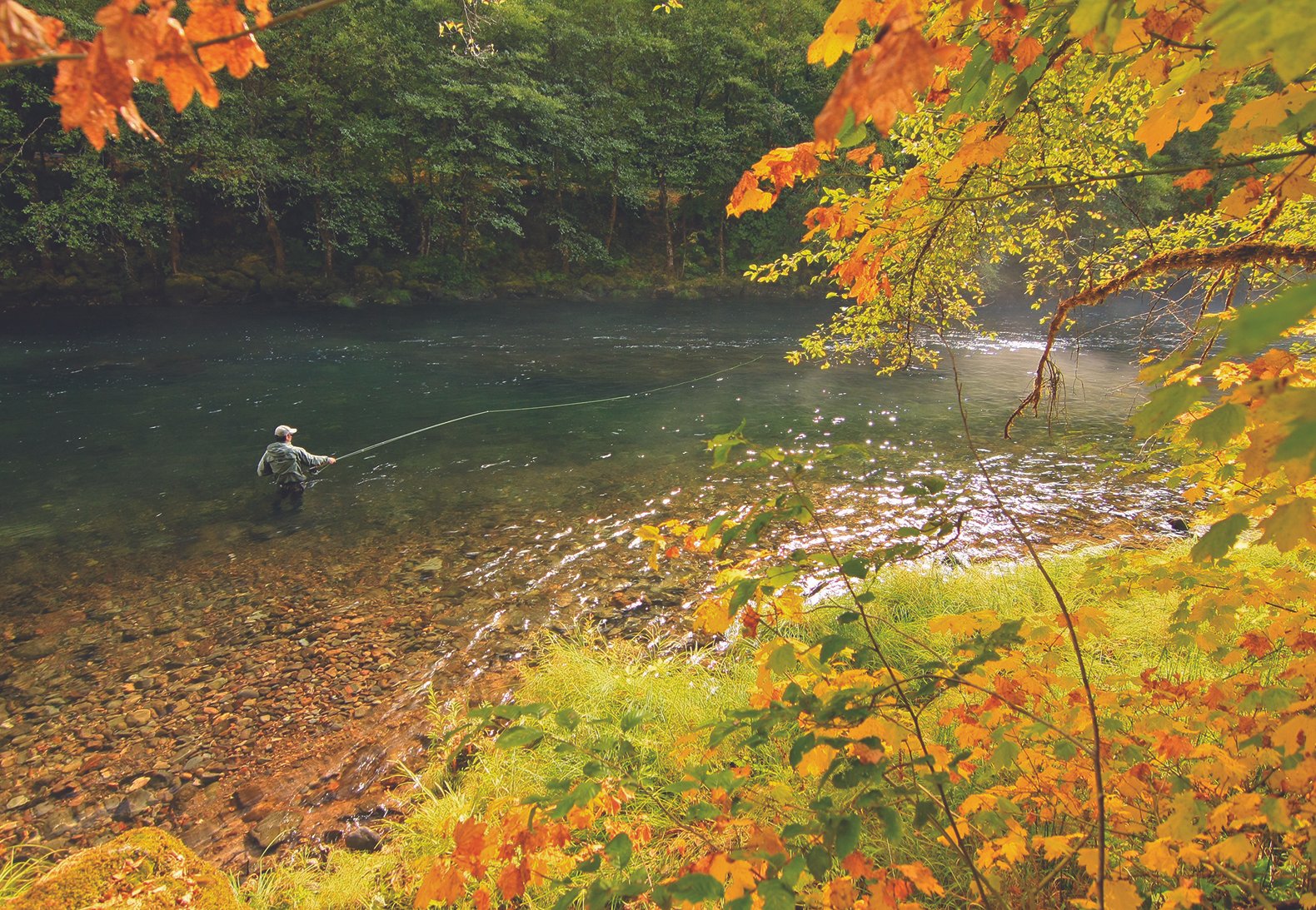
When someone asks me what matters most in steelhead fishing, I don’t talk about rods or lines or even flies. I tell them to learn a run. Most anglers move too quickly. They fish through a piece of water once, maybe twice, and if nothing happens they assume there are no fish there. Steelhead don’t work that way. They travel, but they also pause and hold in specific kinds of water that offer the right combination of depth, current speed, and security. If you want to understand steelhead, you need to understand why a fish would choose a particular piece of water, and that understanding comes from repetition. Pick a run and fish it often. Fish it when the river is up and again when it drops overnight. Watch how the current changes along the seam and where the depth transitions. Over time, the structure becomes clear. Steelhead holding water is not random. When you finally hook a fish in that run, it won’t feel accidental. It will make sense.
Pictured Above: Ken Morrish fishing a favorite autumn run on the North Umpqua with big leaf maples ablaze. Anglers who have fished rivers around the world have memories of the Umpqua as one of the prettiest.
Once you understand the run, how you fish it becomes just as important. I’ve always believed in the swung fly, not because it’s the only method that works, but because it teaches discipline. You make the cast, mend if necessary, and let the fly travel under tension. You don’t overwork it. The current gives the fly its life. A properly tied fly should swim on its own. The swing forces you to cover water methodically, stepping down through the run and paying attention to where the fly is in its arc. There’s no indicator and no immediate feedback, just the line under tension and your awareness. When a steelhead takes a swung fly, it comes from the fish choosing to move. That decision is what makes it meaningful.
The flies I’ve relied on over the years are not complicated. I’ve often favored darker flies for summer steelhead—black wings, clean profiles, strong silhouette. Older Pacific Northwest hair-wing patterns were sparse because they had to be. They needed to sink and track correctly in heavy current. Too much material slows everything down and changes the way the fly swims. A steelhead fly should be efficient: slim body, balanced wing, nothing excessive. Trends come and go, but a fly that sinks properly and swims cleanly will continue to produce fish.
I didn’t learn this alone. I learned from anglers who had already spent years on the river. They showed me how to read a seam before casting and how to step down properly through a run. They talked about water levels more than flies. Those lessons were passed down quietly, standing in the river. Don’t rush. Watch the water. Fish the run thoroughly. If you learn those things early, you’ll save yourself years.
Rivers change. Some of the great steelhead rivers of the past don’t fish the way they once did. Runs fluctuate and habitat disappears. Steelhead are resilient, but they are not immune to pressure. If we want them to remain, we have to fish responsibly—handle fish carefully, respect closures, and support conservation work. Steelhead require faith, but they also require stewardship.
Steelhead fishing is not easy. You can do everything correctly and still go home without touching a fish. That doesn’t mean the effort was wasted. If you’ve learned something about the water, you’ve gained something. The swing continues whether a fish answers or not. Then one day the line tightens. When that happens in a run you know well, it feels earned. That’s why I tell people to learn the run. The fish will come when they come. The understanding lasts much longer.