Harry Lemire’s Black Diamond
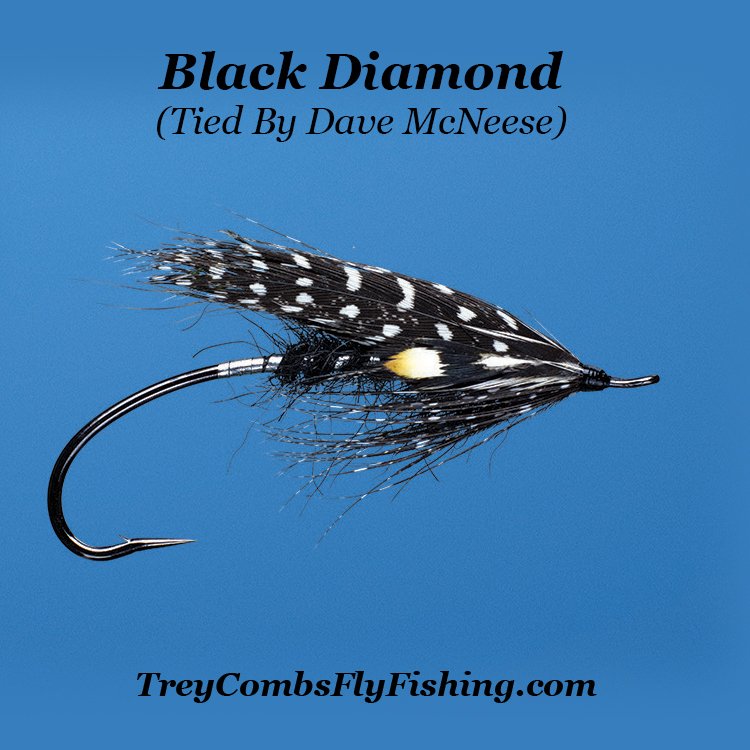
The Black Diamond is a classic Pacific Northwest steelhead fly developed by Harry Lemire
I recall, years ago, while promoting my offshore fly-fishing program that operated from San Diego’s Fisherman’s Landing, I was unloading the mountain of show booth materials from a cab when I spotted Chico Fernandez, a longtime buddy from our mutual fascination for bluewater fly fishing and our meetings at countless fly-fishing shows. I called out, “Hey Chico, what are they biting on?” He called back, “For salt water, white flies—for fresh water, black flies.”
I could not agree more, and no better example then Harry Lemire’s Black Diamond.
Harry Lemire originated the Black Diamond in 1969 for slightly off-colored water during the summer season. However, after taking a thirteen-pound steelhead from the Green in December 1970, he brought this most handsome pattern into frequent winter use and considered it to be highly effective for all the seasons, whatever races they hold.
This pattern, named for the little coal town in Washington where the Lemires made their home, was a favorite of his since its development in 1969. He said, "Where grease-lining, a little black bug is required, especially during the summer and fall."
Harry found that when fished on winter rivers, the fly seems to be at its best when working deep in slower water, such as in the center of the drift.
I have long favored black and guinea for shallow tail-outs when the light is low. The compact and classically beautiful Black Diamond fills that need perfectly.
The main Black Diamond image, pictured above, is from the vise of master fly dresser Dave McNeese of Springfield, Oregon. Dave is featured in Chapter 17 of my book, Flies for Atlantic Salmon & Steelhead. Suffice to say here, the man is simply incapable of tying an ugly, chunky, unruly fly, the everyday likes of which many of us fished happily back in the day when the Beatles topped the charts.
Dave often offers an alternate to the original because he believes the changes make for a fly more attractive to steelhead, and not based solely on aesthetics. I should add that Dave doesn’t need more business. For as long as I’ve known him—some 40 years—he’s been custom dyeing organic materials for flies from the classic American steelhead bucktail to the most complex of Victorian salmon flies.
Original Black Diamond Dressing Notes from Steelhead Fly Fishing and Flies (1976)
Body: Black floss. Tip and Rib: Narrow silver tinsel. Underwing: Grey squirrel tail over four peacock sword fibers. Overwing: Guinea fibers. Hackle: Guinea, tied as a beard. Cheeks: Jungle cock.
Black Diamond Dressing as Pictured Above from Flies for Atlantic Salmon and Steelhead (2023)
Tag: Fine flat silver tinsel. Body: Black floss or seal or synthetic dubbing. Rib: Medium oval silver tinsel. Hackle: Guinea rump feather tied under like a beard. Underwing: Gray squirrel tail, four peacock sword fibers over. Wing: Guinea rump feathers tied flat. Cheeks: Jungle cock. Head: Black.
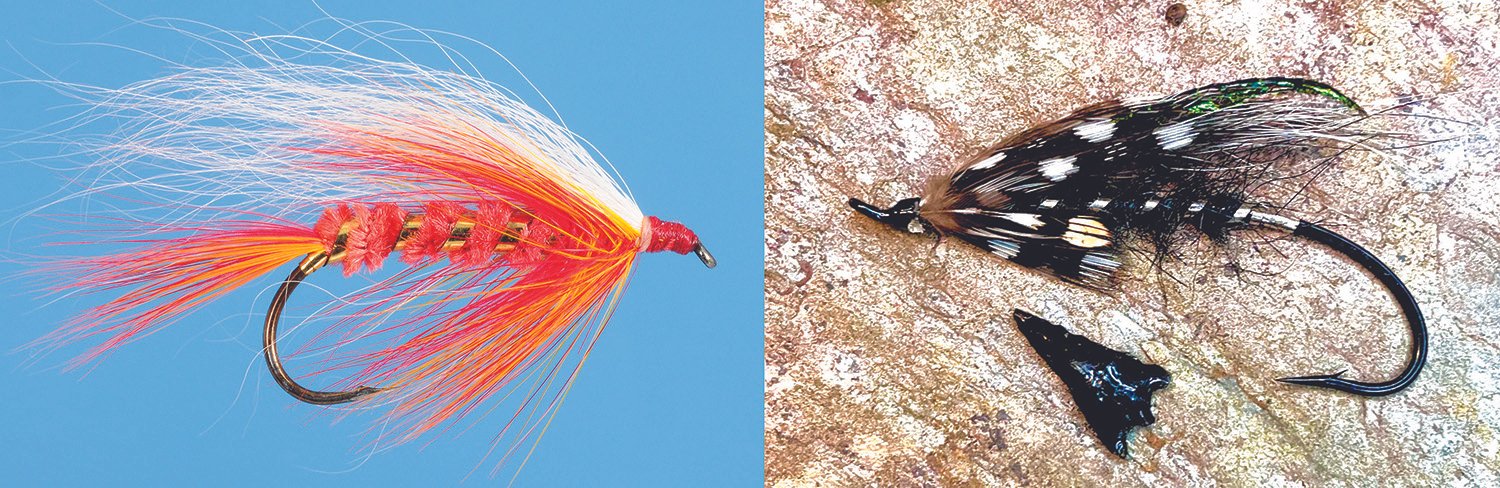
The Black Diamond is also a good example of a fly pattern that represents the transition from the style that dominated the post-World War II world of steelhead fly fishing. This is seen in these two original wet flies: the 1940s-born Skykomish Sunrise with chenille body (left) from the vise of George McLeod, to the 1960s-born Black Diamond (right), which was sleeker with a seal fur body (designed and tied by Harry Lemire).