Dave McNeese: The Most Interesting Fly Fisher in the World
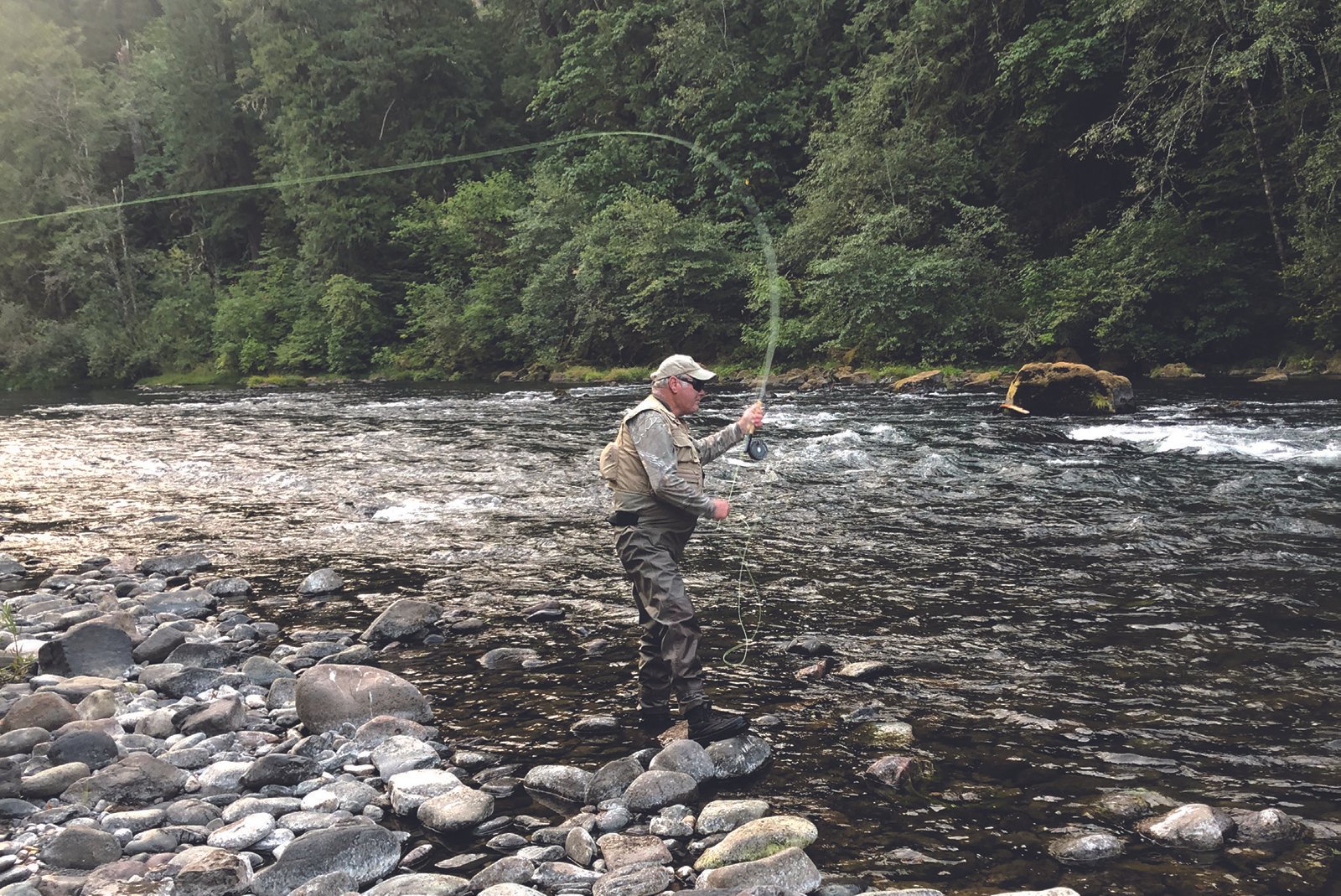
Late one afternoon, Dave McNeese told me he was packing for a trip to a remote canyon in Oregon, where he planned to capture one of North America’s rarest butterflies. Dave is a serious lepidopterist, his private collection the envy of small museums. He was searching for an insect known to taxonomists by a Latin genus and species name. Scientists did not know where the butterfly lived. Dave did, and he was happy to keep it that way.
I have long known that his grasp of fly-fishing history is so vast that sometimes I find it quicker to call Dave than surround the question with Google searches. The collateral nuggets of information drop like little bombs and mess with my concentration. Often I hang up forgetting why I was prompted to call Dave in the first place.
Like the man in the Dos Equis beer television commercial, Dave is the most interesting fly fisher in the world.
Oregon Beginnings
Dave was born and raised in Camp Creek, a little Oregon town on the Willamette River just east of Eugene. His first fishing experiences were with his father, and he was soon fly fishing for trout every day, a serious angler while his peers were still shooting marbles.
Dave recalled that fishing began in the family. His grandfather, Albert, came to Oregon after reading sporting-magazine stories about big salmon, bought property on rivers including the Rogue and Siuslaw, and kept boats and gear ready for fishing trips. Dave’s father became a serious fisherman as well and taught Dave at an early age. Dave remembered fishing ponds for bluegill and bass when he was only three or four years old.
He also remembered the old fly rods stored in his grandfather’s garage. As a boy, the rods were so large that he had to handle them almost like two-handers. By the time he was twelve or thirteen, he had purchased his first seven-and-a-half-foot, six-weight cane rod and fished it for years.
The McKenzie River was close enough that Dave could ride his bike there. He described hunting in the winter, fishing in the summer, catching butterflies, and fishing the McKenzie almost every day.
Dave caught his first steelhead when he was probably six years old, fishing his grandfather’s lot on the Siuslaw River where Lake Creek enters. He used small crayfish, stripping line from a Pflueger reel and tossing the bait into the water. He caught two steelhead, each about four or five pounds. A year or so later, he could cast a fly rod well enough to catch fish consistently.
The Boy Naturalist on the McKenzie
At about twelve years old, Dave became interested in the insects trout were eating. He removed screens from his house, took them down to the river, propped them in the current, and collected nymphs, surface insects, beetles, bees, and larvae. He put specimens in vials with alcohol, studied trout stomach contents, and compared what the trout had eaten with what he was collecting from the river.
Dave recalled eventually taking those vials to Oregon State, where Stanley Jewett looked through the samples and helped identify the aquatic insects. Dave continued this work for about three years. He said it did not necessarily make him catch more fish, but it gave him “a really good clue” about what was happening in the river.
My Flies and the Materials Business
Dave dreamed early of opening a full-service hunting and fishing store, but the cost was too high. The mayor of Eugene, John Warren, owned a large hardware store and told Dave he would need a lot of money. Dave understood quickly that the full outdoor store was not going to happen.
In the late 1960s and early 1970s, while still obsessed with hunting and fishing, Dave began a fly-tying materials mail-order business called My Flies. His wife encouraged him to take the leap. At first, the business operated out of a small space with pegboard and materials on the walls. Local walk-in traffic was limited, so mail order became essential.
Dave became the first person to export dyed Arctic fox to Europe and Scandinavia. Almost overnight, the material replaced bucktail among steelhead fly tiers. I vividly recall that transition. Arctic fox made wings easier to tie, gave them better shape and movement, and allowed for a much smaller head. It promoted a more professional look to steelhead flies.
Dave set up a homemade eight-burner stove in his garage, bought commercial-sized pressure cookers, and worked with dyes from Keystone and Herter’s. Almost from the beginning, he discovered the value of first dyeing materials with fluorescent white, then overdyeing them with solid colors. This gave red, orange, purple, and even black a rich depth.
The pressure cookers allowed him to drive color deeply into hard guard hairs on Arctic fox, otter, and other furs. At first, the heat and pressure destroyed the material. Dave opened the cookers and found only a mess. Over time, he mastered the process.
Dave bought materials from furriers, feather merchants, dye companies, New York suppliers, England, old inventories, and antique flies that could be carefully dismantled for their feathers.
The Eastern Pilgrimage
Dave understood early that what he wanted to learn about fly tying could not be learned in Eugene. He was only in his early twenties, and all facets of fly tying interested him, from full-dressed Atlantic salmon flies to mayfly imitations.
He bought every book he could find, including Art Flick’s Master Fly-Tying Guide. Dave called the tyers in the book. He spoke with Art Flick. He bought flies from the Dettes and Darbees. He studied their work. He tied every day and every night after work, trying to make his flies look like theirs.
Eventually, Ted Niemeyer told him that if he really wanted to learn, he needed to come East. Dave flew to New York and stayed with Harry and Elsie Darbee. Dave remembered sitting beside Elsie while she tied. She told him not to be nervous, to keep tying, and to get faster. Dave was taking seven or eight minutes to tie a fly. Elsie told him he needed to get down to four.
Dave traded valuable dyed hackle and wood duck flanks for instruction. He also visited Eric Leiser, Ted Niemeyer, Sam Melner, and Poul Jorgensen. Dave and Jorgensen became friends.
When Dave returned home, Elsie Darbee sent him back with fertilized Andalusian chicken eggs from the Darbees’ rare strain of birds. These chickens produced the blue dun hackles prized by traditional dry-fly tiers. Most of the eggs hatched, and their descendants became part of Dave’s fly-tying aviary.
Poul Jorgensen and the Crossover Fly
Poul Jorgensen later came west to visit Dave. Dave guided him to his largest trout on Oregon’s Williamson River and then to his first steelhead.
Dave described sitting with Poul on the North Umpqua during hot summer days, tying Atlantic salmon flies under the fir trees. They fished a little in the morning and evening, but much of the day was spent at the picnic table. Dave would watch Poul tie a Jock Scott, then tie his own version in steelhead style, using polar bear wings and different colors.
Dave described this as a crossover type of fly: a steelhead fly influenced by Atlantic salmon fly materials and methods.
McNeese’s Fly Shop and the Western Boom
After selling the original My Flies business in 1975, Dave waited out a non-compete agreement, then used the proceeds to travel back East, buy materials from furriers and feather merchants, and bring them back to Oregon.
In 1977, he opened McNeese’s Fly Shop in Salem.
Dave described the years from about 1975 to 1980 as a period when fly shops seemed to spring up across the West, from Denver to the coast. His own shop moved several times before settling into a large enough building where it remained for decades.
McNeese’s Fly Shop became a mandatory stop for many skilled and discriminating fly tiers. Dave brought in tyers to teach, tie, and demonstrate. Mark Waslick, a tier with world-class credentials in full-dressed Victorian salmon flies, was one of the tyers who appeared there.
Steelhead Fly Fishing: The Anglers and Their Fly Patterns
Dave was a featured angler with his own chapter in Steelhead Fly Fishing, and even then, in 1991, I understood how important he had become to the fly-fishing world. His influence extended beyond the flies he tied and the materials he supplied. He was deeply involved in steelhead fly tying, classic Atlantic salmon flies, rare materials, fly-shop culture, and the larger history of Western fly fishing. Including him in the book was not incidental. He belonged there.
Dave also tied all the flies shown in Plate #1 of Steelhead Fly Fishing (see image below). Looking back at all the fly plates that have appeared in my books, I think this particular plate may be the finest fly plate I have ever seen in print.
Syd Glasso, Dick Wentworth, and the Steelhead Fly
A second major turning point came when Dave encountered the work of Syd Glasso. Glasso worked in Forks, Washington, as a schoolteacher and tied finely crafted steelhead flies. He brought tying excellence, tradition, and the aesthetics of Old World tyers to steelhead flies.
Dave first met Glasso before the full impact of Glasso’s flies had spread. Later, when Steelhead Fly Fishing and Flies appeared with Glasso’s flies on the plates, many steelhead fly tiers were stunned.
Dave remembered the shock those Glasso flies created when readers saw them in the book.
Dave admired Glasso’s Spey flies, particularly the Orange Heron and Brown Heron. He also became one of the few people able to supply Glasso with rare materials he needed for Atlantic salmon flies: golden pheasant, Indian crow, blue chatterer, toucan, Lady Amherst, heron, and other feathers that were difficult to find.
Dave described buying antique salmon flies from England, taking them apart, and salvaging rare feathers such as Indian crow, blue chatterer, and toucan so he could send them to Glasso. He also remembered buying heron, Russian jay wings, black squirrel tails, and old hooks when such materials could still occasionally be found through older suppliers.
Dave described Glasso as private. He recalled visiting Glasso’s apartment in Issaquah and finding almost no visible evidence of fishing, except for a framed Atlantic salmon image.
One of the key figures in Dave’s Glasso research was Dick Wentworth, one of Glasso’s students and fishing companions. Dave studied Wentworth’s diaries, talked with people who had known Glasso, and gathered details connected to Glasso’s flies and fishing.
One story Dave discussed involved a little-known late-winter or spring steelhead movement in the lower Hoh River. Glasso knew about fish that entered late, sometimes in May, silver-bright, spawned quickly, and disappeared. According to Dave, Wentworth’s diaries later included sightings of large fish in the lower river, but Glasso had not widely shared that information.
Dave gathered stories, notes, diaries, photographs, and hundreds of Glasso flies. His stated goal was to keep Glasso’s name from fading away.
The North Santiam, the Purple Spey, and the Purple Prince
In the late 1970s, Dave’s favorite west-side river was Oregon’s North Santiam. The river supported a strong run of hatchery summer steelhead and hatchery rainbow trout. Dave was then interested in Glasso’s Spey flies, especially the orange and hot-orange patterns.
Trout loved those flies too. On some days, every cast hooked a trout and the steelhead were put down. The flies were also labor-intensive, and trout quickly tore them apart.
Dave turned to purple, a color that discouraged trout but remained a known steelhead attractor. The result was the Purple Spey. When Dave and Keith Mootry first tested the fly on the South Santiam, Mootry took six steelhead, while Dave landed four steelhead and a silver salmon. The two steelhead they killed were full of October caddisflies.
The Purple Prince is another Dave McNeese original design. Created in 1981, the dressing is neither Spey nor built-wing “gaudy,” but an example of a steelhead fly at its most complex and beautiful. After more than 40 years, Dave still becomes lyrical over the flies he has tied.
“How I love to fish flies of great beauty!” Dave says. “When fishing this fly I put either hatchery summer or wild winter steelhead on the beach. Last year I took a chrome hen from fast pocket water with this fly on my September birthday—my life in perfect harmony.”
Purple Prince: Tag: Flat fine silver tinsel. Tail: Golden pheasant crest and Indian crow (see fly pictured for proportions). Rib: Medium oval silver tinsel. Body: Rear half, fluorescent red floss over flat silver tinsel; front half fluorescent hot orange seal. (Author’s note: I like to wind flat silver tinsel down and back on any fly with a colored floss body. This prevents the black hook from bleeding into the wet body and ruining the dressing. Hackle: Hot purple pintail flank starting from the third turn of tinsel. Throat: Pintail or teal flank, natural. Underwing: Four fluorescent hot orange hackle tips ending just short of hook bend. Overwing: Hot purple golden pheasant flank, two sets of two; one set to hook point, the other set to bend. Topping: Two or three golden pheasant crests. Cheeks: Jungle cock. (The Purple Prince appears in the image section at the bottom of this article.)
The Reels
Dave designed and built a line of custom fly reels. The largest model was built for big-game offshore fish: billfish, tuna, and wahoo.
Dave gave me one of his large reels to test on long-range fly-fishing trips out of San Diego. I was the lone fly-fishing charter master for the Shogun and Royal Star for eleven years and several dozen charters. These trips lasted up to three weeks and reached as far as French-owned Clipperton Atoll, ten degrees north of the Equator.
I kept “forgetting” to send Dave’s reel back. One trip turned into dozens. The reel never failed. The sealed drag stayed silky smooth without lubrication. I rinsed it with freshwater, or asked a guest angler to do it, and it was ready for the next marlin.
Some clients were so eager to catch a marlin on fly that they did not fish IGFA-legal class tippets. Instead of 12-kilogram class tippet, some fished 80-pound-test leader from fly line to fly. Dave’s reel was set on full drag and left there. It still never failed.
Dave explained that he began thinking about building reels in the late 1980s. He first built a 3.2 steelhead reel, had it engineered into blueprint form, and then had parts made on a CNC machine. He said he built about 1,560 reels between 1992 and 1997. Most went to Japan, with only a few hundred remaining in the U.S. market.
Butterflies, Birds, Antelope, and Everything Else
When I first met Dave, I had driven to his home in Salem to talk about steelhead flies. Before we got to flies, he told me he had just shot a record antelope with a pistol.
I had already heard that, as a kid, he made walking money from winnings in professional trap shooting. I cannot remember a time when Dave was not the most knowledgeable person in the world on organic fly-tying materials. I once read to him from a book on South African birds, and although he came to the subject through fly-tying materials, he was amazingly knowledgeable about the species.
Dave’s butterfly collecting has taken him across Oregon, Central America, South America, and beyond. He described female butterflies choosing host plants, rejecting diseased plants, and placing eggs where the larvae would survive.
Passing It On
Dave has helped young tyers, given away materials, taught people to tie, and brought kids into the outdoors. Starting in 1976, when Steelhead Fly Fishing and Flies was published, Dave has contributed to every book I have written — something for which I will always be grateful.
Dave described teenagers whose parents would drop them at the fly shop for the day so they could watch him tie and learn. One of them was John Shewey who became the editor-in-chief of the Northwest Fly Fishing magazine group, John has penned hundreds of articles and published countless photographs and to date has authored more than a dozen books - he’s also one of the great examples of Dave’s influence.
Conservation and Loss
Dave’s memories of fishing are tied to rivers that have changed. He remembers the McKenzie with large trout, the Rogue with half-pounders, and coastal streams when steelhead were more common.
On the lower McKenzie, Dave once took people out during a heavy hatch of mayflies, caddis, and stoneflies, but saw almost no trout rising. He wondered where the trout had gone. He wondered where the whitefish had gone.
Closing
Dave McNeese has lived a life unusually full of fishing, fly tying, materials, rivers, birds, butterflies, books, shops, reels, and people. He learned from some of the best fly tiers of his generation, then passed that knowledge forward through his shop, his materials, his flies, and the young tyers he encouraged.
He built My Flies and McNeese’s Fly Shop. He supplied rare materials to Syd Glasso. He designed the Purple Spey and the Purple Prince and many others. He built custom fly reels strong enough for offshore fly fishing. He collected butterflies with the same seriousness he brought to steelhead flies.
There are people in fly fishing who become known for one thing. Dave was never one of them. His life has always been larger than that.
— Trey and Mark Combs
Sources
Sources for this article include Trey Combs’s writing on Dave McNeese from Steelhead Fly Fishing and Flies for Atlantic Salmon & Steelhead, along with the Dave McNeese Oral History Interview, April 29, 2019, preserved by Western Washington University Libraries Special Collections, Fly Fishing Oral History Program.
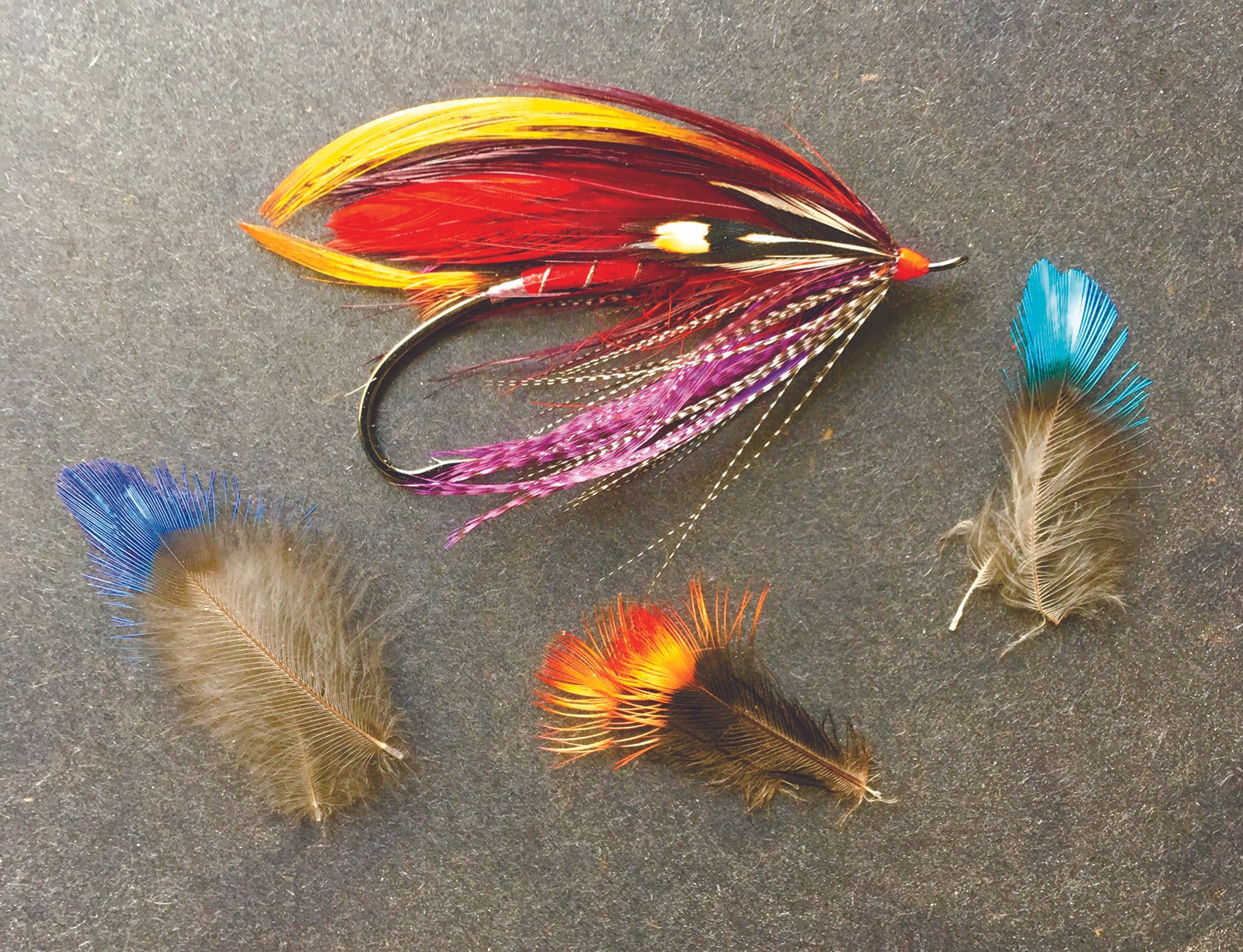
Purple Prince, a Dave McNeese original design. Lower left feathers: Cotinga amabilis. Center: red-ruffed fruit crow (Pyroderus scutatus). Right: spangled cotinga (Cotinga cayana).
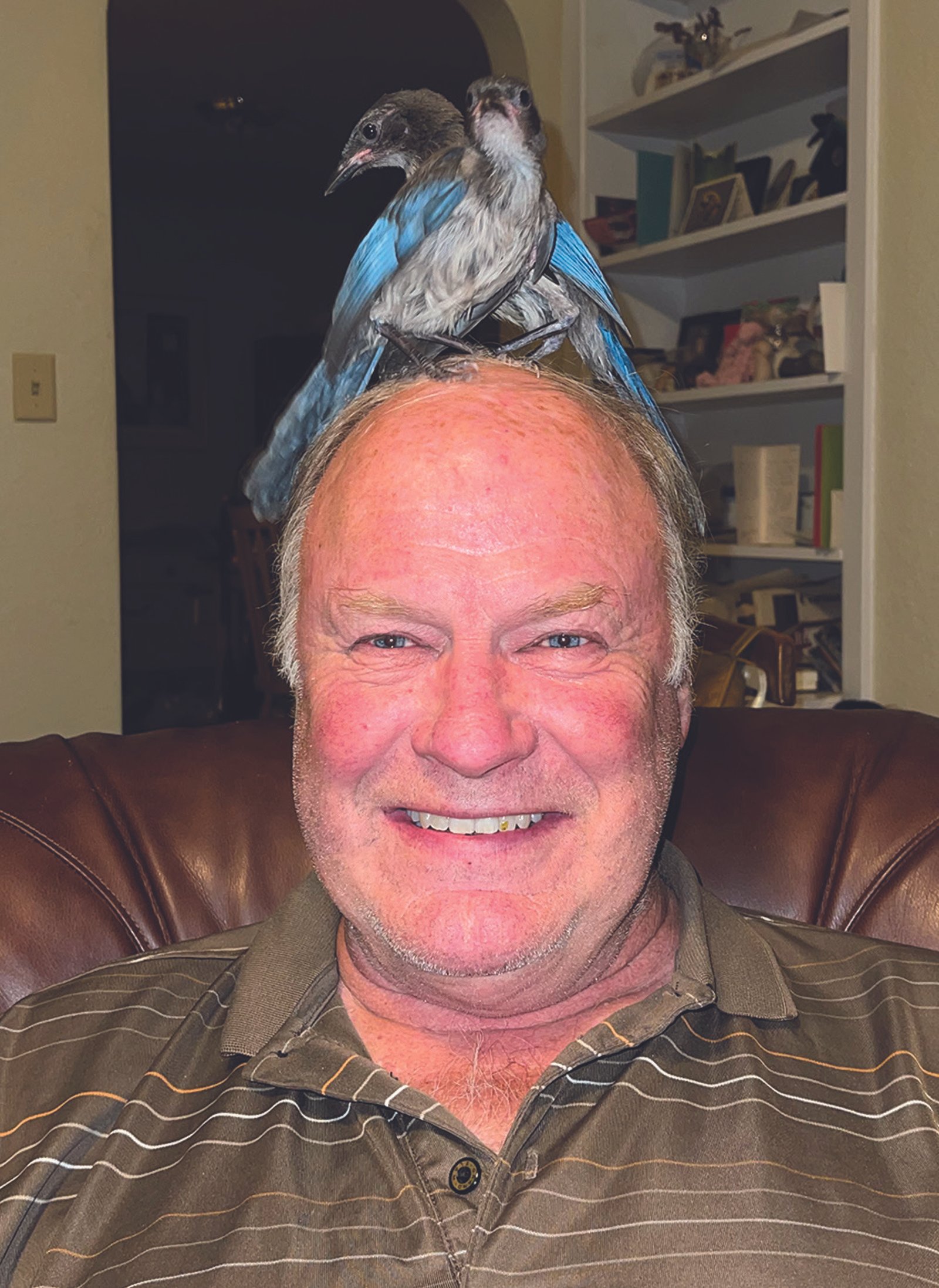
Oregonian Dave McNeese raises several wild birds from little chicks each year. Last year he raised two baby scrub jays and five tiny wrens—“it was so much fun playing with them.” All were trained to find food before releasing.
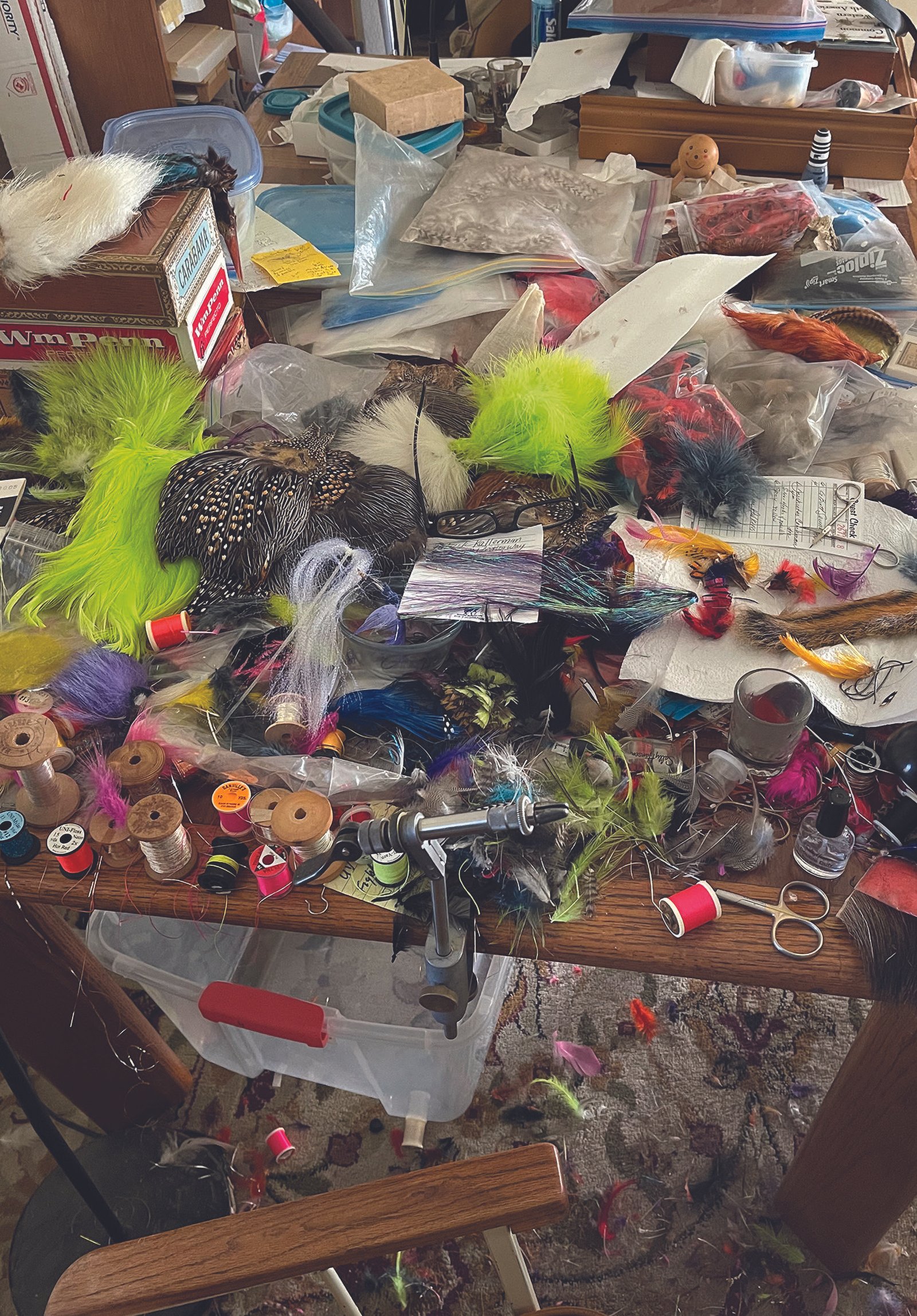
Dave’s tidy fly-tying “perch.” Need we say more?
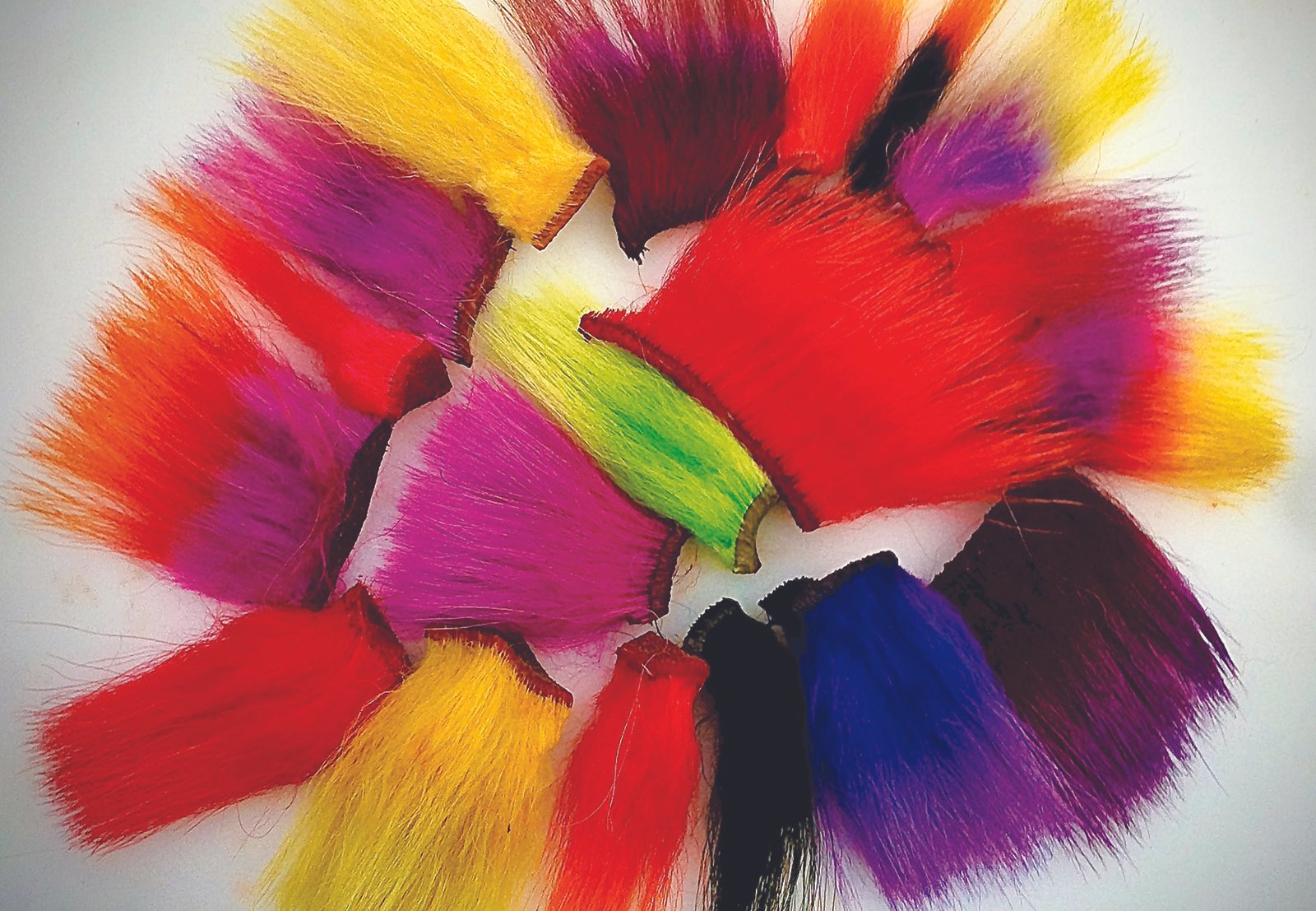
For years Dave McNeese has dyed select materials fluorescent white before dyeing them the desired color to give them a rich glow.
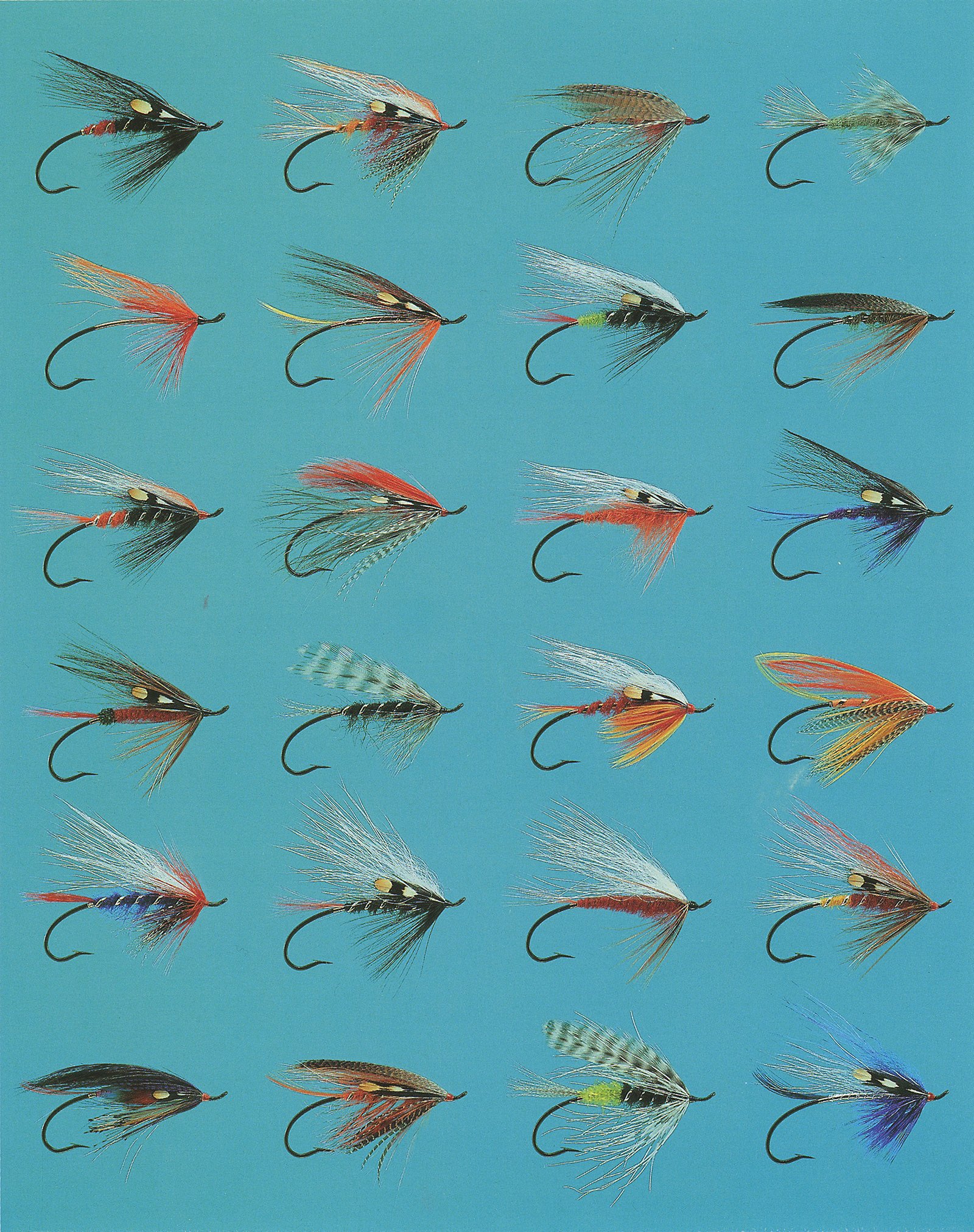
Fly Plate #1 from Steelhead Fly Fishing (all flies tied by Dave NcNeese) - Row 1: Black Gordon, Brad's Brat, Brown Heron, Burlap | Row 2: Fall Favorite, Golden Demon, Green Butt Skunk, Lady Caroline | Row 3: Macks Canyon, Orange Heron, Orange Shrimp, Purple Peril | Row 4: Red Ant, Silver Hilton, Skykomish Sunrise, Sol Due | Row 5: Del Cooper, Skunk, Thor, Umpqua Special | Row 6: Blue Boy, Bronze Brad's Brat, Green Butt Silver Hilton, Pale Peril