North Umpqua River
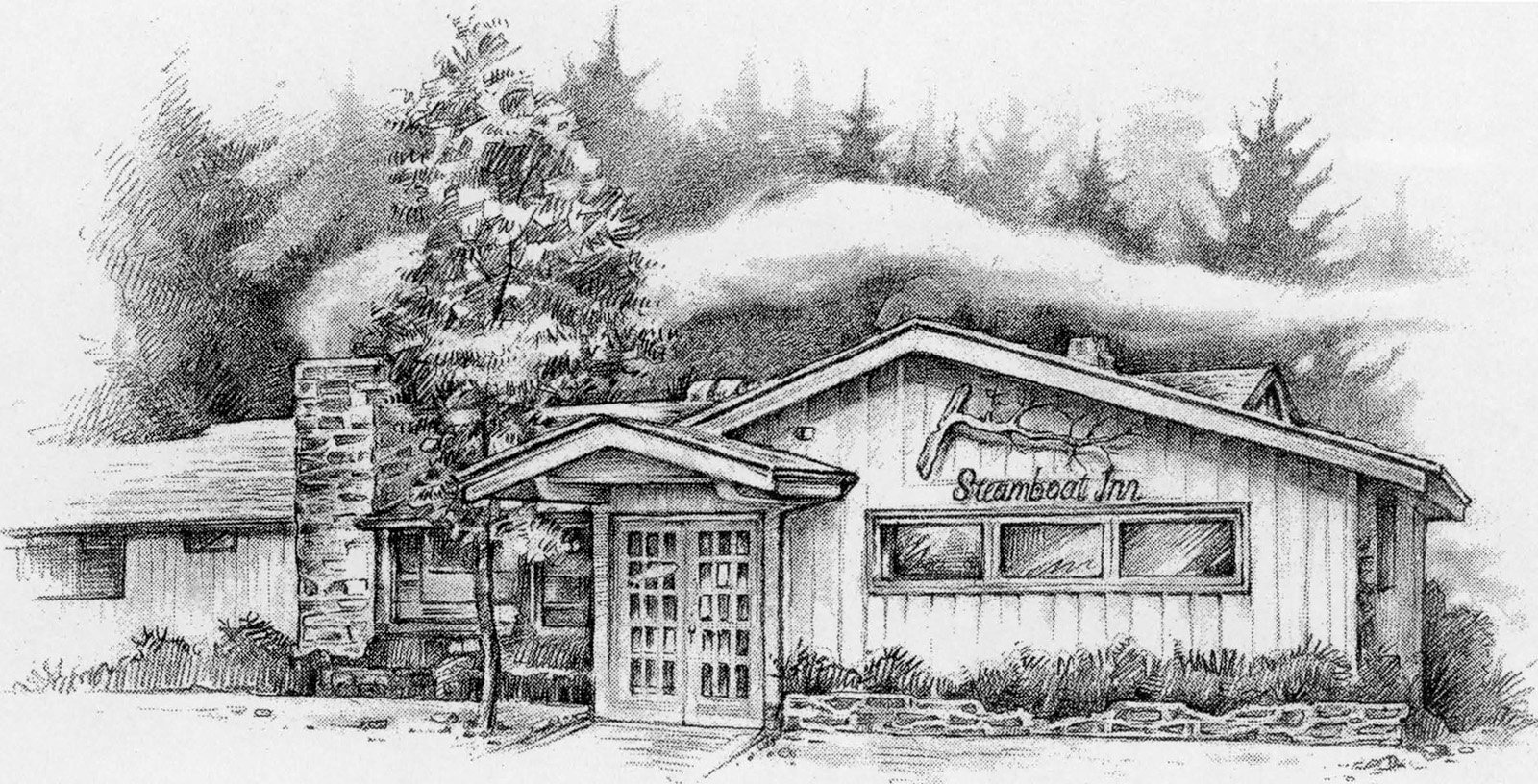
This is the complete chapter from Steelhead Fly Fishing, written by Trey Combs and originally published in 1991. It is presented here in its original form.
On a fog-grey high-tide dawn in early April, the first of the North Umpqua's spring-run steelhead come in from the ocean. As they pass between North Spit, the cape of great white sand dunes, and the lighthouse that signals the south entrance of Winchester Bay, their travel is unhurried, still somewhat random. Unless feeding, they cover a mile in an hour while swimming a meter below the surface.
The shoreline becomes a new and constant bearing. Brackish estuary channels, skeins of smells vaguely familiar to the steelhead, appear and disappear under the opposing forces of gravitational action, the tides of the sea, and the gradient of the river. Some few molecules of river, imprinted on their subconscious years before, fix their attention and hold them during the ebbing tide. Several steelhead, nervous and tentative, break from the group and ghost in on the evening's flood tide. They begin tracking their origins, deliberation becoming a compulsion that carries them past the bridge at Reedsport and almost beyond the reach of the tides. By nightfall they have taken up stations near the beach. They rock almost imperceptibly with the faint currents and pass their first night as adult steelhead in the Umpqua River.
Movement upriver is sporadic and highly individual. Three miles per day is a good average, the greater part taken in the afternoon, when the sun has raised the river's temperature a few degrees. The steelhead are frequently seduced by the strange smells of tributary creeks, and a single fish may stop to breathe in their heady turbulence for days.
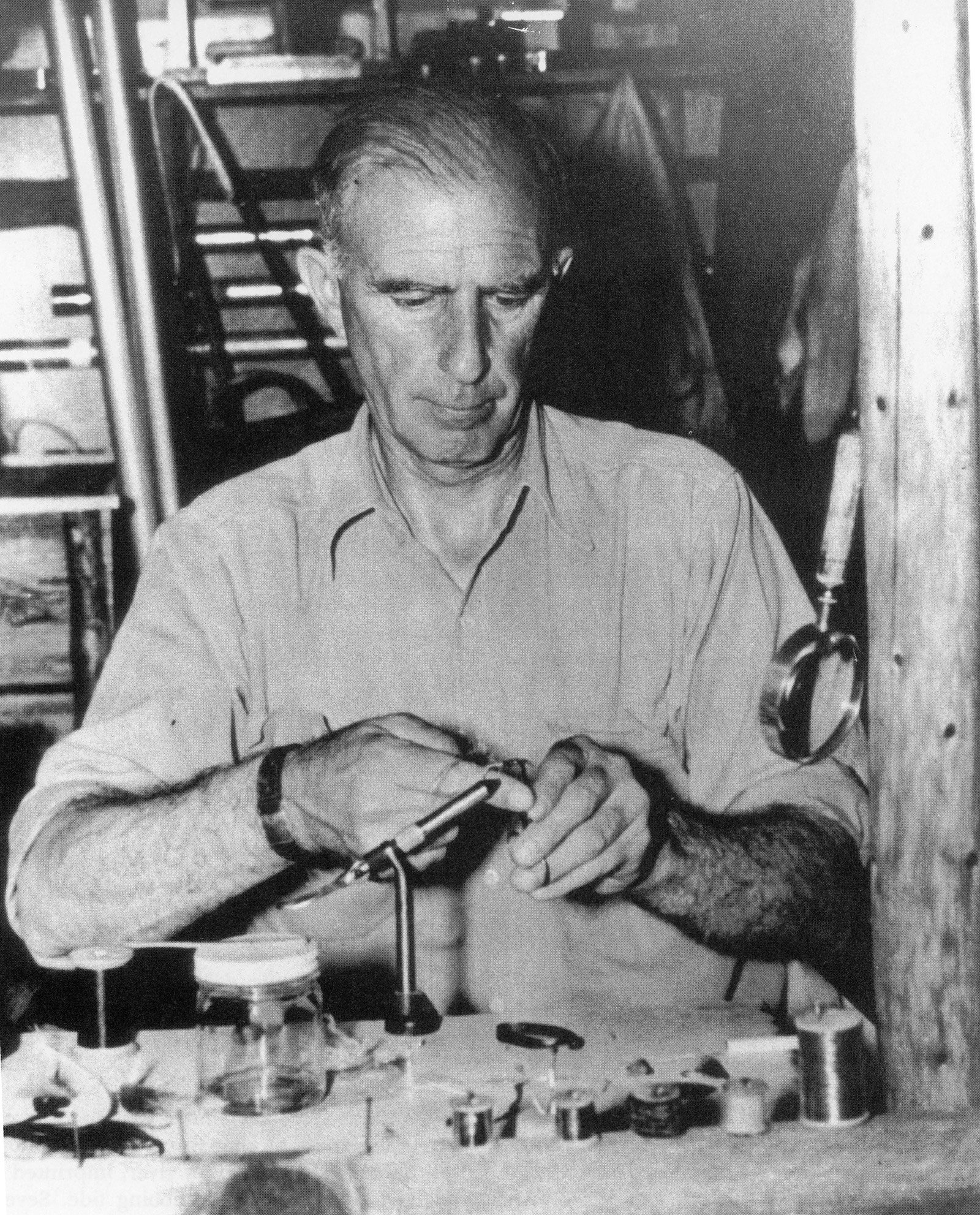
Clarence Gordon at his fly tying bench at Steamboat Inn. Photo courtesy of Jim and Sharon Van Loan.
The steelhead are so immature sexually that they will not spawn for ten months. About three of every four fish have spent two years in the ocean, one in four but a single year. As a race, they average seven pounds. The rare steelhead-two or three in every hundred-has stayed out for three years. These are usually males, and they have been known to reach twenty pounds
The temperature of the Umpqua rises each week, ten degrees in a single month, twenty degrees by late spring, thirty degrees by summer, and the steelhead of May and June are more businesslike in their drive for spawning headwaters. The river is at its coolest in the early morning, and migration is best resumed then. The creeks can still be refreshing layovers, but steelhead tarrying too long in August will be trapped, the water above and below them reaching eighty degrees. Ultimately the creeks, too, will become lethally warm, and the steelhead will perish.
Halfway through their journey, the river splits. Unerringly, the steelhead choose the branch that leads north, and two days later they reach Winchester Dam on the North Umpqua. Six weeks have passed since they crossed the tidal bar at Winchester Bay.
At the dam is a fish ladder, the first serious impediment to their upstream progress, and a temporary source of intimidation. Once they enter, however, they transit the ladder quickly.
An Oregon Department of Fish and Wildlife employee sits in a viewing chamber and peers into the fish ladder through a plexiglas window. He works a single eight-hour shift, usually from four in the morning until noon, and he records each steelhead that passes. The afternoon-to-evening shift, only occasionally completed, provides a necessary frame of reference. All information is fed into a computer. Few, if any, steelhead pass up the ladder at night, and some extrapolation is necessary, for not every fish has been observed, but the overall count is accurate.
As the count proceeds, the steelhead are easily divided into three groups. At least three of every four are fin-clipped hatchery stock, the fleshy little adipose, the fin behind the dorsal fin, having been completely removed by hatchery personnel just before their release. Most, if not all, of the remaining steelhead are wild-born, native North Umpqua stock. Several winter-run steelhead may appear. These are dark, highly colored, and ready to spawn.
Within a week, the steelhead have entered the bedrock canyon water, for which the North Umpqua is famous, and reached Rock Creek, the first of several major spawning tributaries.
Several hundred feet above the mouth of Rock Creek is the Rock Creek Hatchery, where both wild and hatchery stocks are temporarily blocked by a weir. Only wild steelhead are used for brood stock. They are purposely not selected for any particular size or age, the goal being a hatchery plant as much like the wild strain as possible. Furthermore, to assure the broadest possible run timing, brood stock are secured throughout the many weeks covering the main body of the run.
As the wild steelhead arrive, they are held in a concrete pen to grow to sexual maturity until they are ready to be spawned in December or January. The 300,000 eggs gathered will result, one year later, in a plant of approximately 170,000 smolts, five or six to the pound, each about eight inches long. Mortality is extremely high-only five percent or fewer survive to return as adults. In the meantime, hundreds of native steelhead proceed up Rock Creek to spawn naturally.
The steelhead that have continued up the North Umpqua-and this includes many steelhead born and reared in the Rock Creek Hatchery-have already entered the thirty-four-mile-long fly-fishing-only section. Most are nearing their final destination, Steamboat Creek, eighteen river miles above Rock Creek, the most important spawning tributary for native steelhead in the entire North Umpqua system. It has taken them two months to travel the 125 miles from the coast. They remain chrome-bright and magnificently strong. The steelhead will not immediately enter their home stream, preferring instead to concentrate in the holding water immediately below the confluence.
These are the pools of North Umpqua legend, a series of ledge-rock channels, rapids, riffles, and glides, each with a name, a special character, and a history. They are the most celebrated waters in all of steelhead fly fishing.
The Old Road
Merle Hargis was a service packer. In 1930 he owned a saddle, a horse, six mules, and a six-shooter. His little pack train transported everything from kegs of whiskey to human companionship for the gold camps, hunting and fishing camps, geologic survey crews, and Forest Service lookout stations that were tucked into remote corners of the Cascade Mountains above Steamboat. In a good month he made $125.
Sixty years later, he still reminds himself of the handsome frontiersman he was in his youth. Carefully manicured grounds surround his home that overlooks the North Umpqua, but animal traps are cagily placed in the shrubbery, and the toll on neighborhood cats has been high. His trusty six-shooter, a pearl-handled Colt revolver, is kept oiled and loaded in its holster at his bedside. When we last visited, on a warm July afternoon, he shook a handful of cartridges like castanets, and recalled his adventures when the forest above Steamboat was still uncharted wilderness.
"Oh, it was good then!" he said.
The gold camps, those remote outposts of hopeful labor and nefarious scheming, indirectly christened Steamboat Creek. If a mine or a creek was represented as having gold but did not, the unlucky prospector was said to have been "steamboated." The term did not distinguish whether salting a played-out claim or blind bad luck preceded this grim reality.
The twisting road that paralleled the North Umpqua upriver from Idleyld Park to Steamboat Creek was completed in 1927. The old pack train trail was widened for one-lane traffic with coolie labor and given a gravel surface. When Merle made the trip in his Ford roadster, he passed through virgin stands of fir and hemlock, gave his terrified passengers glimpses of the North Umpqua five hundred feet below, and with a hoot of his horn swooped down on the Forest Service Guard Station at Steamboat where his brother, Eldon, worked as a trail foreman.
Eldon already knew about steelhead. Good holding water was directly below the Guard Station on the north side of the river. A two-foot wide plank led from shore to a rock about thirty feet out. This was a fishing convenience-no waders necessary-as well as a place to gather water and to wash dishes. Eldon would cast a fly from the plank, and one day Merle watched him catch a steelhead.
"This was the first time I can remember anything about steelhead," he said. "That was about 1929." As a practical matter, however, Merle was a trout fisherman. He had a bamboo rod, a three-dollar reel, and an enameled line that rarely lasted more than one season. The outfit was easily packed on his saddle. Native trout, highly colored little rainbows and cutthroat, were abundant then, and Merle fished for food. Steelhead, "large rainbows," couldn't be handled on his tackle and left abruptly with his few precious flies. He always bought the same three, Royal Coachman, Grey Hackle, and Queen of the Waters.
"I caught lots of steelhead. 'Course I snagged 'um. Had a big treble hook and some line. Got all I wanted."
But steelhead fly fishing was coming with a rush to the North Umpqua.
John Ewell, who operated a motel in Roseburg, had recently built a few rustic cabins where Canton Creek joins Steamboat Creek. Major Jordan Lawrence Mott visited in 1929. Though Mott was an experienced steelhead fly fisherman-he had fished the Rogue the previous summer-this was his first trip to the North Umpqua. Captain Frank Winch, who represented Forest and Stream magazine, accompanied him. Mott was so taken with the fishing that he obtained a permit from the Forest Service and immediately began setting up a fly-fishing camp that overlooked the pools below Steamboat Creek on the south side of the river. Wood platforms were constructed and tents set up. Zeke Allen, a local guide, became Mott's "bull cook" and general man-about-camp. They were in business that first summer, and the camp flourished. In the fall, Zeke broke camp, and Mott returned to his home on Santa Catalina Island in southern California, and wrote "Umpqua Steelheads," an article published in Forest and Stream in July 1930.
Mott was born in 1881, heir to the J. L. Mott Iron Works fortune. After graduating from Harvard, he married and became a newspaper reporter in New York City. In 1912 he sailed for Europe with another man's wife. His father promptly disinherited him. During World War I, he was commissioned a major in the U.S. Army Signal Corps. Ultimately, he divorced his wife and married "Mrs. Bowne," in 1928. Somewhere along the line, all may have been forgiven. That probably didn't matter. Mott, a man of considerable charm and talent, could pay his own way. He reportedly wrote novels and had worked in early radio. By all local accounts; he was remarkably decent and generous.
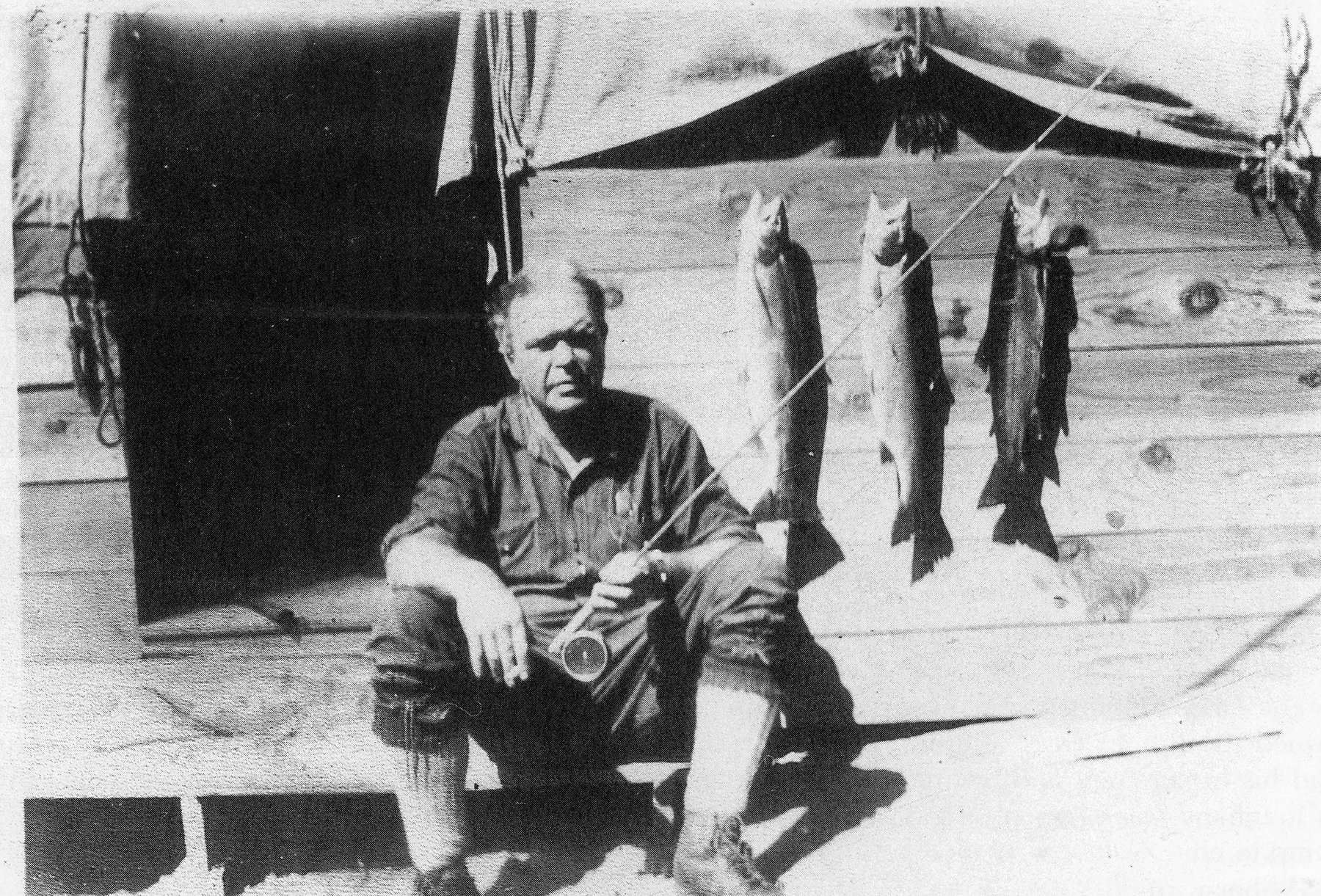
Major Jordon Lawrence Mott poses with a morning's catch before one of his tent "cabins."
Fred Asam, the District Ranger at Steamboat, was Mott's closest friend on the North Umpqua. Each spring Asam arrived with his four children-David, Dorothy, Jeanette, and Alvina (who would later marry Merle Hargis)-and spent the summer. When Mott discovered he had incurable cancer, he gave much of his tackle away to Asam's children. David received a Hardy Brothers rod and reel and a Wheatley fly box, Alvina got his salmon rod, and so on. Today, Mott memorabilia can be found throughout the valley of the North Umpqua.
Mott insisted on the dignity of spending his last days at his own camp, and he returned to Steamboat early in 1931. He died that spring, having spent only two full seasons on the river. Merle Hargis remembers with sadness driving in and meeting the hearse containing Mott's remains on its way to Roseburg.
A bronze plaque beside the bridge built across the Umpqua in 1937, just above Steamboat, reminds visitors that they are crossing Mott Bridge. The pathway leading to the many pools below Steamboat Creek is called Mott Trail. The most famous water on the North Umpqua is divided into three pools: Upper, Middle, and Lower Mott. Kitchen Pool was named because it could be seen from the camp's kitchen tent. Zeke Allen ferried visitors across Boat Pool in a rowboat after they signaled their arrival by ringing a bell. The pools are collectively called Camp Water.
Bill and Muriel Hopkins owned the Circle H Ranch, a dude ranch operation that had been catering to anglers for years. It was located on Susan Creek just above Idleyld Park, where the road ended before 1927. One of their guests was Fred Burnham, an extraordinary fly fisher and a close friend of Zane Grey. The two men had fished for steelhead together on the Rogue, and almost certainly Burnham first regaled Grey with stories of the North Umpqua.
Grey journeyed north to Campbell River late each spring to fish for chinook salmon, and in 1932 he planned a detour to the North Umpqua. He arranged to stay for a month or so at John Ewell's cabins on Canton Creek. Grey and his family and friends would drive to the end of the road at Steamboat and then find a way to move their belongings up to the cabins.
When the famous writer arrived, he sought out Fred Asam to see if a Forest Service packer could be hired for the day to pack their gear the four hundred yards to the cabins. Merle Hargis was in camp that day. The event is still fresh in his memory.
He had his son and that Japanese cook and a whole flock of girls, secretaries, or whatever. There were several of them. They had quite a bunch of stuff, and armloads of fishing rod cases, you know, footlockers, boxes, and tents. So anyway, he saw the ranger-it was on Sunday-and he says, "I wonder if you would let us have your packer to pack us up to John Ewell's cabins." Boy, that set me on fire because I figured on a twenty spot there, see, a tip. I wasn't to get paid 'cause I was gettin' paid anyhow. So I went up with the pack train, six mules and I had that strawberry roan, a dandy horse and I put on quite a show, smartin' all the girls there. I could touch her spurs and tighten up a little and she'd walk on her hind legs. Had a lot of fun! Anyway I packed this stuff up there. I knew my stuff at packin', throw a hitch quick, and they sit back a'watchin, you know, and try to help. I put in a pretty good day. Three trips, eighteen loads. After the last trip up as I was a'gettin' ready to come back and Zane Grey come up to me and put his arm on my shoulder, shook me a little, and said, 'God bless you my boy, you did a good job Here!' And I stuck out my hand. Four half-dollar pieces! I said, 'Oh, you don't owe me anything, I was glad to do this.' Ha, for two lousy dollars!
The Grey entourage was even larger than Merle imagined. Romer Grey, the author's oldest son, owned the Romer Grey Motion Picture Corporation. He wanted to make a movie of this adventure, and his cameramen and technicians joined the party. Grey was a working writer whose daily output in longhand was often prodigious. Secretaries-the "whole flock of girls" Hargis described-were in camp to edit, rewrite, and type manuscripts. Romer's wife was there, as was Grey's close friend, Dr. J.
A. Wiborn, often referred to by the incurably romantic author as "Lone Angler." And, as always, there was George Takahashi, the Japanese cook Grey called "The Great Takahashi-the inimitable, the irrepressible, the indefatigable."
Joe DeBernardi was hired to guide the party. He and his brothers, Albert and Horace, worked with their father, Goliah, on the family's thirteen-hundred-acre ranch near Glide, on the North Umpqua. They were Swiss of Italian extraction, immigrants who first settled in Crescent City, California, before packing their belongings on horse-drawn wagons and moving to Oregon. They grew vegetables, caught salmon and steelhead, and shot deer for the table. Cattle and their turkey farm provided an income. They were not poor, but the Depression was a hard time, and Joe guided to augment the family income. For three summers, starting in 1922, he had guided U.S. Coast and Geodetic Survey crews into the Umpqua National Forest. By the time Zane Grey came to the river, Joe DeBernardi was well known locally as a dependable guide for hunting and fishing parties. They soon became fast friends. Zane and Romer Grey came to the river extremely well equipped. Their Granger and Leonard rods were matched to Hardy Brothers reels. Silk lines by Ashaway and leaders by Hardy Brothers completed their outfits. They purchased their flies from Joe Wharton in Grants Pass, Oregon, and from Hardy Brothers in England. Over the years, they gradually weaned themselves from most English flies, particularly as they began to devise their own steelhead patterns. Joe DeBernardi was not born to the sport, but he learned to cast and to tie his own steelhead flies, a skill Grey came to appreciate. They especially favored the hairwing Coachman and Parmachene Belle, and followed these choices with the Turkey and Red and the Turkey and Gold. Grey had Wharton add a brown bucktail wing to an orange demon-type fly he had first fished in New Zealand, and the Golden Demon filled out their short list.
Joe's first summer with Grey was nearly his last.
Romer scripted an adventure for his movie company to film. A couple of wood Rogue River boats, of the type being built in Grants Pass by Glen Woolridge, would be used in an attempt to run the North Umpqua from Steamboat Creek to Rock Creek. Romer would crouch in the bow and star in his own film; Joe would run the boat through the rapids. The boat was smashed, swamped, and flipped, the impact sending an oarlock through Joe's side. His daughter, Joan, told me, "Dad had a big dent in his side until the day he died."
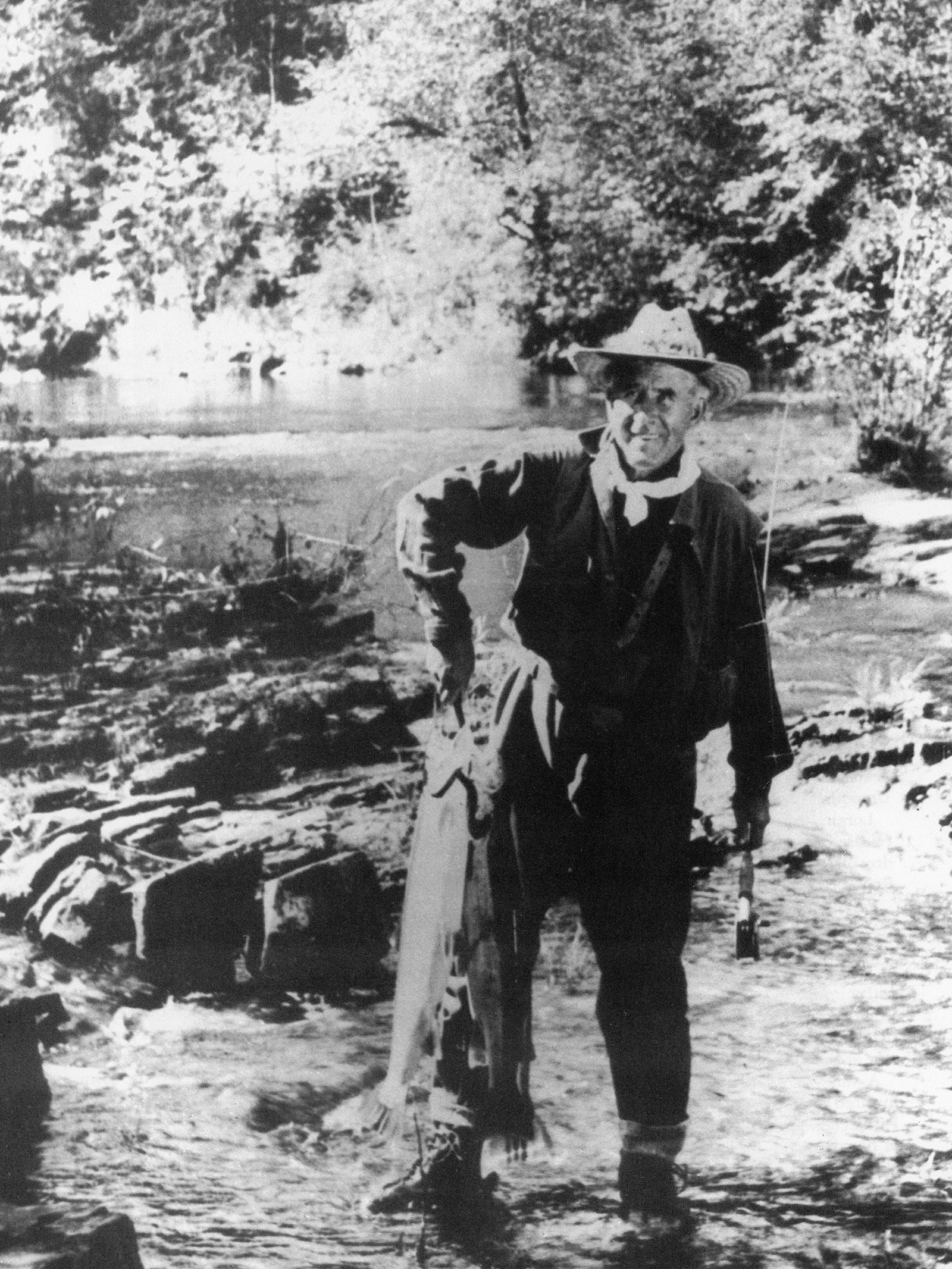
Zane Grey with a brace of North Umpqua steelhead.
Romer filmed comic relief, too. Little Takahashi would climb a tree and fly fish from a branch. As a technician, out of view of the camera, pulled violently on the line, Takahashi, a look of astonishment on his face, would come flying out of the tree and into the river. Presumably this was hysterical to everyone except the star.
Umpqua steelhead weren't that strong, but their size and strength were an impressive departure from the Rogue. Grey's allegiance changed that first summer. He later wrote: "It ought to be a guarantee that I am honest and sincere about this noble river, practically unknown to the world, when I confess that I have given up the Rogue, and the fishing lodges I own at Winkle Bar, on the most beautiful and isolated stretch, to camp and fish and dream and rest beside the green-rushing, singing Umpqua."
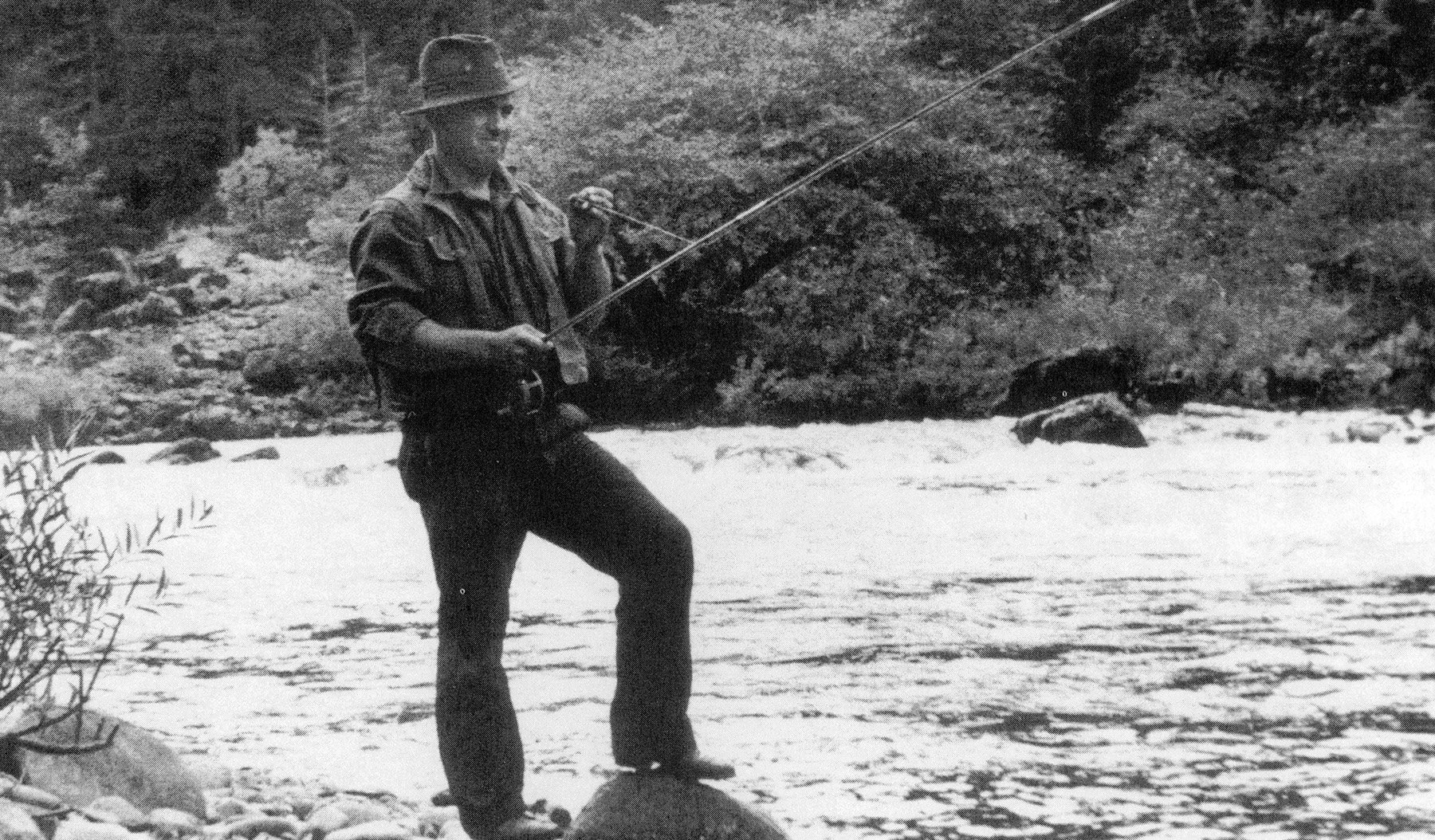
Joe DeBernardi, longtime guide for Zane Grey.
Loren Grey, who joined his father on the North Umpqua in later years, told me that the sudden release of water above Grants Pass raised the level of the Rogue, discolored the water with algae, and drove his father wild. This, more than any other factor, caused his father's disenchantment with the Rogue. Regardless. "The North Umpqua was my father's favorite river," Loren Grey said.
Zane Grey returned each year to stay nearly the entire summer. In the spring, Joe and Albert DeBernardi would drive to Steamboat and set up a camp that, once in place, was comfortable and somewhat permanent. The tents had wooden floors, cots, and chairs. A pole was erected in the center of camp, and a flag, bearing the initials ZG, was run up. Joe stayed on to guide, and often brought with him his young daughters, Joan and Raelene, to stay in camp. Joan recalled for me how her dad would organize wading safety drills. "Grey's boys would cinch a belt around their waders and jump in the river. Everyone ended up splashing each other!" Sometimes on weekends Loren and Romer would stay at the DeBernardi place in Glide and go on into Roseburg for a movie and a night on the town.
A valley story that has circulated for years claims that the famous Umpqua Special pattern was inspired by Joe DeBernardi and Zane Grey as a hairwing cross between the Parmachene Belle and Parmachene Beau. I know that the Belle was a favorite of Grey's. Joe's daughter, Joan, has pictures of her dad tying flies at his house. The story sounds plausible enough; longtime locals can provide no other explanation.
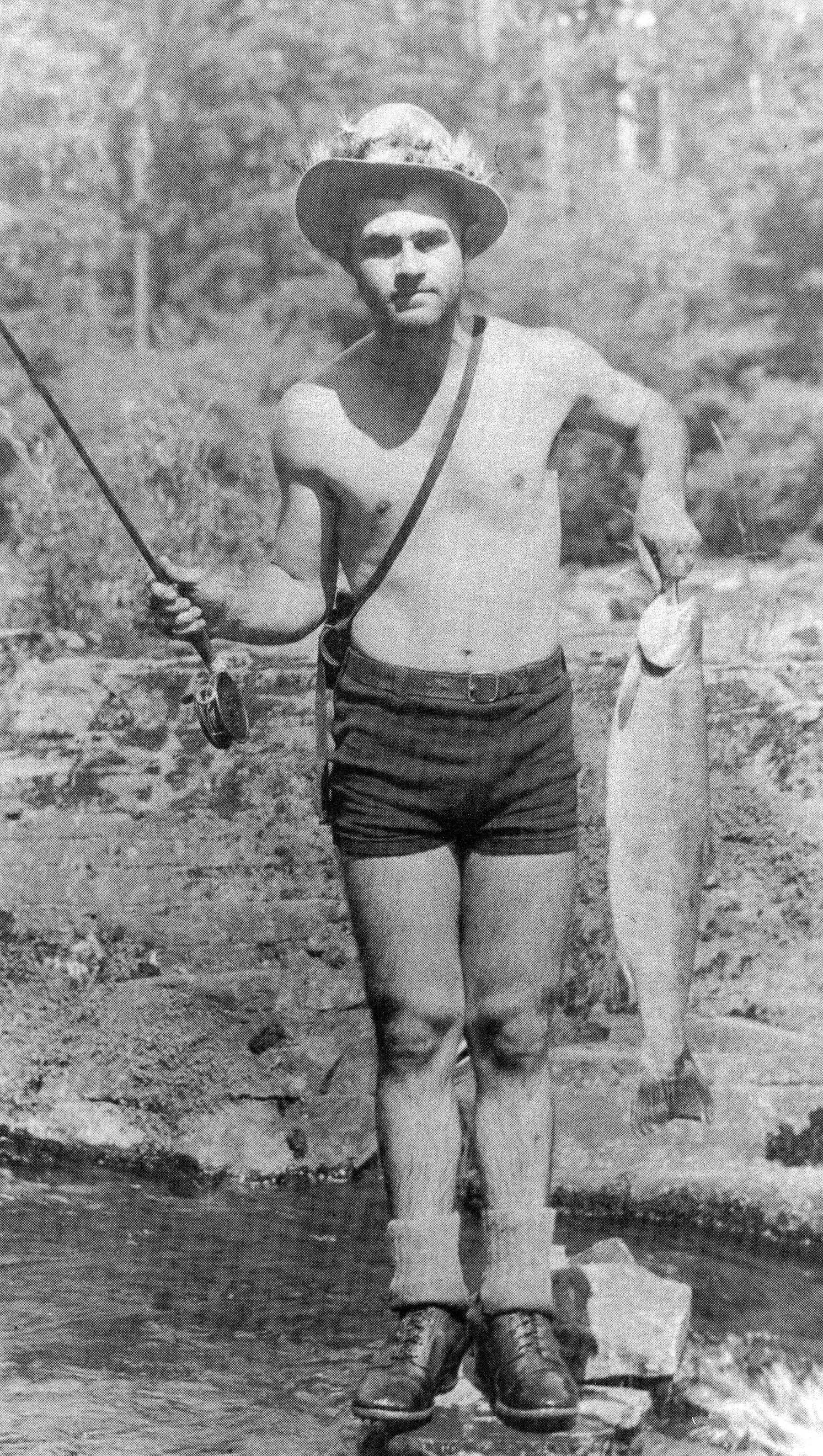
Romer Grey
The only magazine article Zane Grey ever wrote about the North Umpqua appeared in the September 1935 issue of Sports Afield, and was based on his experiences during the summer of 1934. It was vintage Grey.
"Deer and bear and cougar, wolves and coyotes are abundant," he wrote. There was a steelhead forty inches long and ten deep that "made my reel smoke as no Newfoundland salmon had done" during a battle that lasted two and a half hours and took Grey a half-mile downriver. Grey caught 64 steelhead that season, his son Loren an even 100. Readers could not help but be enthralled.
Grey assembled in camp a crude deep sea fighting chair fitted with a large bamboo pole and weights. Training on this for thirty minutes each day maintained his fighting shape for battles with billfish. He otherwise fished in the morning, napped, wrote furiously, and fished in the evening. He named Upper Mott the "ZG Pool," and may have named Ledge Pool. He had the trees behind Takahashi Pool cut down to make room for his backcast, and he occasionally had Joe DeBernardi stand guard over the best pools. He often seemed aloof and lost in thought, "kind of a funny duck," according to Merle Hargis. Except for Joe DeBernardi, locals didn't know him and never really knew what to make of him. As the fame of the Umpqua spread and the pools at Steamboat became crowded, Grey moved his camp to Williams Creek. The present highway would not be completed for twenty years. There was then only the old road far above the river, and the site satisfied his desire for wilderness isolation.
Zane Grey's last season on the river was in 1937. The valley was scorching hot, and after a morning of fishing he fell asleep in a lounge chair. There, in the bright sun, he suffered what Loren Grey described to me as a "heat stroke." Grey was carried to his car by Romer and Joe DeBernardi and was driven to the hospital in Roseburg. An ambulance returned the partially paralyzed Grey to his home in southern California. Despite intense physical therapy, the author never fully recovered. He died two years later.
Clarence Gordon, too, is found in nearly every seam of North Umpqua lore. He was managing the Smoke Tree Ranch, a resort in Palm Springs, California, when he first stayed at John Ewell's cabins on Canton Creek, in 1929. He returned each year, and in 1931 camped above Steamboat with his wife, Delia. Mott had just died, and his camp cook, Zeke Allen, now maintained the camp. Gordon imagined a real lodge on the old Mott site, and in 1934 he obtained a lease from the Forest Service. At first he took over the old Mott site and hired Allen to run a simple tent resort. This soon changed-as did the clientele.
By the late 1930s, North Umpqua Lodge was a permanent structure and a prominent destination in American angling circles. Gordon, the consummate fly fisher, acted as host, guide, and fly tyer. Guests arrived from all over the world. No other river at the time so strongly defined steelhead fly fishing.
At Gordon's invitation, Ray Bergman, the fishing editor of Outdoor Life, came to Steamboat and wrote about his experiences in Trout (Knopf, 1938). The chapter "Steelhead of the Umpqua" became my introduction to the sport. I thought the chapter far and away the most interesting part of a book otherwise informative but tedious.
Clark C. Van Fleet frequently visited the river, and in his book, Steelhead to a Fly (Atlantic, Little Brown, 1951), he said, "You will find in Clarence Gordon an expert on the ways of the fish in these waters, casting a beautiful fly himself and fully acquainted with all the hot spots."
Claude Krieder found the North Umpqua a very tough proposition, and wrote in Steelhead (G. P. Putnam's Sons, 1948), "I sought the famous Mott Pool and the Kitchen Pool, waters in which many tremendous steelhead had been taken over the years by the great among the Umpqua specialists. And none of them yielded a single strike."
Clarence Gordon developed three steelhead patterns for the North Umpqua. The Black Gordon remains a local favorite and is one of a handful of standard steelhead dressings. The other two, the Grey Gordon and the Orange Gordon, are elegant and effective, but less well known.
Grey Gordon - Tail: Lady Amherst tippet. Body: Black dubbing with a silver tinsel rib. Hackle: Guinea. Wing: Grey squirrel
Orange Gordon - Tail: Bronze mallard. Body: Orange wool with a gold tinsel rib. Hackle: Brown. Wing: Bronze mallard (brown bucktail was later substituted)
Two species of caddis of the genus Dicosmoecus are found on the North Umpqua. The grey sedge is commonly seen in late spring and summer; the orange-colored fall caddis, the famous "October Caddis," is found in late summer and fall. Each is about two inches long. It is hard not to believe that Gordon was inspired by the two caddis when he developed these patterns, so closely do their colors resemble the adult insects.
In 1952, the Oregon State Game Commission passed a resolution to maintain the North Umpqua from Rock Creek to Soda Springs as "fly only" water, the third summer steelhead river so designated. This decision was accomplished only at the urging of Clarence Gordon and the Roseburg Rod and Gun Club.
It is a sad irony that these promising changes should have paralleled developments that brought about the end of the North Umpqua Lodge.
Construction of a hydroelectric dam upriver at Toketee so silted the river that fishing was impossible. The dam was built in conjunction with a new river-level highway that would ultimately connect Roseburg with Diamond Lake. The roadbed was blasted out of the basaltic palisades that created the turbulent corridor of river from Idleyld Park to well past Steamboat, and it opened many new miles of river to anglers when it was completed in 1957.
Gordon closed the lodge to guests from 1952 through 1955 and leased the building to a construction company to house their personnel working on the new highway. The North Umpqua Lodge was later sold to the Forest Service and became the Steamboat Ranger Station. Today, hardly a trace of these enterprises remains.
The Circle H Ranch, its ownership having passed to Mildred Young, was forced to close its doors in 1954. It never reopened.
During this period on the north side of the river, the enterprising Gordon opened up a small lunch counter and grocery, the Steamboat Store, to cater to the construction crews. When his business prospered, he was inspired to move the entire store downriver to a point overlooking the great string of pools below Steamboat Creek. The dining facilities were enlarged and a kitchen added. Then, in early 1957, Clarence and Delia Gordon sold the Steamboat Store to Frank and Jeanne Moore and retired to Seal Beach, California.
Frank Moore was a Roseburg restaurateur (Moore's Cafe), who had learned the difficult ways of the North Umpqua so well that he often shared guiding duties with Joe DeBernardi. Jeanne was experienced at simultaneously running a kitchen and raising children. "I had it easy by comparison," says Frank. They had new cabins built below the dining room and changed the name of their business to Steamboat Inn. The new highway was nearly completed as far as Steamboat, and the river again ran crystal clear with the completion of Toketee Dam. Former guests, often well-to-do Californians whom Frank had guided for Gordon in the late 1940s, were contacted and invited back. Frank was there to welcome them and to guide them once again.
Steamboat Inn captured the ambience of the old days. A young guide and a logger had once teamed up for Clarence Gordon and hewed from a single enormous sugar pine log a table top of Bunyanesque proportions. This was a fixture in the old North Umpqua Lodge and integral to Gordon's celebrated "Fishermen's Dinners." The Moores maintained the tradition on the same great table, though in deference to their fly-fishing guests, dinner was not served until thirty minutes after last light. Photographs of Major Mott, Zane Grey, and Clarence Gordon lined the walls, interspersed with more contemporary angling photography by Dan Callaghan. Steelhead fly fishing history was literally below on the river and above on the walls. Steamboat Inn had soon so replaced the old North Umpqua Lodge in the affections of visiting fly fishermen that it became synonymous with the North Umpqua and her wonderful spring-run steelhead.
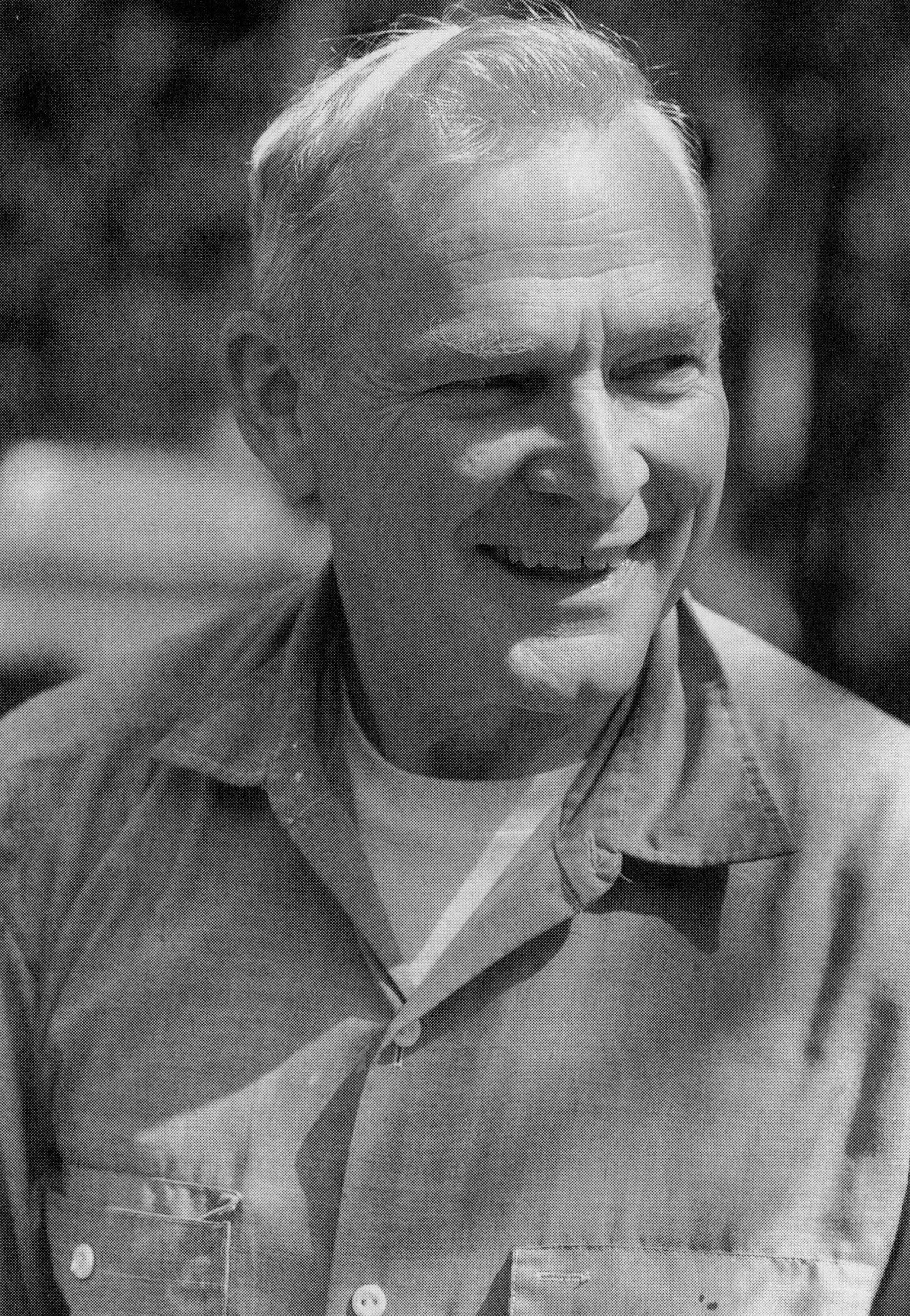
Frank Moore
The regular guests became close personal friends: Jim and Laddie Hayden, Stan and Yvonne Knouse, Dan and Mary Kay Callaghan, Loren Grey, Don Haines, and Ken Anderson, to name but a few. It was Anderson's idea to form a special interest group of fly fishermen who would work to protect their magnificent river. Stan Knouse offered "Steamboaters" as an appropriate name for the group, and Anderson designed the club's logo. Clarence Gordon and Roderick Haig-Brown were made charter members. Initially limited to 100 members, the Steamboaters eventually grew to three times that number.
I believe that, were it not for the Steamboaters, the fly fishing-only section of river would have been lost long ago, logging would have destroyed the few fine spawning tributaries, and the native run of North Umpqua summer steelhead would be but a fine memory.
The old road doesn't go all the way to Steamboat anymore. Frank and Jeanne Moore live near the end of it, far enough above the logging trucks to assure a sense of peaceful solitude. He did most of the construction work on their large log cabin home, skinning the logs and notching them with an ax. When I last visited him there, he reminded me of when I had gone around Steamboat Inn photographing his photographs for Steelhead Fly Fishing and Flies. That had been nearly twenty years before, about five years before he and Jeanne sold their business to Jim and Sharon Van Loan.
In 1989, Frank was still youthful, still moved easily on difficult wades while casting a lovely line. Romer Grey had sent him his father's leather wading shoes, which now hung on the wall in the living room. There were steelhead flies in display frames, huge photographs of friends, Major Mott's tackle, conservation awards, and, next to the grand piano, a fly-tying bench filled to overflowing.
Frank grew up in Oregon and has always been a fly fisher. "My dad used to make his own bamboo rods and his own lines back in the 1920s," he recalled. We chuckled over the controversy involving the origins of the Skunk pattern. "Mildred Krogel was from Roseburg. She first tied the pattern for her husband, Lawrence, and her kids. It was in the late 1930s and 1940s that she was tying it. They used to come up here and stay at Canton Creek Campground the entire summer. They would have a race each morning to see who would get the 'pool of the year.' Sometimes this was Station, other times Kitchen, and so on." The Skunk remains Frank's favorite fly pattern for the North Umpqua, and he usually fishes no other.
Claude Batault, the recently retired French ambassador to Italy, was a houseguest. I was surprised to find that he had been fly-fishing the Dean and Babine rivers since 1966. Frank and Claude would be fishing the Pigeon Springs area of the Kalama the next week; a month later, possibly a chalkstream in Auvergne or Derbyshire.
Frank and I walked across his backyard to meet his trout. He had bulldozed out the little lake with forest on one side and lawn on the other. A pump recycles water, and Frank has built two screened-over spawning channels. A dozen perfectly conditioned rainbow trout to seven or eight pounds darted about as Frank tossed out tiny pellets of food. He assured me that the trout were for the entertainment of his grandchildren. A pair of screech owls were nesting in a wood-duck box. Swallows darted about for insects.
"Mayflies?" I asked.
"Yes," he replied. "They began taking over the pond when the water was only a few inches deep.''
Joe Howell
"What size flies did you bring?" Joe asked.
"Twos and fours, mostly," I answered, already anticipating his approval. I had worked for weeks to fill a couple of Wheatley boxes. Joe's brow was knitting up.
"Do you have anything larger?"
"A few 1/0s," I said. He nodded and gave a little "we'll do the best we can" kind of shrug.
"How big do you go?" I asked.
"One summer I decided to see how large a fly could be used for summer steelhead on the North Umpqua. I fished them as large as 6/0 and they took steelhead as long as the sun wasn't on the water. Even low light was okay."
I whistled softly over the first of many new slants I would get from Joe on his steelhead fly fishing. Joe and Bonnie Howell own the Blue Heron Fly Shop in Idleyld Park. They have been in business only since the early l980s, but the shop has become a local institution, and Joe is widely known as a guide with an intuitive understanding of the North Umpqua and its steelhead. For a couple of weeks, when his busy schedule permitted, we would fish together, spend hours talking about these steelhead, and discuss his fly-pattern preferences.
I remember the first dawn when I met Joe and learned the importance of knowing which rock to stand on, for this knowledge is pertinent on the North Umpqua as nowhere else. Many parts of the river cannot be waded. There are braiding runs, and each channel demands a special approach, the fly often presented from a single wading station, the proverbial rock. Sometimes it is exposed, but more often it is submerged and not evident beneath the metallic surface currents of early morning. For this reason I got in the habit of scouting and fishing new water in the middle of the day. I would rnake careful note of how the run should best be fished and return to fish it again in the evening. Even so, I occasionally managed to wade out beyond the top of my waders.
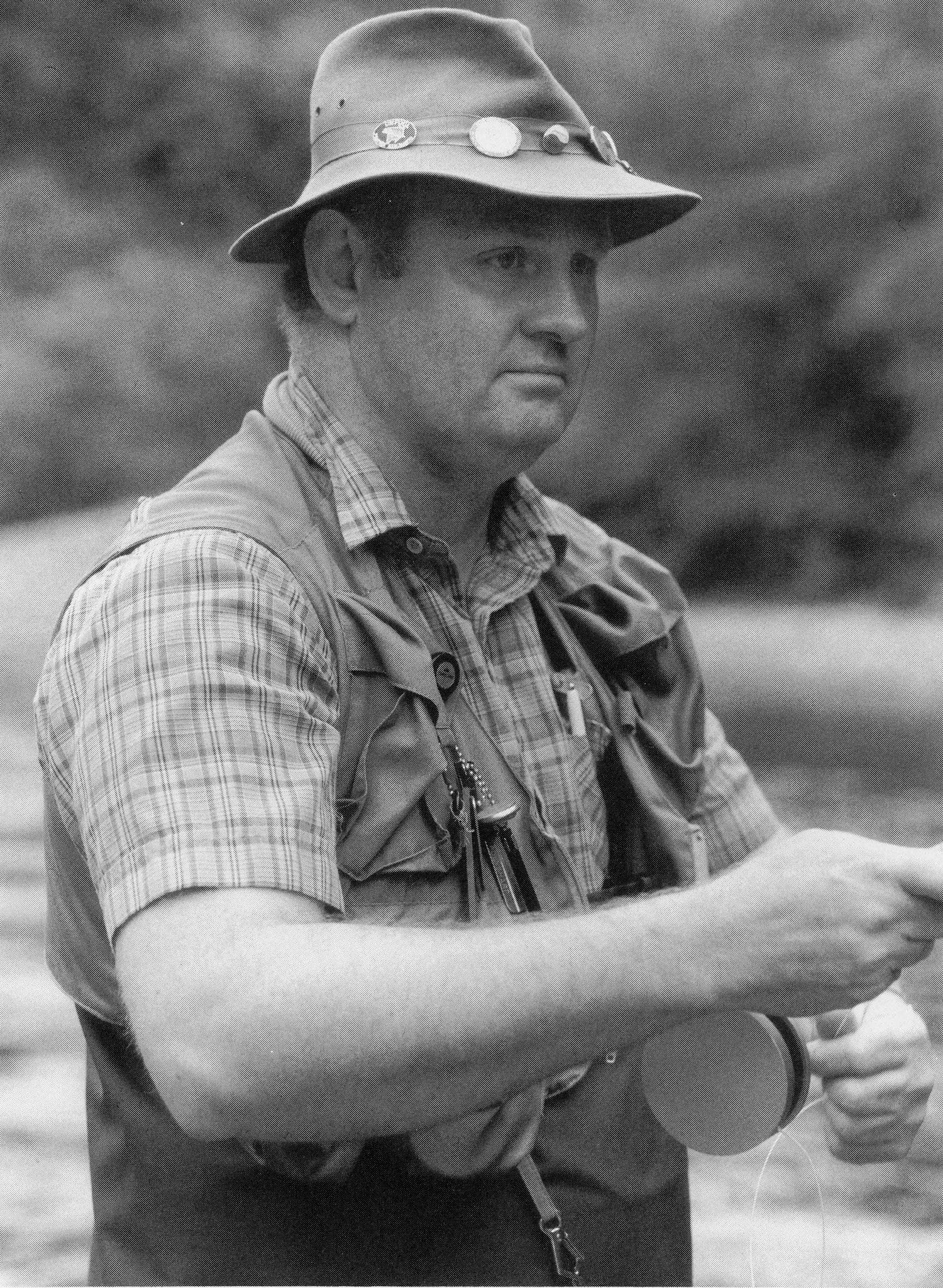
Joe Howell
Some sections of river are little frequented by anglers because they provide no room for a backcast. Roll casting or spey casting is necessary, as is slipping line on the swing to enable the fly to cover additional water. My ten-foot rod and long belly-forward taper line were often an advantage.
Of course, not all the fly fishing requires hopping from rock to rock. Some fine traditional cast-and-step glides flow over freestone bottoms. But, until late summer, the river can run with such speed that the fly is forced immediately to the surface and sent skidding through the surface film on the controlled swing. To remedy this, Joe and I fished with sink-tip lines, casting and mending them exactly as we would a full floating line, the sink-tip portion helping to keep the fly working just below the surface. In these strong currents we also found it necessary to use flies without a lot of throat hackle or long body hackle, because this caused the fly to lay over on the swing.
One morning, halfway down a small run, I rose a steelhead on a Ferry Canyon. When the steelhead would not come back, Joe suggested I work the softer water against the far bank. This would require a very long cast with an immediate back-mend to avoid pulling the fly from the lie. I couldn't make this cast from anywhere without catching a tree, and in truth probably couldn't have made the cast regardless of where I stood. I invited Joe to give it a whirl. His rod is kind of the Babe Ruth bat of steelhead fly fishing, a stiff ten-and-a-half-foot 9-weight that I called the "Thunderstick." But Joe is a big man with remarkable coordination, and he immediately set to work. Standing on a rock to get maximum height, he fired a backcast over the low trees and sent the Muddler out more than a hundred feet. A ten-foot leader and some quick line work enabled him to dead drift the Muddler through most of the lie. When the current began to drag on the fly, he mended his line through a very long controlled swing. When no steelhead showed after twenty casts, he reeled in and changed to a full-dressed 4/0 Skunk with a bucktail wing, chenille body, and plenty of hackle. I had never before seen a fly of this size cast over summer fish. I stopped fishing to watch as he explained.
"I call this a 'heavy silhouette' fly." Joe made a prodigious cast to the water already covered thoroughly with a Muddler. "You want to mend only once with a fly this large. I have watched steelhead start to come to the fly and then turn away when it suddenly darts from a mend."
"But what happens when the fly begins to drag?" I asked.
"You just let it go. Don't mend it. The steelhead will move for these large flies." As if to demonstrate, his Skunk was now dragging, and he brought the fly through the swing with his rod tip, but after the initial mend, he left the presentation alone.
On the dead drift part of the presentation, a steelhead rose to the 4/0 Skunk. The fly came away almost immediately, but I could not have been more impressed.
Joe's opinion was that you often must "hit a steelhead on the head" with a small fly to get it to take. At the same time, repeated mends while using a small fly are much less likely to put a steelhead off. Because the large silhouette pattern is certain to cause some sort of response from a steelhead, (i.e., it will be moved one way or the other), Joe leaves this approach for last.
When Joe and I played the game "If you only had three patterns," I found that his third choice of steelhead flies to go with the Muddler and the Skunk was the Black Gordon, an oldtime favorite on the river. But, of course, he could not leave it at that. For soft water, dead drifts, late summer season, and the steelhead of winter he had developed four beautiful spey-type flies: the Orange Heron 1, Orange Heron 2, Silver Streak, and Gold Streak.
One morning, Joe and I fished Famous Pool, a punch-bowl of ledge rock with steelhead holding in brilliantly clear water of very moderate current. On this and similarly placid water he fishes dry flies, casting upstream for drag-free floats. He looks for virgin fish (steelhead that have not been cast over that day), and he favors the cooler waters of late summer and fall. He uses three patterns, the Muddler, Royal Wulff, and the high floating MacIntosh, the latter better known as an Atlantic salmon dry. When skating dries, Joe fishes two patterns of his own design, the Golden Stone and the Orange Scooter. Both are variations of the Muddler. In that context, he calls his "standard" Muddler a Coon Muddler. Because of the difficulty and expense in obtaining oak turkey when he ties commercially for his shop, he has taken to substituting matching slips of white-tipped wood duck for the underwing and raccoon for the overwing. He feels this variation is at least as effective as the original, and he regularly fishes both.
For June and much of July, the steelhead moving up the North Umpqua are plainly in a hurry. I have watched them, an hour after first light, move into, through, and out of a pool in a few minutes, oblivious to any fly offered. They become more responsive when they near their destinations and take up holding stations for longer periods of time.
The North Umpqua at Steamboat that is fifty degrees the first of June will top sixty degrees by the end of July, as the main stem downriver reaches eighty degrees. The river warms up at ever higher elevations, and by late August the river can be sixty degrees at Steamboat. Some combination of time in the river and water at least twenty degrees warmer than when they entered makes the fish dour and hard to move from deep lies. Except for first and last light, casting over steelhead using a greased-line method is frustrating.
Several approaches, all involving going down to the fish, can then be used. The heavily weighted flies generally fall into two categories, black leeches and dark nymphs-as complicated as Kaufmann's Stone or as simple as the Montana Nymph-and any black Girdle-Bug-type rubber-leg nymph.
"Black Leech" is more generic than specific. Any fly with black marabou tied on a heavily weighted hook qualifies. Joe alternately calls the fly Ugly Bug, Thump Bug, and Beaded Wonder. Everyone seems to apologize for its use; no one questions its effectiveness. The following is a typical example.
Black Leech - Tail Black marabou, short. Hackle: Black, long and webby. Body: Black chenille ribbed with silver tinsel; palmer with webby black hackle. Head Flame single stand floss
Many pools are little more than very narrow channels between ledge rock. To cover the water, one does not swing a fly through so much as run a fly down on a dead drift. To properly accomplish this, Joe had me lengthen my leader to between twelve and fourteen feet and include a thirty-inch tippet of .010 leader. Depending on the brand, this can run from twelve-pound test (Umpqua River Feather Merchants), to eight-pound (Maxima). The heavily weighted fly is "cast" across stream and immediately back-mended to give it slack to reach the bottom. At more than moderate distances, a long-belly forward-taper line is helpful in accomplishing this big initial mend. The fly is then "rolled" along the bottom, the rod tip following the fly until it comes under tension. At this point, either additional line can be slipped into the drift or the swing completed to end the drift. A steelhead may take at any part of the presentation, from the beginning of the dead drift to the end of the swing. I have had no trouble detecting the take during the dead drift, though constant vigilance is necessary to keep the fly free of drag.
When bearing an underbody of lead wire, these heavily weighted leech flies often ride upside down. If they don't, they will immediately foul the bottom. The easiest way to make sure the fly is "weedless" is to secure a lead barbell or bead chain eyes at the head on the top of the hook. If the hook is small-size 4, 6, or 8-the fly will ride hook-up regardless of how the marabou wing is tied.
Two local variations of the black leech, essentially the Roelof's Leech, use only a long piece of black marabou tied in at the head. The hook may be a #6 short-shank, "bait" style, or two hooks, the second hook trailing the first by an inch and connected with Dacron line. The first hook is cut off at the bend. Presumably, this prevents short strikes. In both examples, the fly is weighted at the head with lead barbells (1/16 ounce) or medium- to large-size bead chain. The flies are amazingly snag-free, often extremely effective, and take only seconds to tie.
Nymphs are usually the most effective way to fish the North Umpqua when the summer steelhead are sated and being particularly difficult. A very small weighted nymph, a #8 or smaller, can be effectively cast upstream on a 12-foot leader and fished on a dead drift using a strike indicator.
Joe told me about a variation on this method that involves fishing two nymphs, a heavily weighted medium-size nymph as the point fly, and a very small weighted nymph as the dropper. The point fly is cut off at the bend and is used solely to take the small nymph down. Anglers allegedly do this to get around the rule prohibiting the use of any weight (i.e., split shot), other than that tied directly on the single fly.
Joe is so intensely busy guiding anglers through the summer that it is rarely possible for him to fish at his leisure until fall and winter. Fortunately, a few fresh steelhead arrive each day right through October, while the doldrum steelhead that have summered over are revitalized by the cooler fall water.
The North Umpqua is open all year, with November and May the low points in fresh escapements. A small sprinkling of fresh summer and winter steelhead appears in November, but the river is essentially fallow, and even the diehard angler is likely to wait a few weeks for the main run of winter steelhead.
The North Umpqua's winter-run steelhead number approximately eight thousand native fish that average about eight pounds. Hatchery steelhead have never been introduced into the river. That fact alone may make the race unique in Oregon, where winter-runs are invariably supplemented with hatchery plants. A three-salt male can easily top twenty pounds, and individuals weighing nearly thirty pounds have been recorded. Joe describes the winter steelhead as being more robust and heavier for their length than the steelhead of summer.
The winter river temperature is typically forty-two to forty-eight degrees. Joe recalls once taking a steelhead when the water registered a frigid thirty-seven degrees, and he feels that these steelhead are nearly dormant at that temperature. His line of choice is a fast-sinking shooting head with a four-foot leader, and his fly list begins with a 2/0 Muddler, "an excellent winter steelhead fly. I swing it on a shooting head and not necessarily very deep. The fly may be down only a couple of feet." Of his second choice, a 4/0 Skunk, he says, "I began using this size fly when I saw the driftboat guys doing so well with hot shots. When you're swinging a large fly, it's not much different from a hot shot, except, of course, it doesn't have the wobble to it."
When fishing dingy water, Joe will go to a big Polar Shrimp, General Practitioner, or the simple Silver Orange, a silver-bodied fly with fluorescent orange hackle and white bucktail wing. He prefers to fish his elegant spey flies whenever conditions permit. The difficulty in obtaining genuine blue heron spey hackle prevents their being more commonplace.
Joe and I sought the shaded runs in summer, and we always cared how and when the sun played on the water. The opposite is true for his winter angling. He searches for the pools with sun hard on the water, the rays of warmth raising the surface temperature and charging up the sluggish steelhead.
Station To Boat
Tom Pero, Don Roberts, and I had been fishing the last pools below Steamboat that could be reached either by the Mott Trail or by the highway. We would drive to the water and they would drop down into the canyon, cross a shallows below Ledges, and work upriver to fish Ledges, Knouse's, and Takahashi's pools. I would pick my way down the jumble of rocks and very carefully ease my way into the water to begin fishing opposite my companions. At about eight o'clock, the sun crested the ridge line above Steamboat Creek and flooded the runs with light. On some mornings, however, the air would be cold and so thick with fog that the sun wouldn't burn it off until midmorning. This granted us an extra couple of hours to fish.
Much has been written about the difficulty of wading the North Umpqua. The ledge rock has been polished ice-smooth from the fine grit of countless springs, and it is annually slimed with algae. Zane Grey described the rocks as ""slipperier than slippery-elm,"" and they are. The rocks along these famous pools bear tiny deposits of aluminum that glint in the sun. These are the spoor of stream-cleated anglers who have presumably defied gravity to fish another day. (Anglers not familiar with the river could do no better than to follow this trail.) The old literature never mentions the piles of rock that line much of the north side. They were deposited in the 1950s, when the highway was dynamited from the rock walls, the basalt cleaving along predictable angles and falling into the river to land atop the ledge rock. The North Umpqua is unusually free of decent spawning gravel, a factor that limits the "natural spawning of its steelhead and prevents these rock piles from filling up with sediment and becoming monolithic reefs. Unlike other rivers, the rock piles here remain sharp-edged, interstitial, and all but impossible to wade.
As I rooted through the rock pile, I would alternately wade to my knees and to my armpits. My waders go that far, but occasionally an icy trickle would become a breathtaking flood after I crossed my fingers and tiptoed off a rock. I would shortly find myself ignominiously crawling up another rock face like a beached seal, swearing that this would be my last time through the water. Ever. Later, when I had dried off, I would remember that the water was always open, and that no one else wanted this wretched little orphan pool. But mostly I would remember that earlier in the week, a thirty-inch hen had come to a Ferry Canyon fished on a greased line, twice crossed the river, and given me fits as I flailed and staggered around in the rock pile. When I finally released the steelhead, I apologized to the pool for having called her so many horrible names. But this truce lasted for only a few minutes.
My friends returned to their homes in Bend, Oregon, and I stayed to fish the pool a dozen times, usually each morning, sometimes in the evening, and the pool unfailingly dashed my hopes. I was fishing other waters as well and meeting with Joe Howell for lunch to discuss the river and determine how his clients had fared. I was looking for some equally miserable company and sometimes finding it. The weather was perfect for going to the beach, and I told Joe the greased-line fly was getting me "only halfhearted responses. Even the little parr were in a funk. He said that wasn't a good sign. The last few days hadn't been a lot of fun for him, either.
''I'm going back to getting up at four and fishing Upper Mott or Kitchen at first light," I announced. "
“Then I'd fish Station," he said, "it always holds a few steelhead."
He reached into his vest and dropped a small, very heavily weighted black leech pattern with a flame head and an articulated body. "If all else fails," he added.
The next morning, I crossed Mott Bridge in the dark, parked my truck, and took the Mott Trail down to the river. I went directly to Upper Mott, and, at first light, discovered an angler standing in the water but not yet fishing. As I was wondering whether to go in at Kitchen, another angler silently slipped into the water and began casting, his white strike indicator describing a lobbing arc above the black currents. I walked back up the trail, took a side path, and began pushing across the river for Station before it, too, was filled.
Station Pool is just below the confluence of Steamboat Creek. It got its name more than sixty years ago from the Forest Service Guard Station that once overlooked the pool from the end of the old road.
I recalled Merle Hargis's story about watching his brother take a steelhead while fishing from the plank that then extended from the shore to a large rock some thirty feet out.
Walt Johnson, of Stillaguamish River fame, told me he once fished Station, just after World War II. As he was making his way out on the plank early one morning, a water ouzel momentarily distracted him, and he walked off into the river. An elderly man came to his aid, admonished him for not paying better attention, and identified himself as "Umpqua Vic" O'Byrne, a legendary recluse who lived in a cabin above Steamboat.
The ledge rock opposite me once supported that plank. Steelhead hold directly beneath it, or directly beneath the long piece of ledge rock I was standing on. They won't hold in the tongue of water between, and a swinging fly doesn't properly cover the far lie.
Below Station is a violent rapids with a falls here and there. A less-dangerous side channel creates a scrubby little island that ends when the river comes together and roars into the quiet of Boat Pool. The distance from Station to Boat was well over a hundred yards. As I began casting, the end of a short recollection by Zane Grey kept running through my head: "... he [Romer] would get up at daylight and try to beat everybody to the Ranger Station Pool at Steamboat. Half the time he beat the fishermen who were camped right on the bank. And did he snake steelhead out of that strange and wonderful hold! Twenty-seven he caught there, and lost twice that many. But when the fish start down, it's time to weep."
Joe had told me that it was best to fish my side of the ledge channel first before back-mending and sliding a fly down the opposite wall, dead-drift propositions his leech pattern would make more precise.
The steelhead took halfway down, ran out of the pool without hesitation, and jumped in the first piece of heavy water. She then caught the full force of the rapids and raced downriver past the top end of Boat, where an angler stood casting. The line hung up a bit on a midchannel rock. That, and the long run the steelhead had put on, made me certain she was gone. I couldn't feel anything. I had, as the locals say, been cleaned. After picking my way downriver, I hopped from rock to rock to mid-channel and was just able to free my line. To my astonishment, the fish was still on. When I finally arrived at Boat, the angler courteously backed out and called over to me, "I was standing on that rock and this silver streak came right across my boot tops trailing an entire fly line!"
"I've never seen such a non-stop run! Not even a pause!" I said.
In a few minutes, she was beached, a Steamboat Creek native only twenty-seven inches long with a faint trail of pink down her silver side. After she was sent on her way, I saw that Station was still open, and I hastily returned to the pool. A second steelhead immediately took the fly and held for a minute in the pool. As I was thrashing about to get below the lie, the fish catapulted out of the run and streaked for Boat. Again a steelhead trailing a fly line came rocketing past my neighbor, and again the steelhead, a male of identical length, was successfully beached and released. Station was vacant no longer, and I hoped the couple now alternating casts would be equally fortunate.
I looked downriver, and I could see the curl of smoke from Steamboat Inn and smell the coffee, the bacon, and the pancakes to be filled with sour cream and strawberries. I was soaked, a combination of sweat and river, and famished. Jorge Graziosi, an Argentine who leads fishing expeditions in Patagonia, was sometimes my breakfast companion, and this morning I would be especially glad to visit with him.
I told Jorge about the steelhead. I said I thought these breakaway natives were the very essence of this river, that my morning was a classic North Umpqua experience. He had chased a big buck down a couple pools the previous week before releasing it, and he recalled this, his first steelhead. He reminded me that there had been days when he almost stopped believing in steelhead, and then when he hooked two, he lost them both. "You know," he said, "this is a very difficult river."
"Yes," I replied, "and a great one."
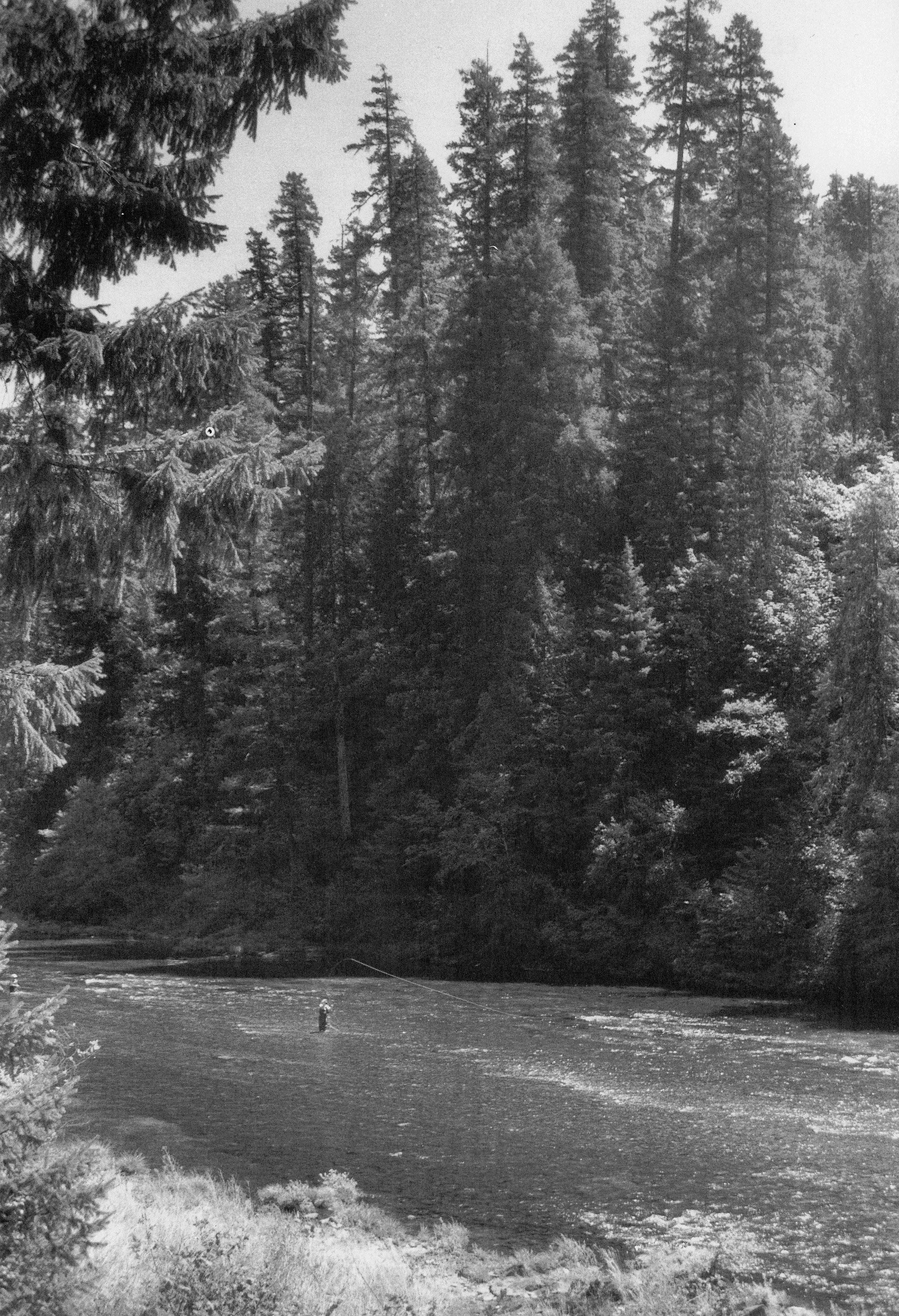
Billy Pate casts a fly on the more traditional pools below Steamboat.
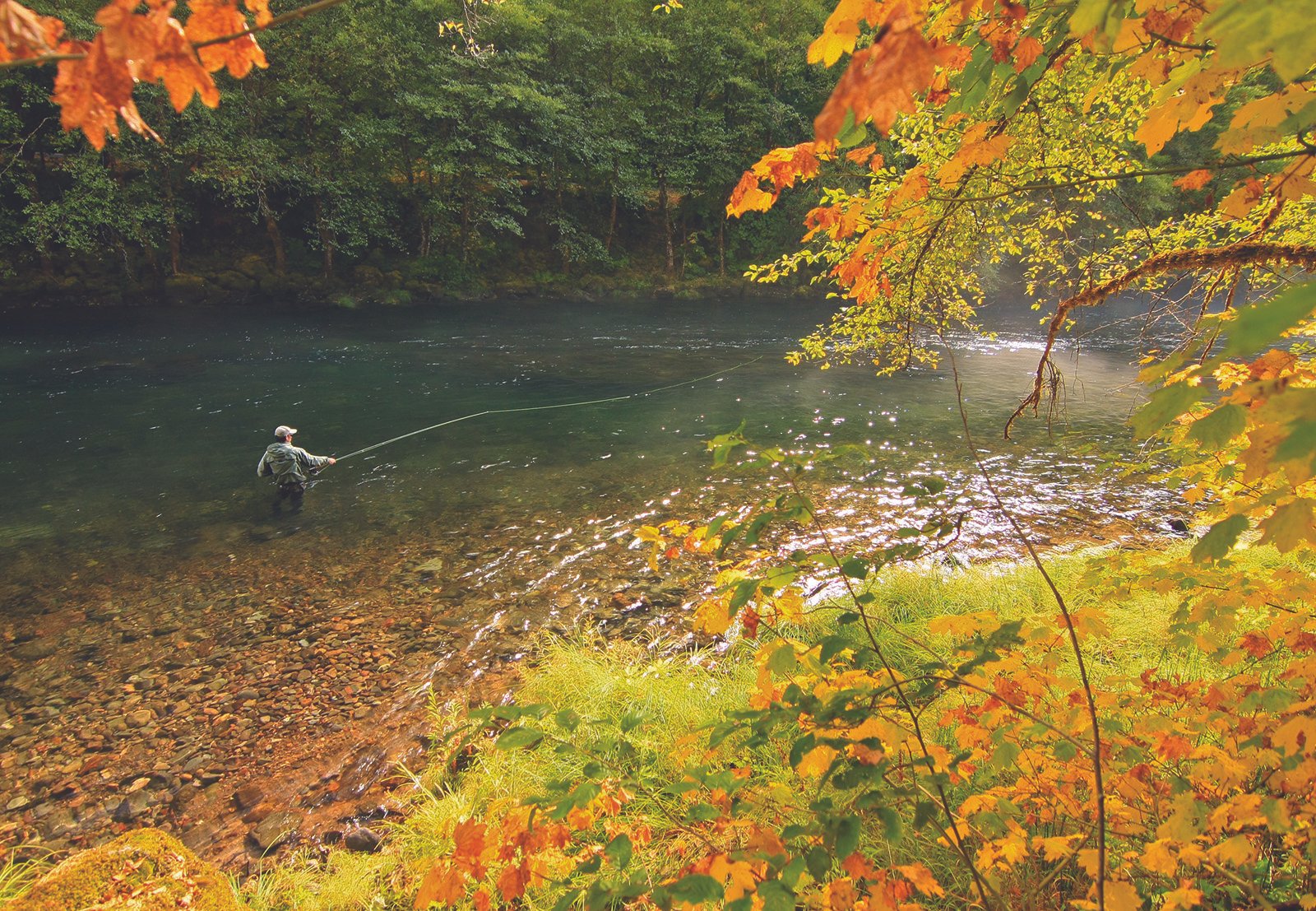
A recent image, not originally in Steelhead Fly Fishing, features Ken Morrish fly fishing a favorite autumn run on the North Umpqua with big leaf maples ablaze. Sadly, in recent years that has literally been true, as devastating forest fires have scarred its banks and ancient sentinel firs above. Anglers who have fished rivers around the world have memories of the Umpqua as one of the prettiest.