A Speyside Soliloquy: Culdrain (Spey)
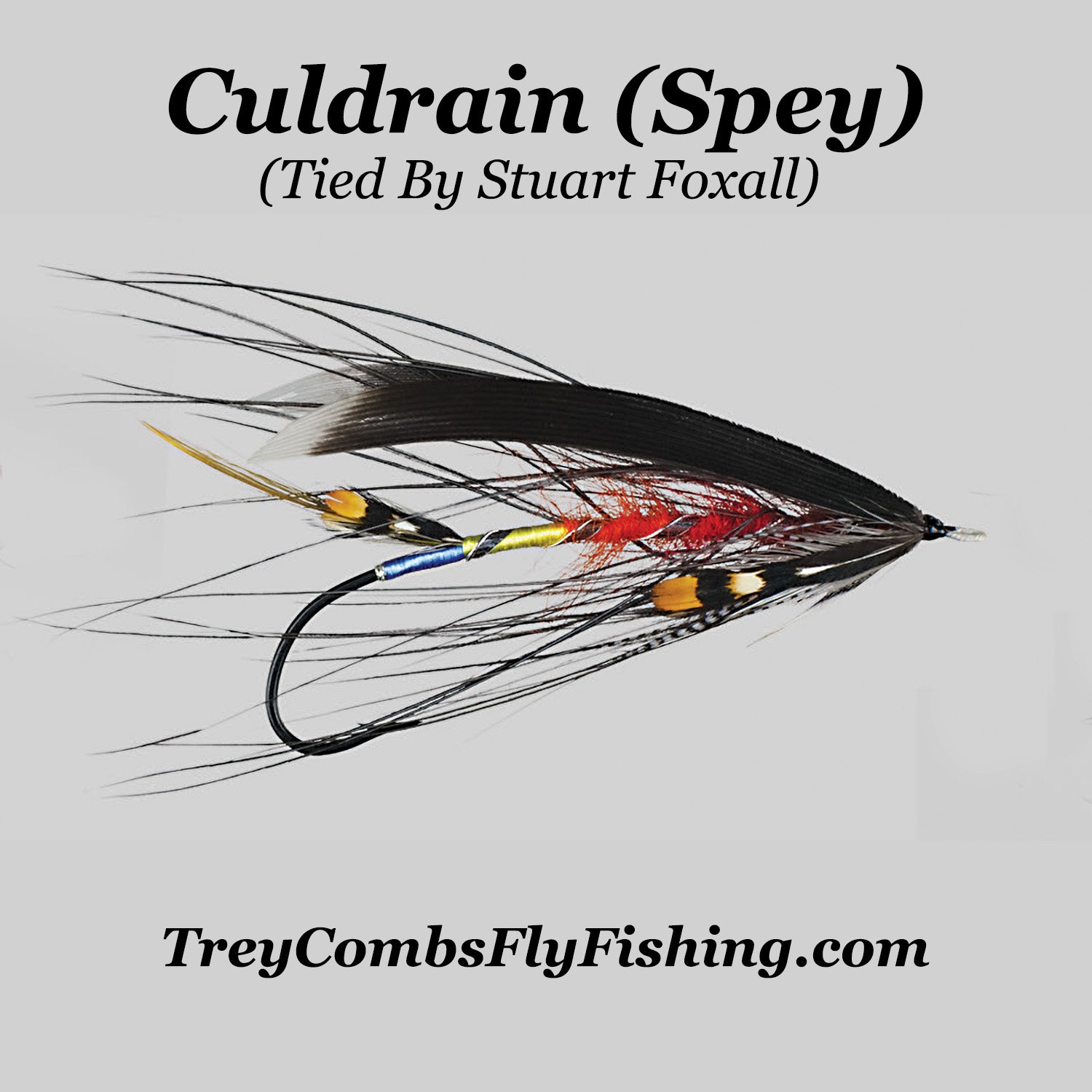
The Culdrain (Spey) Is An Atlantic Salmon Fly First Described By A.E. Knox
A.E. Knox first documented the Culdrain in his 1872 work, Autumns on the Spey. It belongs to the original group of Spey patterns used during the mid-19th century, predating the more complex "standard" salmon flies that became popular in later decades.
History and Origin
The pattern is attributed to the Shanks family, specifically James or George Shanks, who served as ghillies at Gordon Castle. While the fly was used extensively on the Spey, it is named after the Culdrain estate and farm located on the River Bogie, a tributary of the River Deveron. This reflects the crossover between regional tiers and ghillies working the major rivers of the Scottish Highlands.
Knox categorized the Culdrain as a "somber" pattern. Unlike the bright, multi-colored flies of the Victorian era, the Culdrain was a utility fly built for performance in the cold, heavy currents of the early and late seasons. Its construction is defined by a technique known as "beading," where colored silk threads are wrapped between the turns of metal tinsel to provide a subtle flash of color against a dark body.
Dressing Notes (A.E. Knox, 1872)
Knox’s original description is specific about the arrangement of the body and ribbing, which distinguishes it from later, more commercialized variations.
Body: Black mohair or pig’s wool.
Ribbing: Broad silver tinsel, wrapped with wide spacing.
Beading: Two threads of silk—one orange and one yellow—wound side-by-side between each turn of the silver tinsel.
Hackle: Long, jet-black cock hackle.
Wing: Grey mallard feathers, tied low and flat to the hook shank.
Functional Characteristics
The Culdrain was typically tied on large hooks to handle the heavy spring or autumn flows. The choice of black mohair and black cock hackle created a stark silhouette, while the orange and yellow silk "beads" provided visibility in the peat-stained, tea-colored water characteristic of the Spey. The low-set mallard wing and sparse dressing ensured the fly sank quickly and maintained its profile without "buffeting" in fast water.
Featured Image & Fly Dresser
The fly image featured in this blog entry and in our fly pattern dictionary comes from the talented hands of master fly dresser Stuart Foxall,