White Winter Ghost
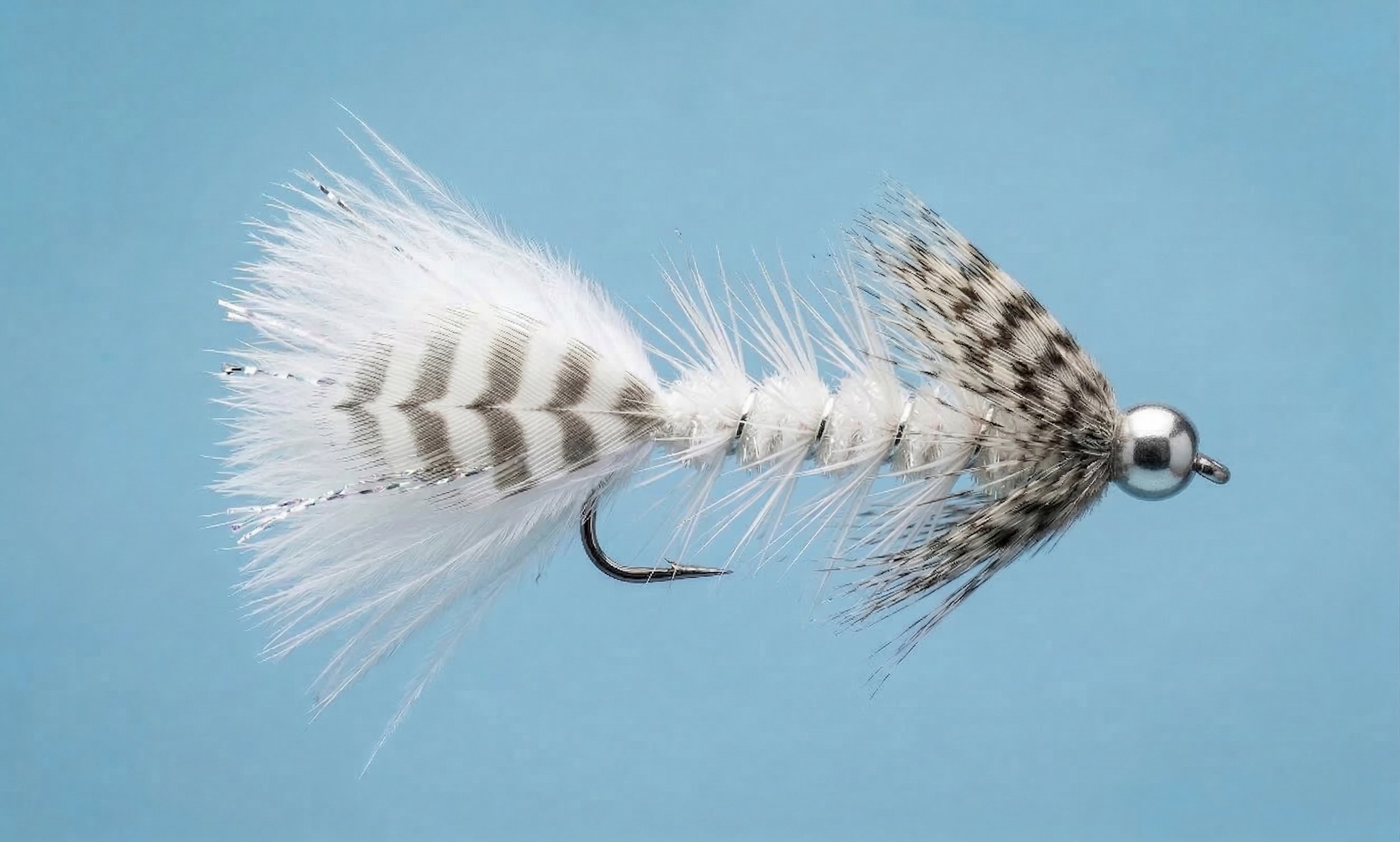
Steady Flow Streamer – “White Winter Ghost”
This prototype pattern is built to solve a specific problem: how to present a fly in “gin-clear,” cold water under the bright, silver-grey skies typical of winter.
It is a refractive design built around a translucent white profile and materials that catch and shimmer in low ambient light. The goal is not a solid silhouette, but a flickering presence—a fly that mimics the semi-transparent quality of a silver baitfish moving through a cold run.
The name reflects that purpose. The White Winter Ghost is intended to produce a shimmering, ghostly profile, one that remains visible without startling wary fish in high-clarity water.
Patterns like this are not new in principle. The history of steelhead fly design is defined by experimentation—anglers such as Syd Glasso, Jim Pray, Wes Drain, and Ralph Wahl refining materials and proportions to match specific water types and conditions. This pattern follows that same line of thinking, using a modern tool to explore combinations built on those established ideas.
Dressing Notes
The following dressing is designed to be fully fishable using commercially available materials.
Hook: 2X-long streamer hook (size 4–8)
Head: 5/32” plain silver tungsten bead
Thread: White or light grey 6/0 (140 denier)
Tail: Arctic white marabou with four strands of silver Flashabou
Tail Overlay: Natural barred mallard flank (tied flat)
Body: Pearl or silver UV chenille
Rib: Medium silver Ultra Wire
Hackle: White or light grey rooster hackle (palmered)
Collar: Natural grey partridge
Design Logic
Visibility in Cold Water: The Role of Silver and White
White establishes the flickering outline, while silver and UV materials extend visibility under flat, winter light. In “gin-clear” 3–6 foot water—particularly under silver-grey skies—white and pearl materials become semi-transparent.
This refractive quality allows the fly to register as a living form without producing a heavy, defined shadow that might spook fish in high-visibility conditions.
Silhouette
In clear water and flat winter light, fish can resolve fine detail. The smaller hook sizes (4–8) maintain a slender, realistic baitfish profile.
Viewed from below, the UV body and silver flash catch what little ambient light is available, producing a subtle flickering effect during the swing that can trigger a response.
Movement: The Subtle Pulse
The natural partridge collar provides softer movement than stiffer materials. It does not collapse or vibrate aggressively; instead, it pulses and breathes with small variations in current.
This restrained motion suggests the delicate movement of a cold-water prey species, providing a secondary signal that complements the fly’s visual shimmer.
Depth Without Distraction: The Silver Bead
The tungsten bead serves a simple purpose: to get the fly down quickly.
The plain silver finish is chosen for its ability to catch and reflect low, directional winter light. It creates a subtle focal point at the head of the fly, drawing attention to the movement of the tail without overwhelming the overall presentation.
On the Water
This pattern is designed for a very specific type of holding water: a steady, walking-speed run with a smooth, even surface. The ideal depth range is 3–6 feet, where fish are holding deeper to conserve energy in cold temperatures.
At this pace, the current has enough force to animate the white marabou without overpowering it. The fly maintains its shape and refractive presence without collapsing or spinning.
The barred mallard overlay stabilizes the tail, reduces fouling, and helps the fly track cleanly through its arc.
Presentation and Line Control
Fishing the White Winter Ghost effectively comes down to managing speed and depth throughout the swing.
The Stack Mend (Getting Deep)
After a quartering downstream cast, introduce slack upstream of the fly without disturbing its position. This allows the bead to pull the fly downward before the current applies tension.
The objective is to reach the target depth early in the swing.
The Tracking Mend (Controlling Speed)
Once the line comes tight, aim for a slow, steady swing. If the current is pushing too aggressively, use an upstream mend to create a belly in the line. This acts as a natural brake, preventing the fly from skating or moving too quickly for a cold, less aggressive fish.
Tracking the Fly
Follow the fly with the rod tip as it moves across the current. Maintain a soft connection to ensure the fly presents its full, shimmering side profile to the fish.
The Hang
At the end of the swing, allow the fly to pause in the current for 5–10 seconds. The vertical pulse of the marabou in softer water near the bank often triggers a response from fish that have followed the fly through the run.
Final Thought
This is a prototype pattern built around established principles—refraction, subtle movement, and controlled depth—applied to the unique light and clarity of winter water.
Like any fly, its value will ultimately be determined on the river.
This pattern is part of an ongoing series exploring AI-assisted fly design. For a full explanation of the approach, see our article on AI & Fly Pattern Design.
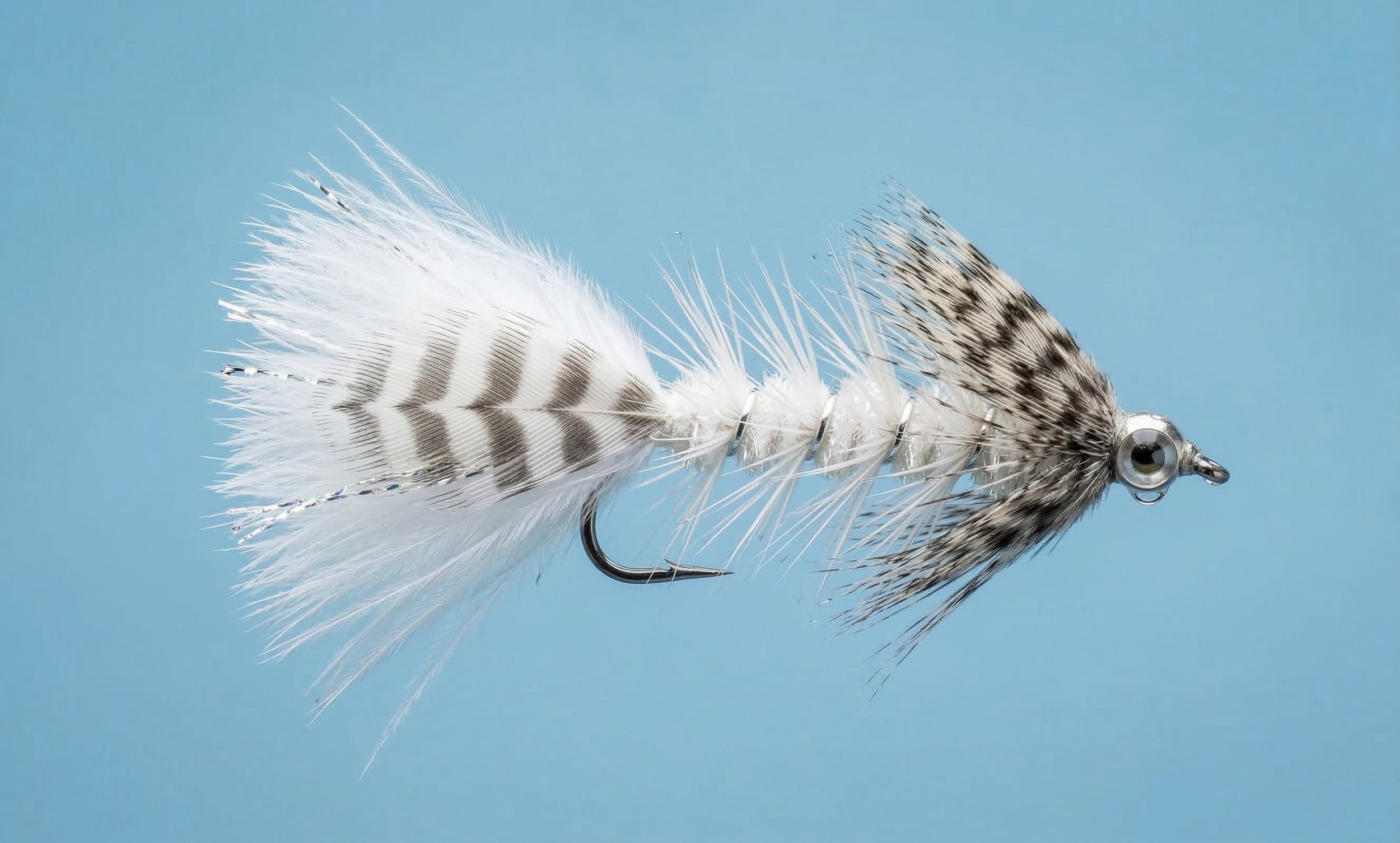
A variation of the pattern can be tied with eyes to introduce a subtle focal point at the head of the fly. In clear, winter water, this addition may help define the profile without overpowering its translucent character, though the standard dressing is presented without eyes.