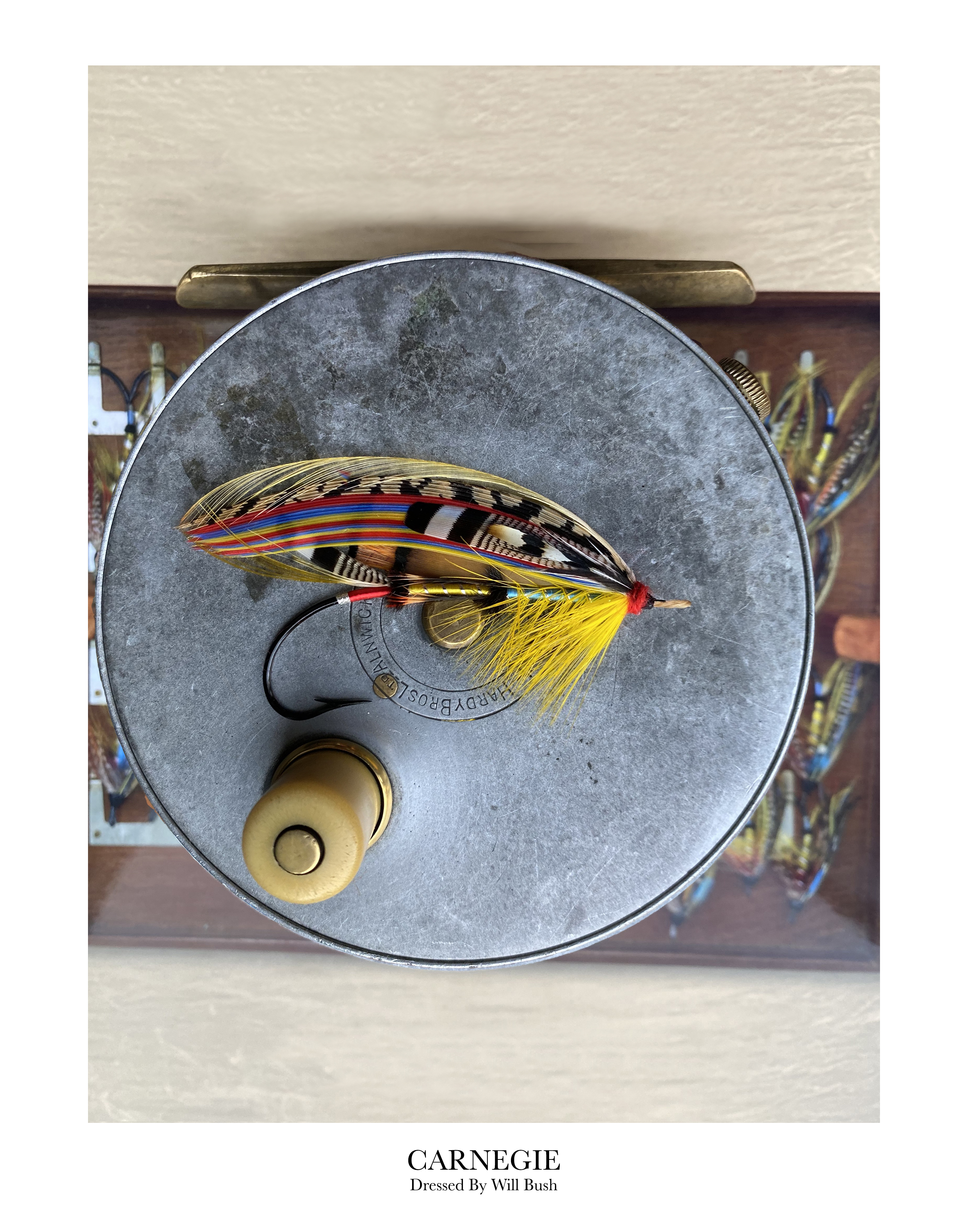
Fly Pattern Plate #1 - Carnegie
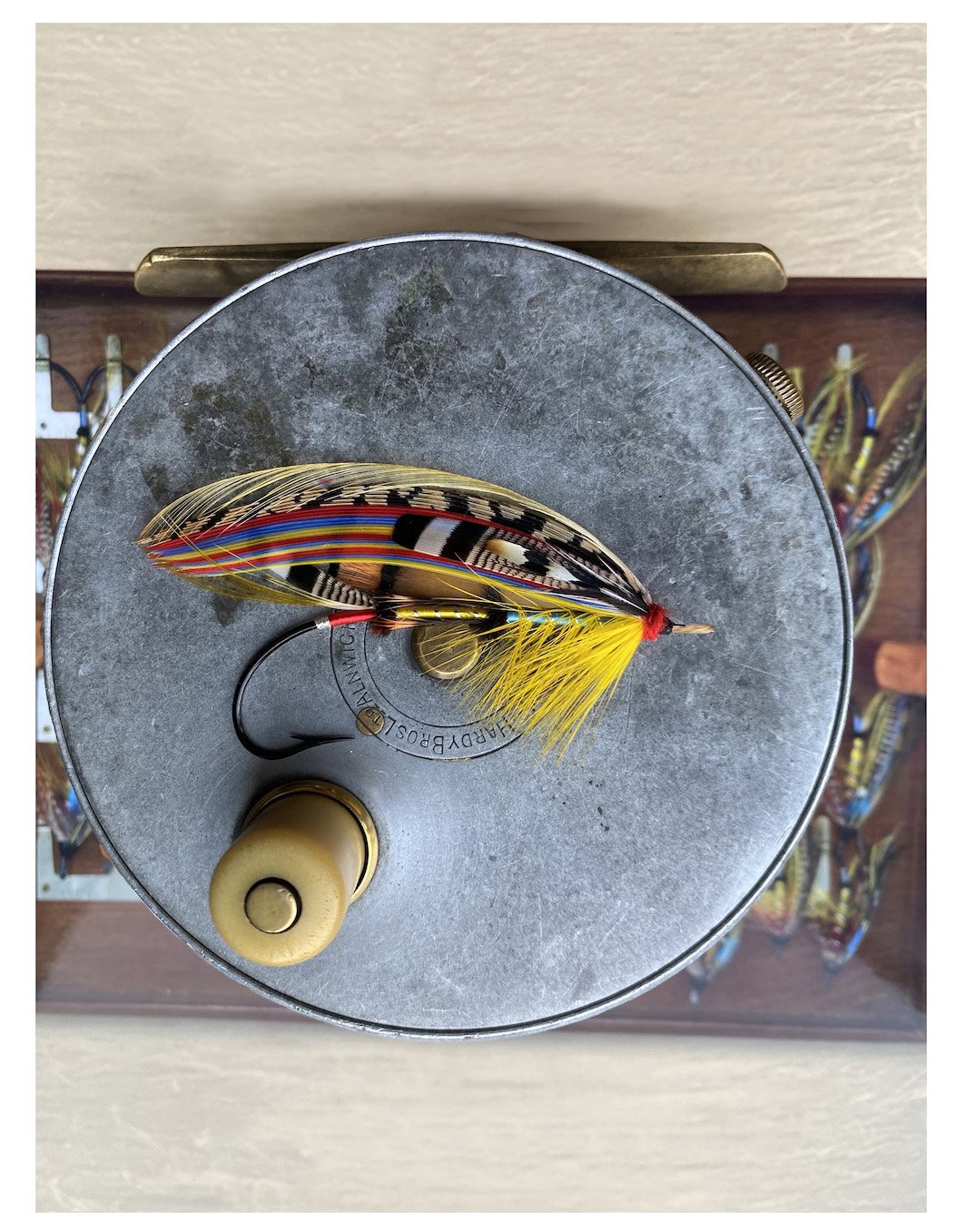
The download link to the high resolution version of this image is located at the bottom of this page.
Carnegie - Dressed by Will Bush
The Carnegie is a classic fully dressed salmon fly of the late Victorian period, originally designed by George M. Kelson and described in The Salmon Fly: How to Dress It and How to Use It (1895). Kelson’s work is considered a seminal 19th-century reference on salmon fly dressings, and the Carnegie is an excellent example — balanced, deliberate, and unmistakably Scottish in character.
Kelson’s dressing outlines a dark-bodied fly structured with measured ribbing, a composed tail, carefully married wing sections incorporating golden pheasant and barred fibers, and jungle cock set cleanly along the shoulder. The pattern reflects the disciplined architecture that defined Victorian salmon fly design.
The fly featured in this plate was dressed by Will Bush, widely regarded as one of the finest fly dressers of classic salmon flies. Bush is known not only for precision and proportion, but for strict adherence to historical accuracy. In this Carnegie dressing, he uses authentic, period-correct materials consistent with Kelson’s 1895 specification — natural feathers and traditional components chosen to preserve the color harmony, texture, and silhouette intended by Kelson.
The married wings are tightly aligned and cleanly constructed. The jungle cock is correctly positioned. The hackle is balanced to the body. The overall profile maintains the elongated, flowing line characteristic of classic salmon flies. The result is not reinterpretation, but faithful execution.
As Fly Pattern Plate No. 1 in the Trey Combs Fly Fishing Archive, the Carnegie establishes the standard for the collection: historically documented patterns, dressed in authentic materials at the highest contemporary level and anchored to classic dressing literature.
Download Information: Fly Pattern Plate #1 is a high-resolution archival plate. Each plate includes a white border and is suitable for high-quality printing and framing. Dimensions: 11” (width) x 14” (height) at 300 DPI. Click the button below to automatically download the high-resolution image.
** Flies tied by Will Bush are considered highly collectable. To inquire, Will can be contacted via Instagram @willbushflies