Essay: AI and Fly Pattern Development
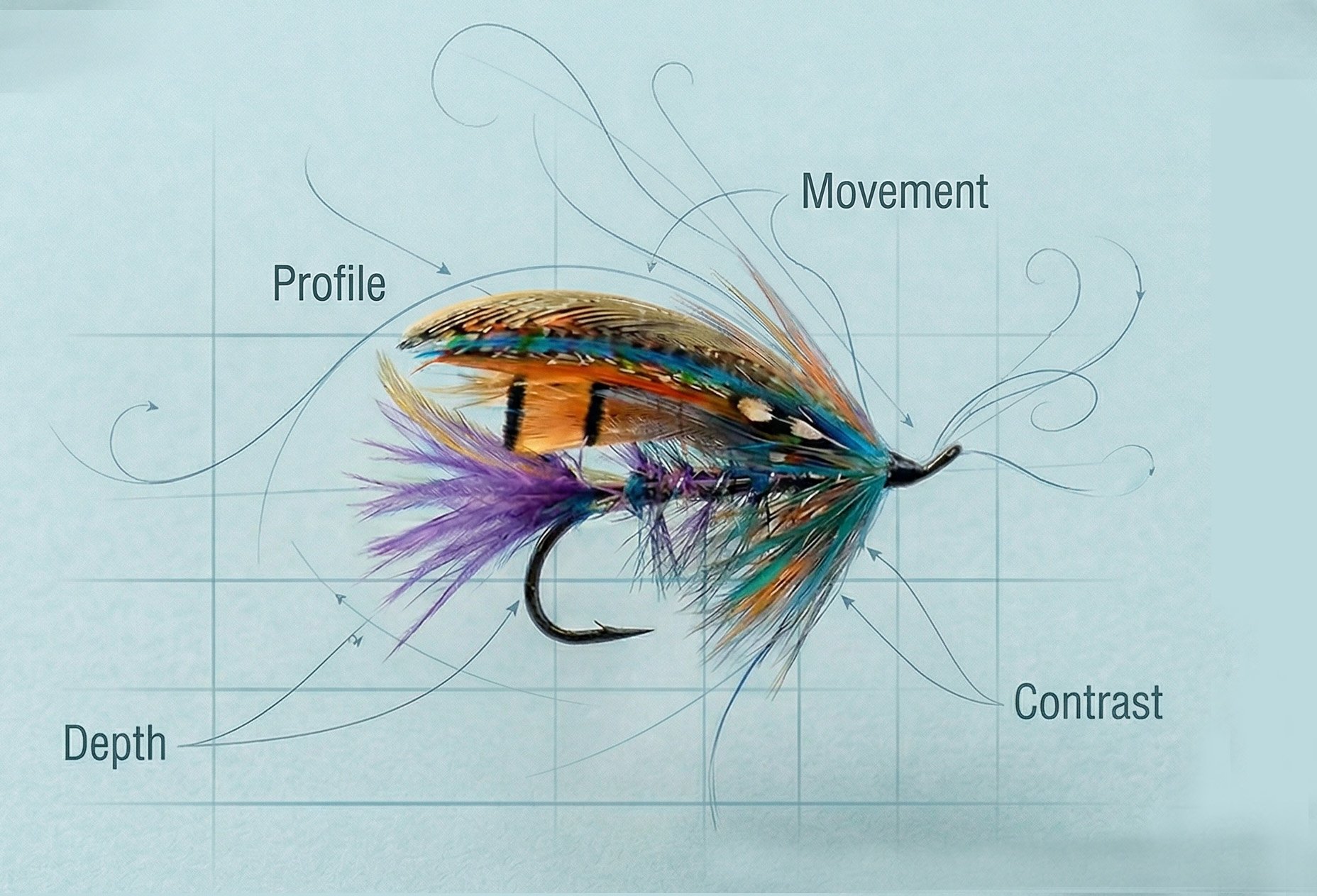
AI & Fly Pattern Design
Fly patterns have always evolved through experimentation.
From the heavily dressed flies of the early era to the sparse, functional designs that emerged in the Pacific Northwest, each generation of anglers has adjusted materials, proportions, and intent based on what they observed on the water. That process—trial, error, and refinement—has defined the history of salmon and steelhead flies.
Famed fly dressers such as Syd Glasso, Jim Pray, Wes Drain, and Ralph Wahl did not arrive at their patterns after the first try. They developed them over time, refining each section of the fly to match specific water types, conditions, and fish behavior.
A new series we are beginning sits within that same tradition.
AI as a Tool, Not a Substitute
There is a meaningful difference between work that is created by a machine and work that is assisted by one.
In fly tying, the distinction is straightforward: copying a pattern versus understanding why it works.
Our approach is firmly in the second category.
Each pattern begins with input drawn from experience—specific river conditions, depth, clarity, flow speed, and intended presentation. These parameters guide the development of a fly built on established principles: contrast, movement, profile, and depth control.
AI is used to explore combinations quickly. The results are then reviewed, refined, and grounded in practical experience before being presented.
What This Adds to the Process
Historically, developing a new pattern required time and repetition. Materials were adjusted incrementally. Proportions were refined over seasons. Results were observed slowly, often one fish at a time.
That process remains valuable.
What AI offers is speed—not replacement. It allows for the rapid development of combinations that would otherwise take years to test, while still relying on the same underlying principles that have guided fly design for decades.
Every pattern we present is filtered through that lens.
The Role of the Angler
No tool replaces experience on the water.
It cannot step into a run on the North Umpqua, manage a line through a walking-speed current, or experience a day on the Babine. It does not replace the judgment that comes from time on the water.
Fly fishing will always remain a human and personal pursuit.
That does not change.
A Prototype Series
The patterns presented in this new ongoing series should be viewed as prototypes.
Each is built around a defined set of conditions and a specific objective. Materials are selected for function, and every dressing is designed to be fully fishable using commercially available components.
These are not replacements for established patterns. They are new ideas grounded in long-standing principles of steelhead and salmon fly design.
Moving Forward
Over the coming months, we will introduce a series of prototype patterns, each built around a specific set of conditions and design principles. These will be released gradually, allowing time for observation, discussion, and refinement as they are fished and evaluated on the water by anglers.
This series is an attempt to examine how new tools can interact with a very traditional craft.
Some patterns may prove effective. Others may not. That uncertainty is part of the process, just as it has always been.
As we introduce new prototypes here and on Instagram, we welcome your thoughts and observations as these designs are fished and evaluated on the water. Follow along at @TreyCombsFlyFishing.
As with any new fly pattern, the final judgment will not be made on the screen, but on the river.